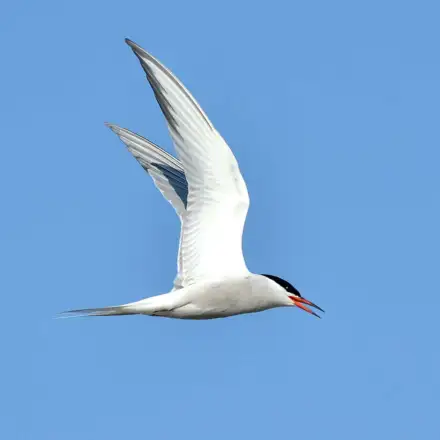
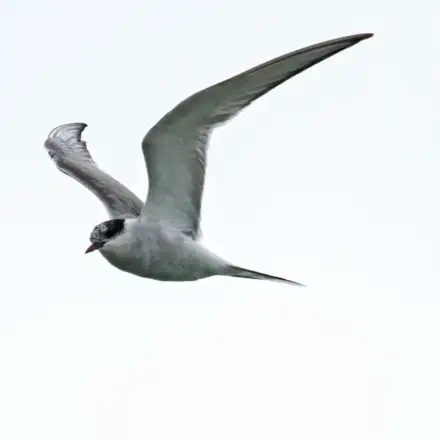
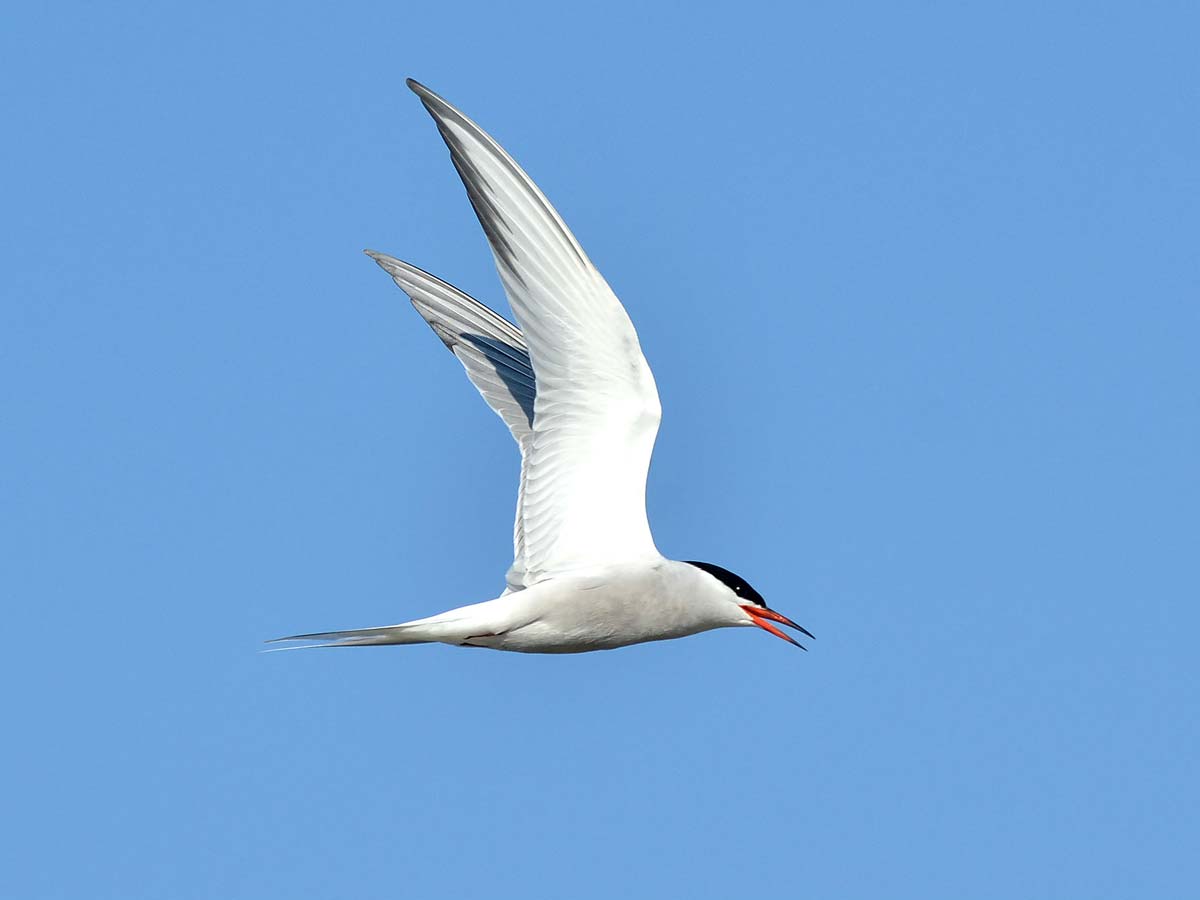
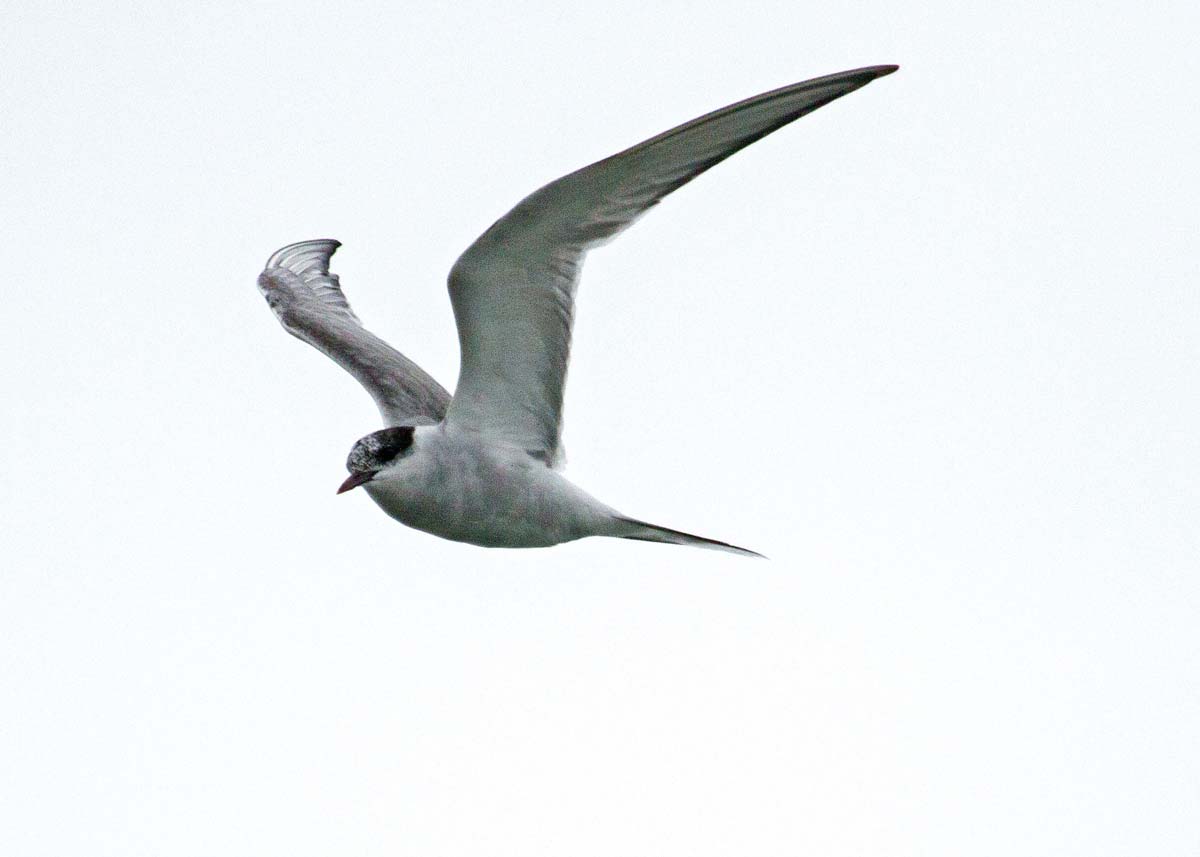
Arctic Tern
Scientific name: Sterna paradisaea
Family laridae
Phenology
- Mainland
- Passage migrant
- Madeira
- Passage migrant
- Azores
- Passage migrant
Conservation status
Learn more- Mainland
- Madeira
- Azores
- IUCN Global

Data
Maps
Distribution | Breeding
Scale
Minimum value:
Maximum value:
Scale
Minimum value:
Maximum value:
Scale
Minimum value:
Maximum value:
Scale
Minimum value:>
Maximum value:<
Scale
Minimum value:
Maximum value:
Scale
Minimum value:>
Maximum value:>
Distribution based on seabird tracking data (locations/hexagone).
Colony(ies) of origin:
Device:
Data period / number of individuals:
Data period / number of individuals:
Distribution of seabird breeding colonies or sites (number of breeding pairs).
Distribution based on marine censuses (probability of occurrence).
Observed density based on marine censuses (birds/ km2).
Confirmed occurence during marines censuses.
Abundance of waders derived from Project Arenaria coastal surveys (birds/square).
Passage rates derived from RAM coastal surveys (birds/hour).
No data available for the selected period.
Presentation
Distribution, movements and phenology
During the breeding season, between May and August, the Arctic Tern has a circumpolar Arctic distribution, migrating to sub-Antarctic and Antarctic waters to winter (Billerman et al. 2026). It undertakes one of the longest known migrations, covering over 80,000 km per year (Egevang et al. 2010). It is during these long journeys that the species occurs in Portugal, preferring predominantly pelagic waters (Fijn et al. 2013; Meirinho et al. 2014). Pre-breeding migration takes place between March and May and post-breeding migration between August and October. September is when the species is most abundant along the Mainland coast (Catry et al. 2010a; Elmberg et al. 2020).
Individual tracking of 25 birds from colonies in Greenland, the Netherlands and the United Kingdom, fitted with GLS devices, confirms the extensive use of the Portuguese EEZ during both migratory periods, indicating a higher occurrence in the Azores and Madeira sub-areas during the pre-breeding migration, coinciding with the end of the non-breeding period. The Mainland region was used solely during the final phase of the breeding season, in August, likely by birds that initiated migration early.
Abundance and population trends
The global population has been estimated at over 2,000,000 birds, of which 564,000 to 906,000 pairs breed in Europe, showing a declining trend (BirdLife International 2025).
There is little information regarding the number of Arctic Terns occurring in the Portuguese EEZ, as they are generally observed singly or in small flocks. On the Mainland, land-based observations of the species occur following storms and the passage of cold fronts with strong westerly winds (Moore 2000). During the post-breeding migration in 2015, 1,003 birds were recorded migrating south from Cape Carvoeiro (Elmberg et al. 2020). In the Azores and Madeira, there are occasional records (Meirinho et al. 2014). However, the lack of systematic information regarding its abundance and population trends has prevented an assessment of the species’ environmental status within the Portuguese EEZ.
Ecology and habitat
The Arctic Tern nests on the ground on islands, but also away from the coast, in lakes and other wetlands. It nests in Arctic regions and in the northern temperate regions (Billerman et al. 2026). Colonies can range from a few pairs to hundreds or thousands of birds. In Portugal, it occurs during migration throughout the EEZ, in pelagic areas, mostly far from land. It feeds at the surface and its diet consists of small fish, crustaceans, molluscs and insects.
Threats and conservation
Potential threats to the species are likely related to the effect of climate change on breeding areas and Arctic ecosystems, which could lead to a decrease in food availability (Møller et al. 2006) or a reduction in available nesting habitat. There is a strong relationship between breeding success and prey availability. Some populations have been affected by the collapse of their main prey (e.g. sand eels), reducing or preventing breeding altogether (Billerman et al. 2026). In some colonies, eggs and chicks are subject to predation by invasive predators, such as the American mink Neovison vison. No threats have been identified for Portugal.
- Autores
Joanne Morten, Ruben Fijn, Tânia Nascimento
- Owners/sources of tracking data
Egevang 2008, Fijn et al. 2013, Morten et al. 2018, Redfern 2018b, Redfern 2018c
Moore CC (2000). Movimentações invulgares de aves marinhas junto ao cabo Carvoeiro. Pardela 13: 7-10. Bibliography:
Møller AP, Flensted-Jensen E & Mardal W (2006). Dispersal and climate change: a case study of the Arctic tern Sterna paradisaea. Global Change Biology 12: 2005–2013. Bibliography:
Meirinho A, Barros N, Oliveira N, Catry P, Lecoq M, Paiva V, Geraldes P, Granadeiro JP, Ramírez I & Andrade J (2014). Atlas das Aves Marinhas de Portugal. Sociedade Portuguesa para o Estudo das Aves. Bibliography:
Fijn RC, Hiemstra D, Phillips RA & van der Winden J (2013). Arctic Terns Sterna paradisaea from The Netherlands migrate record distances across three oceans to Wilkes Land, East Antarctica. Ardea 101: 3–12. Bibliography:
Elmberg J, Hirschfeld E, Cardoso H & Hessel R (2020). Seabird migration at Cabo Carvoeiro (Peniche, Portugal) in autumn 2015. Marine Ornithology 48: 231-244. Bibliography:
Egevang C, Stenhouse IJ, Phillips RA, Petersen A, Fox JW & Silk JRD (2010). Tracking of Arctic terns Sterna paradisaea reveals longest animal migration. Proceedings of the National Academy of Sciences 107(5): 2078–2081. Bibliography:
BirdLife International (2025). IUCN Red List for birds. Downloaded from https://datazone.birdlife.org on 30.11.2025. Bibliography:
Billerman SM, Keeney BL, Kirwan GM, Medrano F, Sly ND & Smith MG (eds.) (2026). Birds of the World. Cornell Laboratory of Ornithology, Ithaca, NY, USA. Bibliography:
Catry P, Costa H, Elias G & Matias R (2010a). Aves de Portugal, Ornitologia do Território Continental. Assírio e Alvim, Lisboa Data:
Fijn RC, Hiemstra D, Phillips R & van der Winden J (2013). Arctic Terns I from the Netherlands Migrate Record Distances Across Three Oceans to Wilkes Land, East Antarctica. Ardea 101(1): 3-12. Data:
Redfern C (2018c). Dataset 1658: Arctic Tern, Sterna paradisaea, Geolocator (GLS), Farne Islands, Farne Islands, United Kingdom, 2017–2018. BirdLife International Seabird Tracking Database. Downloaded from https://data.seabirdtracking.org/dataset/1658/ on 30.11.2025. Data:
Redfern C (2018b). Dataset 1659: Arctic Tern, Sterna paradisaea, Geolocator (GLS), Farne Islands, Farne Islands, United Kingdom, 2017–2018. BirdLife International Seabird Tracking Database. Downloaded from https://data.seabirdtracking.org/dataset/1659/ on 30.11.2025. Data:
Morten J, Hawkes L & Maxwell S (2018). Dataset 1905: Arctic Tern, Sterna paradisaea, GPS, Sandgerdi, Iceland, Iceland, 2018. BirdLife International Seabird Tracking Database. Downloaded from https://data.seabirdtracking.org/dataset/1905/ on 30.11.2025. Data:
Egevang C (2008). Dataset 739: Arctic Tern, Sterna paradisaea, Geolocator (GLS), Sand Island, Young Sound, Greenland, 2007–2008. BirdLife International Seabird Tracking Database. Downloaded from https://data.seabirdtracking.org/dataset/739/ on 30.11.2025. Glossary:
A group of marine arthropods that are important in the marine food chain. Glossary:
Persistent changes in global or regional climate patterns, influenced by natural and anthropogenic factors. Glossary:
Monitoring the movements of individuals using tracking devices. Glossary:
The direction of change in the size of a population over time (increase, decline or stability). Glossary:
A concept defined under the Marine Strategy Framework Directive (MSFD), referring to the condition of the elements of the marine environment, including birds. It aims to assess whether ecosystems are healthy, balanced and capable of supporting ecological functions and human uses in a sustainable manner. The ultimate goal is for the components and ecosystems to achieve Good Environmental Status. Glossary:
Under the United Nations Convention on the Law of the Sea, coastal states are entitled to declare an EEZ comprising maritime area beyond their territorial waters. The national EEZ is delimited by an imaginary line situated 200 nautical miles from the coast, separating national waters from international or shared waters. Within its EEZ, each state has rights such as the exploitation of marine resources, the conduct of scientific research and the regulation of fishing by foreign vessels. Glossary:
Referring to the period preceding breeding. Glossary:
Referring to the period following breeding. Glossary:
The area or environment where organisms that do not depend on the seafloor normally live. It is the typical ecological environment of open ocean waters. The pelagic ecosystem does not include only the open sea; it also comprises the waters covering the continental shelf. The pelagic zone begins below the influence of tides and extends into the open ocean, at depths ranging from a few tens of metres to approximately 6,000 metres, and is divided into different layers. Glossary:
A period generally corresponding to the winter months, which may include part of autumn. Glossary:
A small device attached to birds to study their large-scale movements (usually migration), which works by recording light intensity (from which the duration of night and the local midday time are estimated, and consequently the latitude and longitude on each day). Glossary:
A generic common name given to various species of bony fish of the genus Ammodytes.