
Presentation
The Atlas of Seabirds of Portugal represents the most comprehensive compilation to date of data on the distribution and abundance of seabirds and coastal birds that use Portuguese waters.
This is the result of data collected over eight years of voyages to carry out marine censuses (on board) throughout the national EEZ, five years of coastal censuses at strategic points on the continental coast (RAM points), and a national census of wintering coastal birds on the non-estuarine Portuguese coast (Project Arenaria). This entire effort involved more than 150 observers.
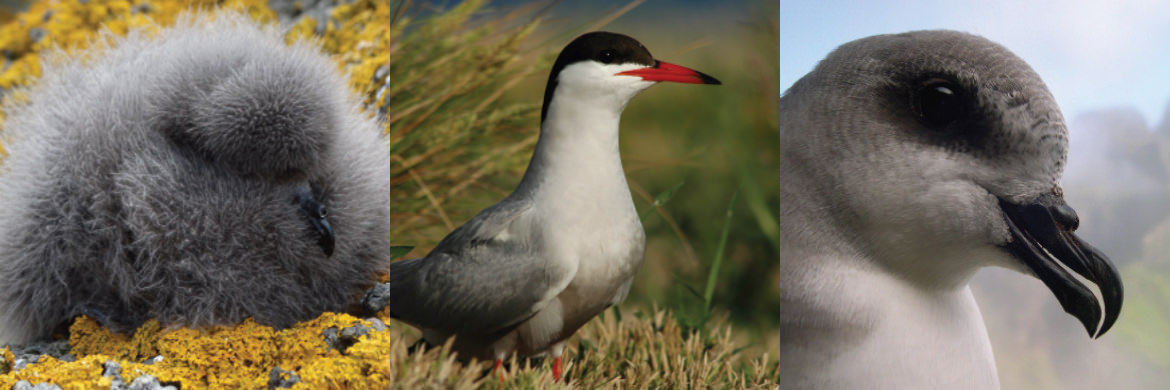
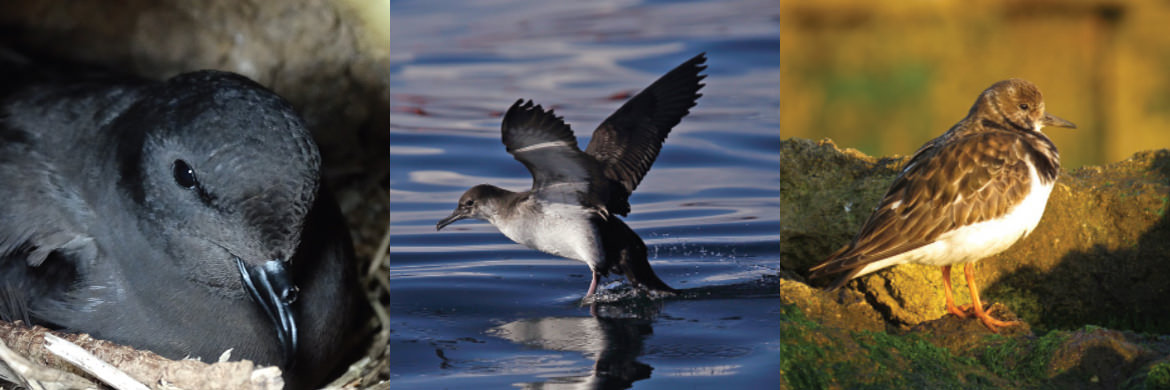
This atlas provides a detailed overview, covering the entire Portuguese territory, of the status of 65 species of seabirds. For the 50 species considered to be the most important, this atlas brings together detailed information on their distribution, movements and phenology; abundance and population trends; ecology and habitat; and threats and conservation. For these species, more than 500 species distribution or modelling maps are presented by season and geographical region.
This work also compiles information on historical aspects of marine ornithology in Portugal and the conservation of this group of birds in the country; it provides an overview of the composition and dynamics of breeding and non-breeding seabird communities in Portuguese territory, their breeding colonies, and highlights certain aspects of the ecology of this fascinating group of birds.
This work also aims to serve as a reference and a testament to how Portuguese marine ornithology occupies a leading position in the current landscape of national biological oceanography. We believe this work represents an important step towards filling some gaps in the knowledge of life in our seas, clearly documenting that the blue ocean on the map is, after all, richly populated by countless living creatures moving through the seasons, and which never cease to amaze us.
Coastal observation network for seabirds and marine mammals, based on systematic counts along the coastline. Glossary:
Under the United Nations Convention on the Law of the Sea, coastal states are entitled to declare an EEZ comprising maritime area beyond their territorial waters. The national EEZ is delimited by an imaginary line situated 200 nautical miles from the coast, separating national waters from international or shared waters. Within its EEZ, each state has rights such as the exploitation of marine resources, the conduct of scientific research and the regulation of fishing by foreign vessels.