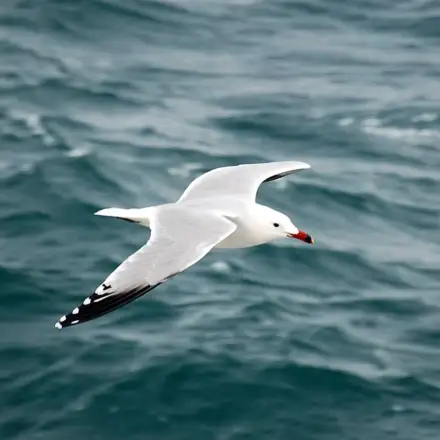
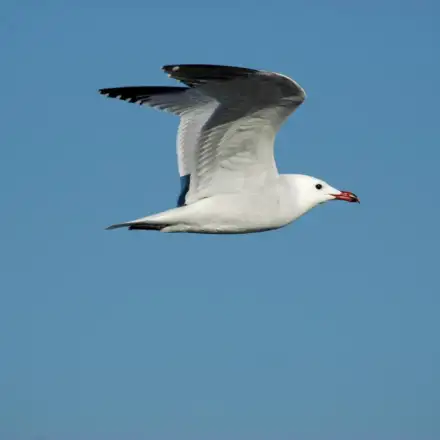
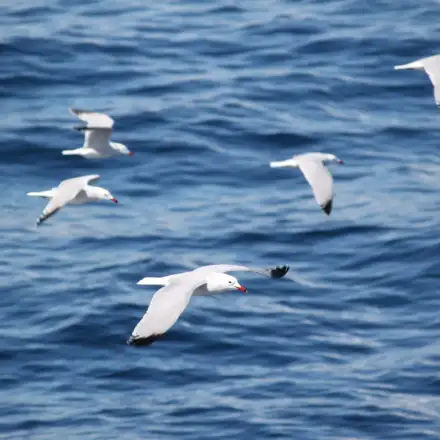
Audouin's Gull
Scientific name: Larus audouinii
Family laridae
Phenology
- Mainland
- Summer breeder, wintering and passage migrant
- Madeira
- Absent
- Azores
- Vagrant
Conservation status
Learn more- Mainland
- Madeira
- Azores
- IUCN Global
Data
Maps
Distribution | Breeding
Scale
Minimum value:
Maximum value:
Scale
Minimum value:
Maximum value:
Scale
Minimum value:
Maximum value:
Scale
Minimum value:>
Maximum value:<
Scale
Minimum value:
Maximum value:
Scale
Minimum value:>
Maximum value:>
Distribution based on seabird tracking data (locations/hexagone).
Colony(ies) of origin:
Device:
Data period / number of individuals:
Data period / number of individuals:
Distribution of seabird breeding colonies or sites (number of breeding pairs).
Distribution based on marine censuses (probability of occurrence).
Observed density based on marine censuses (birds/ km2).
Confirmed occurence during marines censuses.
Abundance of waders derived from Project Arenaria coastal surveys (birds/square).
Passage rates derived from RAM coastal surveys (birds/hour).
No data available for the selected period.
Presentation
Distribution, movements and phenology
The Audouin’s Gull breeds between April and August, from the Atlantic coast of Morocco to Mainland Portugal and in various Mediterranean countries. It is a partially migratory species, wintering in the Mediterranean and along the north-west African coast as far south as Senegal (Billerman et al. 2026).
Although there are historical records (Leal & Lecoq 2006; Catry et al. 2010a), the species only became permanently re-established in Portugal from 2008 onwards, on Deserta Island in Faro (Moniz 2015). In the Algarve, the species is most common from March to October, with several hundred individuals remaining throughout the winter. Breeding adults in the Algarve forage in deep, productive waters up to approximately 100 km from the colony during incubation (Pereira et al. 2025b). After hatching, most adults remain near the colony, although some move north to Morocco and the Mediterranean. Individual tracking data from 76 birds fitted with GPS, from colonies in Portugal and Spain, indicate year-round use of the continental sub-area of the EEZ. The distribution of the birds was concentrated mainly south of the Algarve, although use has also been recorded along the south-west coast, between Setúbal and Sagres. No occurrences were recorded in the Azores and Madeira, which explains the scarce or non-existent observations of the species in these regions (Correia-Fagundes et al. 2021; Birding Azores 2022).
Abundance and population trends
The global population has been estimated at around 20,000 pairs (Oliveira et al. 2025b), with a declining trend (BirdLife International 2025). In Portugal, the species began nesting again in the early 2000s in the salt pans of Castro Marim, albeit irregularly and with very low or zero productivity, due to heavy predation pressure (Leal & Lecoq 2006). From 2008 onwards, it became a regular resident on Deserta Island, where the population grew steadily and spread to Culatra Island. In 2024, 5,591 breeding pairs were recorded on Barreta and 1,701 on Culatra. In recent years, an expansion of the breeding population towards the west coast of the Mainland has also been noted (Equipa Atlas 2022). Consequently, this population has achieved Good Environmental Status for the abundance indicator.
Ecology and habitat
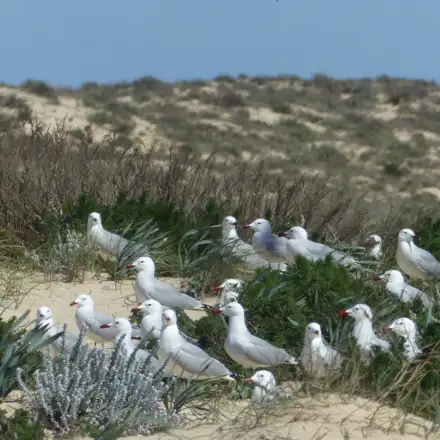
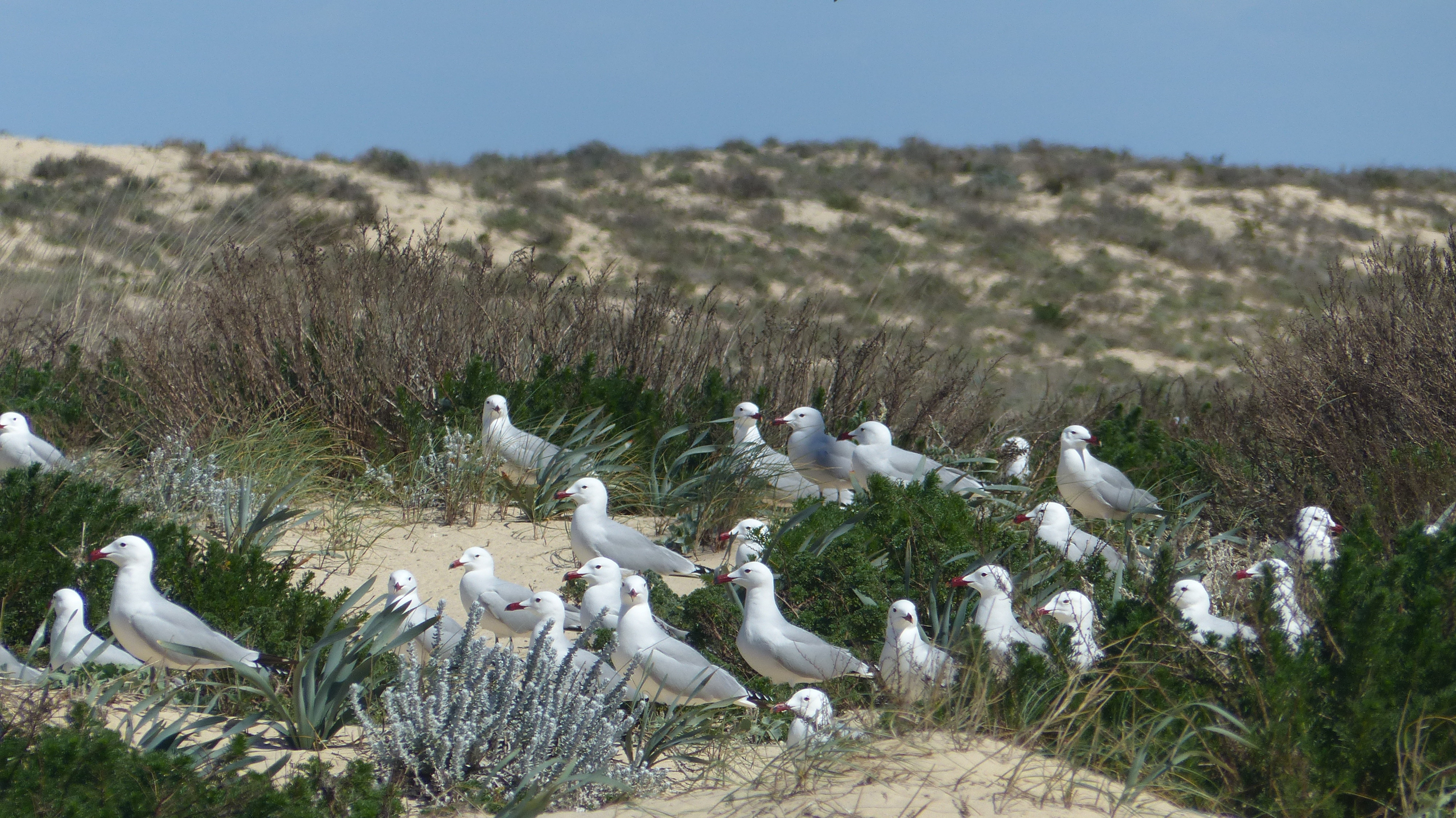
The Audouin’s Gull is generally found near the coast, though it may also frequent the continental slope. Its diet consists mainly of epipelagic fish, but also includes demersal and benthic species (Matos et al. 2018). It also feeds heavily on discards from commercial fisheries, particularly trawlers and purse seiners (Bécares et al. 2015; Matos et al. 2018). It nests colonially on rocky or sandy islands, sandy peninsulas and salt pans. With the collapse of some historic colonies, the Audouin’s Gull has demonstrated an ability to colonise new sites, including less traditional environments such as harbours and urban areas (Oliveira et al. 2025b).
Threats and conservation
The Audouin’s Gull is particularly sensitive to a reduction in fishing discards and the intrusion of predatory mammals into colonies, factors which have led to population declines and dispersal to other areas (Oro et al. 2004). Human presence, both in nesting areas and foraging grounds, constitutes another significant threat, as it can significantly disturb the birds, forcing them to abandon their sites and compromising breeding success. The species is also susceptible to habitat loss and degradation, bycatch, competition with other species, marine pollution, offshore energy structures, disease outbreaks and the increasing effects of climate change (Oliveira et al. 2025b).
- Autor
Tânia Nascimento
- Owners/sources of tracking data
Gonzalez-Solis 2016j, Ramos 2021a, Vitor H. Paiva (MARE-UCoimbra)
Pereira JM, Ramos JA, Domingues A, Almeida A, Marçalo A, Cascão C, Silva C, Rey D, Ceia FR, Carvalho F, Santos ID, Gonçalves JMS, Cerveira LR, Frade M, Laranjeiro MI, Oliveira N, Nascimento T, Paiva VH & Norte AC (2025b). Experimental anthropogenic food restrictions drive short-term foraging and immuno-haematological changes in sympatric breeding gulls. Science of the Total Environment 1003: 180672. Bibliography:
Oro D, Cam E, Pradel R & Martínez-Abraín A (2004). Influence of food availability on demography and local population dynamics in a long-lived seabird. Proceedings of the Royal Society of London. Series B: Biological Sciences 271(1537): 387-396. Bibliography:
Oliveira N, Nascimento T & Vulcano A (comp.) (2025b). International Single Species Action Plan for the conservation of the Audouin’s Gull Larus audouinii (2025 to 2035). Project LIFE Ilhas Barreira. SPEA - Portuguese Society for the Study of Birds, European Commission Technical Report, Lisbon. Bibliography:
Moniz F (2015). Ecologia Alimentar da Gaivota-de-audouin (Larus audouinii) e da Gaivota-de-patas-amarelas (Larus michahellis) no Sul de Portugal. Tese de Mestrado. Universidade de Évora. Bibliography:
Matos DM, Ramos JA, Calado JG, Ceia FR, Hey J & Paiva VH (2018). How fishing intensity affects the spatial and trophic ecology of two Gull species breeding in sympatry. ICES Journal of Marine Science 75(6): 1949-1964. Bibliography:
Leal A & Lecoq M (2006). Plano de Acção para a Conservação da Gaivota de Audouin em Portugal. Sociedade Portuguesa para o Estudo das Aves, Lisboa Bibliography:
Equipa Atlas (2022). III Atlas das Aves Nidificantes de Portugal (2016-2021). SPEA, ICNF, LabOr/UÉ, IFCN. Portugal. Bibliography:
Correia-Fagundes C, Romano H, Zino FJA & Biscoito M (2021). Birds of the archipelagos of Madeira and the Selvagens III. New records and checklist update (2010-2020). Boletim do Museu de História Natural do Funchal LXXI: 5-20. Bibliography:
BirdLife International (2025). IUCN Red List for birds. Downloaded from https://datazone.birdlife.org on 30.11.2025. Bibliography:
Birding Azores (2022). Birding Azores database. Downloaded from https://www.azoreswildlife.com/ on 23.12.2025. Bibliography:
Billerman SM, Keeney BL, Kirwan GM, Medrano F, Sly ND & Smith MG (eds.) (2026). Birds of the World. Cornell Laboratory of Ornithology, Ithaca, NY, USA. Bibliography:
Bécares J, García-Tarrasón M, Villero D, Bateman S, Jover L, García-Matarranz V, Sanpera C & Arcos JM (2015). Modelling terrestrial and marine foraging habitats in breeding Audouin's gulls Larus audouinii: timing matters. PLoS One 10(4): e01207. Bibliography:
Catry P, Costa H, Elias G & Matias R (2010a). Aves de Portugal, Ornitologia do Território Continental. Assírio e Alvim, Lisboa Data:
Ramos R (2021a). Dataset 1757: Audouin's Gull, Larus audouinii, GPS, San Pedro, San Pedro, Spain, 2020–2021. BirdLife International Seabird Tracking Database. Downloaded from https://data.seabirdtracking.org/dataset/1757/ on 30.11.2025. Data:
Gonzalez-Solis J (2016j). Dataset 1030: Audouin's Gull, Larus audouinii, GPS, Ebro Delta, Ebro Delta, Spain, 2015–2016. BirdLife International Seabird Tracking Database. Downloaded from https://data.seabirdtracking.org/dataset/1030/ on 30.11.2025. Glossary:
A marine organism, usually a fish, that spends most of its life on the seabed, associated with the marine substrate, which may be sandy or rocky. However, these organisms are capable of active swimming, thus differing from benthic organisms. Glossary:
Organisms that live associated with the seabed or sediments. Glossary:
A sudden increase in the incidence of a disease within a population or region. Glossary:
Persistent changes in global or regional climate patterns, influenced by natural and anthropogenic factors. Glossary:
A species or parameter that reflects the state of an ecosystem or environmental changes. Glossary:
Monitoring the movements of individuals using tracking devices. Glossary:
The direction of change in the size of a population over time (increase, decline or stability). Glossary:
A measure of a population’s breeding success, generally expressed as the average number of chicks produced per pair. Glossary:
A concept defined under the Marine Strategy Framework Directive (MSFD), referring to the condition of the elements of the marine environment, including birds. It aims to assess whether ecosystems are healthy, balanced and capable of supporting ecological functions and human uses in a sustainable manner. The ultimate goal is for the components and ecosystems to achieve Good Environmental Status. Glossary:
A small device attached to birds to study their movements at a finer scale (usually during the breeding season). These devices use the Global Positioning System (GPS) to obtain information on position, latitude, longitude and altitude at any point on Earth, using a network of orbiting satellites. Glossary:
Refers to the unintentional capture of marine species during fishing. Animals may become entangled in hooks or fishing nets. It is usually associated with commercial fishing, but can also occur in recreational fishing. Bycatch is one of the main threats to seabirds at sea. Glossary:
Under the United Nations Convention on the Law of the Sea, coastal states are entitled to declare an EEZ comprising maritime area beyond their territorial waters. The national EEZ is delimited by an imaginary line situated 200 nautical miles from the coast, separating national waters from international or shared waters. Within its EEZ, each state has rights such as the exploitation of marine resources, the conduct of scientific research and the regulation of fishing by foreign vessels. Glossary:
A portion of the seabed with a very steep gradient lying between the continental shelf and the continental margin, where the abyssal plains begin. Glossary:
The portion of the catch taken by commercial fishing vessels that is returned to the sea, often dead or dying. Discarded fish often belong to species of no commercial value, individuals below the minimum legal landing size, or individuals whose landing is not permitted, for example due to quota restrictions. Discards may also consist of parts of the catch, namely offal and heads, which, after on-board processing, are rejected and discarded at sea. Discards have a strong impact on marine ecosystems and influence many aspects of the distribution, foraging behaviour and population dynamics of seabirds, particularly species and individuals that habitually follow vessels. Glossary:
A typically small-mesh, highly visible net used by purse seiners to catch small pelagic fish such as sardines or mackerel. After locating a school, the net is deployed from a vessel and encircles it completely, preventing the fish from escaping, and is then hauled in. When properly operated, it is a selective fishing gear.