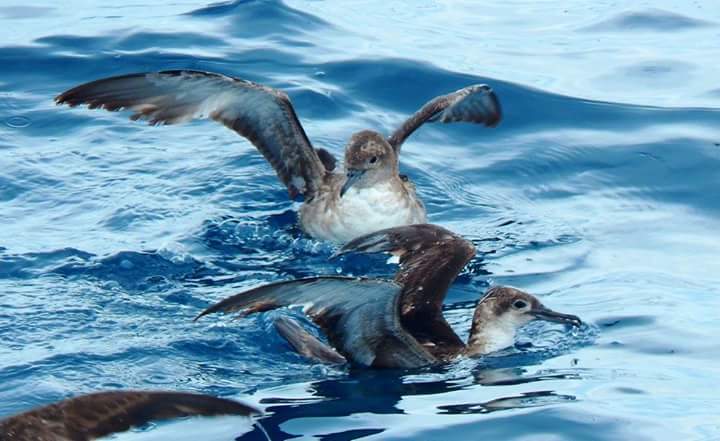
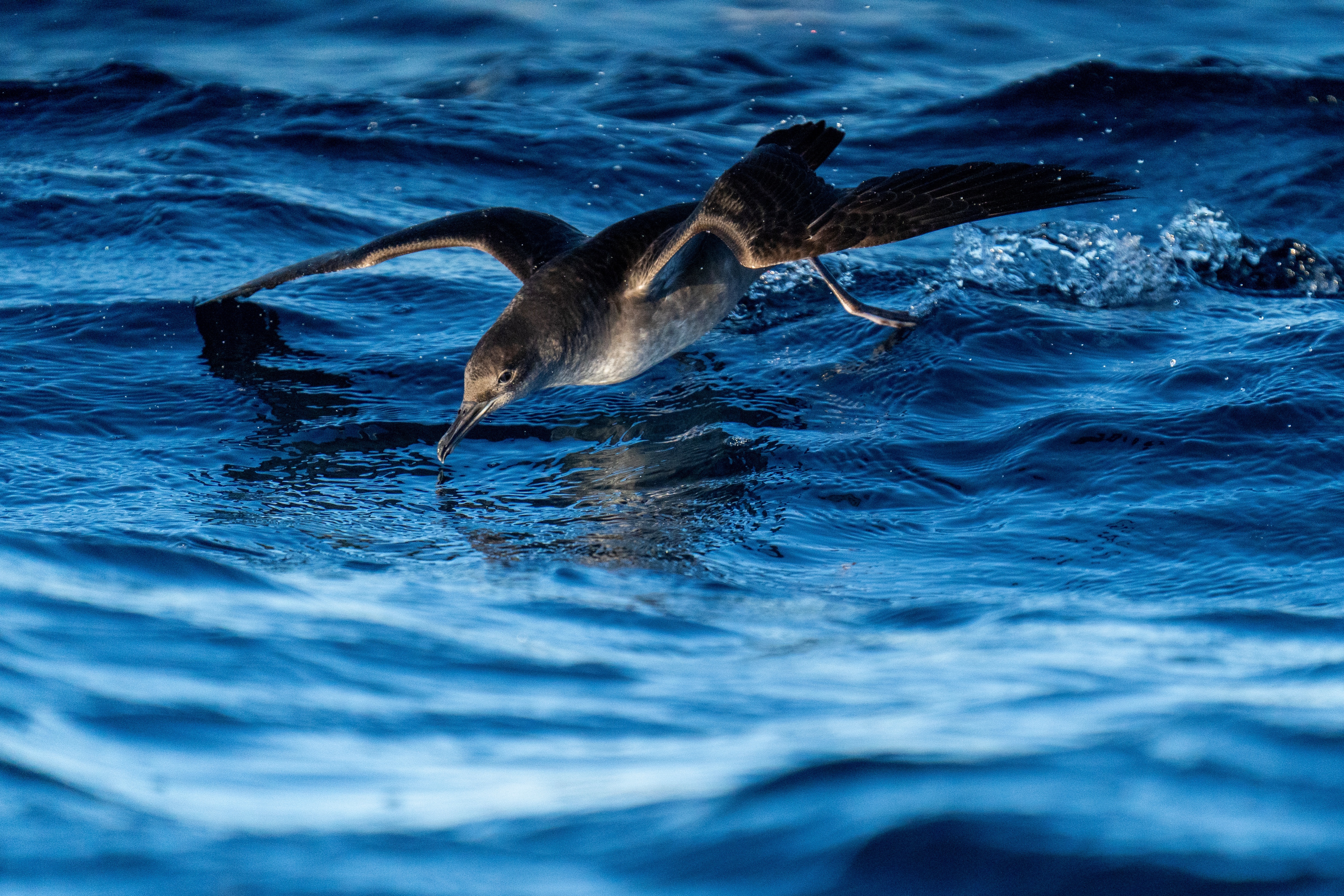
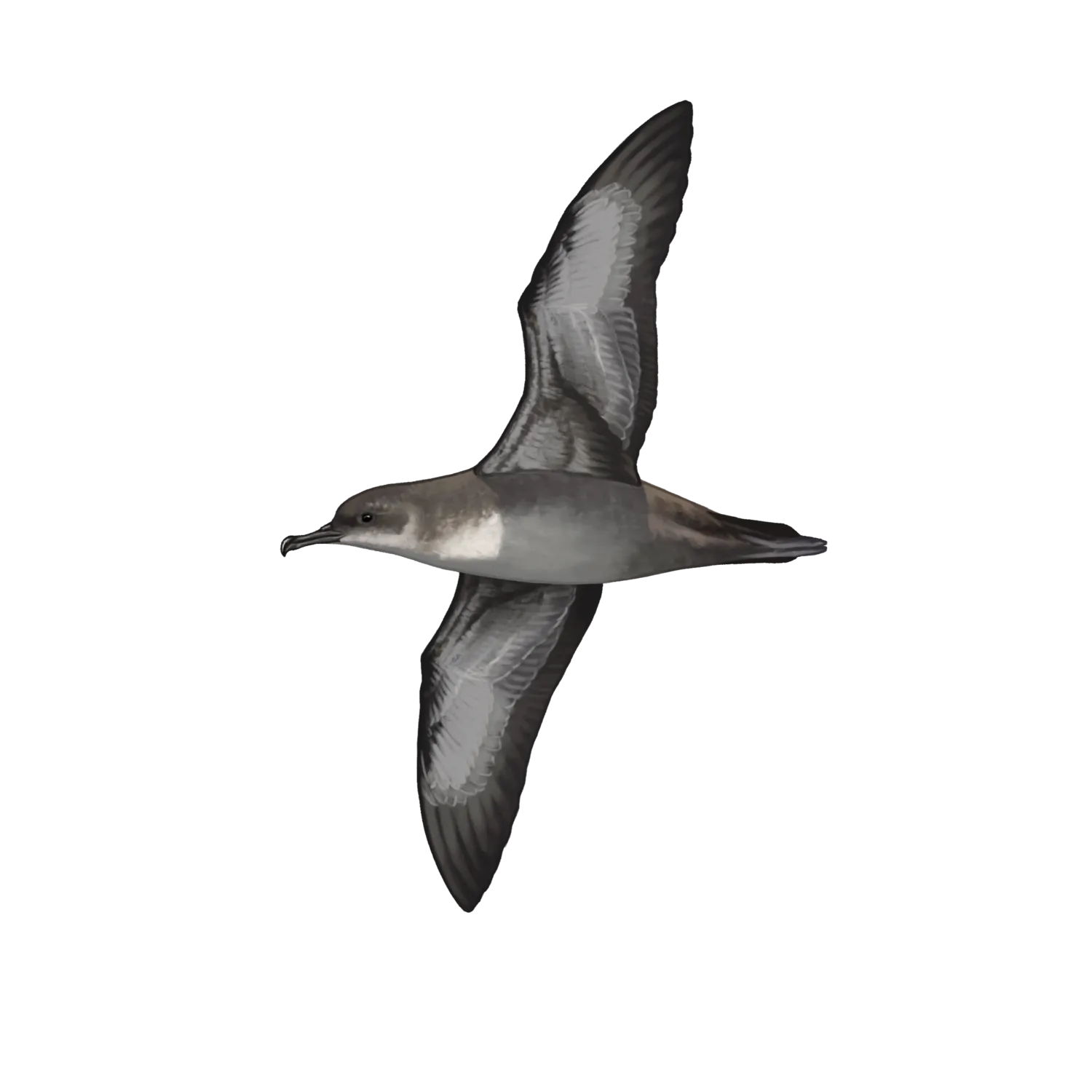
Balearic Shearwater
Scientific name: Puffinus mauretanicus
Family procellariidae
Phenology
- Mainland
- Summering, passage migrant and wintering
- Madeira
- Vagrant
- Azores
- Vagrant
Conservation status
Learn more- Mainland
- Madeira
- Azores
- IUCN Global
Data
Maps
Distribution | Non-breeding
Scale
Minimum value:
Maximum value:
Scale
Minimum value:
Maximum value:
Scale
Minimum value:
Maximum value:
Scale
Minimum value:>
Maximum value:<
Scale
Minimum value:
Maximum value:
Scale
Minimum value:>
Maximum value:>
Distribution based on seabird tracking data (locations/hexagone).
Colony(ies) of origin:
Device:
Data period / number of individuals:
Data period / number of individuals:
Distribution of seabird breeding colonies or sites (number of breeding pairs).
Distribution based on marine censuses (probability of occurrence).
Observed density based on marine censuses (birds/ km2).
Confirmed occurence during marines censuses.
Abundance of waders derived from Project Arenaria coastal surveys (birds/square).
Passage rates derived from RAM coastal surveys (birds/hour).
No data available for the selected period.
Presentation
Distribution, movements and phenology
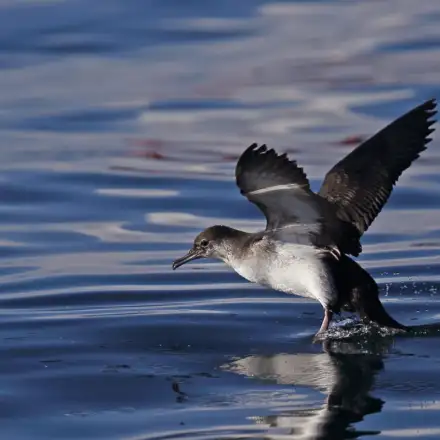
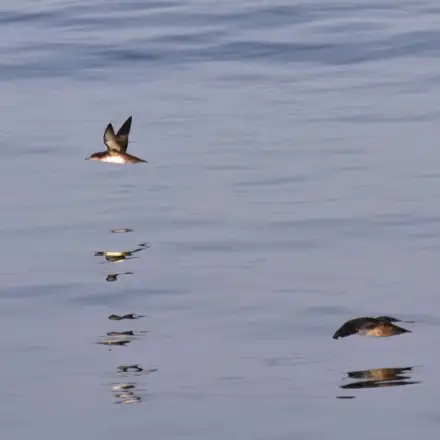
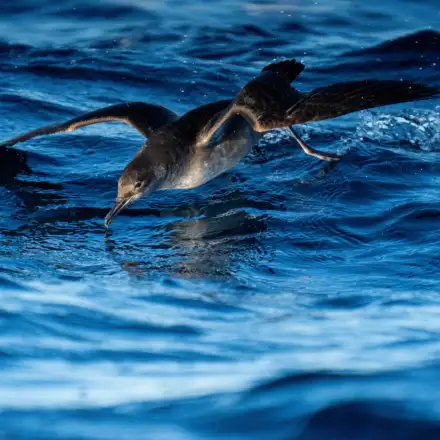
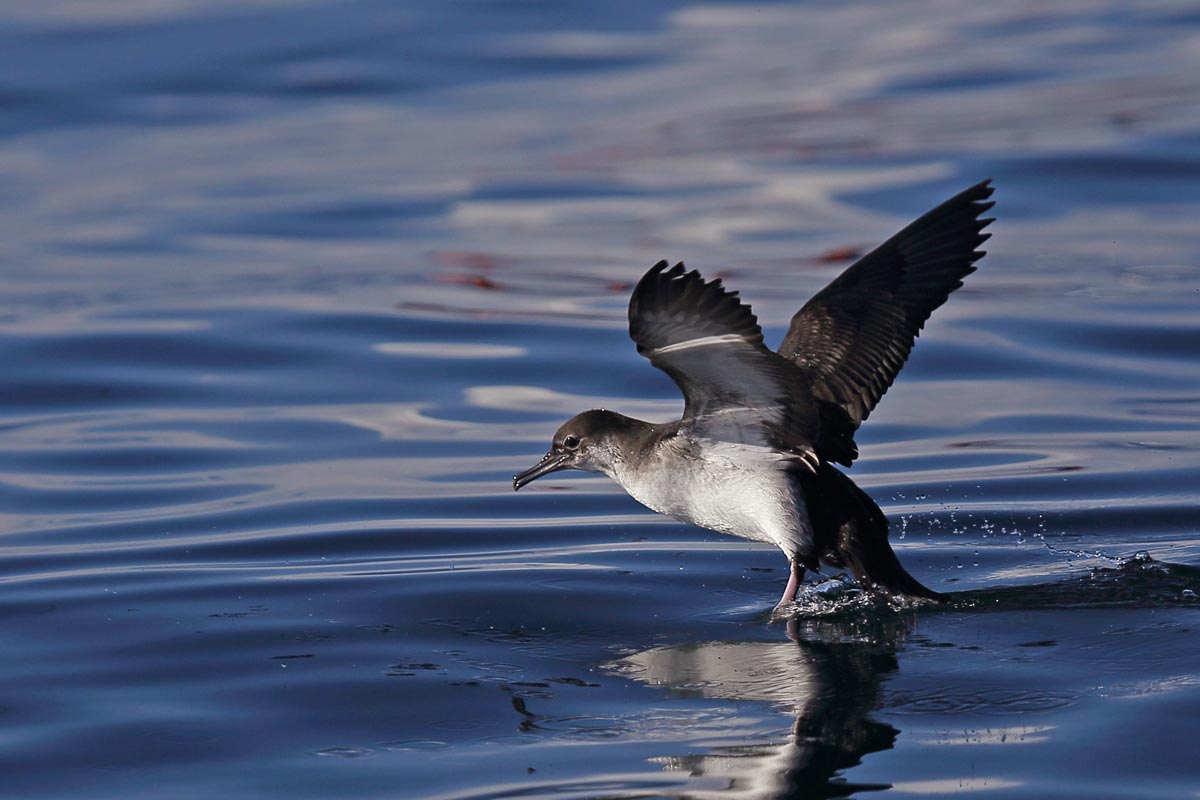
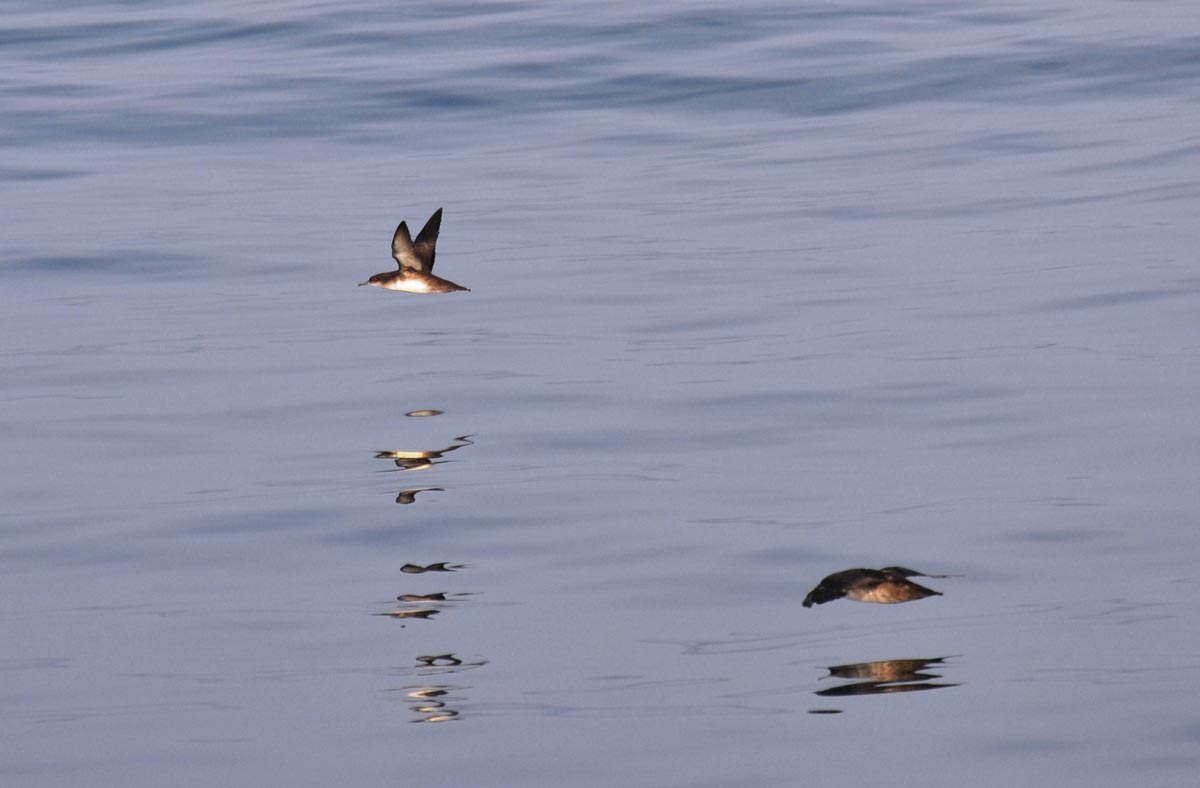
The Balearic Shearwater breeds exclusively on the Balearic Islands (Spain). Some individuals begin arriving at the colonies as early as September, with egg-laying taking place between February and March and the fledging of juveniles in June (Ruíz & Martí 2004). During the non-breeding season, it is mainly concentrated along the Atlantic coasts of South-west Europe, particularly in the waters of Spain, Portugal and France, extending also to the South-west of the United Kingdom, South-east of Ireland, North-west of Morocco and the Western Mediterranean (Arcos et al. 2009; Guilford et al. 2012; De la Cruz et al. 2025). The vast majority of the global population uses Iberian coastal waters as a migratory corridor. During the post-breeding migration, which takes place in summer, a large proportion of breeding adults and juveniles move along the coast of Mainland Portugal (Ruíz & Martí 2004; Guilford et al. 2012). Over 50% of the global population remains in the North-central region of the country to spend the winter there, specifically in the Aveiro-Nazaré SPA (Araújo et al. 2022a). Some birds, likely immatures and non-breeding adults, remain in the region throughout the year. In the Azores and Madeira, its occurrence is quite rare (Meirinho et al. 2014).
Data from 10 birds fitted with GPS between 2000 and 2023, in the Balearic Islands and at sea off France, confirm this distribution.
Abundance and population trends
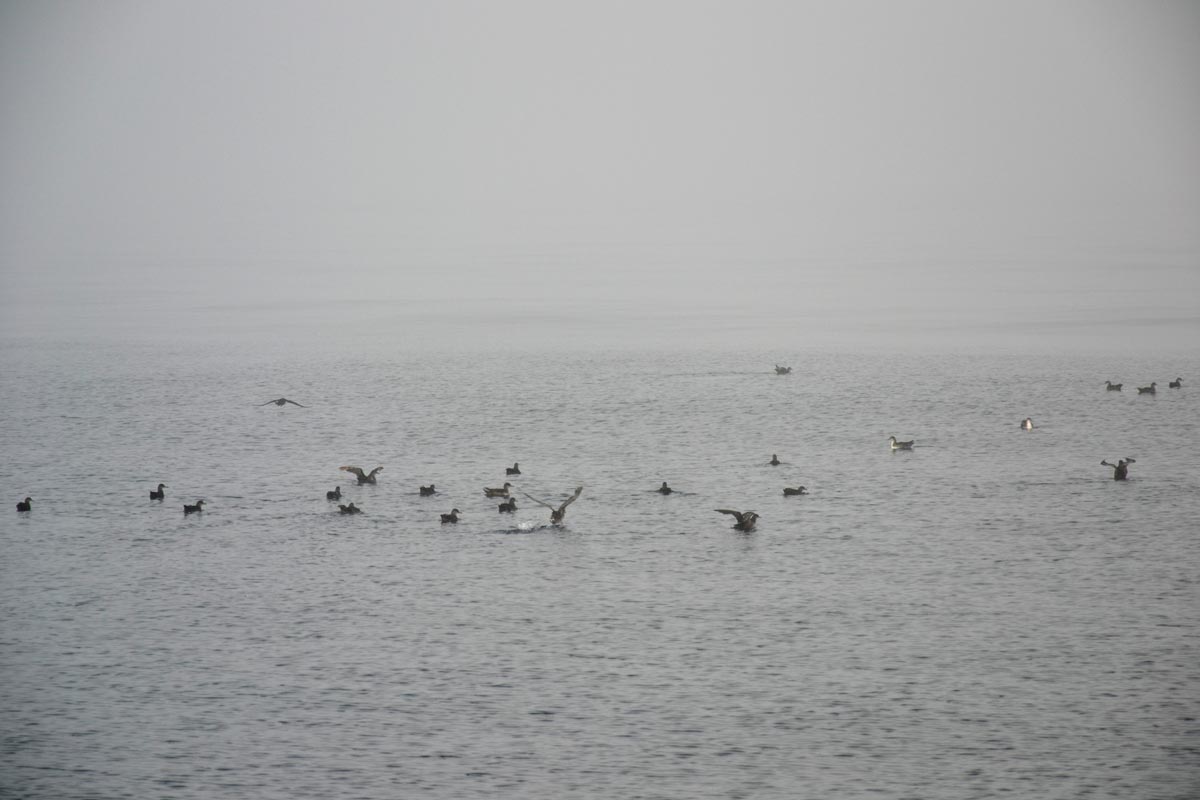
Estimates from colonies indicate a population of fewer than 3,000 pairs (Arcos et al. 2017), but censuses from vessels and coastal counts suggest that the global population may be around 25,000 individuals (Arcos et al. 2012; Arroyo et al. 2016). The species presents a sharp reduction in its breeding population, with a projected annual decline of about 14% (Genovart et al. 2016; Genovart et al. 2019). In Mainland Portugal, the population was estimated at 9,093 to 20,436 individuals between 2010 and 2015 (Araújo et al. 2022a). There are regular concentrations of several hundred birds in Portuguese waters (Catry et al. 2010a). The negative trend of this population, combined with the fact that it has not achieved Good Environmental Status for the abundance indicator on the Mainland, appears to be in line with the global trend. There is no up-to-date information on abundance or population trends for the Azores and Madeira.
Ecology and habitat
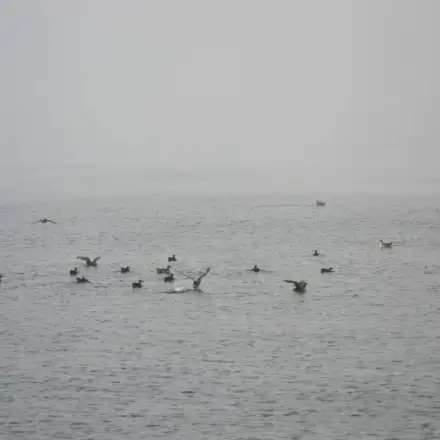
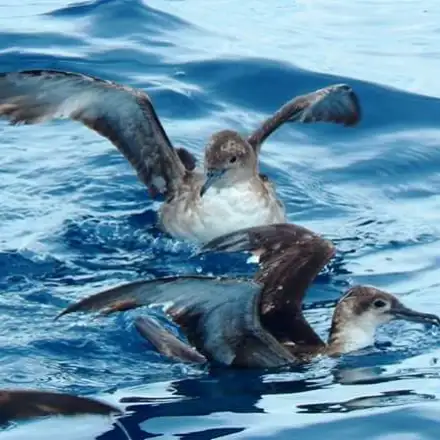
The Balearic Shearwater is a coastal bird that does not occur beyond the continental shelf (Ruíz & Martí 2004). It generally breeds in cavities on small islets and on cliffs. It feeds on small pelagic fish (e.g. anchovies and sardines) and cephalopods, also making use of fishing discards (Navarro et al. 2009). In Portugal, it has been observed feeding in large groups, including on schools of sand eels (Catry et al. 2010a).
Threats and conservation
It is the most threatened seabird species in Europe. The main threats identified are predation of adults by introduced mammals (e.g. cats and rodents), disturbance from human activities, and bycatch in fishing gear, which accounts for almost 50% of mortality (Arcos 2011; Genovart et al. 2016). Although bycatch appears to be irregular, Balearic Shearwater bycatch events have been recorded, mainly in longlines (Arcos & Oro 2004; Cortés et al. 2017) and purse seines, but also in trawls and gillnets (Abelló & Esteban 2012; Oliveira et al. 2015), with some incidents involving over a hundred birds being caught.
- Autor
Ana Almeida
- Owners/sources of tracking data
Arcos & Ruiz 2000a, Arcos & Ruiz 2000b, David Grémillet & Nicolas Courbin (PNA Puffin Baléares), Weimerskirch & Louzao 2012
Ruíz A & Martí R (2004). La Pardela Balear. SEO/BirdLife-Conselleria de Medi Ambient del Govern de les Illes Balears, Madrid. Bibliography:
Oliveira N, Henriques A, Miodonski J, Pereira J, Marujo D, Almeida A, Barros N, Andrade J, Marçalo A, Santos J, Oliveira IB, Ferreira M, Araújo H, Monteiro S, Vingada J, Ramírez I (2015). Seabird bycatch in Portuguese mainland coastal fisheries: An assessment through on-board observations and fishermen interviews. Global Ecology and Conservation 3: 51-61. Bibliography:
Navarro J, Louzao M, Igual JM, Oro D, Delgado A, Arcos JM, Genovart M, Hobson KA & Forero MG (2009). Seasonal changes in the diet of a critically endangered seabird and the importance of trawling discards. Marine Biology 156(12): 2571-2578. Bibliography:
Meirinho A, Barros N, Oliveira N, Catry P, Lecoq M, Paiva V, Geraldes P, Granadeiro JP, Ramírez I & Andrade J (2014). Atlas das Aves Marinhas de Portugal. Sociedade Portuguesa para o Estudo das Aves. Bibliography:
Guilford T, Wynn R, McMinn M, Rodríguez A, Fayet A, Maurice L, Jones A & Meier R (2012). Geolocators reveal migration and pre-breeding behaviour of the critically endangered Balearic shearwater Puffinus mauretanicus. PLoS One 7(3): e33753. Bibliography:
Genovart M, García D, Louzao M & Arcos JM (2019). First conservation diagnosis of the Balearic Shearwater Puffinus mauretanicus in Ibiza. Final report for ACAP. SEO/BirdLife, CSIC y IRBI. Bibliography:
Genovart M, Arcos JM, Álvarez D, McMinn M, Meier R, Wynn RB, Guilford T & Oro D (2016). Demography of the critically endangered Balearic shearwater: the impact of fisheries and time to extinction. Journal of Applied Ecology 53(4): 1158-1168. Bibliography:
De la Cruz A, Pereira JM, Arroyo GM, Ramos JA, Alonso H, Arcos JM, Ramos F, Tornero J, Saavedra C, Vázquez JA, García-Barón I, Astarloa A, Louzao M, Laran S, Dorémus G, Waggitt J & Paiva VH (2025). Global distribution, threats and population trends of the critically endangered Balearic shearwater Puffinus mauretanicus. Biological Conservation 305: 111047. Bibliography:
Cortés V, Arcos JM & González-Solís J (2017). Seabirds and demersal longliners in the northwestern Mediterranean: factors driving their interactions and bycatch rates. Marine Ecology Progress Series 565: 1-16. Bibliography:
Arroyo GM, Mateos-Rodríguez M, Munõz AR, De La Cruz A, Cuenca D & Onrubia A (2016). New population estimates of a critically endangered species, the Balearic Shearwater Puffinus mauretanicus, based on coastal migration counts. Bird Conservation International 26 (1): 87–99. Bibliography:
Arcos JM & Oro D (2004). Pardela Balear (Puffinus mauretanicus). In Madroño A, González C & Atienza JC (eds.). Libro Rojo de las Aves de España. Dirección General para la Biodiversidad-SEO /BirdLife, Madrid: 46-50. Bibliography:
Arcos JM, López I, Alonso J & Mayol J (2017). Study, monitoring, and conservation of the Balearic shearwater in Spain: An update. Fourth Meeting of the Population and Conservation Status Working Group, Agreement on the Conservation of Albatrosses and Petrels. Wellington, New Zealand. 7–8 September 2017. Bibliography:
Arcos JM, Bécares J, Rodríguez B & Ruiz A (2009). Áreas Importantes para la Conservación de las Aves marinas en España. LIFE04NAT/ES/000049. Sociedad Española de Ornitología SEO/BirdLife), Madrid. Bibliography:
Arcos JM, Arroyo G, Bécares J, Mateos-Rodríguez M, Rodríguez B, Muñoz A, Ruiz A, De la Cruz A, Cuenca D & Onrubia A (2012). New estimates at sea suggest a larger global population of the Balearic Shearwater Puffinus mauretanicus. Proceedings of the 13th Medmaravis Pan Mediterranean Symposium: 84–94. Bibliography:
Arcos JM (2011). International species action plan for the Balearic shearwater, Puffinus mauretanicus. SEO /BirdLife & BirdLife International. Bibliography:
Araújo H, Correia-Rodrigues P, Bastos-Santos J, Ferreira M, Pereira AT, Martinez-Cedeira J, Vingada J & Eira C (2022a). Seabird abundance and distribution off western Iberian waters estimated through aerial surveys. Marine Ornithology 50: 71-80. Bibliography:
Abelló P & Esteban A (2012). Trawling bycatch does affect Balearic Shearwaters Puffinus mauretanicus. Revista Catalana D'ornitologia 28: 34-39. Bibliography:
Catry P, Costa H, Elias G & Matias R (2010a). Aves de Portugal, Ornitologia do Território Continental. Assírio e Alvim, Lisboa Data:
Weimerskirch H & Louzao M (2012). Dataset 1637: Balearic Shearwater, Puffinus mauretanicus, PTT, Sa Conillera, Eivissa Island, Spain, 2012. BirdLife International Seabird Tracking Database. Downloaded from https://data.seabirdtracking.org/dataset/1637/ on 30.11.2025. Data:
Arcos JM & Ruiz A (2000b). Dataset 829: Balearic Shearwater, Puffinus mauretanicus, PTT, Ibiza, Balearic Archipelago, Spain, 2000. BirdLife International Seabird Tracking Database. Downloaded from https://data.seabirdtracking.org/dataset/829/ on 30.11.2025. Data:
Arcos JM & Ruiz A (2000a). Dataset 828: Balearic Shearwater, Puffinus mauretanicus, PTT, Formentera, Balearic Archipelago, Spain, 2000. BirdLife International Seabird Tracking Database. Downloaded from https://data.seabirdtracking.org/dataset/828/ on 30.11.2025. Glossary:
A group of marine molluscs that includes squids, cuttlefish and octopuses. Glossary:
Preferred routes and geographical areas where the movement of individuals is concentrated during migrations. Glossary:
Equipment used to catch marine animals, such as nets, longlines or traps. Glossary:
A species or parameter that reflects the state of an ecosystem or environmental changes. Glossary:
The direction of change in the size of a population over time (increase, decline or stability). Glossary:
A small device attached to birds to study their movements at a finer scale (usually during the breeding season). These devices use the Global Positioning System (GPS) to obtain information on position, latitude, longitude and altitude at any point on Earth, using a network of orbiting satellites. Glossary:
Refers to the unintentional capture of marine species during fishing. Animals may become entangled in hooks or fishing nets. It is usually associated with commercial fishing, but can also occur in recreational fishing. Bycatch is one of the main threats to seabirds at sea. Glossary:
An area of Community importance where measures are applied to maintain or restore the conservation status of populations of wild bird species listed in Annex I of the Birds Directive. These are intended for the species mentioned in that annex and aim to ensure their survival and breeding, the conservation of their eggs, nests and habitats, as well as for migratory bird species not referred to in that annex but which occur regularly within the national territory. Glossary:
The portion of the catch taken by commercial fishing vessels that is returned to the sea, often dead or dying. Discarded fish often belong to species of no commercial value, individuals below the minimum legal landing size, or individuals whose landing is not permitted, for example due to quota restrictions. Discards may also consist of parts of the catch, namely offal and heads, which, after on-board processing, are rejected and discarded at sea. Discards have a strong impact on marine ecosystems and influence many aspects of the distribution, foraging behaviour and population dynamics of seabirds, particularly species and individuals that habitually follow vessels. Glossary:
A static net, often nearly invisible and with variable mesh size, used to catch a wide variety of fish. It is set in the sea at varying depths and later retrieved. It is a non-selective fishing gear that frequently catches seabirds, marine mammals and reptiles. Glossary:
A typically small-mesh, highly visible net used by purse seiners to catch small pelagic fish such as sardines or mackerel. After locating a school, the net is deployed from a vessel and encircles it completely, preventing the fish from escaping, and is then hauled in. When properly operated, it is a selective fishing gear. Glossary:
Referring to the period following breeding. Glossary:
The portion of the seabed that begins at the coastline and slopes gently downwards to the continental slope (where the slope is much steeper). On average, the continental shelf extends to a depth of 200 metres. Glossary:
The area or environment where organisms that do not depend on the seafloor normally live. It is the typical ecological environment of open ocean waters. The pelagic ecosystem does not include only the open sea; it also comprises the waters covering the continental shelf. The pelagic zone begins below the influence of tides and extends into the open ocean, at depths ranging from a few tens of metres to approximately 6,000 metres, and is divided into different layers. Glossary:
A fishing gear consisting of a main line (mother line) from which secondary lines with hooks attached branch off. It is left in the sea and can be placed on the seabed to catch deep-sea species (e.g. scabbardfish) or at the surface to catch large pelagic fish (e.g. swordfish). Glossary:
A period generally corresponding to the winter months, which may include part of autumn. Glossary:
A generic common name given to various species of bony fish of the genus Ammodytes. Glossary:
A term generally applied to a species introduced deliberately or accidentally into a specific location or region outside its original range. Depending on its adaptation to the new environment, an introduced species may or may not become naturalised and proliferate. Glossary:
A small bony fish of the family Engraulidae, whose scientific name is Engraulis encrasicolus, also known as the European anchovy.