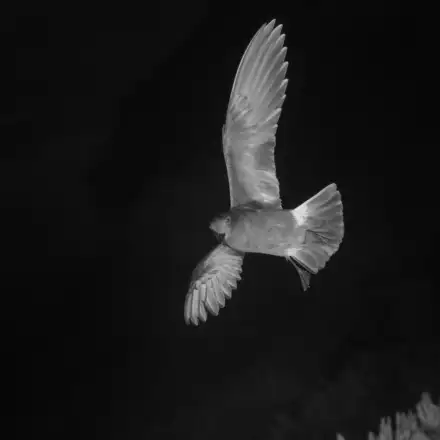
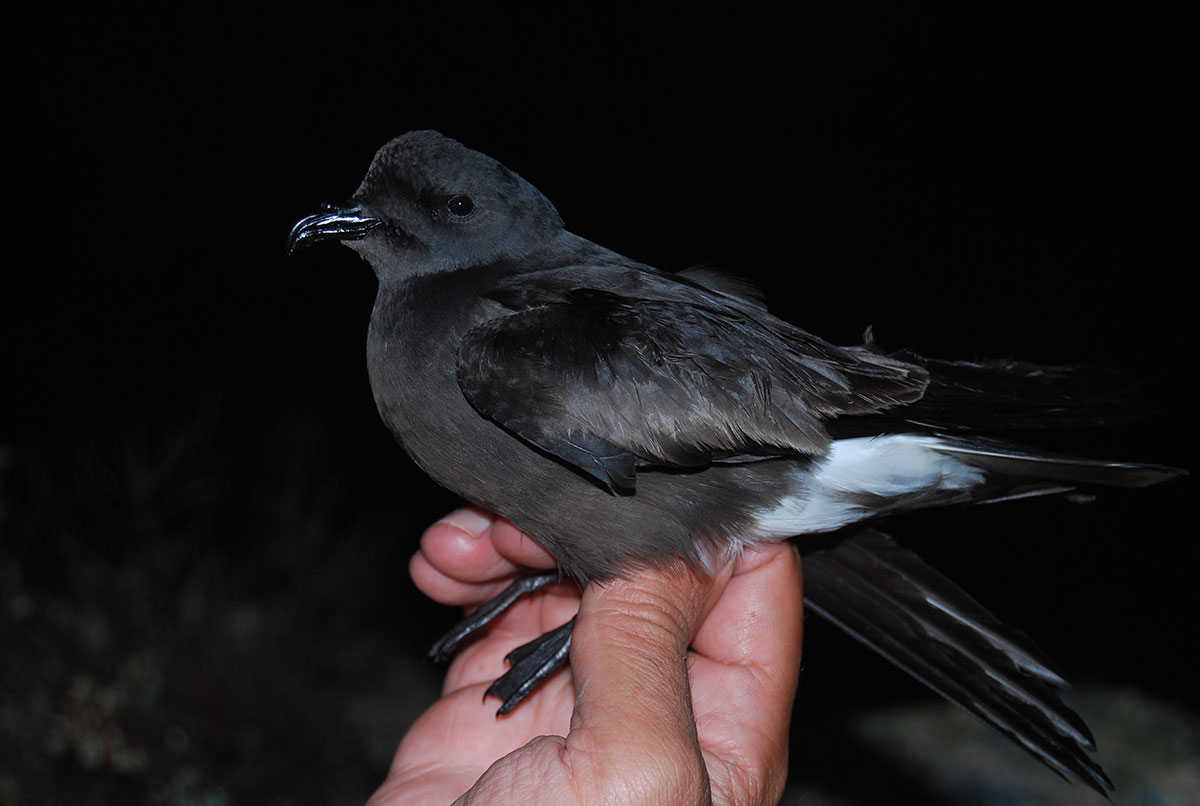
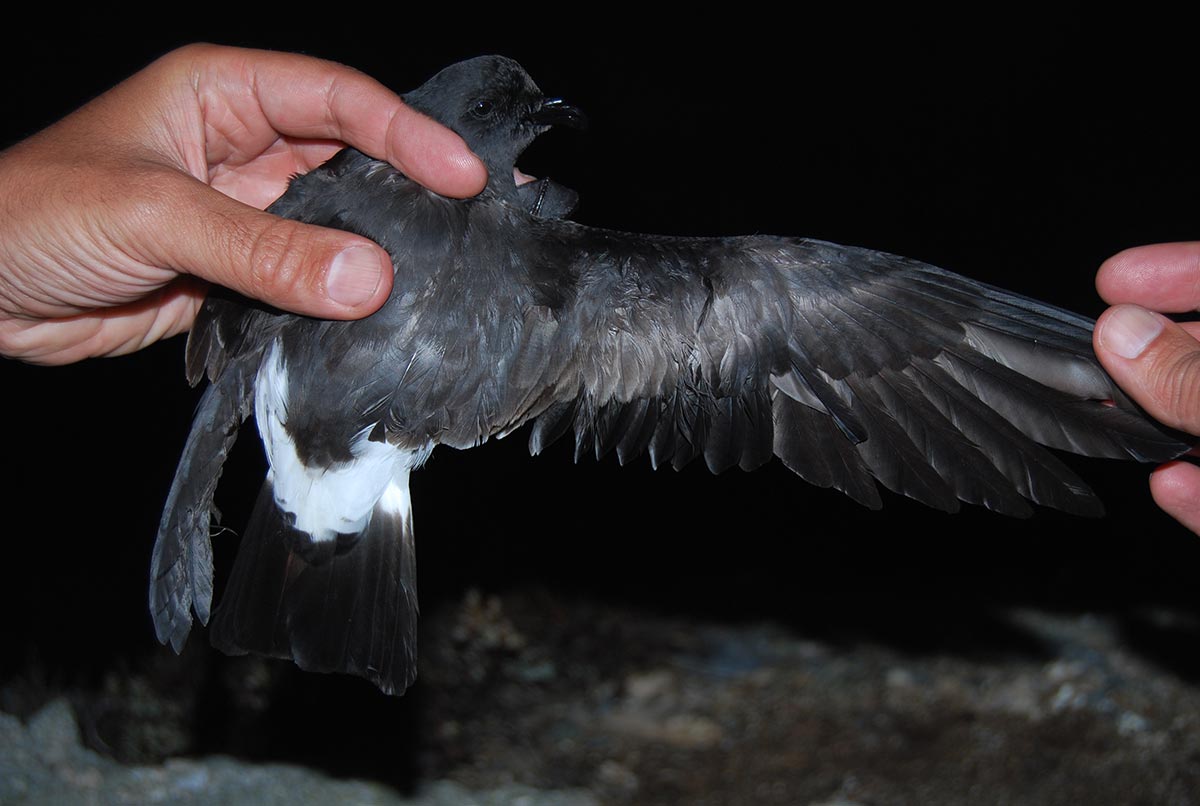
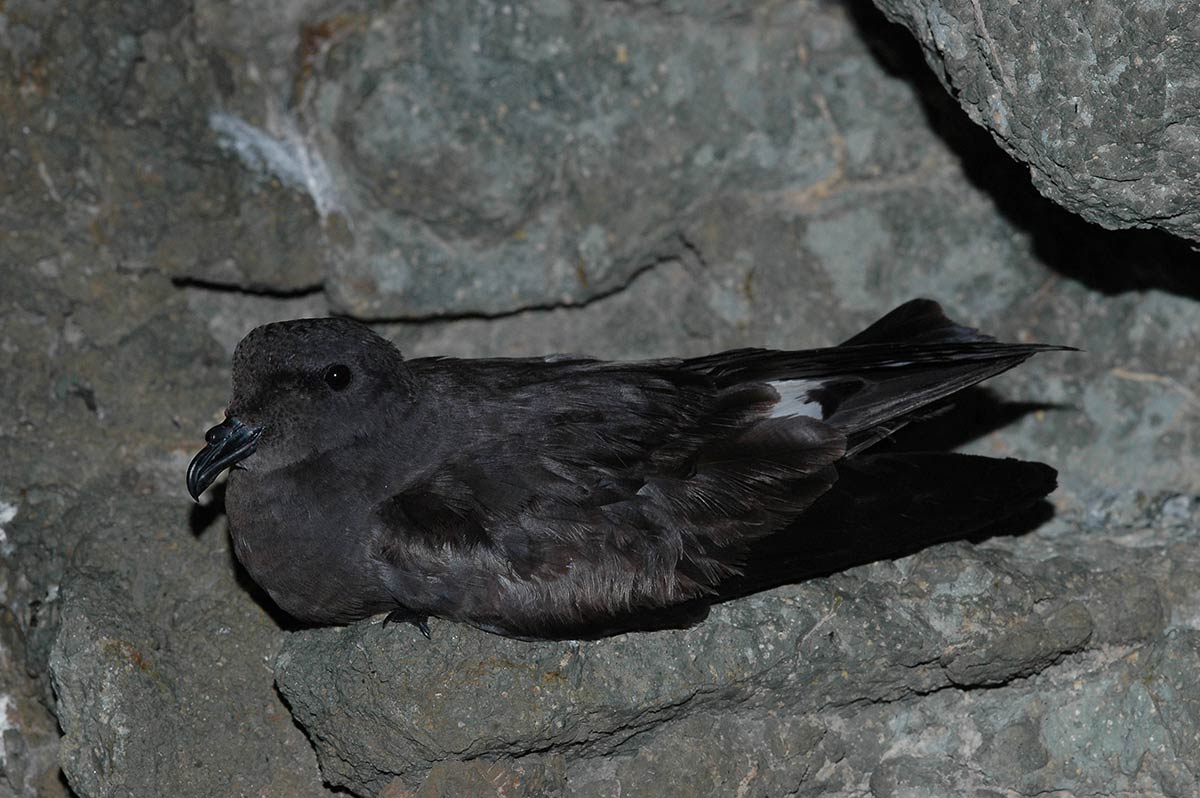
Band-rumped Storm-petrel
Scientific name: Hydrobates castro
Family hydrobatidae
Phenology
- Mainland
- Winter breeder
- Madeira
- Summer and winter breeder
- Azores
- Winter breeder
Conservation status
Learn more- Mainland
- Madeira
- Azores
- IUCN Global
Data
Maps
Distribution | Breeding
Scale
Minimum value:
Maximum value:
Scale
Minimum value:
Maximum value:
Scale
Minimum value:
Maximum value:
Scale
Minimum value:>
Maximum value:<
Scale
Minimum value:
Maximum value:
Scale
Minimum value:>
Maximum value:>
Distribution based on seabird tracking data (locations/hexagone).
Colony(ies) of origin:
Device:
Data period / number of individuals:
Data period / number of individuals:
Distribution of seabird breeding colonies or sites (number of breeding pairs).
Distribution based on marine censuses (probability of occurrence).
Observed density based on marine censuses (birds/ km2).
Confirmed occurence during marines censuses.
Abundance of waders derived from Project Arenaria coastal surveys (birds/square).
Passage rates derived from RAM coastal surveys (birds/hour).
No data available for the selected period.
Presentation
Distribution, movements and phenology
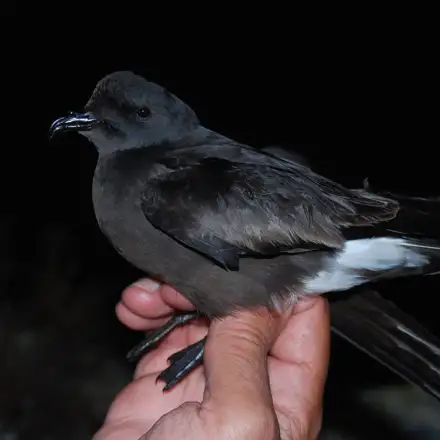
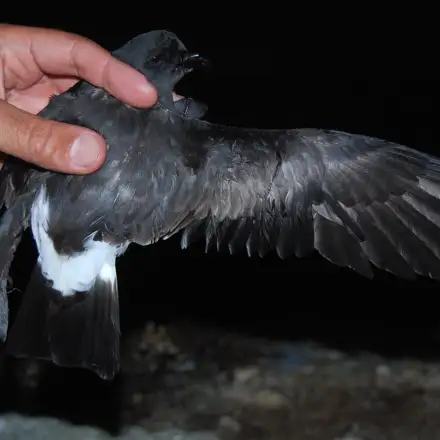
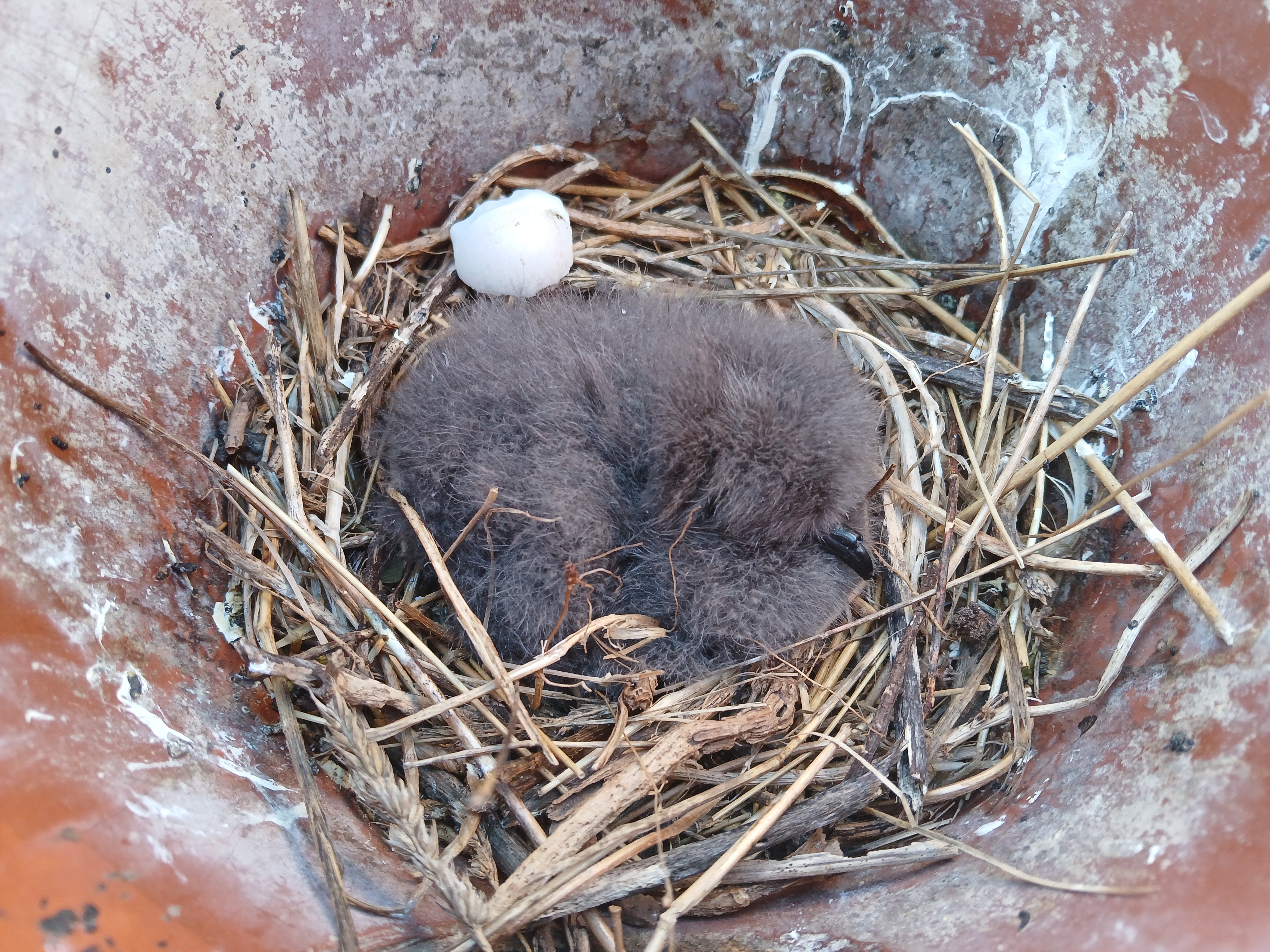
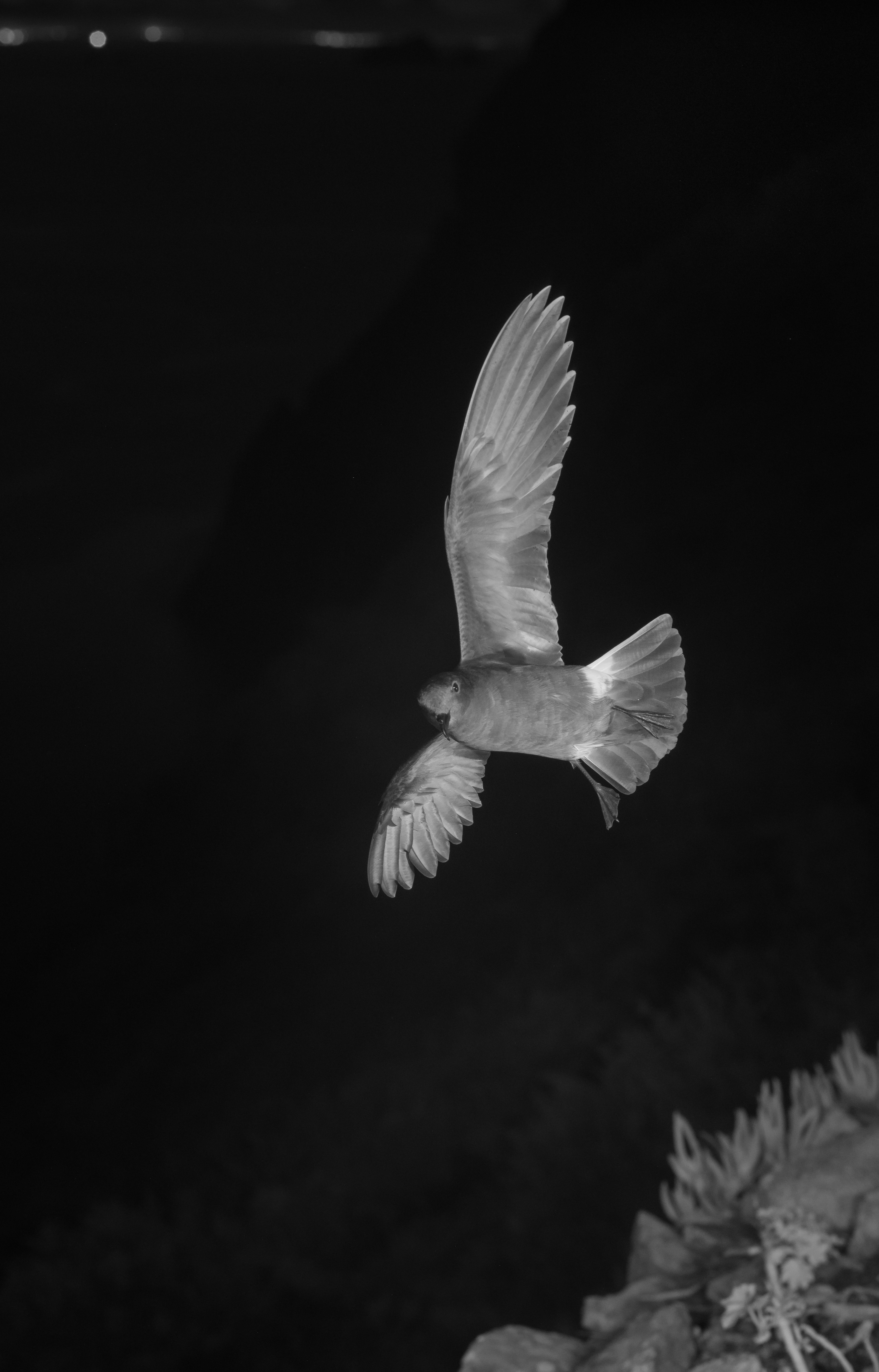
The Band-rumped Storm-petrel breeds in the Atlantic, specifically on the Berlengas, the Azores, Madeira (Portugal), Ascension and St Helena. In the Pacific, it breeds off the coast of Japan, in Hawaii and in the Galápagos (Billerman et al. 2026). In Madeira, there are two populations with distinct breeding seasons: a summer population, which breeds between March and October, and a winter population, which breeds between September and February (Granadeiro et al. 1998; Nunes 2000). In the remaining Portuguese colonies, the species breeds only in winter. Colonies have been identified on Farilhão Grande and Berlenga Island on the Mainland, on the island of Madeira, the Desertas and Selvagens islands in Madeira, and on Santa Maria, Graciosa, São Jorge, Terceira, São Miguel, Flores and Corvo in the Azores (Equipa Atlas 2022; Pipa et al. 2023). Based on the individual tracking of 22 birds fitted with GPS, from the colonies on the islet of Praia (Terceira) and Farilhão Grande, extensive use of the Portuguese EEZ was observed during the breeding season, particularly in the subregions of origin of the populations, the Azores and the Mainland. These birds showed a preference for marine areas situated north of their respective colonies, although some of them also appear to use waters further south as far as the coast of Morocco (Carreiro et al. 2020). After breeding, both summer and winter breeding birds migrate to the east coast of Central America and the Gulf of Mexico (Raül Ramos & Beñat Garcia-Urdangarin pers. comm.).
Abundance and population trends
The global population has been estimated at around 150,000 mature individuals, with a declining trend. The European population, meanwhile, has been estimated at between 6,600 and 6,900 pairs (BirdLife International 2025).
In Mainland Portugal, the population numbers around 420 to 784 pairs (Equipa Atlas 2022), showing interannual fluctuations (Oliveira et al. 2025a). In the Azores, the breeding population was estimated at between 664 and 1,173 pairs at the end of the 2010s, using passive acoustic monitoring, with evidence of a recent decline (Pipa & Silva 2021; Pipa et al. 2023; Pipa et al. 2024). For Madeira, there are no precise estimates of the size of the breeding populations, with a minimum of 5,000 pairs assumed (Equipa Atlas 2022). Despite fluctuations or declines, the populations on the Mainland and in the Azores have achieved Good Environmental Status for the abundance and productivity indicators.
Ecology and habitat
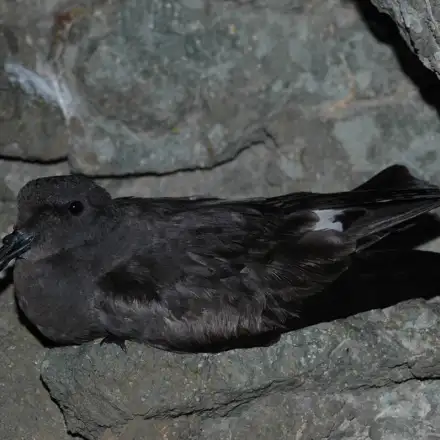
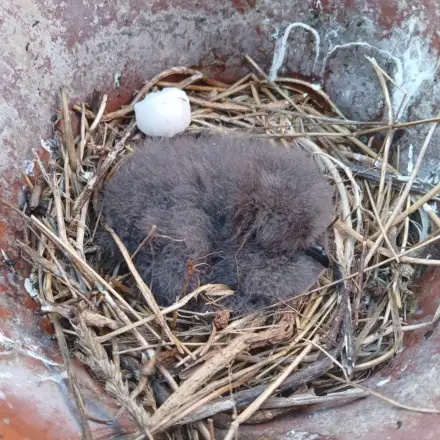
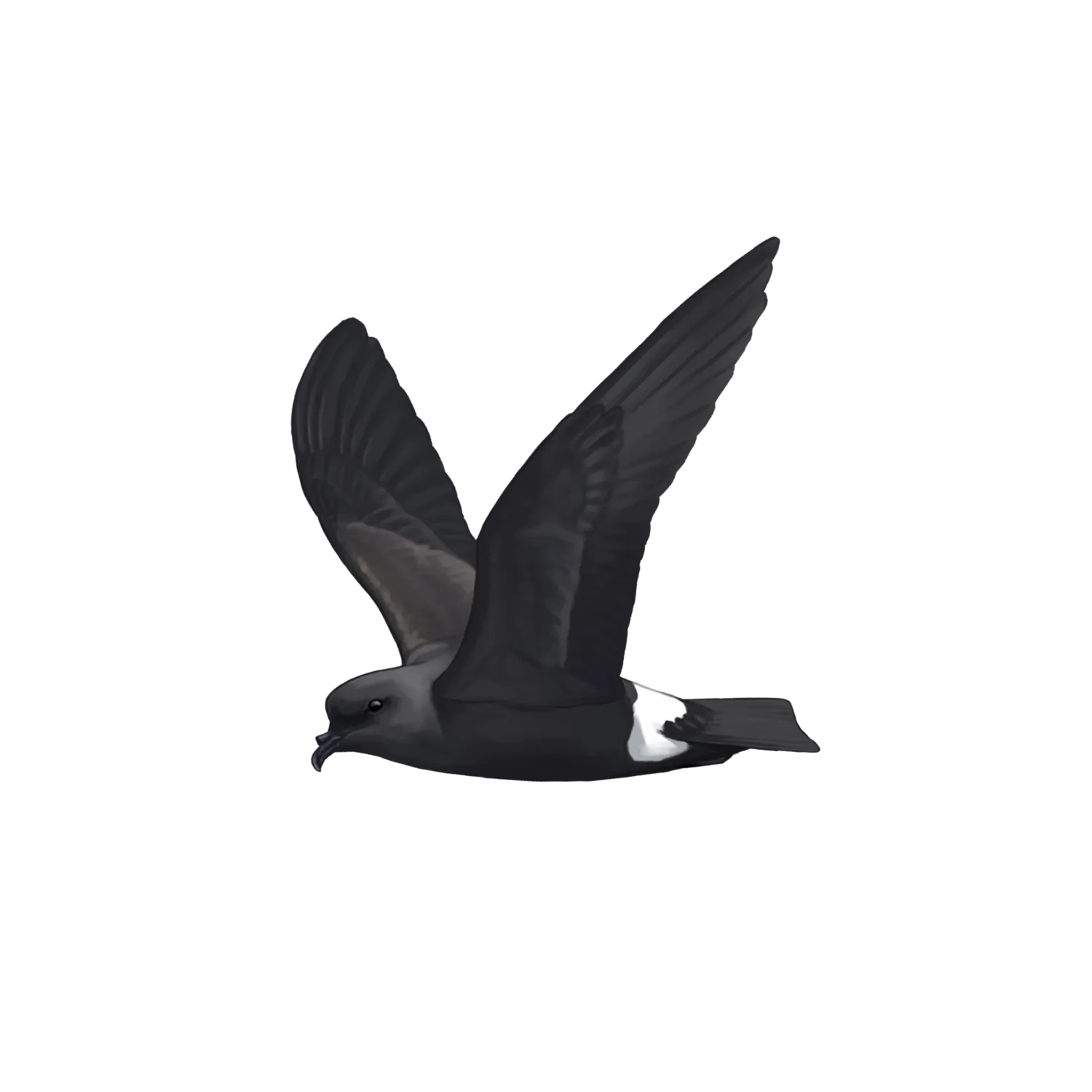
The Band-rumped Storm-petrel is a pelagic species, spending most of its annual life cycle in the open sea. Its diet consists of small pelagic fish of the Gadidae family, as well as cephalopods and deep-sea fish of the Myctophidae family; it may also feed on food scraps and fishing discards (Monteiro et al. 1996b; Carreiro et al. 2020; Billerman et al. 2026). It nests in small cavities or crevices in rocks, on islands and islets.
Threats and conservation
The presence of introduced mammals in the colonies, such as rats and cats, poses a serious threat through the predation of eggs, chicks and even adults, and may also lead to the abandonment of nesting sites (Monteiro et al. 1999; Raine et al. 2017). Predation by other animals, including wall lizards, Yellow-legged Gulls Larus michahellis and nocturnal birds of prey, may also contribute to local declines (Matias & Catry 2010; Bried & Neves 2015; Oliveira et al. 2023a). Light pollution can cause disorientation and collisions with structures, but the species appears to have low susceptibility to this threat (Rodriguez & Rodriguez 2009; Raine et al. 2017).
- Autores
Tânia Pipa, Ben Porter, Hannah F. R. Hereward, Verónica Neves
- Owners/sources of tracking data
SPEA BirdLife, Porter et al. 2019, Porter et al. 2020
Rodríguez A & Rodríguez B (2009). Attraction of petrels to artificial lights in the Canary Islands: effects of the moon phase and age class: Petrel attraction to lights. Ibis 151: 299-310. Bibliography:
Raine AF, Boone M, McKown M & Holmes N (2017). The breeding phenology and distribution of the band-rumped storm-petrel (Oceanodroma castro) on Kaua'I and Lehua Islet, Hawaiian Islands. Marine Ornithology 45: 73-82. Bibliography:
Pipa T, Silva C, Atchoi E, Hervías-Parejo S, Oliveira N, Ramírez J & Martín A (2023). Estimativa populacional bioacústica de roque-de-castro Hydrobates castro e painho-de-monteiro Hydrobates monteiroi nos Açores. XI Congresso SPEA II Jornadas da Macaronésia. São Miguel, Açores, 22-26 Novembro 2023. Bibliography:
Pipa T & Silva C (2021) Projeto LuMinAves (2017-2020): Reduzir o impacto da luz artificial nas aves marinhas. Lisboa (unpublished report). Bibliography:
Pipa T, Martins B, Silva C, Heber S, Magalhães M, Carriço R, Câmara R, Lourenço J, Aguiar L, Cunha B, Raposo P, Raposo A, Coelho R, Huamán M, Pinto F, Sequeira R, Carreira G, Pereira D & De la Cruz A (2024). Monitorização de aves marinhas Procellariiformes 2020-2023: Relatório da Ação D5.1. Projeto LIFE IP AZORES NATURA - LIFE17 IPE/PT/00010. Unpublished report. Bibliography:
Oliveira N, Almeida A, Alonso H, Bouça A, Costa M, Crisóstomo P, Leandro S, Mendes RN, Morais L, Mouga T, Mourato E, Nascimento T, Paiva VH, Silva CP & Andrade J (2025a). 5-years after-Life Berlengas: Conservation efforts and monitoring in Berlengas Archipelago (2019-2024). Project LIFE Berlengas. Sociedade Portuguesa para o Estudo das Aves, Lisboa. Bibliography:
Oliveira N, Abreu P, Alonso H, Fagundes AI, Macq A, Geraldes PL & Andrade J (2023a). The Effect of Environmental Conditions on Captures, Survival and Breeding Success of a Winter-Breeding Seabird. Ardea 111(2): 487-500. Bibliography:
Nunes M (2000). Madeiran Storm-petrel in the Desertas Islands (Madeira Archipelago): a new case of two distinct populations breeding annually? Arquipélago. Life and Marine Sciences Supplement 2 (Part A): 175-180. Bibliography:
Monteiro LR , Ramos JA, Pereira JC, Monteiro PR, Feio RS, Thompson DR, Bearshop S, Furness RW, Laranjo M, Hilton G, Neves VC, Groz MP & Thompson KR (1999). Status and distribution of Fea’s Petrel, Bulwer’s Petrel, Manx Shearwater, Little Shearwater and Band-rumped Storm-Petrel in the Azores Archipelago. Waterbirds 22(3): 358-366. Bibliography:
Monteiro LR , Ramos JA, Furness RW & Del Nevo A J (1996b). Movements, morphology, breeding, molt, diet and feeding of seabirds in the Azores. Colonial Waterbirds 19(1): 82-97. Bibliography:
Granadeiro JP, Grade N, Lecoq M, Morais L, Santos C & Silva MC (1998). Breeding Madeiran Storm-petrels Oceanodroma castro on the Farilhões islands, Portugal. Proceedings of the IV Mediterranean Seabird Symposium: Seabird Ecology and Coastal Zone Management in the Mediterranean. Bibliography:
Equipa Atlas (2022). III Atlas das Aves Nidificantes de Portugal (2016-2021). SPEA, ICNF, LabOr/UÉ, IFCN. Portugal. Bibliography:
Carreiro AR, Paiva VH, Medeiros R, Franklin KA, Oliveira N, Fagundes AI & Ramos JA (2020) Metabarcoding, stables isotopes, and tracking: unraveling the trophic ecology of a winter-breeding storm petrel (Hydrobates castro) with a multimethod approach. Marine Biology 167:14. Bibliography:
Bried J & Neves VC (2015). Habitat restoration on Praia islet, Azores archipelago, proved successful for seabirds, but new threats have emerged. Airo 23: 25-36. Bibliography:
BirdLife International (2025). IUCN Red List for birds. Downloaded from https://datazone.birdlife.org on 30.11.2025. Bibliography:
Billerman SM, Keeney BL, Kirwan GM, Medrano F, Sly ND & Smith MG (eds.) (2026). Birds of the World. Cornell Laboratory of Ornithology, Ithaca, NY, USA. Bibliography:
Matias R & Catry P (2010). The diet of Atlantic yellow-legged gulls (Larus michahellis atlantis) at an oceanic seabird colony: estimating predatory impact upon breeding petrels. European Journal of Wildlife Research 56: 861-869 Data:
Porter B, Hereward HFR & Neves V (2020). Dataset 1551: Band-rumped Storm-petrel, Hydrobates castro, GPS, Praia Islet, Azores, Portugal, 2019–2020. BirdLife International Seabird Tracking Database. Downloaded from https://data.seabirdtracking.org/dataset/1551/ on 30.11.2025. Data:
Porter B, Hereward HFR & Neves V (2019). Dataset 1550: Band-rumped Storm-petrel, Hydrobates castro, GPS, Praia Islet, Azores, Portugal, 2019. BirdLife International Seabird Tracking Database. Downloaded from https://data.seabirdtracking.org/dataset/1550/ on 30.11.2025. Glossary:
Individuals capable of breeding, used as a reference in population estimates. Glossary:
A group of marine molluscs that includes squids, cuttlefish and octopuses. Glossary:
Alteration of natural night-time light levels due to artificial lighting. Glossary:
A species or parameter that reflects the state of an ecosystem or environmental changes. Glossary:
Monitoring the movements of individuals using tracking devices. Glossary:
The direction of change in the size of a population over time (increase, decline or stability). Glossary:
A measure of a population’s breeding success, generally expressed as the average number of chicks produced per pair. Glossary:
A concept defined under the Marine Strategy Framework Directive (MSFD), referring to the condition of the elements of the marine environment, including birds. It aims to assess whether ecosystems are healthy, balanced and capable of supporting ecological functions and human uses in a sustainable manner. The ultimate goal is for the components and ecosystems to achieve Good Environmental Status. Glossary:
A small device attached to birds to study their movements at a finer scale (usually during the breeding season). These devices use the Global Positioning System (GPS) to obtain information on position, latitude, longitude and altitude at any point on Earth, using a network of orbiting satellites. Glossary:
Under the United Nations Convention on the Law of the Sea, coastal states are entitled to declare an EEZ comprising maritime area beyond their territorial waters. The national EEZ is delimited by an imaginary line situated 200 nautical miles from the coast, separating national waters from international or shared waters. Within its EEZ, each state has rights such as the exploitation of marine resources, the conduct of scientific research and the regulation of fishing by foreign vessels. Glossary:
The portion of the catch taken by commercial fishing vessels that is returned to the sea, often dead or dying. Discarded fish often belong to species of no commercial value, individuals below the minimum legal landing size, or individuals whose landing is not permitted, for example due to quota restrictions. Discards may also consist of parts of the catch, namely offal and heads, which, after on-board processing, are rejected and discarded at sea. Discards have a strong impact on marine ecosystems and influence many aspects of the distribution, foraging behaviour and population dynamics of seabirds, particularly species and individuals that habitually follow vessels. Glossary:
The area or environment where organisms that do not depend on the seafloor normally live. It is the typical ecological environment of open ocean waters. The pelagic ecosystem does not include only the open sea; it also comprises the waters covering the continental shelf. The pelagic zone begins below the influence of tides and extends into the open ocean, at depths ranging from a few tens of metres to approximately 6,000 metres, and is divided into different layers. Glossary:
A term generally applied to a species introduced deliberately or accidentally into a specific location or region outside its original range. Depending on its adaptation to the new environment, an introduced species may or may not become naturalised and proliferate.