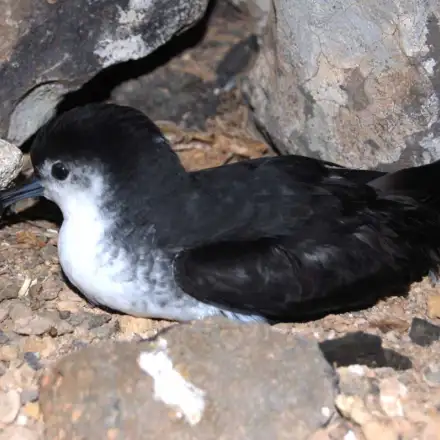
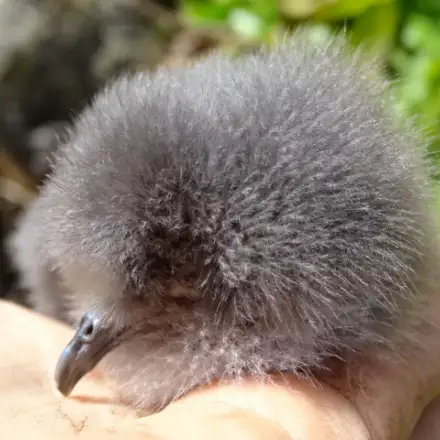
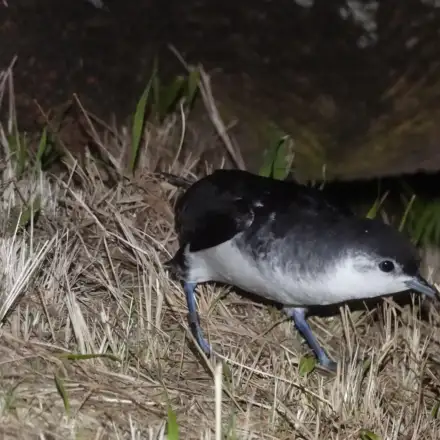
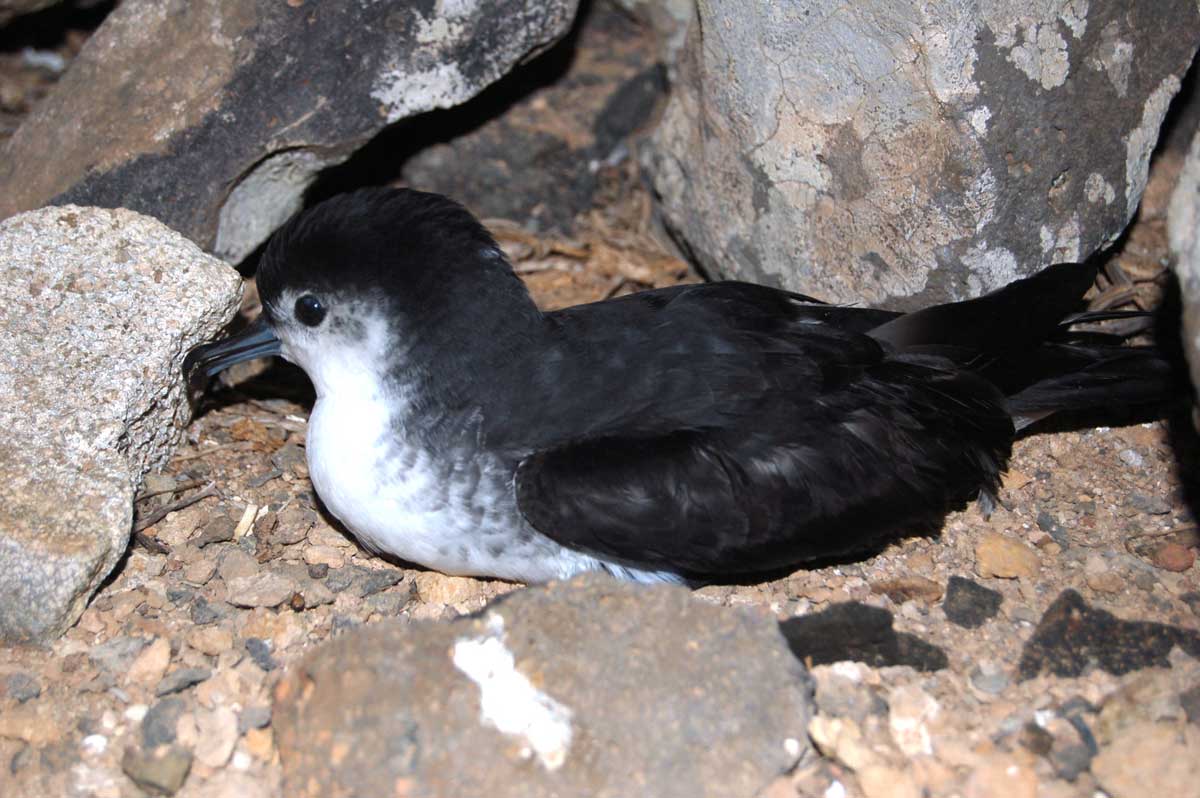
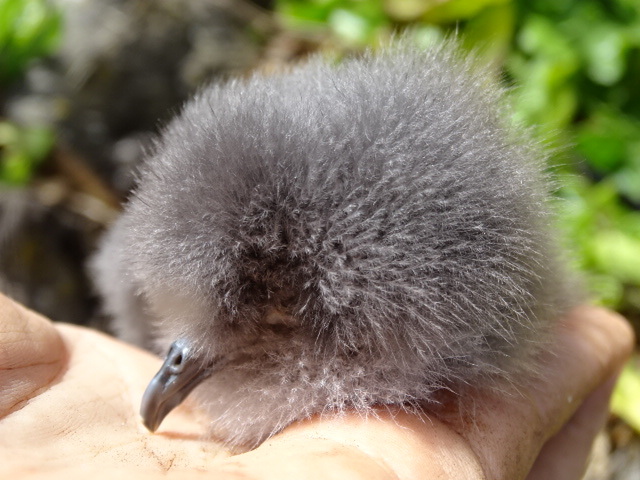
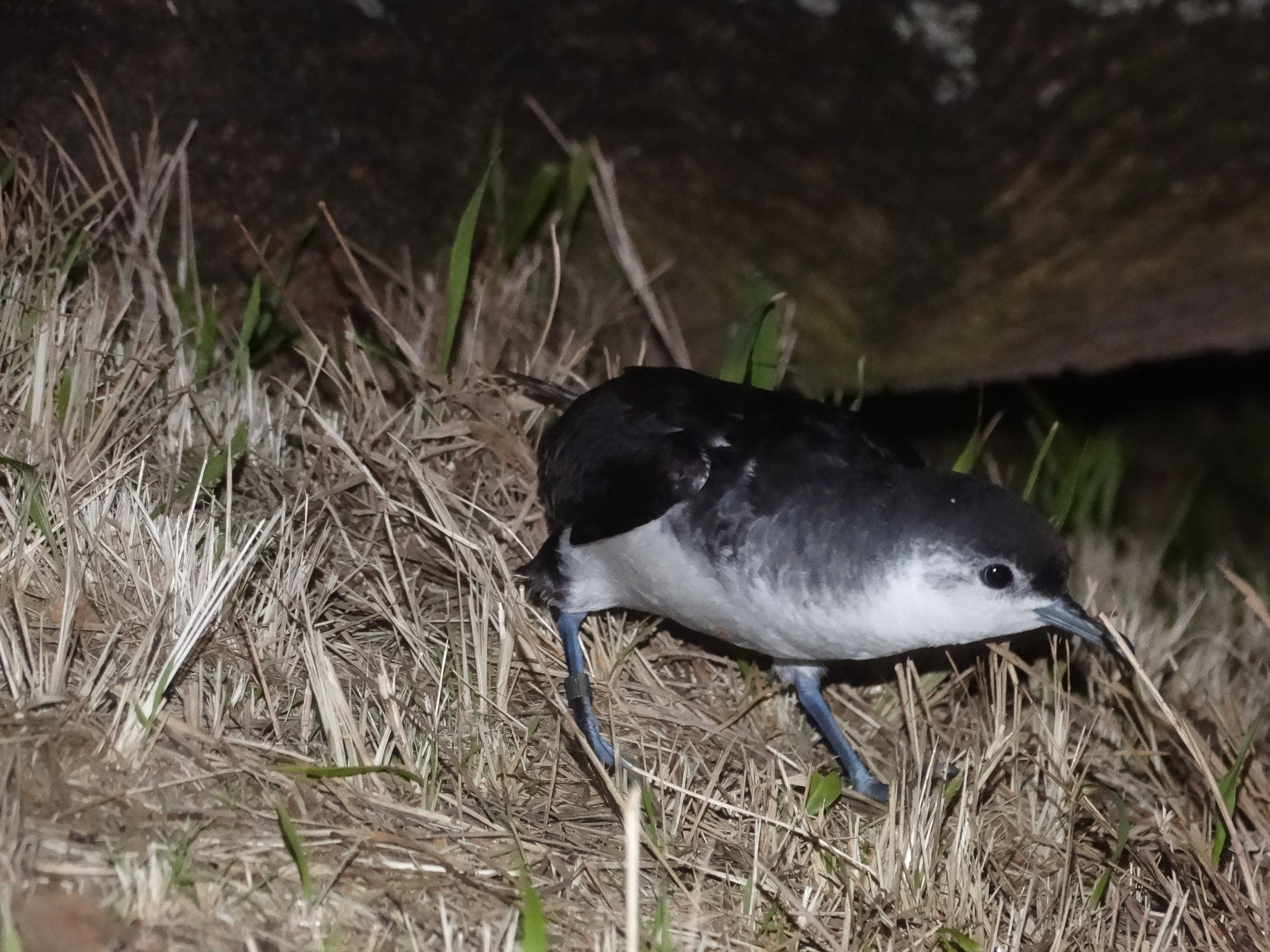
Barolo Shearwater
Scientific name: Puffinus baroli
Family procellariidae
Phenology
- Mainland
- Summering and wintering
- Madeira
- Resident
- Azores
- Resident
Conservation status
Learn more- Mainland
- Madeira
- Azores
- IUCN Global
Data
Maps
Distribution | Breeding
Scale
Minimum value:
Maximum value:
Scale
Minimum value:
Maximum value:
Scale
Minimum value:
Maximum value:
Scale
Minimum value:>
Maximum value:<
Scale
Minimum value:
Maximum value:
Scale
Minimum value:>
Maximum value:>
Distribution based on seabird tracking data (locations/hexagone).
Colony(ies) of origin:
Device:
Data period / number of individuals:
Data period / number of individuals:
Distribution of seabird breeding colonies or sites (number of breeding pairs).
Distribution based on marine censuses (probability of occurrence).
Observed density based on marine censuses (birds/ km2).
Confirmed occurence during marines censuses.
Abundance of waders derived from Project Arenaria coastal surveys (birds/square).
Passage rates derived from RAM coastal surveys (birds/hour).
No data available for the selected period.
Presentation
Distribution, movements and phenology
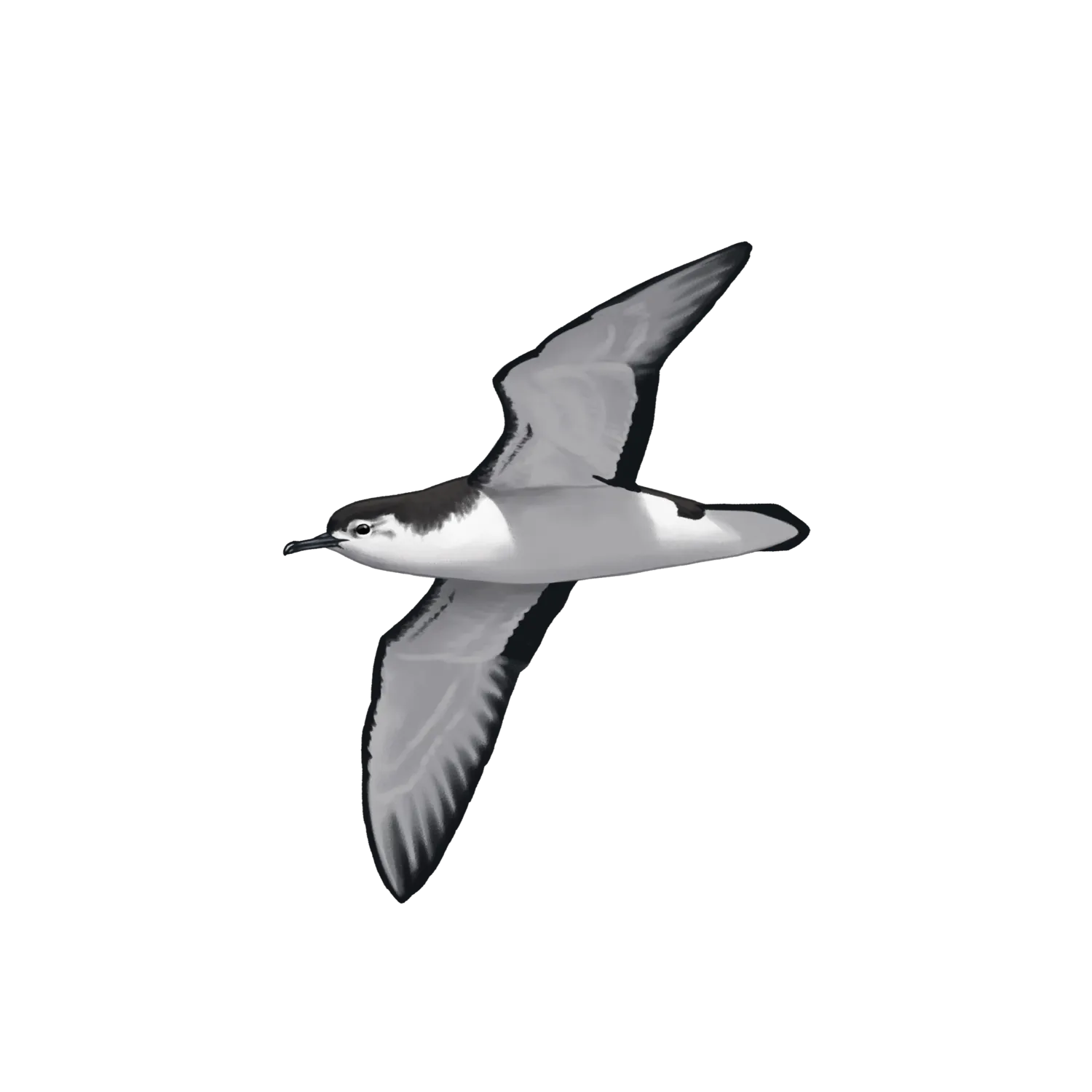
The Barolo Shearwater occurs in the tropical and temperate waters of the North Atlantic, breeding in the archipelagos of Macaronesia. In Portugal, it breeds on islands and islets in the Azores and Madeira archipelagos between December and June (Neves et al. 2012; Equipa Atlas 2022). After breeding, it does not undertake large-scale migrations (Neves et al. 2012; Paiva et al. 2016; Ramos et al. 2020), with at least part of the population remaining in the vicinity of the colonies and even visiting them during this period (Billerman et al. 2026). It occurs throughout the Portuguese EEZ, with the highest density in the Madeira sub-area (Meirinho et al. 2014). This occurrence was confirmed by individual tracking data from 27 birds fitted with GLS devices, originating from colonies in Madeira and the Azores, indicating extensive use of all sub-areas of the EEZ, both during the breeding and non-breeding periods. It appears to avoid only the very deep waters of the westernmost part of the Azores sub-area.
Abundance and population trends
In Portugal, the population has been estimated at between 2,407 and 5,578 pairs (Equipa Atlas 2022), which is thought to account for over 83% of the global population (BirdLife International 2025). In the Azores, the species nests on several islands and islets, although not all colonies have been confirmed and there is little information on population size and trends. For the period 1996–2004, the population was estimated at between 895 and 1,741 pairs (Monteiro et al. 1999; Equipa Atlas 2022). Between 2018 and 2022, 23 breeding pairs were estimated on Vila Islet and 17 pairs on Praia Islet (Pipa et al. 2024). In the Madeira archipelago, it occurs in small numbers on the islands of Madeira, Porto Santo and the Desertas Islands, being more abundant on the Selvagens Islands. In 2013, the breeding population on Selvagem Grande was estimated at 1,383 to 3,684 pairs and, on Cima Islet (Porto Santo), between 129 and 148 pairs (Isabel Fagundes pers. comm.). These figures, compared with the previous census on Selvagem Grande (Oliveira & Moniz 1995; Moniz et al. 1997), suggest a decrease of between 24.7% and 32.6% over 20 years. Nevertheless, the lack of a minimum time series made it impossible to assess the environmental status of the Madeira population. In the Azores, however, the breeding population did not achieve Good Environmental Status for the abundance indicator.
Ecology and habitat
The Barolo Shearwater is a non-migratory pelagic bird, but may disperse up to 2,500 km from its colonies (Neves et al. 2012). It nests in ground cavities and on inaccessible cliffs, and may share nesting areas with other seabirds. Its diet consists mainly of small cephalopods and fish, diving to an average depth of approximately 15 m (Monteiro et al. 1998; Neves et al. 2012; Ramos et al. 2015).
Threats and conservation
The main threats are predation by introduced mammals, reduction of nesting habitat, indigenous predators such as the Yellow-legged Gull Larus michahellis, light pollution and interspecific competition for nesting cavities (Monteiro et al. 1996a; Rodríguez et al. 2012). Climate change and severe weather events pose a growing threat, as the increased frequency and intensity of storms can cause changes to nesting habitat or flooding (Fagundes et al. 2016). Furthermore, climate change may alter oceanographic conditions, potentially leading to a decline in prey abundance (Ramos et al. 2015a).
- Autores
Isabel Fagundes, Tânia Pipa, Zuzana Zajkova, Verónica Neves
- Owners/sources of tracking data
Rodríguez A, Rodríguez B & Lucas M P (2012). Trends in numbers of petrels attracted to artificial lights suggest population declines in Tenerife, Canary Islands. Ibis 154: 167-172. Bibliography:
Ramos R, Paiva VH, Zajková Z, Precheur C, Fagundes AI, Jodice PGR, Mackin W, Zino F, Bretagnolle V & González-Solís J (2020). Spatial ecology of closely related taxa: the case of the little shearwater complex in the North Atlantic Ocean. Zoological Journal of the Linnean Society XX: 1–21. Bibliography:
Ramos JA, Fagundes AI, Xavier J C, Fidalgo V, Ceia FR, Medeiros R & Paiva V H (2015a). A switch in the Atlantic Oscillation correlates with inter-annual changes in foraging location and food habits of Macaronesian shearwaters (Puffinus baroli) nesting on two islands of the sub-tropical Atlantic Ocean. Deep-Sea Research I 104: 60–71. Bibliography:
Pipa T, Martins B, Silva C, Heber S, Magalhães M, Carriço R, Câmara R, Lourenço J, Aguiar L, Cunha B, Raposo P, Raposo A, Coelho R, Huamán M, Pinto F, Sequeira R, Carreira G, Pereira D & De la Cruz A (2024). Monitorização de aves marinhas Procellariiformes 2020-2023: Relatório da Ação D5.1. Projeto LIFE IP AZORES NATURA - LIFE17 IPE/PT/00010. Unpublished report. Bibliography:
Paiva VH, Fagundes AI, Romão V, Gouveia C & Ramos JA (2016). Population-scale foraging segregation in an apex predator of the North Atlantic. PLoS ONE 11(3): e0151340. Bibliography:
Oliveira P & Moniz P (1995). Population size, breeding chronology, annual cycle and effects of inter-specific competition on the reproductive success of little shearwater Puffinus assimilis baroli in Selvagem. In Tasker ML (ed.) Threats to seabirds: Proceedings of the 5th International Seabird Group conference. Seabird Group, Sandy: 35. Bibliography:
Neves VC, Bried J, González-Solís J, Roscales JL & Clarke MR (2012). Feeding ecology and movements of the Barolo shearwater Puffinus baroli baroli in the Azores, NE Atlantic. Marine Ecology Progress Series 452: 269-285. Bibliography:
Monteiro LR , Ramos JA, Pereira JC, Monteiro PR, Feio RS, Thompson DR, Bearshop S, Furness RW, Laranjo M, Hilton G, Neves VC, Groz MP & Thompson KR (1999). Status and distribution of Fea’s Petrel, Bulwer’s Petrel, Manx Shearwater, Little Shearwater and Band-rumped Storm-Petrel in the Azores Archipelago. Waterbirds 22(3): 358-366. Bibliography:
Monteiro LR, Ramos JA, Furness RW (1996a). Past and present status and conservation of the seabirds breeding in the Azores Archipelago. Biological Conservation 78: 319–328. Bibliography:
Monteiro LR , Granadeiro JP & Furness RW (1998). Relationship between mercury levels and diet in Azores seabirds. Marine Ecology Progress Series 166: 259-265. Bibliography:
Moniz P, Monteiro L & Oliveira P (1997). The Little shearwater. In Hegemeijer W & Blair M (eds.). The EBCC atlas of european breeding birds. Their distribution and abundance. T & Ad Poyser, London. Bibliography:
Meirinho A, Barros N, Oliveira N, Catry P, Lecoq M, Paiva V, Geraldes P, Granadeiro JP, Ramírez I & Andrade J (2014). Atlas das Aves Marinhas de Portugal. Sociedade Portuguesa para o Estudo das Aves. Bibliography:
Fagundes AI, Ramos JA, Ramos U, Medeiros R & Paiva VH (2016). Breeding biology of a winter-breeding procellariiform in the North Atlantic, the Macaronesian shearwater Puffinus lherminieri baroli. Zoology 119: 421–429. Bibliography:
Equipa Atlas (2022). III Atlas das Aves Nidificantes de Portugal (2016-2021). SPEA, ICNF, LabOr/UÉ, IFCN. Portugal. Bibliography:
BirdLife International (2025). IUCN Red List for birds. Downloaded from https://datazone.birdlife.org on 30.11.2025. Bibliography:
Billerman SM, Keeney BL, Kirwan GM, Medrano F, Sly ND & Smith MG (eds.) (2026). Birds of the World. Cornell Laboratory of Ornithology, Ithaca, NY, USA. Data:
Paiva V (2014). Dataset 1028: Barolo Shearwater, Puffinus baroli, Geolocator (GLS), Cima Islet, Madeira, Portugal, 2011–2014. BirdLife International Seabird Tracking Database. Downloaded from https://data.seabirdtracking.org/dataset/1028/ on 30.11.2025. Data:
Paiva V (2013). Dataset 1029: Barolo Shearwater, Puffinus baroli, Geolocator (GLS), Selvagens, Madeira, Portugal, 2010–2013. BirdLife International Seabird Tracking Database. Downloaded from https://data.seabirdtracking.org/dataset/1029/ on 30.11.2025. Data:
Neves V & Gonzalez-Solis J (2008). Dataset 684: Barolo Shearwater, Puffinus baroli, Geolocator (GLS), Vila, Azores, Portugal, 2007–2008. BirdLife International Seabird Tracking Database. Downloaded from https://data.seabirdtracking.org/dataset/684/ on 30.11.2025. Glossary:
A group of marine molluscs that includes squids, cuttlefish and octopuses. Glossary:
Alteration of natural night-time light levels due to artificial lighting. Glossary:
Persistent changes in global or regional climate patterns, influenced by natural and anthropogenic factors. Glossary:
A species or parameter that reflects the state of an ecosystem or environmental changes. Glossary:
A set of data collected consistently over time, used to analyse trends. Glossary:
Monitoring the movements of individuals using tracking devices. Glossary:
The direction of change in the size of a population over time (increase, decline or stability). Glossary:
A concept defined under the Marine Strategy Framework Directive (MSFD), referring to the condition of the elements of the marine environment, including birds. It aims to assess whether ecosystems are healthy, balanced and capable of supporting ecological functions and human uses in a sustainable manner. The ultimate goal is for the components and ecosystems to achieve Good Environmental Status. Glossary:
Under the United Nations Convention on the Law of the Sea, coastal states are entitled to declare an EEZ comprising maritime area beyond their territorial waters. The national EEZ is delimited by an imaginary line situated 200 nautical miles from the coast, separating national waters from international or shared waters. Within its EEZ, each state has rights such as the exploitation of marine resources, the conduct of scientific research and the regulation of fishing by foreign vessels. Glossary:
The area or environment where organisms that do not depend on the seafloor normally live. It is the typical ecological environment of open ocean waters. The pelagic ecosystem does not include only the open sea; it also comprises the waters covering the continental shelf. The pelagic zone begins below the influence of tides and extends into the open ocean, at depths ranging from a few tens of metres to approximately 6,000 metres, and is divided into different layers. Glossary:
A biogeographical region comprising the archipelagos of the Azores, Madeira, the Canary Islands and Cape Verde. Glossary:
A small device attached to birds to study their large-scale movements (usually migration), which works by recording light intensity (from which the duration of night and the local midday time are estimated, and consequently the latitude and longitude on each day). Glossary:
A term generally applied to a species introduced deliberately or accidentally into a specific location or region outside its original range. Depending on its adaptation to the new environment, an introduced species may or may not become naturalised and proliferate.