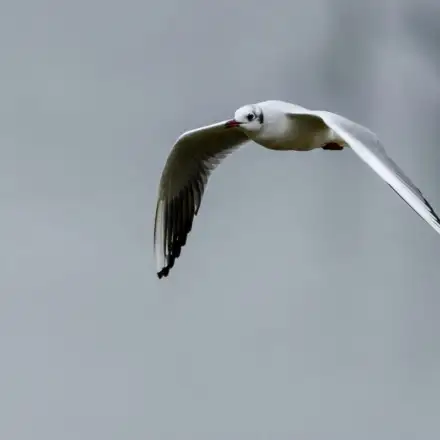
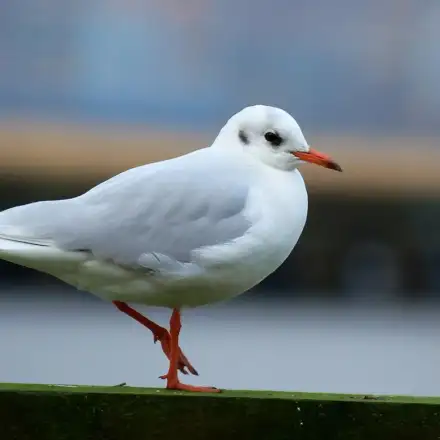
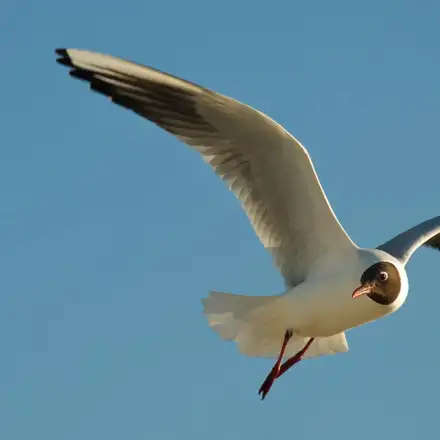
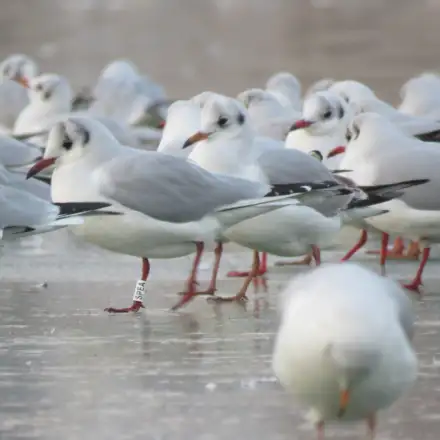
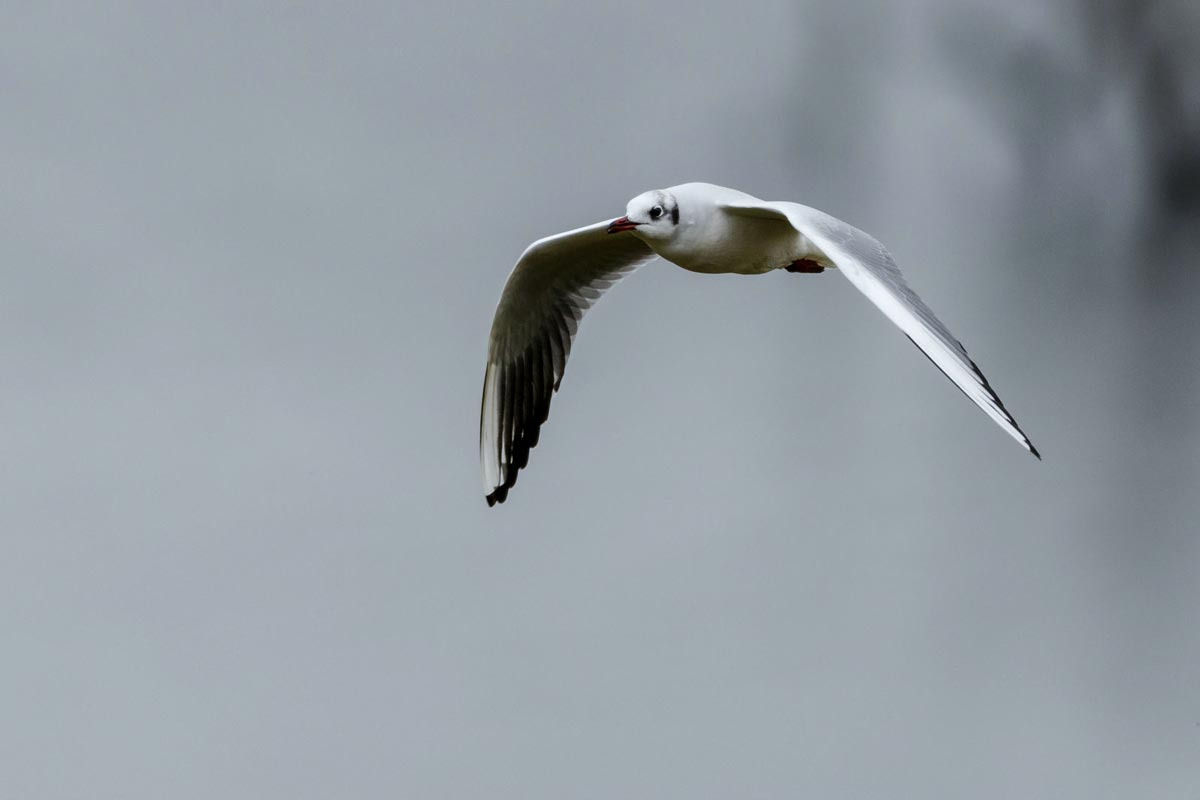
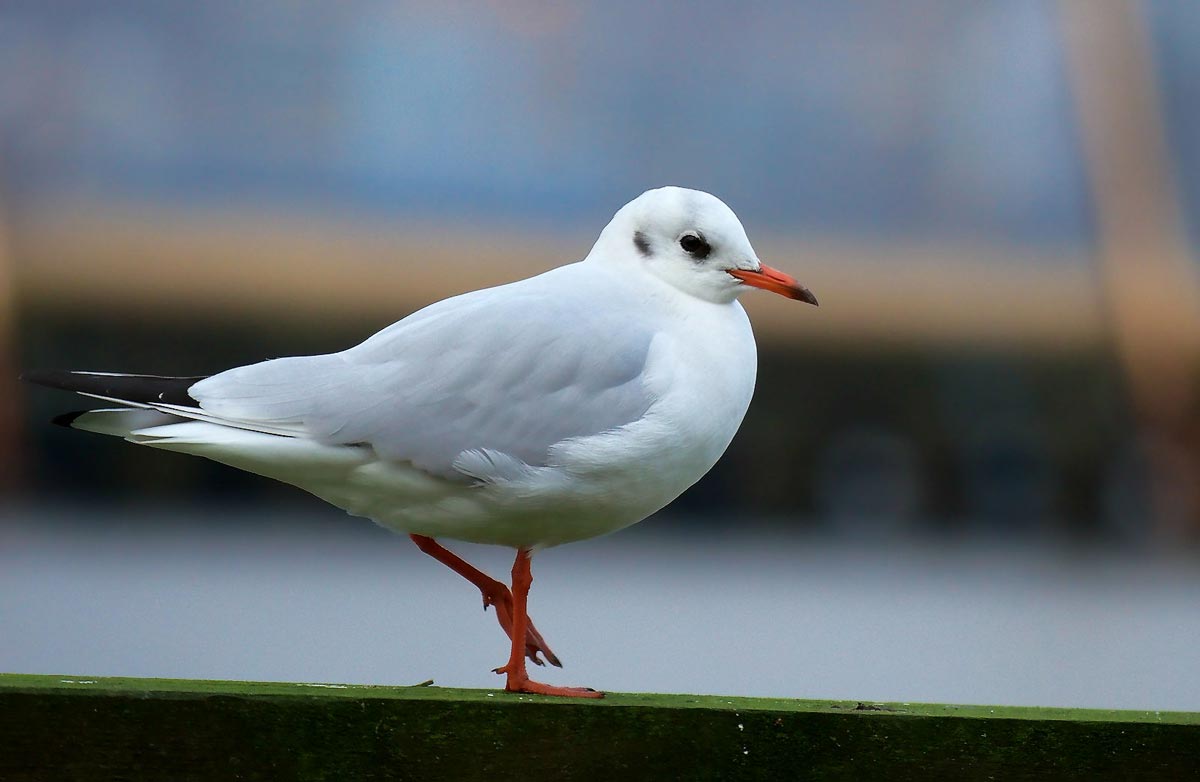
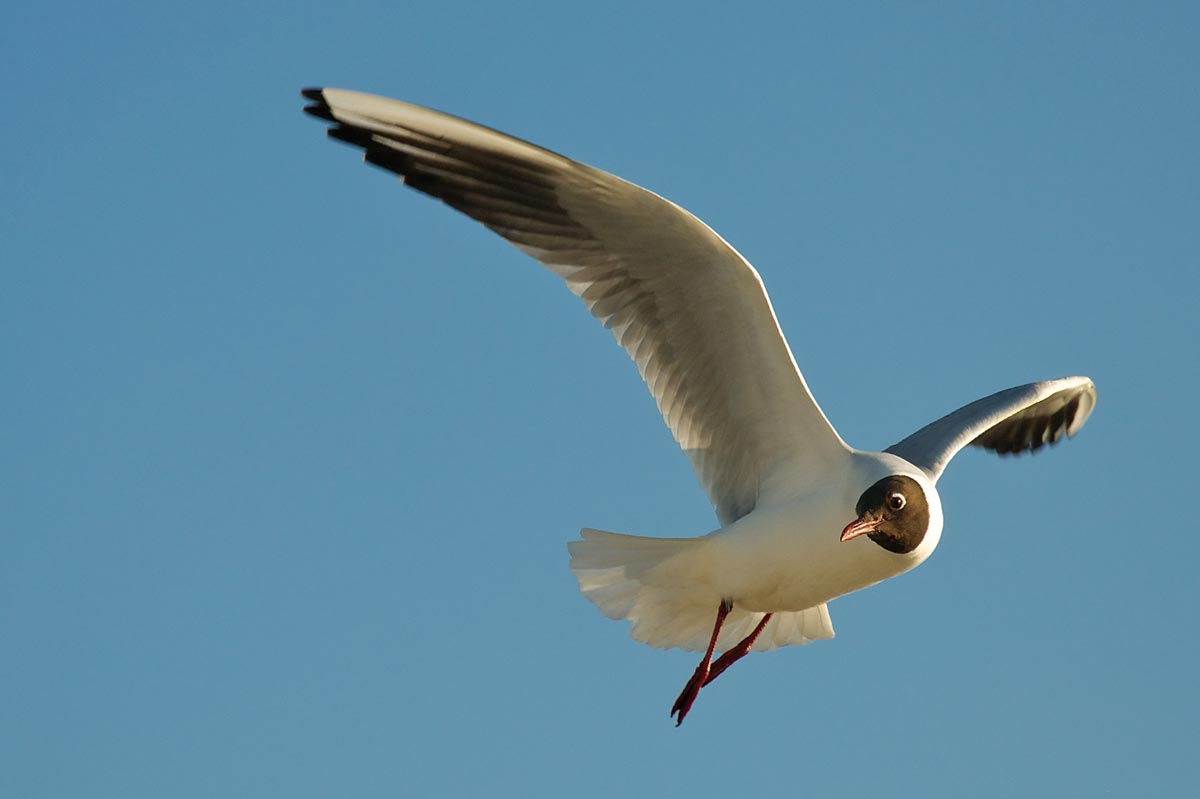
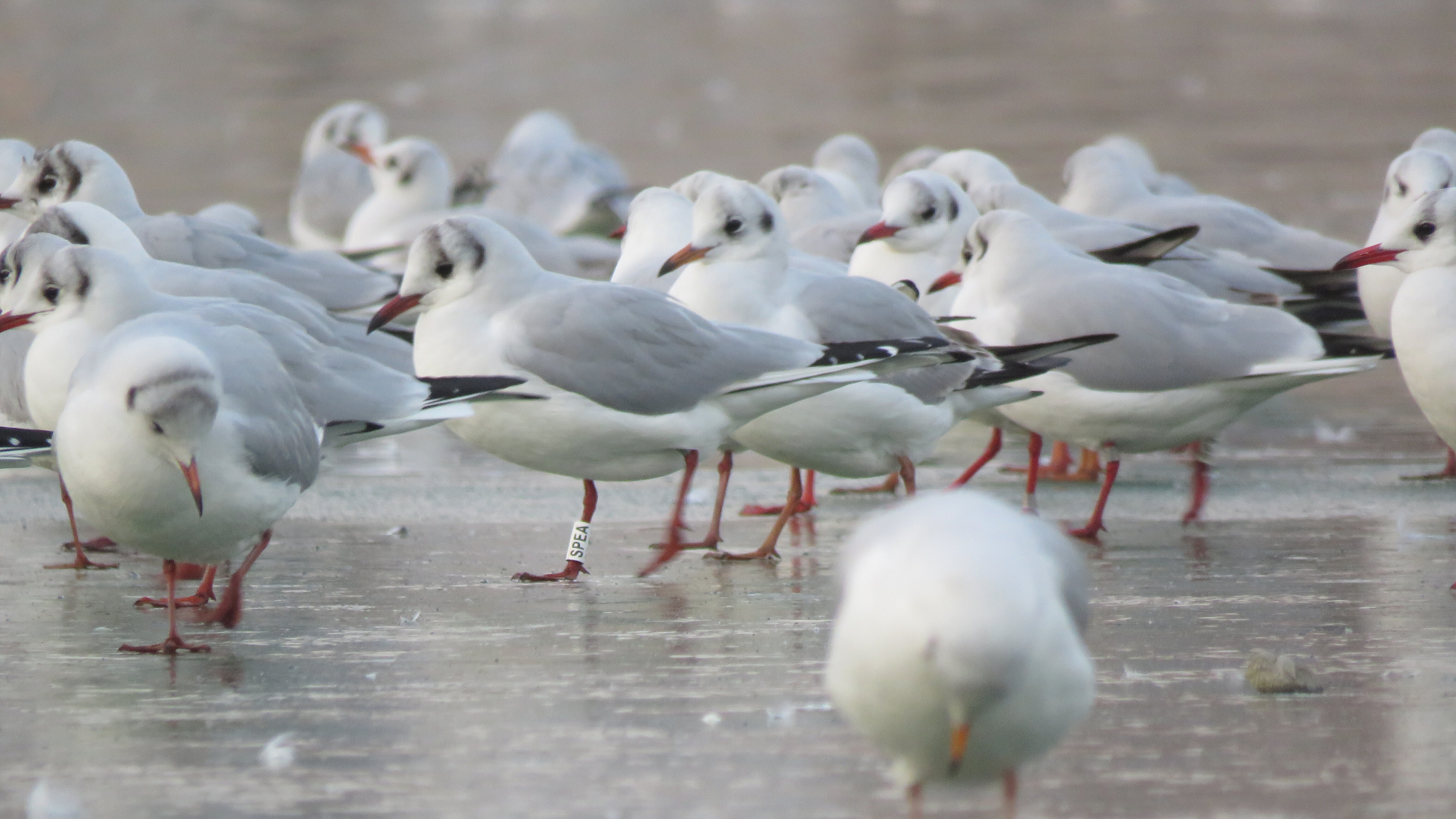
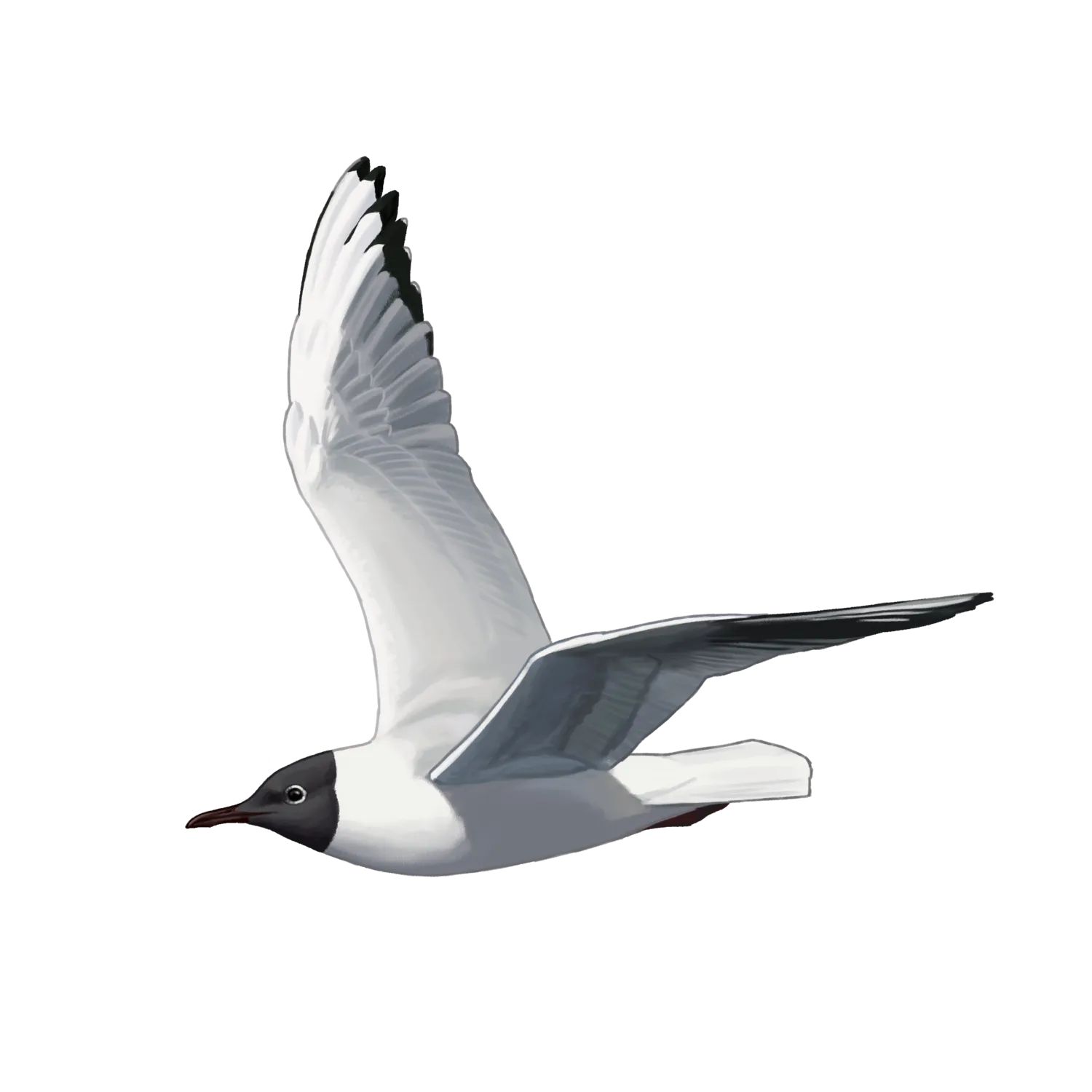
Black-headed Gull
Scientific name: Larus ridibundus
Family laridae
Phenology
- Mainland
- Summer breeder, wintering and passage migrant
- Madeira
- Wintering
- Azores
- Wintering
Conservation status
Learn more- Mainland
- Breeding population Wintering population
- Madeira
- Azores
- IUCN Global
Data
Maps
Distribution | Breeding
Scale
Minimum value:
Maximum value:
Scale
Minimum value:
Maximum value:
Scale
Minimum value:
Maximum value:
Scale
Minimum value:>
Maximum value:<
Scale
Minimum value:
Maximum value:
Scale
Minimum value:>
Maximum value:>
Distribution based on seabird tracking data (locations/hexagone).
Colony(ies) of origin:
Device:
Data period / number of individuals:
Data period / number of individuals:
Distribution of seabird breeding colonies or sites (number of breeding pairs).
Distribution based on marine censuses (probability of occurrence).
Observed density based on marine censuses (birds/ km2).
Confirmed occurence during marines censuses.
Abundance of waders derived from Project Arenaria coastal surveys (birds/square).
Passage rates derived from RAM coastal surveys (birds/hour).
No data available for the selected period.
Presentation
Distribution, movements and phenology
The Black-headed Gull breeds between April and July in north-east North America and most of Eurasia, excluding the northernmost regions and southern Asia (Billerman et al. 2026). Most Eurasian breeders migrate to the southern coast of Eurasia and the northern and central coasts of Africa, although some birds are resident. In Mainland Portugal, most individuals occur during autumn and winter, heading north in March and April. There is a small breeding population, and some non-breeding individuals remain in Portugal throughout the year (Leitão et al. 1997; Catry et al. 2010a). The Black-headed Gull is found mainly in the major coastal wetlands, notably the Tagus estuary (Equipa Atlas 2018). It also occurs along the entire coastline, in salt pans and other inland wetlands. At sea, it appears to occur mainly during winter, using almost exclusively the coastal strip between Cascais and Caminha (Meirinho et al. 2014). In the Azores and Madeira, it is a regular winter visitor (Equipa Atlas 2018; Correia-Fagundes et al. 2021).
Data from 15 birds fitted with GLS in 2022 and 2025 in Spain confirm its known distribution on the Mainland, with particular note of the dispersal of one bird into deeper waters, reaching the Madeira region.
Abundance and population trends
The global population has been estimated at 4.8 to 8.9 million individuals, with the European population showing a moderate decline (BirdLife International 2025; Wetlands International 2025). In Portugal, breeding is relatively recent and is limited to the Mainland, with an estimated 10 to 40 breeding pairs (Equipa Atlas 2022). During winter and autumn, it is one of the most common gulls on Mainland Portugal. Its main concentration area is in the Tagus estuary (Equipa Atlas 2018), where several tens of thousands of individuals were recorded in the past (Meirinho et al. 2014). However, there is no information on its current status. On the Mainland’s non-estuarine coast, the most recent count was 1,338 wintering individuals in 2021 (Projeto Arenaria 2022). In the Azores and Madeira, they are regular winter visitors. The wintering populations on the Mainland and in the Azores have achieved Good Environmental Status for the abundance indicator, unlike the situation observed in Madeira.
Ecology and habitat
The Black-headed Gull mainly winters in coastal habitats, favouring estuaries and lagoons, salt pans, aquaculture sites and beaches near river mouths (Catry et al. 2010a). Inland, it is found at reservoirs, weirs, pastures, agricultural land, landfill sites and wastewater treatment plants (Elias et al. 1998; Catry et al. 2010a; Martín-Vélez et al. 2024). In Portugal, it nests inland, in artificial water bodies created by reservoirs and dams. On the islands, the species appears to prefer the areas around harbours. It is an opportunistic species that feeds mainly on aquatic invertebrates (e.g. Diptera and molluscs) as well as terrestrial (particularly earthworms and insects) and occasionally on fish (Lourenço 2019; Billerman et al. 2026).
Threats and conservation
The most significant threats to the species relate to disturbance, predation, avian influenza, periods of severe drought and contamination in nesting areas. It is one of the few examples of seabirds with a Data Deficient conservation status for its breeding population (Equipa Atlas 2022), and it is urgent to address this gap.
- Autores
Víctor Martín-Vélez, Andy J. Green
- Owners/sources of tracking data
Victor Martin Velez, Andy J. Green (CSIC)
Wetlands International (2025). Waterbird Population Estimates. Downloaded from http://wpe.wetlands.org on 30.11.2025. Bibliography:
Projeto Arenaria (2025). Monitorização da distribuição e abundância de aves nas praias e costas de Portugal. Downloaded from sites.google.com/site/projectoarenaria/Home on 21.12.2025. Bibliography:
Meirinho A, Barros N, Oliveira N, Catry P, Lecoq M, Paiva V, Geraldes P, Granadeiro JP, Ramírez I & Andrade J (2014). Atlas das Aves Marinhas de Portugal. Sociedade Portuguesa para o Estudo das Aves. Bibliography:
Martín-Vélez V, Navarro J, Vazquez M, Navarro-Ramos MJ, Bonnedahl J, van Toor ML, Bustamante J & Green AJ (2024). Dirty habits: potential for spread of antibiotic-resistance by black-headed gulls from waste-water treatment plants. Environmental Science and Pollution Research 31(58): 66079-66089. Bibliography:
Lourenço PM (2019). Internet photography forums as sources of avian dietary data: bird diets in Continental Portugal. Airo 26:3-26. Bibliography:
Leitão D, Rufino R & Tomé R (1997). Primeiro registo de nidificação de Guincho-comum Larus ridibundus em Portugal Continental. Airo 8: 33-34. Bibliography:
Equipa Atlas (2022). III Atlas das Aves Nidificantes de Portugal (2016-2021). SPEA, ICNF, LabOr/UÉ, IFCN. Portugal. Bibliography:
Equipa Atlas (2018). Atlas das Aves Invernantes e Migradoras de Portugal 2011-2013. Sociedade Portuguesa para o Estudo das Aves, LabOr- Laboratório de Ornitologia – ICAAM - Universidade de Évora, Instituto da Conservação da Natureza e das Florestas, Instituto das Florestas e Conservação da Natureza (Madeira), Secretaria Regional da Energia, Ambiente e Turismo (Açores) e Associação Portuguesa de Anilhadores de Aves. Lisboa. Bibliography:
Elias G, Reino LM, Silva T, Tomé R & Geraldes P (coords.) (1998). Atlas das aves invernantes do Baixo Alentejo. Sociedade Portuguesa para o Estudo das Aves, Lisboa. Bibliography:
Correia-Fagundes C, Romano H, Zino FJA & Biscoito M (2021). Birds of the archipelagos of Madeira and the Selvagens III. New records and checklist update (2010-2020). Boletim do Museu de História Natural do Funchal LXXI: 5-20. Bibliography:
BirdLife International (2025). IUCN Red List for birds. Downloaded from https://datazone.birdlife.org on 30.11.2025. Bibliography:
Billerman SM, Keeney BL, Kirwan GM, Medrano F, Sly ND & Smith MG (eds.) (2026). Birds of the World. Cornell Laboratory of Ornithology, Ithaca, NY, USA. Bibliography:
Catry P, Costa H, Elias G & Matias R (2010a). Aves de Portugal, Ornitologia do Território Continental. Assírio e Alvim, Lisboa Glossary:
A rocky, steep and prominent geographical area that projects into the sea, often forming a cape. Glossary:
A species or parameter that reflects the state of an ecosystem or environmental changes. Glossary:
A concept defined under the Marine Strategy Framework Directive (MSFD), referring to the condition of the elements of the marine environment, including birds. It aims to assess whether ecosystems are healthy, balanced and capable of supporting ecological functions and human uses in a sustainable manner. The ultimate goal is for the components and ecosystems to achieve Good Environmental Status. Glossary:
A small device attached to birds to study their large-scale movements (usually migration), which works by recording light intensity (from which the duration of night and the local midday time are estimated, and consequently the latitude and longitude on each day). Glossary:
Classification of the threat level of a species according to its probability of extinction. The criteria for this classification generally follow internationally recognised rules defined by the International Union for Conservation of Nature (IUCN) (http://www.redlist.org) and are based on population size, range and population trend. This status may be national or international.