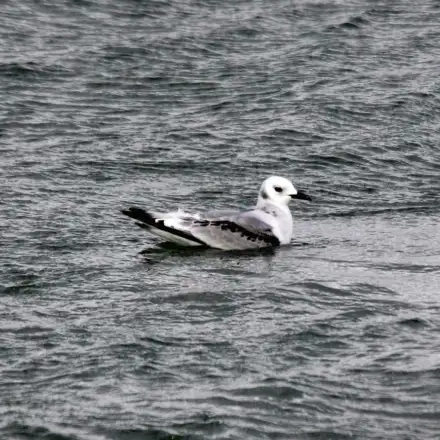
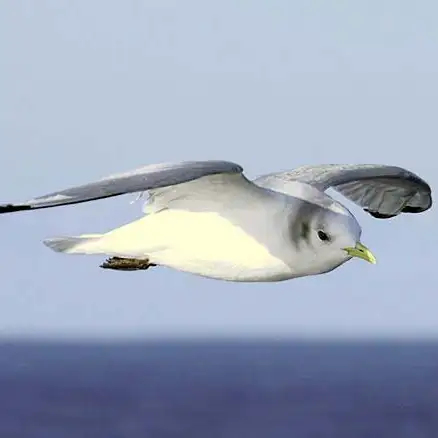
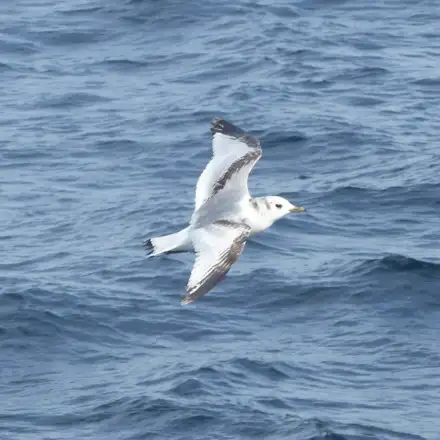
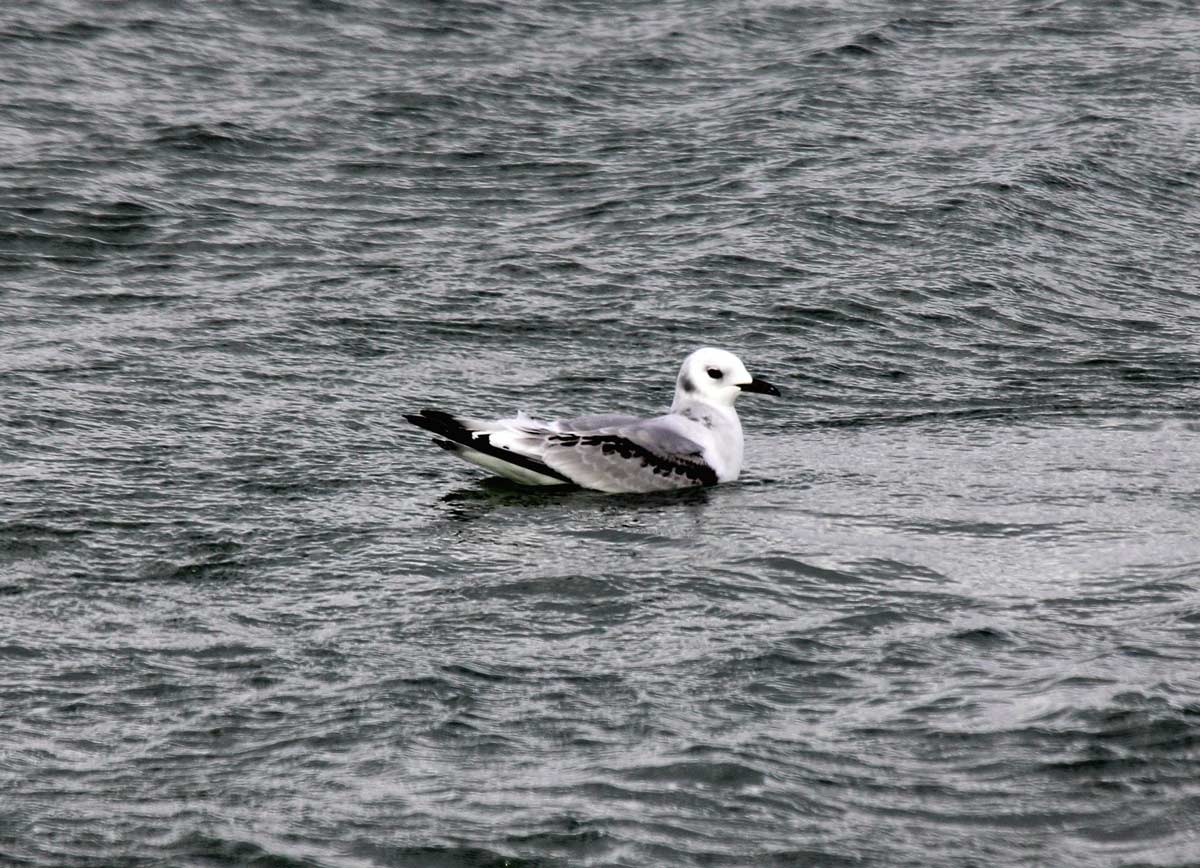
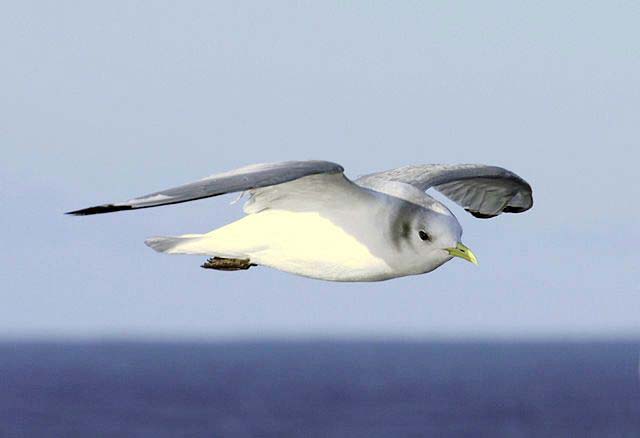
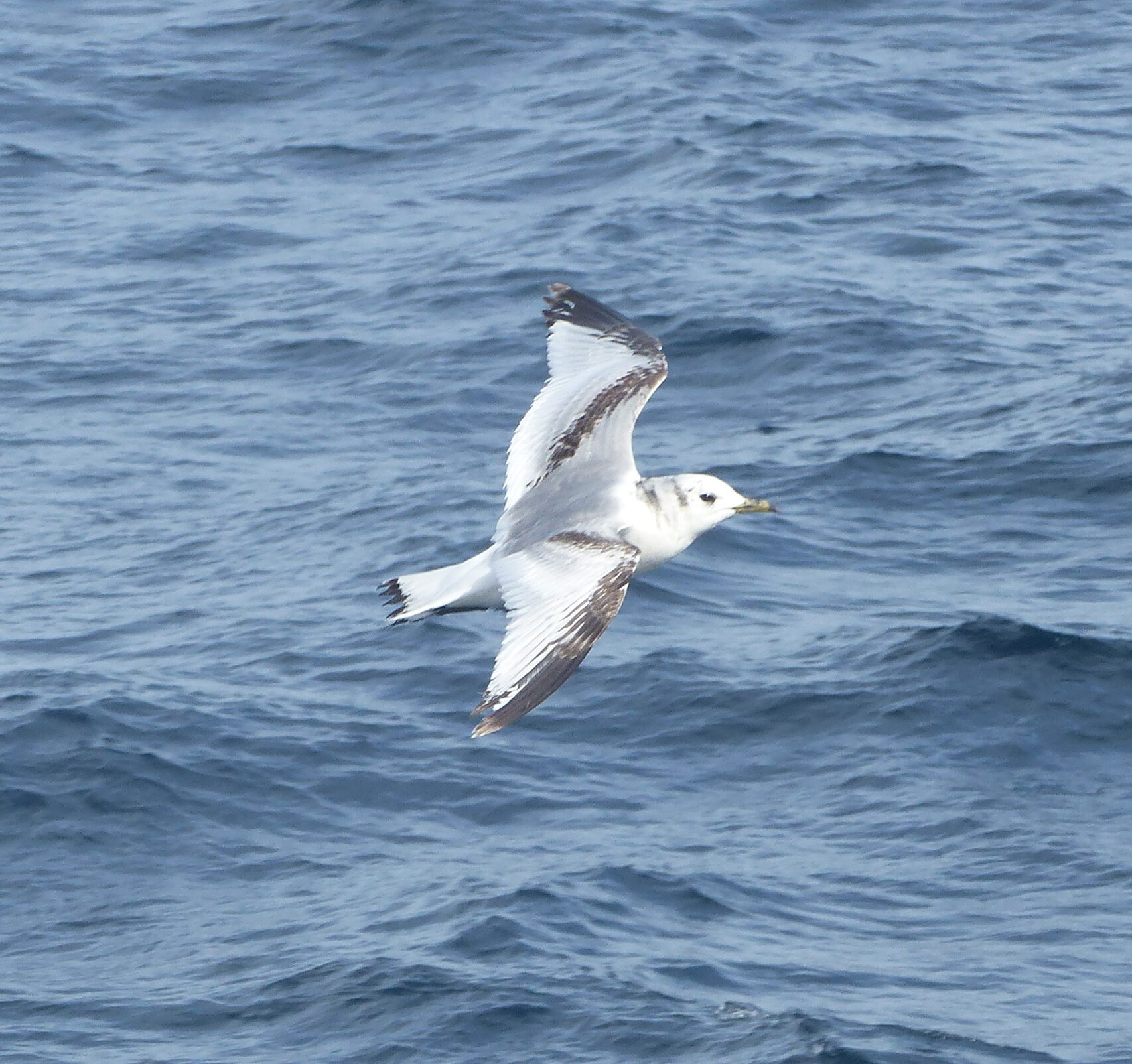
Black-legged Kittiwake
Scientific name: Rissa tridactyla
Family laridae
Phenology
- Mainland
- Wintering
- Madeira
- Wintering
- Azores
- Wintering
Conservation status
Learn more- Mainland
- Madeira
- Azores
- IUCN Global
Data
Maps
Distribution | Breeding
Scale
Minimum value:
Maximum value:
Scale
Minimum value:
Maximum value:
Scale
Minimum value:
Maximum value:
Scale
Minimum value:>
Maximum value:<
Scale
Minimum value:
Maximum value:
Scale
Minimum value:>
Maximum value:>
Distribution based on seabird tracking data (locations/hexagone).
Colony(ies) of origin:
Device:
Data period / number of individuals:
Data period / number of individuals:
Distribution of seabird breeding colonies or sites (number of breeding pairs).
Distribution based on marine censuses (probability of occurrence).
Observed density based on marine censuses (birds/ km2).
Confirmed occurence during marines censuses.
Abundance of waders derived from Project Arenaria coastal surveys (birds/square).
Passage rates derived from RAM coastal surveys (birds/hour).
No data available for the selected period.
Presentation
Distribution, movements and phenology
The Black-legged Kittiwake breeds from April to August in the Northern Hemisphere, in the temperate and Arctic coastal zones of the Atlantic and Pacific. Atlantic populations winter throughout the North Atlantic as far south as the Sargasso Sea and the West coast of Africa, including the entire Portuguese EEZ (Billerman et al. 2026). Birds wintering in our waters mainly originate from colonies in Norway, the United Kingdom and Iceland (Catry et al. 2010a), with some birds coming from Canada, the Faroe Islands, Greenland and Russia. It occurs regularly in the Azores and Madeira, although it is less abundant in the latter archipelago (Meirinho et al. 2014).
Individual tracking data for 368 birds from the colonies mentioned above confirm the extensive use of the Portuguese EEZ across its three sub-areas, with the highest concentration in the Mainland region, followed by the Azores and Madeira. The majority of the birds used these areas during their wintering period, between October and March.
Abundance and population trends
The global population has been estimated at 14.6 to 15.7 million individuals, of which 3,460,000 to 4,410,000 mature individuals occur in Europe (BirdLife International 2025). This population has declined sharply since the 1980s by >40% over three generations.
The species nested in Portugal, in the Berlengas archipelago, between the late 1970s and early 1980s, as a result of a natural expansion that led to the colonisation of other areas along the Iberian coast (Catry et al. 2010a). The size of the wintering population in Portuguese waters is very poorly documented, but appears to be related to weather conditions in more northerly regions and on the open sea. Based on the data used for the environmental status assessment, an estimate of between 3,100 and 10,700 individuals was obtained for the continental shelf in 2024. Despite the lack of more concrete estimates, this population appears to be in Good Environmental Status for the abundance indicator. There is no information on abundance or population trends for the Azores and Madeira.
Ecology and habitat
The Black-legged Kittiwake is a migratory bird that leaves the colonies after breeding, dispersing to the open sea from July and August (Olsen & Larsson 2004). It is mostly observed at sea, either alone or in small groups (Snow & Perrins 1998), and may congregate in productive areas such as continental shelves, upwelling zones and fish shoals. Its diet consists mainly of fish and marine invertebrates (including plankton), but it also feeds on discards from fishing vessels (Billerman et al. 2026).
Threats and conservation
Black-legged Kittiwake populations have been affected by reduced prey availability in the Atlantic, primarily due to climate change and, in part, to targeted industrial fishing (Frederiksen et al. 2012). Increased foraging effort and nutritional stress result in higher mortality and breeding failure (Paredes et al. 2014). The species suffers bycatch in longline fisheries, particularly in the Gran Sol bank, although the impact is low in other areas of the North Atlantic (BirdLife International 2025). Oil pollution contributes to a decline in the physical condition of adults and reduced breeding success (Nikolaeva et al. 2006). The species may also be vulnerable to outbreaks of avian influenza.
- Autores
Tânia Nascimento, Nadine Pires
- Owners/sources of tracking data
Daunt 2008, Daunt 2010, SEATRACK, Thorarinsson 2011
Snow DW & Perrins CM (1998). The Birds of the Western Palearctic vol. 1: Non-Passerines. Oxford University Press. Oxford. Bibliography:
Paredes R, Orben RA, Suryan RM, Irons DB, Roby DD, Harding AM, Young RC, Benoit-Bird K, Ladd C, Renner H & Heppell S (2014). Foraging responses of Black-legged Kittiwakes to prolonged food-shortages around colonies on the Bering Sea Shelf. PloS one 9(3): e92520. Bibliography:
Olsen KM & Larsson H (2004). Gulls of Europe, Asia and North America. Christopher Helm, London. Bibliography:
Nikolaeva NG, Spiridonov VA & Krasnov YV (2006). Existing and proposed marine protected areas and their relevance for seabird conservation: a case study in the Barents Sea region. In Boere G, Galbraith C & Stroud D (eds.). Waterbirds around the world. The Stationery Office, Edinburgh, UK: 743-749. Bibliography:
Meirinho A, Barros N, Oliveira N, Catry P, Lecoq M, Paiva V, Geraldes P, Granadeiro JP, Ramírez I & Andrade J (2014). Atlas das Aves Marinhas de Portugal. Sociedade Portuguesa para o Estudo das Aves. Bibliography:
Frederiksen M, Moe B, Daunt F Phillips RA, Barrett RT , Bogdanova MI, Boulinier T, Chardine JW, Chastel O, Chivers LS , Christensen-Dalsgaard S, Clément-Chastel C, Colhoun K, Freeman R, Gaston AJ, González-Solís J, Goutte A, Grémillet D, Guilford T, Jensen, GH , Krasnov Y, Lorentsen SH , Mallory ML, Newell M, Olsen B, Shaw D, Steen H, Strøm H, Systad GH , Thórarinsson TL & Anker-Nilssen T (2012). Multicolony tracking reveals the winter distribution of a pelagic seabird on an ocean basin scale. Diversity and Distributions 18: 530–542. Bibliography:
BirdLife International (2025). IUCN Red List for birds. Downloaded from https://datazone.birdlife.org on 30.11.2025. Bibliography:
Billerman SM, Keeney BL, Kirwan GM, Medrano F, Sly ND & Smith MG (eds.) (2026). Birds of the World. Cornell Laboratory of Ornithology, Ithaca, NY, USA. Bibliography:
Catry P, Costa H, Elias G & Matias R (2010a). Aves de Portugal, Ornitologia do Território Continental. Assírio e Alvim, Lisboa Data:
Thorarinsson TL (2011). Dataset 1036: Black-legged Kittiwake, Rissa tridactyla, Geolocator (GLS), Hafnarholmi, Iceland Shelf, Iceland, 2009–2011. BirdLife International Seabird Tracking Database. Downloaded from https://data.seabirdtracking.org/dataset/1036/ on 30.11.2025. Data:
Daunt F (2010). Dataset 1037: Black-legged Kittiwake, Rissa tridactyla, Geolocator (GLS), Isle of May, North Sea, United Kingdom, 2009–2010. BirdLife International Seabird Tracking Database. Downloaded from https://data.seabirdtracking.org/dataset/1037/ on 30.11.2025. Data:
Daunt F (2008). Dataset 1102: Black-legged Kittiwake, Rissa tridactyla, Geolocator (GLS), Isle of May, North Sea, United Kingdom, 2007–2008. BirdLife International Seabird Tracking Database. Downloaded from https://data.seabirdtracking.org/dataset/1102/ on 30.11.2025. Glossary:
A rocky, steep and prominent geographical area that projects into the sea, often forming a cape. Glossary:
Individuals capable of breeding, used as a reference in population estimates. Glossary:
A sudden increase in the incidence of a disease within a population or region. Glossary:
Persistent changes in global or regional climate patterns, influenced by natural and anthropogenic factors. Glossary:
A species or parameter that reflects the state of an ecosystem or environmental changes. Glossary:
Monitoring the movements of individuals using tracking devices. Glossary:
The Sole Bank is a fishing ground located in the North Atlantic, to the west and south-west of the British Isles. Due to its great fish abundance, it is an area heavily exploited by European fishing fleets, particularly by vessels from Galicia, Spain. Glossary:
A concept defined under the Marine Strategy Framework Directive (MSFD), referring to the condition of the elements of the marine environment, including birds. It aims to assess whether ecosystems are healthy, balanced and capable of supporting ecological functions and human uses in a sustainable manner. The ultimate goal is for the components and ecosystems to achieve Good Environmental Status. Glossary:
Refers to the unintentional capture of marine species during fishing. Animals may become entangled in hooks or fishing nets. It is usually associated with commercial fishing, but can also occur in recreational fishing. Bycatch is one of the main threats to seabirds at sea. Glossary:
Under the United Nations Convention on the Law of the Sea, coastal states are entitled to declare an EEZ comprising maritime area beyond their territorial waters. The national EEZ is delimited by an imaginary line situated 200 nautical miles from the coast, separating national waters from international or shared waters. Within its EEZ, each state has rights such as the exploitation of marine resources, the conduct of scientific research and the regulation of fishing by foreign vessels. Glossary:
The portion of the catch taken by commercial fishing vessels that is returned to the sea, often dead or dying. Discarded fish often belong to species of no commercial value, individuals below the minimum legal landing size, or individuals whose landing is not permitted, for example due to quota restrictions. Discards may also consist of parts of the catch, namely offal and heads, which, after on-board processing, are rejected and discarded at sea. Discards have a strong impact on marine ecosystems and influence many aspects of the distribution, foraging behaviour and population dynamics of seabirds, particularly species and individuals that habitually follow vessels. Glossary:
The portion of the seabed that begins at the coastline and slopes gently downwards to the continental slope (where the slope is much steeper). On average, the continental shelf extends to a depth of 200 metres. Glossary:
Aquatic organisms, generally small, which are suspended in the water and drift with the currents. Plankton may consist of plants (phytoplankton), animals (zooplankton) or other organisms such as bacteria. Glossary:
A fishing gear consisting of a main line (mother line) from which secondary lines with hooks attached branch off. It is left in the sea and can be placed on the seabed to catch deep-sea species (e.g. scabbardfish) or at the surface to catch large pelagic fish (e.g. swordfish). Glossary:
A period generally corresponding to the winter months, which may include part of autumn. Glossary:
A phenomenon involving interaction between the ocean and the atmosphere, in which warm surface waters move away from the coast and are replaced by cooler, nutrient-rich waters from the depths.