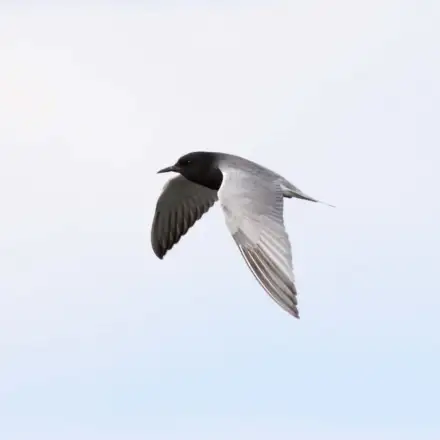
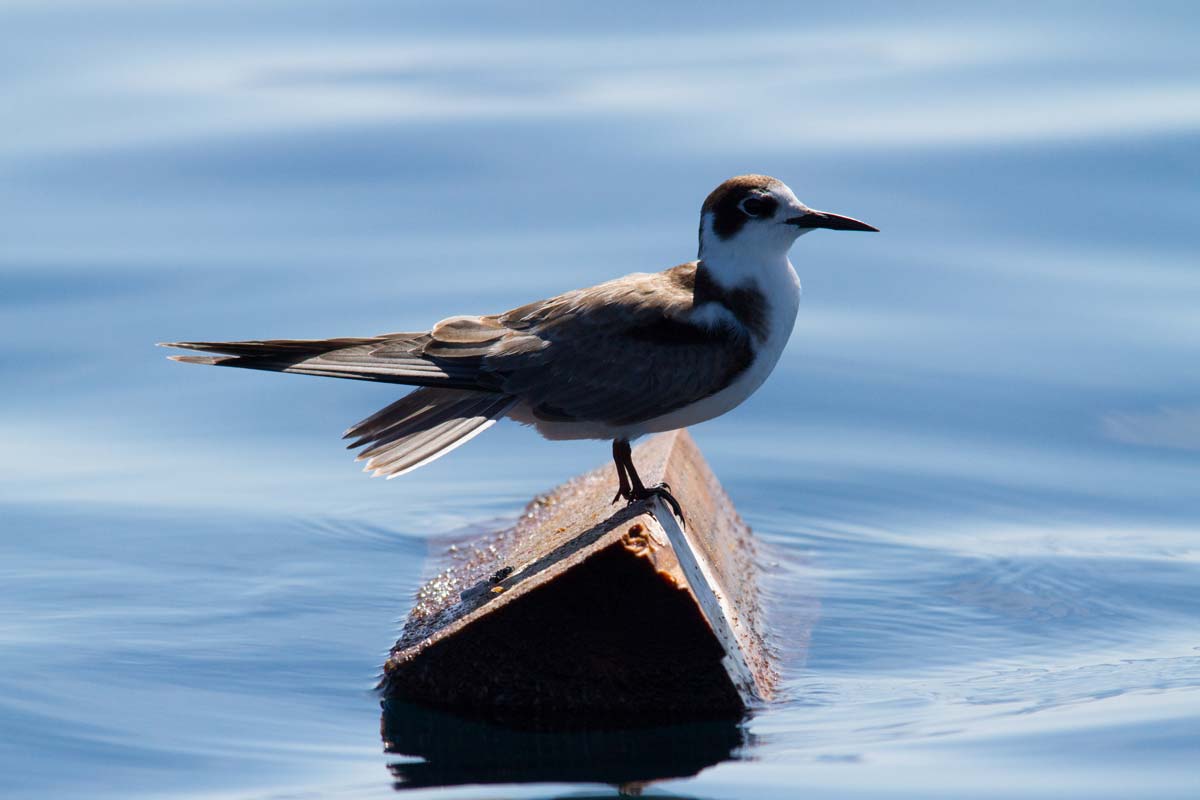
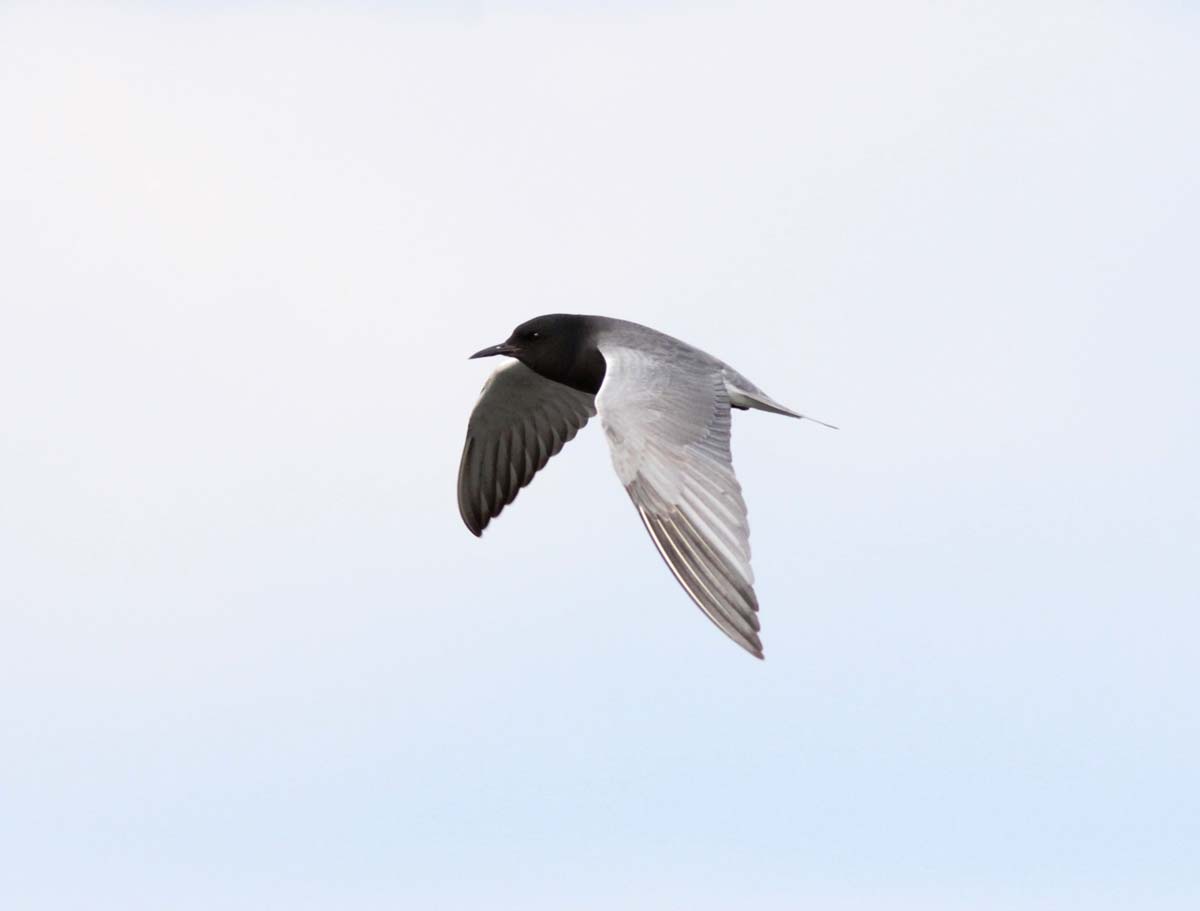
Black Tern
Scientific name: Chlidonias niger
Family laridae
Phenology
- Mainland
- Passage migrant
- Madeira
- Passage migrant
- Azores
- Vagrant
Conservation status
Learn more- Mainland
- Madeira
- Azores
- IUCN Global

Data
Maps
Distribution | Breeding
Scale
Minimum value:
Maximum value:
Scale
Minimum value:
Maximum value:
Scale
Minimum value:
Maximum value:
Scale
Minimum value:>
Maximum value:<
Scale
Minimum value:
Maximum value:
Scale
Minimum value:>
Maximum value:>
Distribution based on seabird tracking data (locations/hexagone).
Colony(ies) of origin:
Device:
Data period / number of individuals:
Data period / number of individuals:
Distribution of seabird breeding colonies or sites (number of breeding pairs).
Distribution based on marine censuses (probability of occurrence).
Observed density based on marine censuses (birds/ km2).
Confirmed occurence during marines censuses.
Abundance of waders derived from Project Arenaria coastal surveys (birds/square).
Passage rates derived from RAM coastal surveys (birds/hour).
No data available for the selected period.
Presentation
Distribution, movements and phenology
The Black Tern breeds between April and June in Eurasia and North America. After breeding, the birds migrate south, with European populations wintering along the vast majority of the west coast of Africa (Billerman et al. 2026). It is essentially during these migratory movements that the species is found across the Mainland, although there are some records of isolated nesting in the Algarve (Catry et al. 2010a). Post-breeding migration occurs from late July to October, with some birds using the coastal marine zone. Pre-breeding migration, which takes place between April and May, was previously assumed to be carried out mainly overland (Snow & Perrins 1998; Meirinho et al. 2014). However, more recent data obtained through individual tracking indicate that at least some of the birds utilise the marine environment during these migrations (Alerstam et al. 2025). Individual tracking data from eight birds from Swedish colonies, fitted with GLS between 2014 and 2022, illustrate these migratory patterns on the Mainland, whilst also highlighting an interesting occurrence in the Madeira sub-area during those same periods. In the Azores, however, the species is quite rare (Birding Azores 2022).
Abundance and population trends
The global population is estimated at between 800,000 and 1,750,000 individuals, showing a declining trend (BirdLife International 2025). The European population has been estimated at between 74,400 and 154,000 pairs. In Mainland Portugal, the species is uncommon, though flocks of dozens of individuals may be observed during post-breeding migration (Catry et al. 2010a). Based on the data used for the environmental status assessment, an estimate of around 100 to 3,200 individuals was obtained for the continental shelf in 2024. The negative trend of this population, combined with the fact that it has not achieved Good Environmental Status for the abundance indicator, appears to be in line with the global trend. In the case of Madeira and the Azores, there is no information on population trends, thus preventing an assessment of their environmental status.
Ecology and habitat
The Black Tern nests in estuarine habitats and inland wetlands, such as lagoons, swamps, ditches, vegetation-covered channels, waterlogged meadows, peatlands and rice paddies (BirdLife International 2025). On the Mainland and during migration periods, it also occurs in the same type of habitats, the coastal marine area and zones further from the coast. During the winter, it is predominantly marine in habits. It feeds mainly on aquatic insects, small fish and amphibians. Outside the breeding season, it consumes mainly marine fish, as well as insects and small crustaceans (Lourenço 2019; Billerman et al. 2026).
Threats and conservation
The main threats to this species are found in its breeding areas, due to the disturbance and deterioration of nesting habitats, caused primarily by agricultural exploitation. Drought and water abstraction for human use in wetlands also pose a significant threat to breeding success, due to the loss of nesting platforms and by facilitating access for terrestrial predators (BirdLife International 2025; Billerman et al. 2026). The introduction of exotic fish has also led to the disappearance of some prey fish for this species. However, no specific threats to the Black Tern have been documented in Portugal.
- Autores
Inês Lacerda, Sissel Sjöberg
- Owners/sources of tracking data
Snow DW & Perrins CM (1998). The Birds of the Western Palearctic vol. 1: Non-Passerines. Oxford University Press. Oxford. Bibliography:
Meirinho A, Barros N, Oliveira N, Catry P, Lecoq M, Paiva V, Geraldes P, Granadeiro JP, Ramírez I & Andrade J (2014). Atlas das Aves Marinhas de Portugal. Sociedade Portuguesa para o Estudo das Aves. Bibliography:
Lourenço PM (2019). Internet photography forums as sources of avian dietary data: bird diets in Continental Portugal. Airo 26:3-26. Bibliography:
BirdLife International (2025). IUCN Red List for birds. Downloaded from https://datazone.birdlife.org on 30.11.2025. Bibliography:
Birding Azores (2022). Birding Azores database. Downloaded from https://www.azoreswildlife.com/ on 23.12.2025. Bibliography:
Billerman SM, Keeney BL, Kirwan GM, Medrano F, Sly ND & Smith MG (eds.) (2026). Birds of the World. Cornell Laboratory of Ornithology, Ithaca, NY, USA. Bibliography:
Alerstam T, Bäckman J, Grönroos J, Olofsson P, Strandberg R & Sjöberg S (2025). Migration of black terns Chlidonias niger and common terns Sterna hirundo between south Sweden and the Atlantic coast of Africa. Journal of Avian Biology 2025: e03348. Bibliography:
Catry P, Costa H, Elias G & Matias R (2010a). Aves de Portugal, Ornitologia do Território Continental. Assírio e Alvim, Lisboa Data:
Alerstam T, Bäckman J, Grönroos J, Olofsson P, Strandberg R & Sjöberg S (2025). Migration of black terns Chlidonias niger and common terns Sterna hirundo between south Sweden and the Atlantic coast of Africa. Journal of Avian Biology 2025: e03348. Glossary:
Wetland ecosystems characterised by the accumulation of partially decomposed organic matter, of high ecological importance. Glossary:
A group of marine arthropods that are important in the marine food chain. Glossary:
A species or parameter that reflects the state of an ecosystem or environmental changes. Glossary:
Monitoring the movements of individuals using tracking devices. Glossary:
The direction of change in the size of a population over time (increase, decline or stability). Glossary:
A concept defined under the Marine Strategy Framework Directive (MSFD), referring to the condition of the elements of the marine environment, including birds. It aims to assess whether ecosystems are healthy, balanced and capable of supporting ecological functions and human uses in a sustainable manner. The ultimate goal is for the components and ecosystems to achieve Good Environmental Status. Glossary:
Referring to the period preceding breeding. Glossary:
Referring to the period following breeding. Glossary:
The portion of the seabed that begins at the coastline and slopes gently downwards to the continental slope (where the slope is much steeper). On average, the continental shelf extends to a depth of 200 metres. Glossary:
A small device attached to birds to study their large-scale movements (usually migration), which works by recording light intensity (from which the duration of night and the local midday time are estimated, and consequently the latitude and longitude on each day). Glossary:
A term generally applied to a species introduced deliberately or accidentally into a specific location or region outside its original range. Depending on its adaptation to the new environment, an introduced species may or may not become naturalised and proliferate.