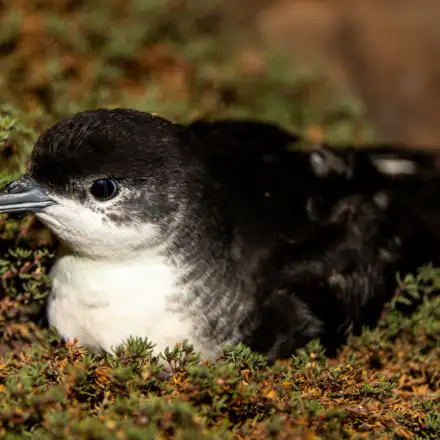
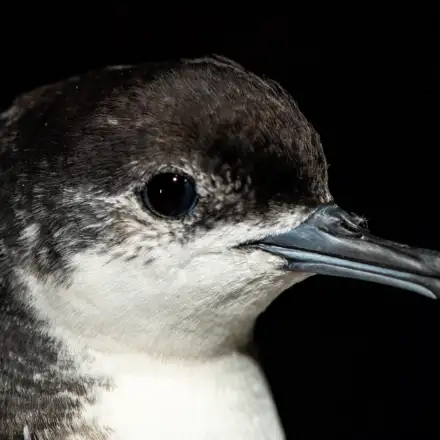
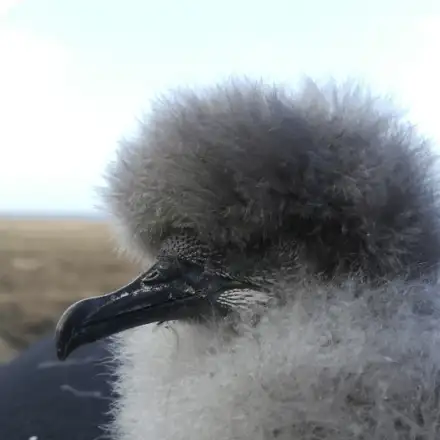
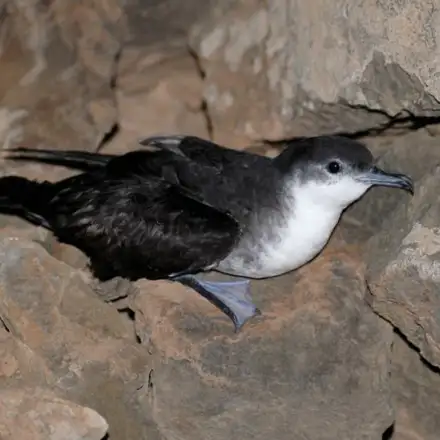
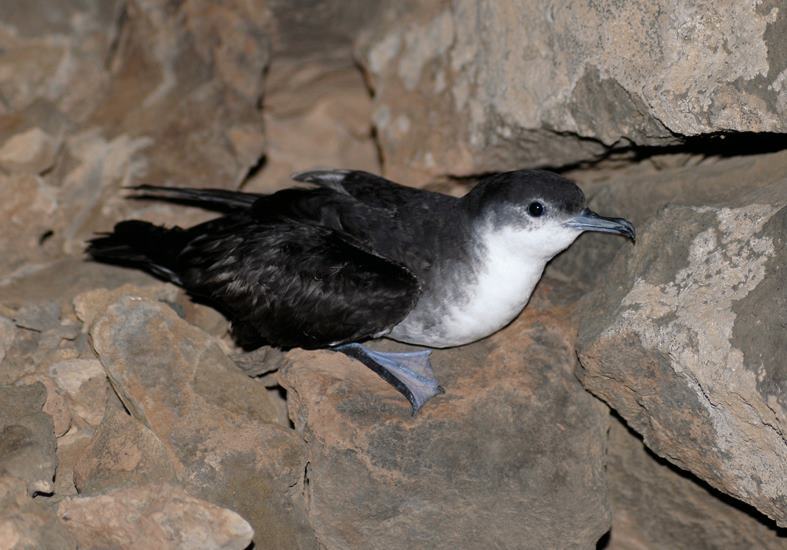
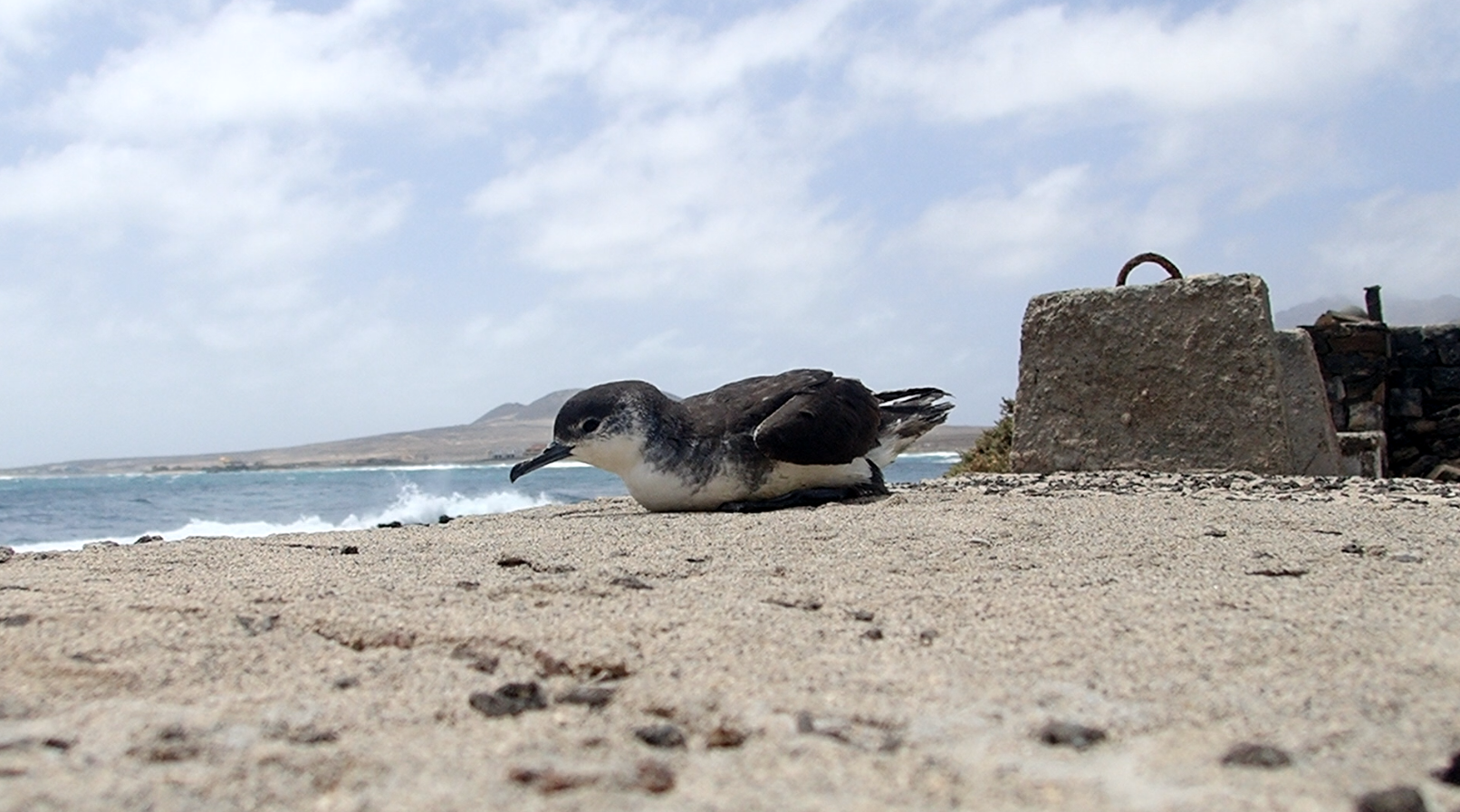
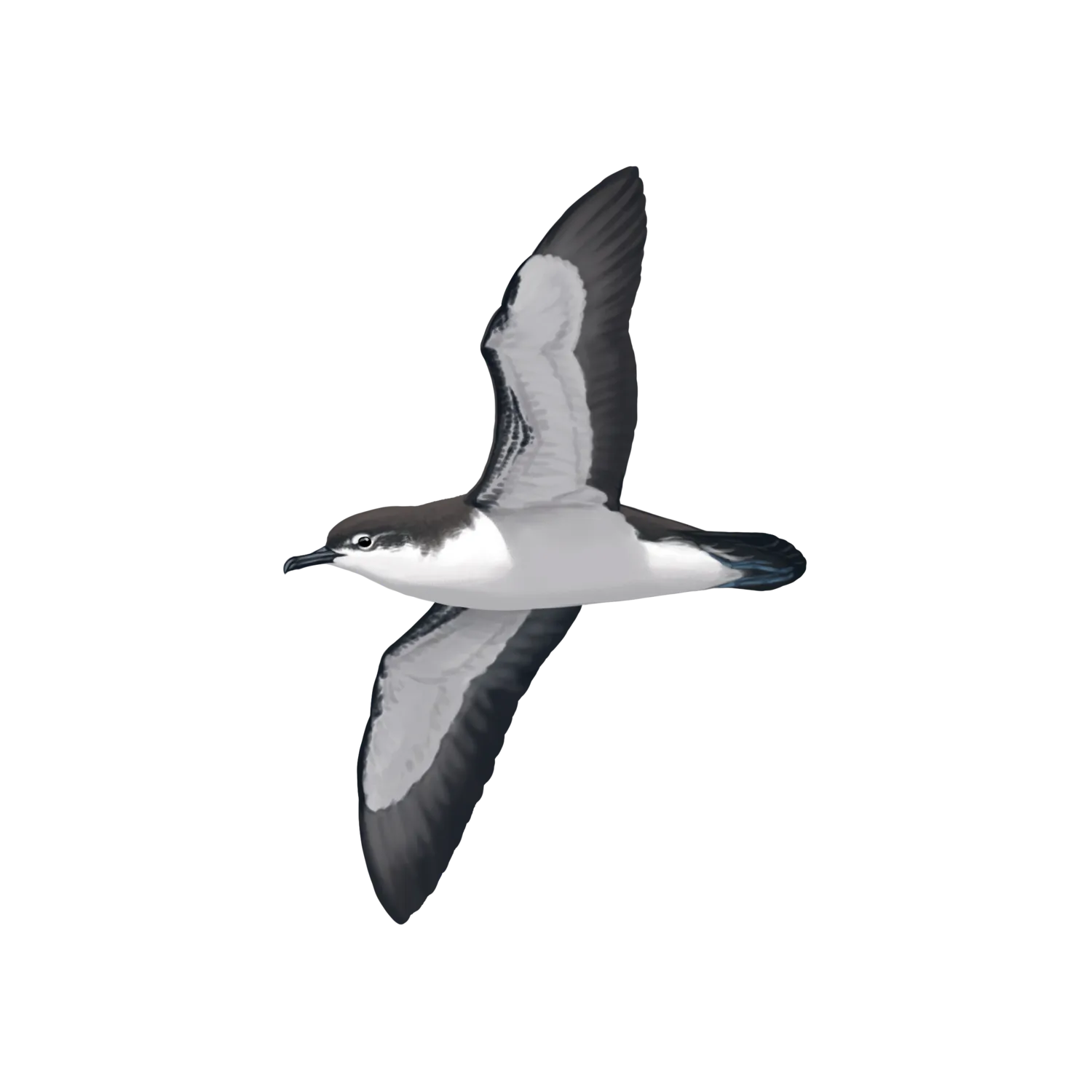
Boyd’s Shearwater
Scientific name: Puffinus boydi
Family procellariidae
Phenology
- Mainland
- Absent
- Madeira
- Vagrant
- Azores
- Vagrant
Conservation status
Learn more- Mainland
- Madeira
- Azores
- IUCN Global
Maps
Distribution | Breeding
Scale
Minimum value:
Maximum value:
Scale
Minimum value:
Maximum value:
Scale
Minimum value:
Maximum value:
Scale
Minimum value:>
Maximum value:<
Scale
Minimum value:
Maximum value:
Scale
Minimum value:>
Maximum value:>
Distribution based on seabird tracking data (locations/hexagone).
Colony(ies) of origin:
Device:
Data period / number of individuals:
Data period / number of individuals:
Distribution of seabird breeding colonies or sites (number of breeding pairs).
Distribution based on marine censuses (probability of occurrence).
Observed density based on marine censuses (birds/ km2).
Confirmed occurence during marines censuses.
Abundance of waders derived from Project Arenaria coastal surveys (birds/square).
Passage rates derived from RAM coastal surveys (birds/hour).
No data available for the selected period.
Presentation
Distribution, movements and phenology
The Boyd’s Shearwater breeds exclusively in the Cape Verde archipelago between December and May. Its colonies are distributed across the islands of Santo Antão, São Vicente, Branco, Raso, São Nicolau, Rombos, Brava, Fogo and Santiago, and the islets of Branco and Raso (Billerman et al. 2026). After breeding, it migrates mainly to the waters of the Central Atlantic, with some birds reaching the more coastal waters of northern Brazil (Zajková et al. 2017). There are records of some individuals occasionally visiting the colonies of the Barolo Shearwater Puffinus baroli in the Canary Islands. The fact that the species was recognised only very recently, combined with the difficulty of distinguishing it from its congener, the Barolo Shearwater, based solely on morphological characteristics, may explain the lack of records of its occurrence in Portuguese waters.
Based on data from 19 birds fitted with GLS between 2007 and 2013, the species was observed in the Azores and Madeira sub-areas of the Portuguese EEZ, mainly in the waters between the islands of the central Azores group and the island of Madeira. This area appears to be used more intensively during the non-breeding season.
Abundance and population trends
The species was recognised only very recently, and there are currently no estimates of its global population size. In the late 1980s and early 1990s, it was estimated that several thousand breeding pairs were nesting in Cape Verde. During that period, it likely occupied several islands and islets, with confirmed breeding or evidence of breeding on multiple islands (Gill & Donsker 2019). Currently, the population appears to be moderately stable, although there is a high degree of uncertainty due to the lack of systematic monitoring and the small size of the colonies. The absence of data prevents the assessment of robust population trends, and it has therefore not been possible to assess the environmental status of this population within the Portuguese EEZ.
Ecology and habitat
The Boyd’s Shearwater is a coastal and pelagic species that nests on islets and rocky slopes on some islands. It feeds mainly in relatively productive waters near the islands, using shallow-diving strategies. The diet consists mainly of small fish and cephalopods, and is dependent on local oceanographic conditions (Zajková et al. 2017).
Threats and conservation
The species has historically been exploited through the capture of adults and eggs, a pressure that still persists locally. Although its wide distribution across the Cape Verde islands suggests resilience, the colonies are small and isolated and remain highly vulnerable to any disturbances. Extreme environmental events may also reduce food availability (Pyle et al. 2011; dos Santos et al. 2022).
- Autor
Inês Lacerda
- Owners/sources of tracking data
Zajková Z, Militão T & González-Solís J (2017). Year-round movements of a small seabird and oceanic isotopic gradient in the tropical Atlantic. Marine Ecology Progress Series 579: 169-183. Bibliography:
Pyle P, Welch AJ & Fleischer RC (2011). A new species of shearwater (Puffinus) recorded from Midway Atoll, Northwestern Hawaiian Islands. The Condor: Ornithological Applications 113(3): 518–527. Bibliography:
Gill F & Donsker D (eds.) (2019). Loons, penguins, petrels. IOC World Bird List v 9.1. Bibliography:
dos Santos I, Ramos JA, Ceia FR, Rodrigues I, Almeida N, Antunes S, Carreiro AR, Matos DM, Lopes RJ, Geraldes P & Paiva VH (2022). Sexual segregation in the foraging distribution, behaviour, and trophic niche of the endemic Boyd’s shearwater (Puffinus lherminieri boydi). Marine Biology 169: 144. Bibliography:
Billerman SM, Keeney BL, Kirwan GM, Medrano F, Sly ND & Smith MG (eds.) (2026). Birds of the World. Cornell Laboratory of Ornithology, Ithaca, NY, USA. Data:
Gonzalez-Solis J (2014a). Dataset 980: Boyd’s Shearwater, Puffinus boydi, Geolocator (GLS), Ilhéu de Cima, Ilhéus do Rombo, Cape Verde, 2009–2014. BirdLife International Seabird Tracking Database. Downloaded from https://data.seabirdtracking.org/dataset/980/ on 30.11.2025. Data:
Gonzalez-Solis J (2009b). Dataset 981: Boyd’s Shearwater, Puffinus boydi, Geolocator (GLS), Raso, Raso Islet, Cape Verde, 2007–2009. BirdLife International Seabird Tracking Database. Downloaded from https://data.seabirdtracking.org/dataset/981/ on 30.11.2025. Glossary:
A group of marine molluscs that includes squids, cuttlefish and octopuses. Glossary:
The direction of change in the size of a population over time (increase, decline or stability). Glossary:
A concept defined under the Marine Strategy Framework Directive (MSFD), referring to the condition of the elements of the marine environment, including birds. It aims to assess whether ecosystems are healthy, balanced and capable of supporting ecological functions and human uses in a sustainable manner. The ultimate goal is for the components and ecosystems to achieve Good Environmental Status. Glossary:
Under the United Nations Convention on the Law of the Sea, coastal states are entitled to declare an EEZ comprising maritime area beyond their territorial waters. The national EEZ is delimited by an imaginary line situated 200 nautical miles from the coast, separating national waters from international or shared waters. Within its EEZ, each state has rights such as the exploitation of marine resources, the conduct of scientific research and the regulation of fishing by foreign vessels. Glossary:
The area or environment where organisms that do not depend on the seafloor normally live. It is the typical ecological environment of open ocean waters. The pelagic ecosystem does not include only the open sea; it also comprises the waters covering the continental shelf. The pelagic zone begins below the influence of tides and extends into the open ocean, at depths ranging from a few tens of metres to approximately 6,000 metres, and is divided into different layers. Glossary:
A small device attached to birds to study their large-scale movements (usually migration), which works by recording light intensity (from which the duration of night and the local midday time are estimated, and consequently the latitude and longitude on each day).