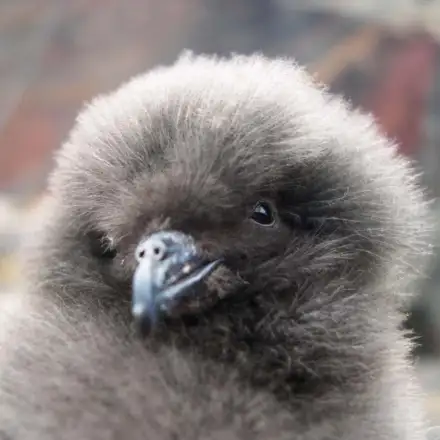
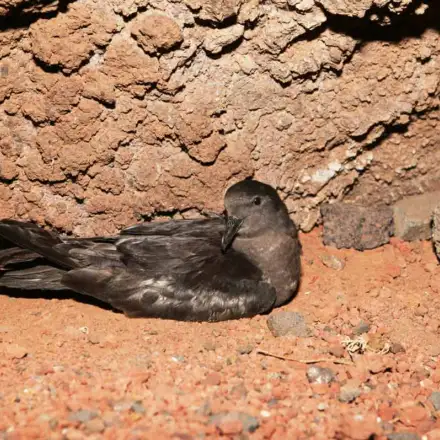
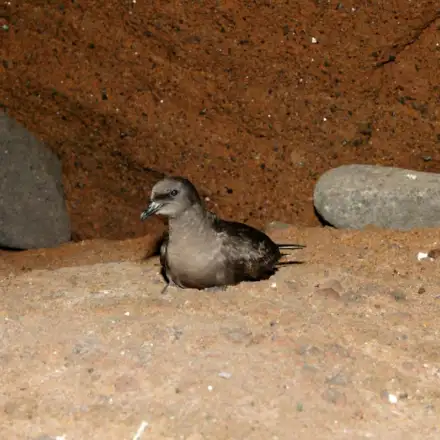
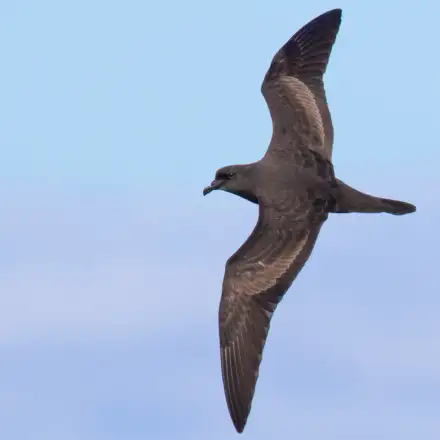
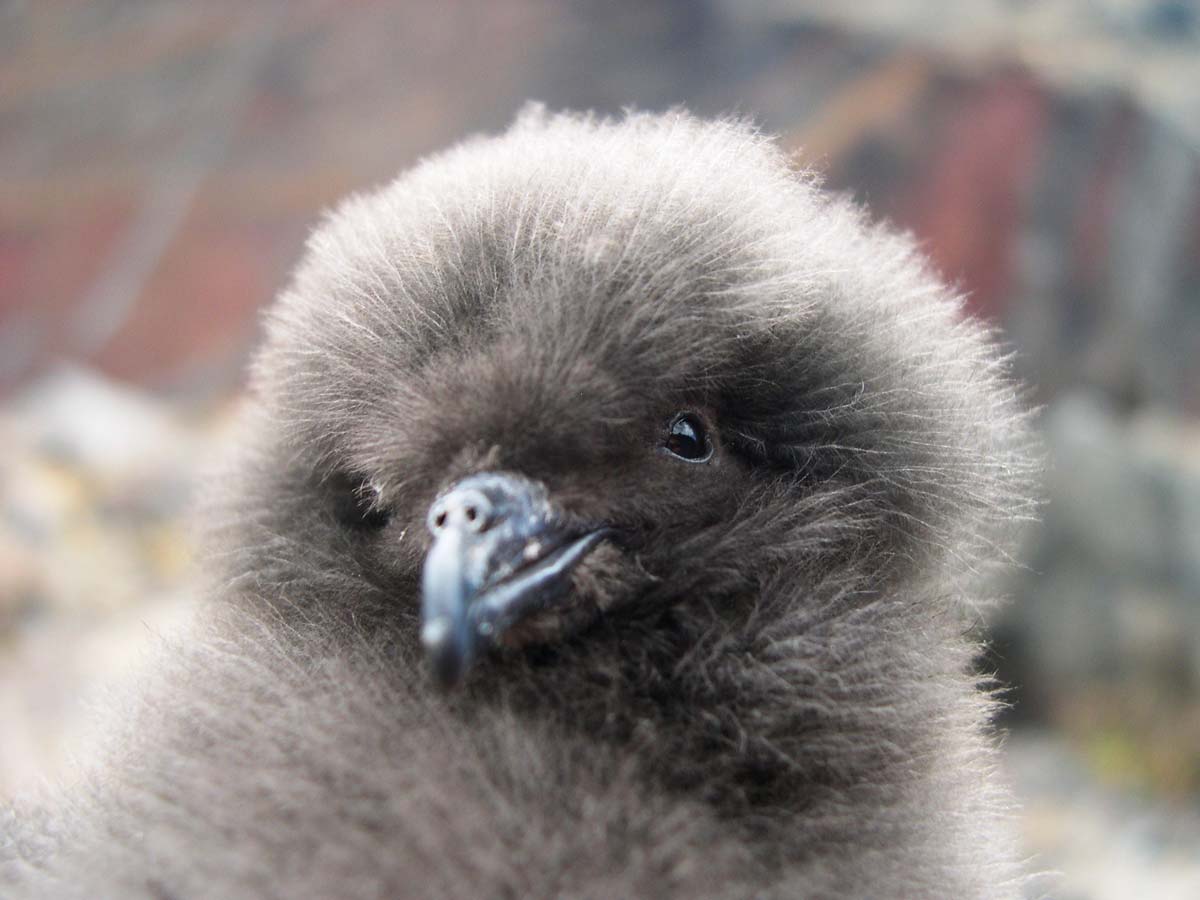
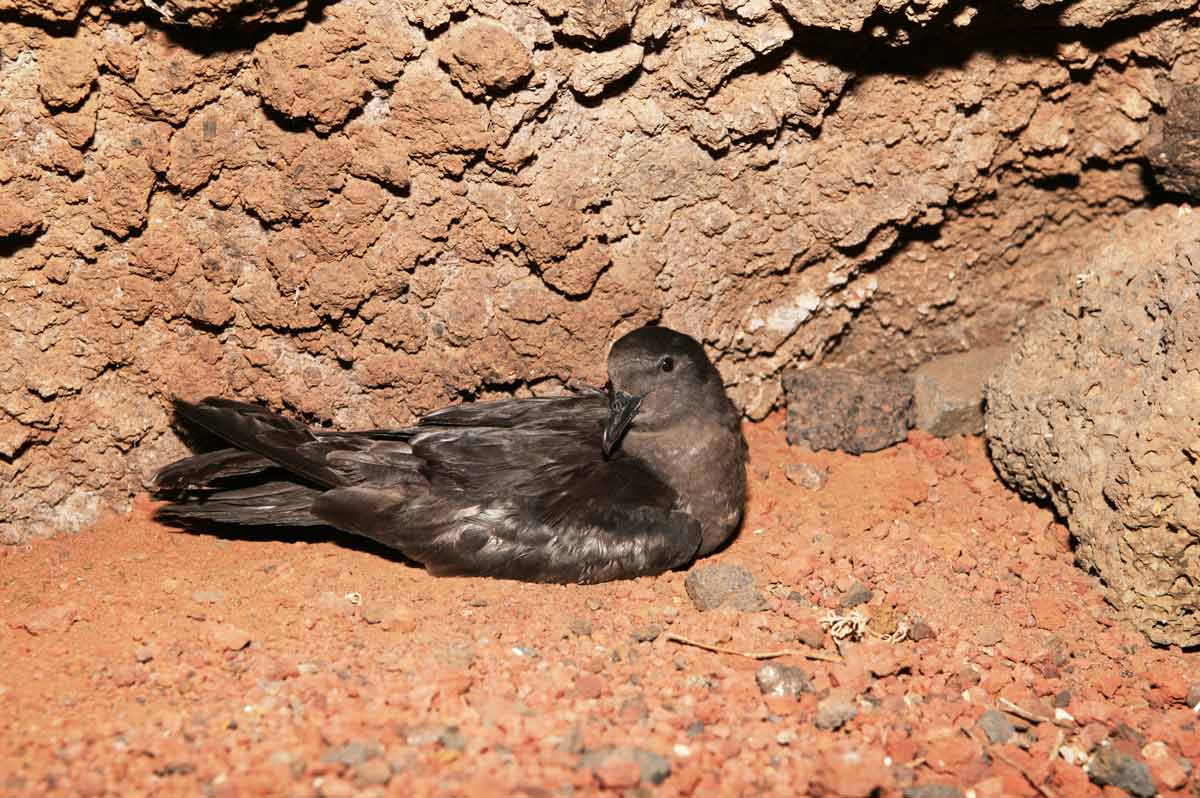
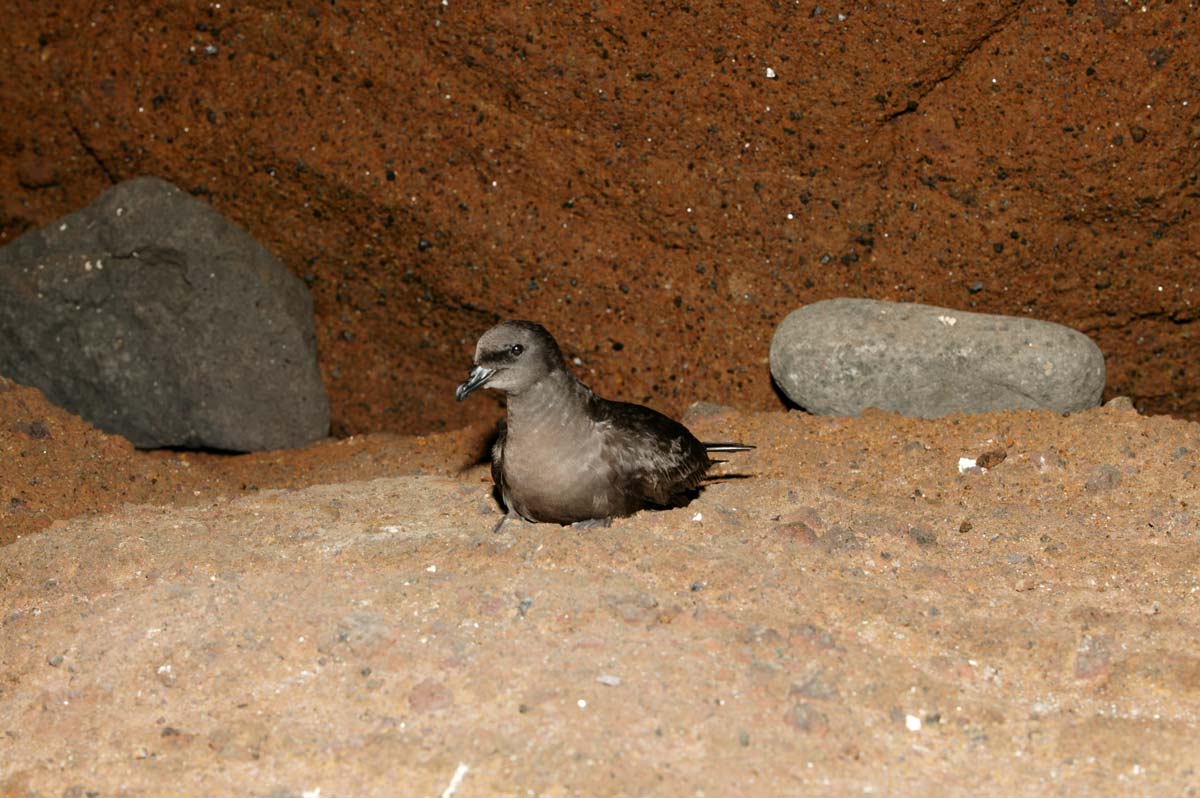
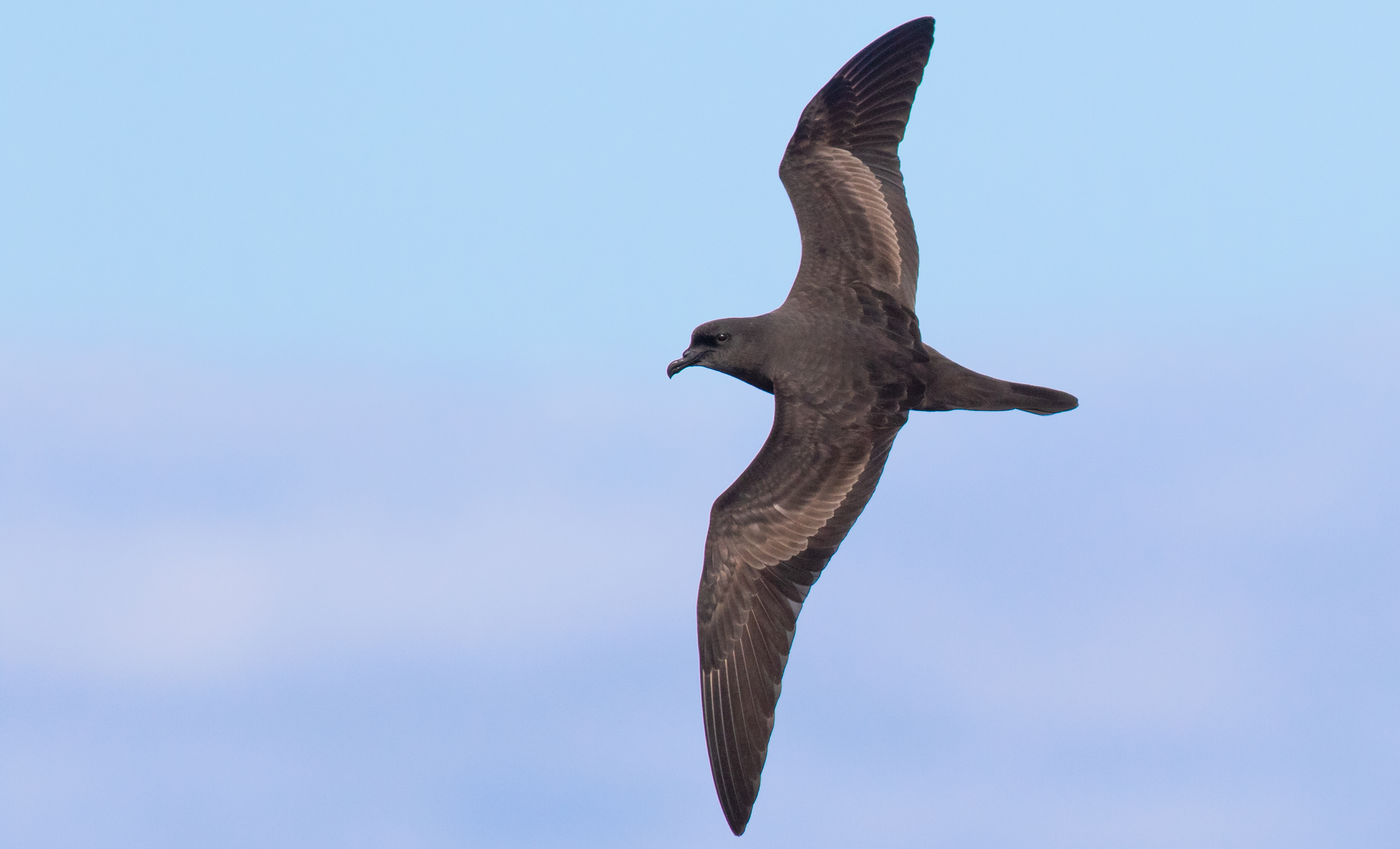
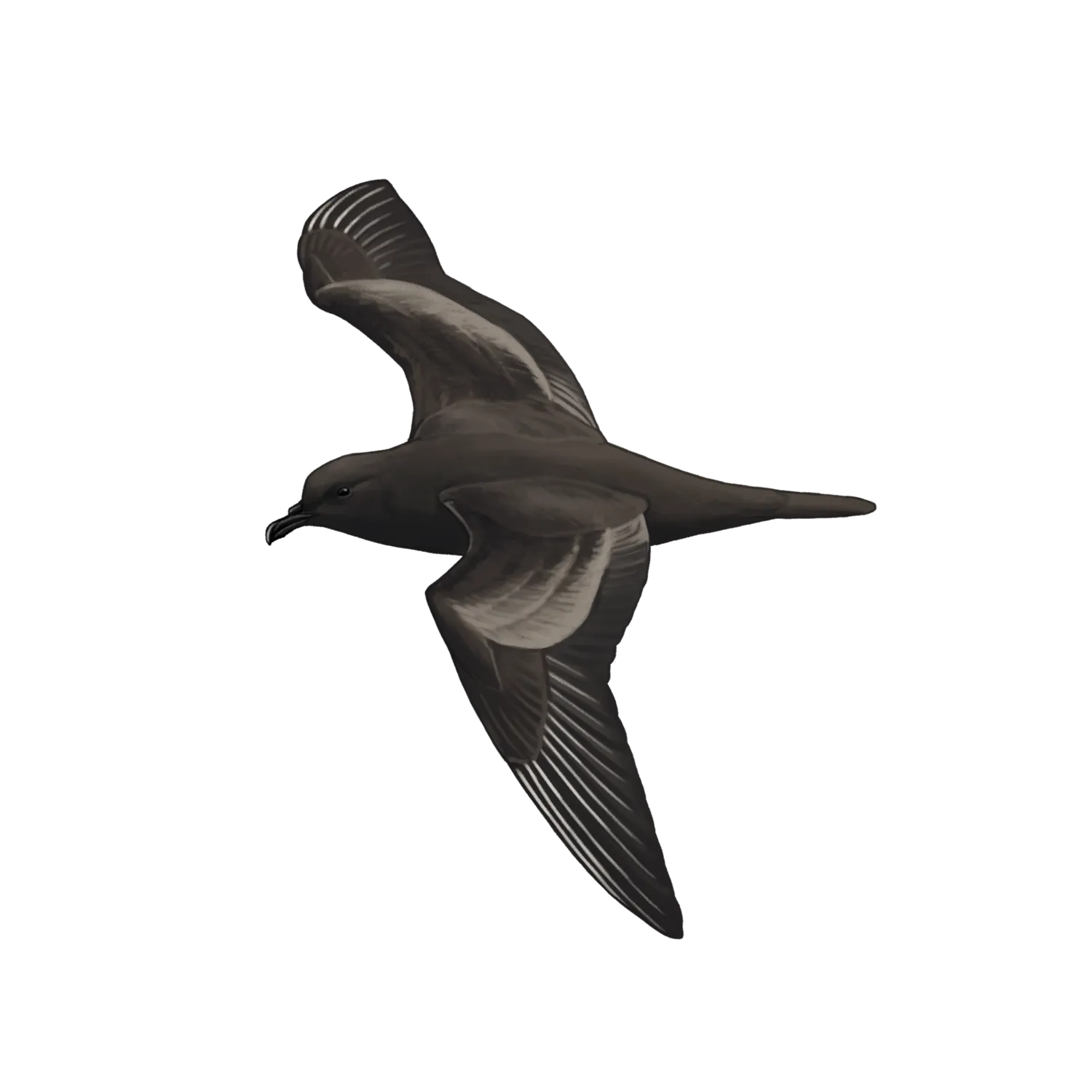
Bulwer's Petrel
Scientific name: Bulweria bulwerii
Family procellariidae
Phenology
- Mainland
- Summering
- Madeira
- Summer breeder
- Azores
- Summer breeder
Conservation status
Learn more- Mainland
- Madeira
- Azores
- IUCN Global
Data
Maps
Distribution | Breeding
Scale
Minimum value:
Maximum value:
Scale
Minimum value:
Maximum value:
Scale
Minimum value:
Maximum value:
Scale
Minimum value:>
Maximum value:<
Scale
Minimum value:
Maximum value:
Scale
Minimum value:>
Maximum value:>
Distribution based on seabird tracking data (locations/hexagone).
Colony(ies) of origin:
Device:
Data period / number of individuals:
Data period / number of individuals:
Distribution of seabird breeding colonies or sites (number of breeding pairs).
Distribution based on marine censuses (probability of occurrence).
Observed density based on marine censuses (birds/ km2).
Confirmed occurence during marines censuses.
Abundance of waders derived from Project Arenaria coastal surveys (birds/square).
Passage rates derived from RAM coastal surveys (birds/hour).
No data available for the selected period.
Presentation
Distribution, movements and phenology
The Bulwer’s Petrel is pantropical, occurring in the three major oceans. It breeds in the Eastern Atlantic, between the Azores and Cape Verde, and in the Western Pacific, from Asia to Hawaii, including the Marquesas Islands (Billerman et al. 2026). The species makes extensive use of the Portuguese EEZ during the breeding season (April to October), occurring mainly in the open sea (Meirinho et al. 2014; Dias et al. 2016; Ventura et al. 2022). On the Mainland, it occurs mainly in summer and autumn, along the continental shelf, avoiding coastal areas (Catry et al. 2010a). Individual tracking data from 66 birds from Madeira (Deserta Grande and Selvagem) and the Canary Islands, fitted with GPS devices between 2010 and 2021, confirm this distribution, highlighting the central and south-eastern areas of the Azores and south of Madeira. During the non-breeding season, available tracking data obtained from individuals from Selvagem Grande, Vila Islet (Azores) and Montaña Clara (Canary Islands) indicate that the birds migrate southwards, heading towards deep equatorial ocean waters (Zino et al. 2012; Dias et al. 2015; Ramos et al. 2015b; Cruz-Flores et al. 2019).
Abundance and population trends
The global population has been estimated at around 500,000 to 1,000,000 mature individuals, with a stable trend (BirdLife International 2025). In Portugal, the majority of the population appears to be concentrated on the Desertas Islands, where 45,000 pairs have been estimated (Catry et al. 2015). There are no robust estimates for the rest of the Madeira archipelago, but it is likely that the Selvagens colony numbers several thousand pairs (Equipa Atlas 2022). In the Azores archipelago, it breeds on the islet of Vila (Santa Maria) with 65 breeding pairs, on the islet of Baixo (Graciosa) with 17 pairs (Pipa & Silva 2021; Pipa et al. 2024) and on the islet of Praia in very small numbers. Due to a lack of data, an assessment of environmental status was only possible for the Azores population, which shows an increase in both indicators — abundance and productivity — and has achieved Good Environmental Status.
Ecology and habitat
The Bulwer’s Petrel is a pelagic bird, approaching land only during the breeding season. Nests are located in excavated burrows, small rock cavities and piles of scree (Billerman et al. 2026). The diet consists mainly of mesopelagic fish and cephalopods (Zonfrillo 1986; Neves et al. 2011a; Waap et al. 2017), feeding primarily at night and taking advantage of the vertical migration of prey to the surface of the water column (Dias et al. 2015; Dias et al. 2016).
Threats and conservation
Predation by introduced species, such as brown rats, cats and mustelids, is the main threat to the species, and the Bulwer’s Petrel is therefore confined to islands and islets free of these predators. Adults and chicks are also preyed upon by Yellow-legged Gulls Larus michahellis (Matias & Catry 2010). In the Azores, the species competes directly with the Cory’s Shearwater Calonectris borealis due to a scarcity of suitable nesting habitat (Ramos et al. 1997; Bried & Bourgeois 2005), leading a significant proportion of breeding individuals to fail to breed every year (Cruz-Flores et al. 2021). Other threats include light pollution (Rodríguez et al. 2012), the ingestion of marine litter (Carvalho 2012) and mercury accumulation (Furtado et al. 2021). Furthermore, the rise in sea surface temperature caused by climate change may negatively affect the species’ survival (Cruz-Flores et al. 2022).
- Autores
Paulo Catry, Marta Cruz-Flores, Francis Zino, Manuel Biscoito, Tânia Pipa, Maria P. Dias
- Owners/sources of tracking data
Arcos 2010b, Gonzalez-Solis 2010a, Gonzalez-Solis 2012a, Gonzalez-Solis 2013a, Gonzalez-Solis 2013b, Gonzalez-Solis 2020a, Gonzalez-Solis 2021b, Granadeiro & Catry 2015, Granadeiro & Catry 2021a, Granadeiro & Catry 2021b, Zino & Biscoito 2013
Dias MP, Romero J, Granadeiro JP, Catry T, Pollet IL & Catry P (2016). Distribution and at-sea activity of a nocturnal seabird, the Bulwer’s Petrel Bulweria bulwerii, during the incubation period. Deep Sea Research Part I: Oceanographic Research Papers 113: 49-56. Bibliography:
Zonfrillo B (1986). Diet of Bulwer’s petrel Bulweria bulwerii in the Madeiran archipelago. Ibis 128: 570-572. Bibliography:
Zino F, Philips R & Biscoito M (2012). Bulwer’s Petrel movements at sea – a preliminary analysis of datalogger results from Selvagem Grande. Birding World 26(2): 79-81. Bibliography:
Waap S, Symondson WOC, Granadeiro JP, Alonso H, Serra-Gonçalves C, Dias MP & Catry P (2017). The diet of a nocturnal pelagic predator, the Bulwer’s petrel, across the lunar cycle. Scientific Reports 7: 1384. Bibliography:
Ventura F, Catry P, Dias MP, Breed G, Folch A, Granadeiro JP (2022). A central place foraging seabird flies at right angles to the wind to jointly optimize locomotor and olfactory search efficiency. Proceedings of the Royal Society B 289: 20220895. Bibliography:
Rodríguez A, Rodríguez B & Lucas M P (2012). Trends in numbers of petrels attracted to artificial lights suggest population declines in Tenerife, Canary Islands. Ibis 154: 167-172. Bibliography:
Ramos R, Sanz V, Militão T, Bried J, Neves VC, Biscoito M, Phillips RA, Zino F & González-Solís J (2015b). Leapfrog migration and habitat preferences of a small oceanic seabird, Bulwer’s Petrel (Bulweria bulwerii). Journal of Biogeography, 42: 1651-1664. Bibliography:
Ramos JA, Monteiro LR , Sola E & Moniz Z (1997). Characteristics and competition for nest cavities in burrowing Procelariiformes. The Condor 99: 634-641. Bibliography:
Pipa T & Silva C (2021) Projeto LuMinAves (2017-2020): Reduzir o impacto da luz artificial nas aves marinhas. Lisboa (unpublished report). Bibliography:
Pipa T, Martins B, Silva C, Heber S, Magalhães M, Carriço R, Câmara R, Lourenço J, Aguiar L, Cunha B, Raposo P, Raposo A, Coelho R, Huamán M, Pinto F, Sequeira R, Carreira G, Pereira D & De la Cruz A (2024). Monitorização de aves marinhas Procellariiformes 2020-2023: Relatório da Ação D5.1. Projeto LIFE IP AZORES NATURA - LIFE17 IPE/PT/00010. Unpublished report. Bibliography:
Neves VC, Nolf D & Clarke MR (2011a). Diet of Bulwer’s Petrel (Bulweria bulwerii) in the Azores, NE Atlantic. Waterbirds 34 (3): 357-362. Bibliography:
Meirinho A, Barros N, Oliveira N, Catry P, Lecoq M, Paiva V, Geraldes P, Granadeiro JP, Ramírez I & Andrade J (2014). Atlas das Aves Marinhas de Portugal. Sociedade Portuguesa para o Estudo das Aves. Bibliography:
Furtado R, Granadeiro JP, Gatt MC, Rounds R, Horikohi K, Paiva VH, Menezes D, Pereira E & Catry P (2021). Monitoring of mercury in the mesopelagic domain of the Pacific and Atlantic oceans using body feathers of Bulwer’s petrels as bioindicators. Science of the Total Environment 775: 145796. Bibliography:
Equipa Atlas (2022). III Atlas das Aves Nidificantes de Portugal (2016-2021). SPEA, ICNF, LabOr/UÉ, IFCN. Portugal. Bibliography:
Dias MP, Alho M, Granadeiro JP & Catry P (2015a). Wanderer of the deepest seas: migratory behaviour and distribution of the highly pelagic Bulwer’s petrel. Journal of Ornithology 156(4): 955-962. Bibliography:
Cruz-Flores M, Ramos R, Sardà-Serra M, López-Souto S, Militão T & González-Solís J (2019). Migración y ecología espacial de la población española de petrel de Bulwer. Monografía n.º 4 del programa Migra. SEO/BirdLife. Madrid. Bibliography:
Cruz-Flores M, Pradel R, Bried J, Militão T, Neves VC, González-Solís J & Ramos R (2022). Will climate change affect the survival of tropical and subtropical species? Predictions based on Bulwer’s petrel populations in the NE Atlantic Ocean. Science of The Total Environment 847:157352. Bibliography:
Cruz-Flores M, Pradel R, Bried J, González-Solís J, Ramos R. (2021). Sex-specific costs of reproduction on survival in a long-lived seabird. Biology Letters 17: 20200804. Bibliography:
Catry P, Dias M, Catry T, Pedro P, Tenreiro P, Menezes D (2015). Bulwer’s petrels breeding numbers on the Desertas Islands (Madeira): improved estimates indicate the NE Atlantic population to be much larger than previously thought. Airo 23: 10-14. Bibliography:
Carvalho AT (2012). Ecologia alimentar de duas aves pelágicas das Ilhas Selvagens. Dissertação para obtenção de grau de Mestre em Biologia da Conservação. Faculdade de Ciências da Universidade de Lisboa, Lisboa. Bibliography:
Bried J & Bourgeois K (2005). Which future for Bulwer’s petrel in the Azores? Airo 15: 51-55. Bibliography:
BirdLife International (2025). IUCN Red List for birds. Downloaded from https://datazone.birdlife.org on 30.11.2025. Bibliography:
Billerman SM, Keeney BL, Kirwan GM, Medrano F, Sly ND & Smith MG (eds.) (2026). Birds of the World. Cornell Laboratory of Ornithology, Ithaca, NY, USA. Bibliography:
Matias R & Catry P (2010). The diet of Atlantic yellow-legged gulls (Larus michahellis atlantis) at an oceanic seabird colony: estimating predatory impact upon breeding petrels. European Journal of Wildlife Research 56: 861-869 Bibliography:
Catry P, Costa H, Elias G & Matias R (2010a). Aves de Portugal, Ornitologia do Território Continental. Assírio e Alvim, Lisboa Data:
Zino F & Biscoito M (2013). Dataset 1121: Bulwer's Petrel, Bulweria bulwerii, Geolocator (GLS), Selvagens, Madeira, Portugal, 2009–2013. BirdLife International Seabird Tracking Database. Downloaded from https://data.seabirdtracking.org/dataset/1121/ on 30.11.2025. Data:
Granadeiro JP & Catry P (2021b). Dataset 1868: Bulwer's Petrel, Bulweria bulwerii, GPS, Selvagens, Madeira, Portugal, 2016–2021. BirdLife International Seabird Tracking Database. Downloaded from https://data.seabirdtracking.org/dataset/1868/ on 30.11.2025. Data:
Granadeiro JP & Catry P (2021a). Dataset 1870: Bulwer's Petrel, Bulweria bulwerii, GPS, Selvagens, Madeira, Portugal, 2016–2021. BirdLife International Seabird Tracking Database. Downloaded from https://data.seabirdtracking.org/dataset/1870/ on 30.11.2025. Data:
Granadeiro JP & Catry P (2015). Dataset 1869: Bulwer's Petrel, Bulweria bulwerii, GPS, Deserta Grande, Madeira, Portugal, 2015. BirdLife International Seabird Tracking Database. Downloaded from https://data.seabirdtracking.org/dataset/1869/ on 30.11.2025. Data:
Gonzalez-Solis J (2021b). Dataset 1807: Bulwer's Petrel, Bulweria bulwerii, GPS, M Clara, Canarias, Spain, 2020. BirdLife International Seabird Tracking Database. Downloaded from https://data.seabirdtracking.org/dataset/1807/ on 30.11.2025. Data:
Gonzalez-Solis J (2020a). Dataset 1639: Bulwer's Petrel, Bulweria bulwerii, GPS, M Clara, Canarias, Spain, 2020. BirdLife International Seabird Tracking Database. Downloaded from https://data.seabirdtracking.org/dataset/1639/ on 30.11.2025. Data:
Gonzalez-Solis J (2013b). Dataset 973: Bulwer's Petrel, Bulweria bulwerii, Geolocator (GLS), Vila, Azores, Portugal, 2007–2013. BirdLife International Seabird Tracking Database. Downloaded from https://data.seabirdtracking.org/dataset/973/ on 30.11.2025. Data:
Gonzalez-Solis J (2013a). Dataset 971: Bulwer's Petrel, Bulweria bulwerii, Geolocator (GLS), M Clara, Canarias, Spain, 2010–2013. BirdLife International Seabird Tracking Database. Downloaded from https://data.seabirdtracking.org/dataset/971/ on 30.11.2025. Data:
Gonzalez-Solis J (2012a). Dataset 970: Bulwer's Petrel, Bulweria bulwerii, Geolocator (GLS), Ilhéu de Cima, Ilhéus do Rombo, Cape Verde, 2010–2012. BirdLife International Seabird Tracking Database. Downloaded from https://data.seabirdtracking.org/dataset/970/ on 30.11.2025. Data:
Gonzalez-Solis J (2010a). Dataset 972: Bulwer's Petrel, Bulweria bulwerii, Geolocator (GLS), Raso, Raso Islet, Cape Verde, 2007–2010. BirdLife International Seabird Tracking Database. Downloaded from https://data.seabirdtracking.org/dataset/972/ on 30.11.2025. Data:
Arcos JM (2010b). Dataset 859: Bulwer's Petrel, Bulweria bulwerii, PTT, Alegranza, Canarias, Spain, 2010. BirdLife International Seabird Tracking Database. Downloaded from https://data.seabirdtracking.org/dataset/859/ on 30.11.2025. Glossary:
Individuals capable of breeding, used as a reference in population estimates. Glossary:
A group of marine molluscs that includes squids, cuttlefish and octopuses. Glossary:
Alteration of natural night-time light levels due to artificial lighting. Glossary:
Persistent changes in global or regional climate patterns, influenced by natural and anthropogenic factors. Glossary:
Daily movement of organisms between deep and surface layers of the water column. Glossary:
Geographical distribution covering tropical regions of various oceans or continents. Glossary:
A species or parameter that reflects the state of an ecosystem or environmental changes. Glossary:
Monitoring the movements of individuals using tracking devices. Glossary:
The direction of change in the size of a population over time (increase, decline or stability). Glossary:
A measure of a population’s breeding success, generally expressed as the average number of chicks produced per pair. Glossary:
A concept defined under the Marine Strategy Framework Directive (MSFD), referring to the condition of the elements of the marine environment, including birds. It aims to assess whether ecosystems are healthy, balanced and capable of supporting ecological functions and human uses in a sustainable manner. The ultimate goal is for the components and ecosystems to achieve Good Environmental Status. Glossary:
A small device attached to birds to study their movements at a finer scale (usually during the breeding season). These devices use the Global Positioning System (GPS) to obtain information on position, latitude, longitude and altitude at any point on Earth, using a network of orbiting satellites. Glossary:
Waters situated away from the coast, beyond the continental shelf. It is used in matters relating to maritime activities, such as fishing, the oil industry and the exploitation of renewable energy. These waters are characterised by being located in the open sea, at great depths and far from coastal influences such as rivers and estuaries. They are thus distinguished from coastal waters. Glossary:
Under the United Nations Convention on the Law of the Sea, coastal states are entitled to declare an EEZ comprising maritime area beyond their territorial waters. The national EEZ is delimited by an imaginary line situated 200 nautical miles from the coast, separating national waters from international or shared waters. Within its EEZ, each state has rights such as the exploitation of marine resources, the conduct of scientific research and the regulation of fishing by foreign vessels. Glossary:
The portion of the seabed that begins at the coastline and slopes gently downwards to the continental slope (where the slope is much steeper). On average, the continental shelf extends to a depth of 200 metres. Glossary:
The area or environment where organisms that do not depend on the seafloor normally live. It is the typical ecological environment of open ocean waters. The pelagic ecosystem does not include only the open sea; it also comprises the waters covering the continental shelf. The pelagic zone begins below the influence of tides and extends into the open ocean, at depths ranging from a few tens of metres to approximately 6,000 metres, and is divided into different layers. Glossary:
Carnivorous mammals belonging to the family Mustelidae. This family, the largest in the order Carnivora, includes ferrets, weasels, martens, otters, badgers and many more. Glossary:
A marine organism living in the water column generally between 200 and 1,000 metres in depth. Glossary:
A term generally applied to a species introduced deliberately or accidentally into a specific location or region outside its original range. Depending on its adaptation to the new environment, an introduced species may or may not become naturalised and proliferate.