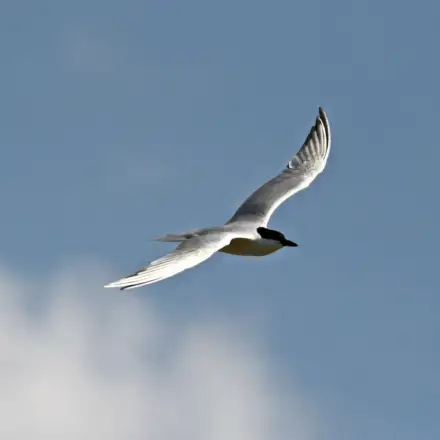
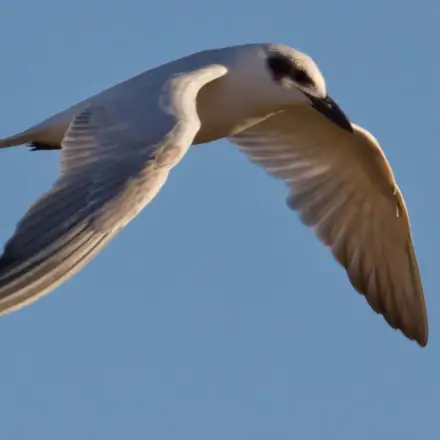
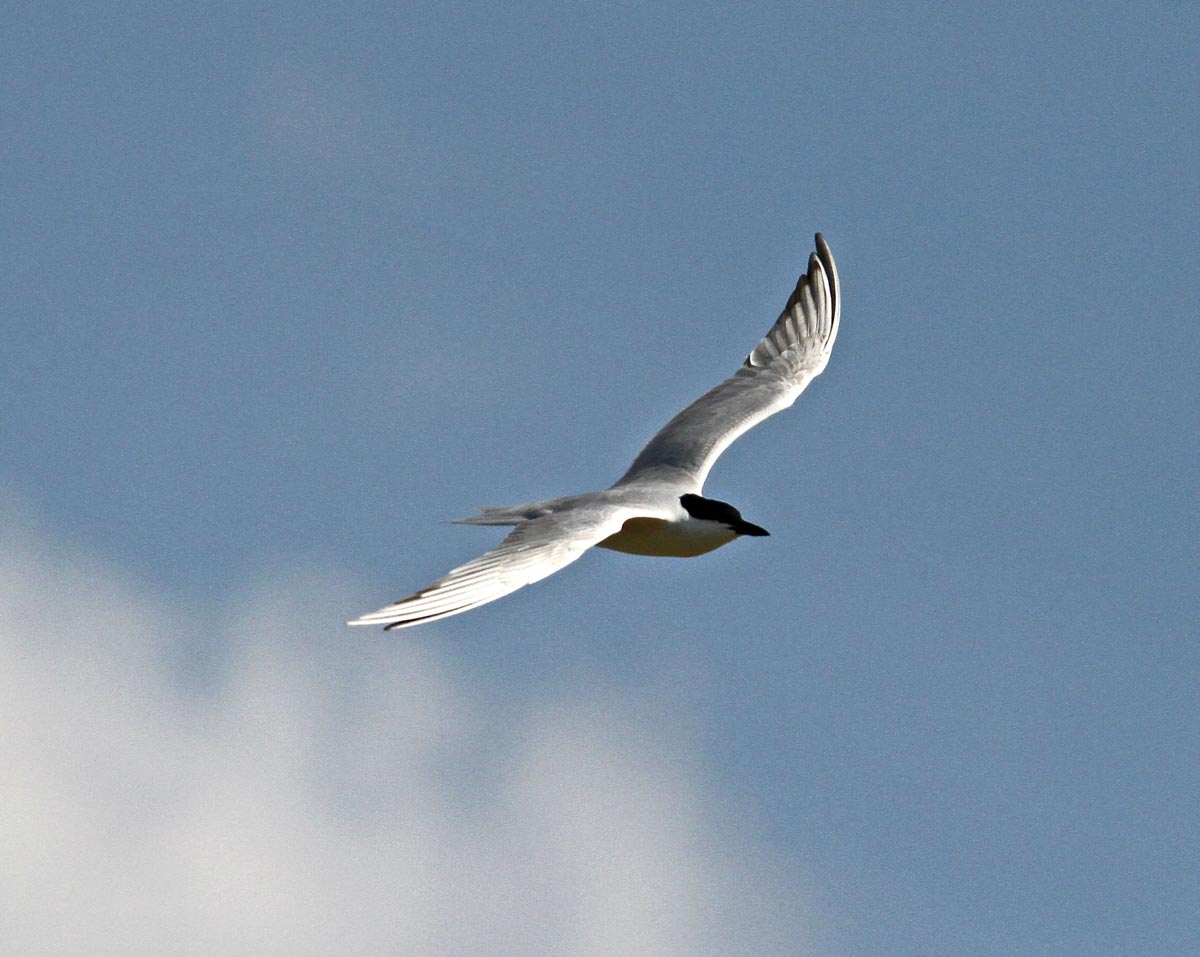
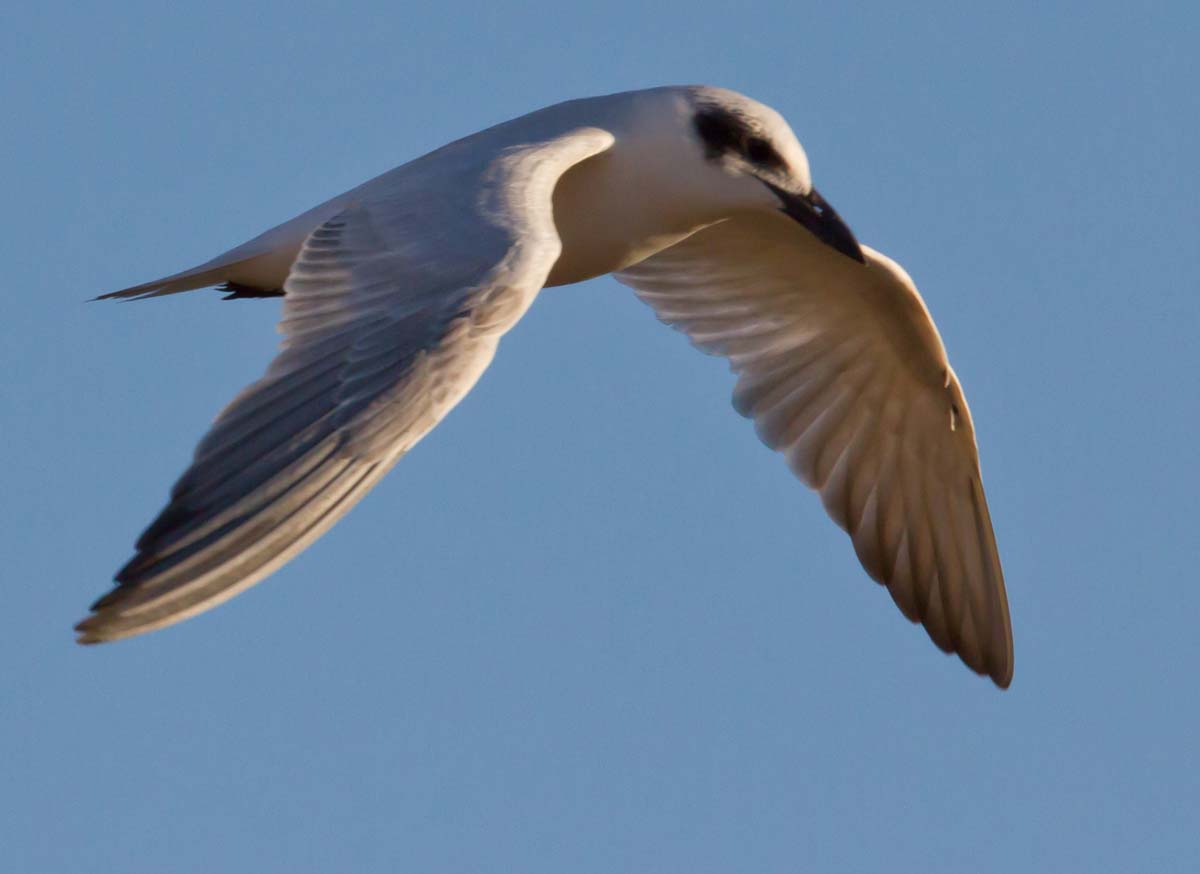
Common Gull-billed Tern
Scientific name: Gelochelidon nilotica
Family laridae
Phenology
- Mainland
- Summer breeder and passage migrant
- Madeira
- Vagrant
- Azores
- Vagrant
Conservation status
Learn more- Mainland
- Madeira
- Azores
- IUCN Global
Data
Maps
Colonies | Breeding
Scale
Minimum value:
Maximum value:
Scale
Minimum value:
Maximum value:
Scale
Minimum value:
Maximum value:
Scale
Minimum value:>
Maximum value:<
Scale
Minimum value:
Maximum value:
Scale
Minimum value:>
Maximum value:>
Distribution based on seabird tracking data (locations/hexagone).
Colony(ies) of origin:
Device:
Data period / number of individuals:
Data period / number of individuals:
Distribution of seabird breeding colonies or sites (number of breeding pairs).
Distribution based on marine censuses (probability of occurrence).
Observed density based on marine censuses (birds/ km2).
Confirmed occurence during marines censuses.
Abundance of waders derived from Project Arenaria coastal surveys (birds/square).
Passage rates derived from RAM coastal surveys (birds/hour).
No data available for the selected period.
Presentation
Distribution, movements and phenology
The Common Gull-billed Tern breeds discontinuously between April and July in southern and central Europe, Asia, North and South America, and Australia (Billerman et al. 2026). Part of the European population is migratory, wintering in West Africa. In Mainland Portugal, the Common Gull-billed Tern nests south of the Tagus in breeding populations located mainly in reservoirs in the Alentejo, but also in the Tagus estuary, and is likely to breed in the Ria de Aveiro (Equipa Atlas 2022). The first birds appear from March onwards, with the majority arriving in April and remaining observable until mid-September. Along the coast, it occurs in small numbers, mainly in estuarine coastal areas between May and August (Catry et al. 2010a). In recent years, it has been a regular visitor to the Azores throughout the year, with few records from Madeira, where it occurs mainly during the summer (Correia-Fagundes et al. 2021; eBird 2026).
Abundance and population trends
The European population has been estimated at between 16,600 and 21,200 breeding pairs, with an upward trend, although the global population is thought to be in decline (BirdLife International 2025). In Portugal, it is estimated that there are between 1,000 and 2,000 breeding pairs, with the Alentejo being the main area of occurrence, particularly the Alqueva and Caia reservoirs (Equipa Atlas 2022). Occupancy of these nesting areas is dynamic, with interannual fluctuations in the number of breeding pairs, and no evidence of a consistent trend of sustained growth in recent years. This pattern reflects the irregular nature of nesting and the high dependence on favourable environmental conditions.
This dynamic is corroborated by the analysis of the environmental status for the breeding population abundance indicator, which shows strong interannual variability. Nevertheless, the species has achieved Good Environmental Status for this indicator. In the case of the Azores and Madeira, the available information does not allow for an assessment of the species’ population trends, making it impossible to evaluate its environmental status.
Ecology and habitat
The Common Gull-billed Tern is mainly found in estuaries, coastal lagoons, salt pans, salt marshes, flooded rice paddies and inland wetlands, including reservoirs and temporary lakes. Its diet consists mainly of small fish, but also includes aquatic and terrestrial insects, crustaceans, amphibians and small reptiles (Billerman et al. 2026), which it catches by skimming close to the water’s surface or the ground. It is a colonial species that nests on sandy ground, mudflats or exposed banks, usually in places with very sparse or absent vegetation.
Threats and conservation
The main threats to the Common Gull-billed Tern in Portugal are linked to the loss, degradation and disturbance of its nesting habitats, particularly coastal and inland wetlands. Drainage, agricultural intensification, changes in salt pan management, human disturbance during the breeding season, predation of eggs and chicks, and artificial fluctuations in water levels are critical factors. Climate change may exacerbate these pressures by increasing the frequency of droughts and extreme weather events. The conservation of the species depends on the proper management of wetlands, the control of disturbance at breeding sites, and the regular monitoring of populations. The creation or maintenance of artificial islands and open areas may also promote breeding success.
- Autor
Joana Andrade
Equipa Atlas (2022). III Atlas das Aves Nidificantes de Portugal (2016-2021). SPEA, ICNF, LabOr/UÉ, IFCN. Portugal. Bibliography:
eBird (2026). eBird: An online database of bird distribution and abundance (web application). eBird, Cornell Lab of Ornithology, Ithaca, New York. Downloaded from http://www.ebird.org on 02.02.2026. Bibliography:
Correia-Fagundes C, Romano H, Zino FJA & Biscoito M (2021). Birds of the archipelagos of Madeira and the Selvagens III. New records and checklist update (2010-2020). Boletim do Museu de História Natural do Funchal LXXI: 5-20. Bibliography:
BirdLife International (2025). IUCN Red List for birds. Downloaded from https://datazone.birdlife.org on 30.11.2025. Bibliography:
Billerman SM, Keeney BL, Kirwan GM, Medrano F, Sly ND & Smith MG (eds.) (2026). Birds of the World. Cornell Laboratory of Ornithology, Ithaca, NY, USA. Bibliography:
Catry P, Costa H, Elias G & Matias R (2010a). Aves de Portugal, Ornitologia do Território Continental. Assírio e Alvim, Lisboa Glossary:
A group of marine arthropods that are important in the marine food chain. Glossary:
Persistent changes in global or regional climate patterns, influenced by natural and anthropogenic factors. Glossary:
A species or parameter that reflects the state of an ecosystem or environmental changes. Glossary:
The direction of change in the size of a population over time (increase, decline or stability). Glossary:
A concept defined under the Marine Strategy Framework Directive (MSFD), referring to the condition of the elements of the marine environment, including birds. It aims to assess whether ecosystems are healthy, balanced and capable of supporting ecological functions and human uses in a sustainable manner. The ultimate goal is for the components and ecosystems to achieve Good Environmental Status.