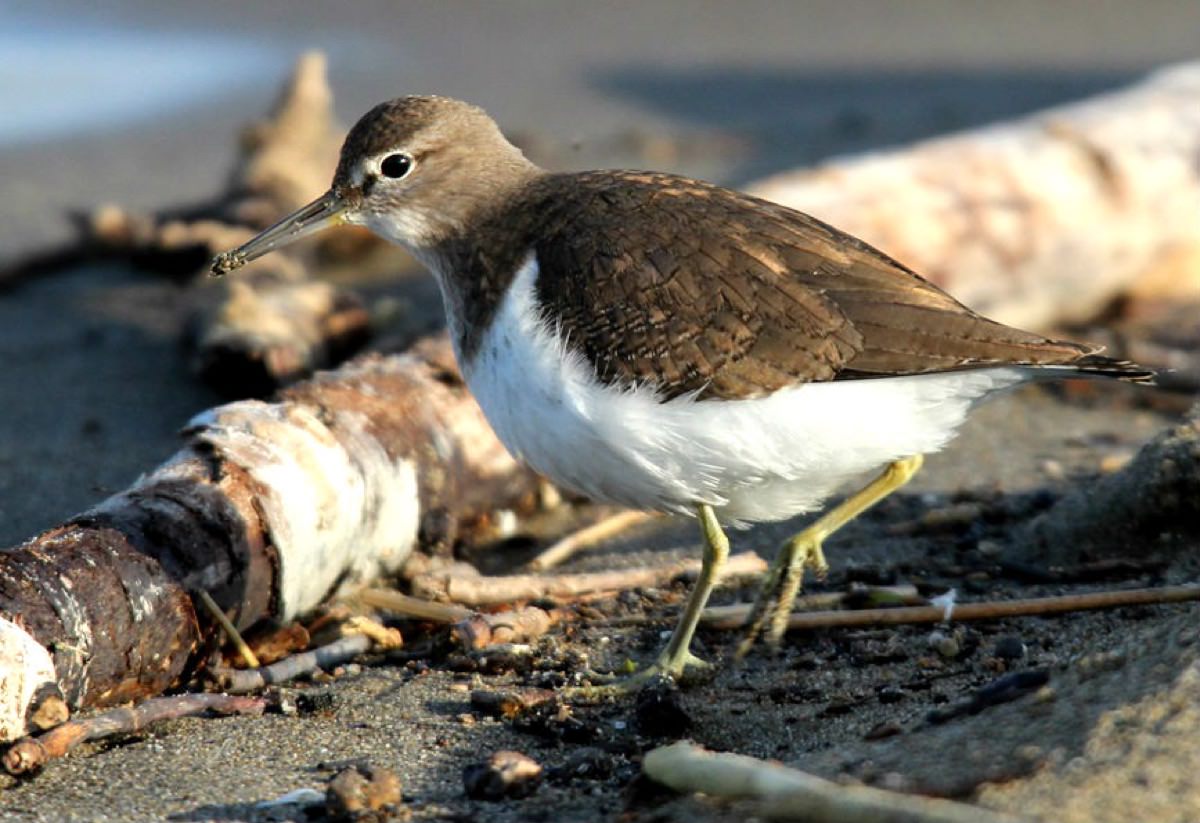
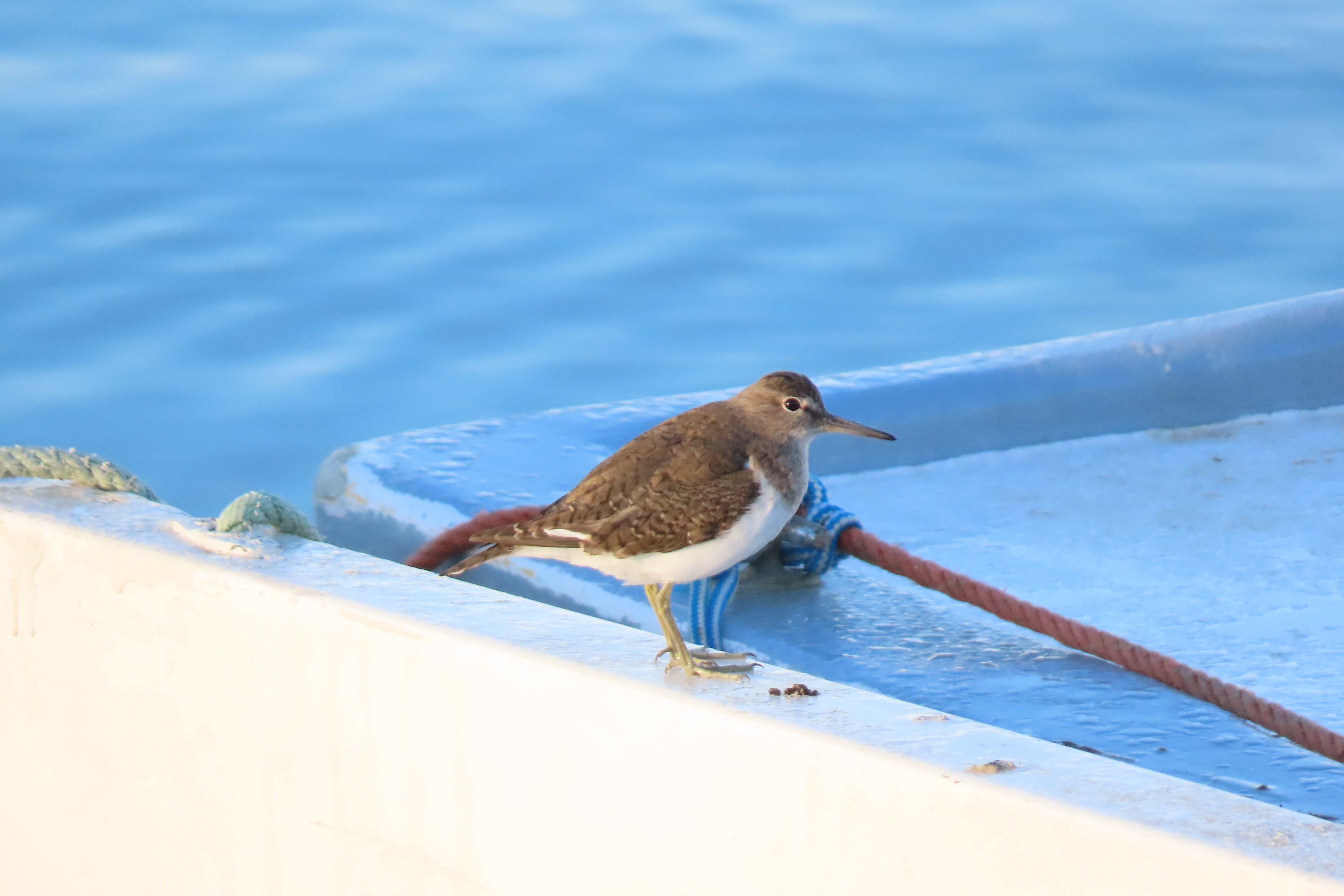
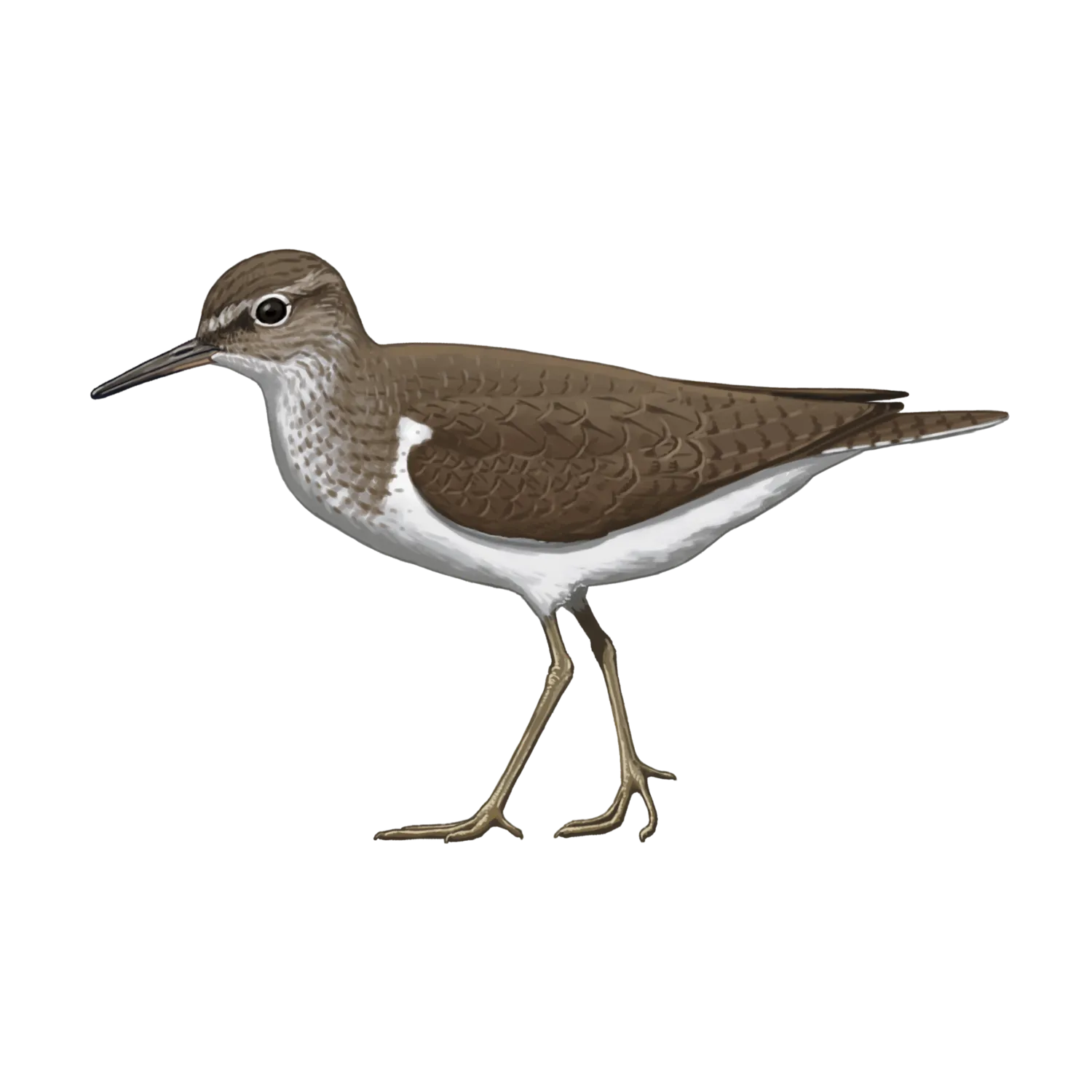
Common Sandpiper
Scientific name: Actitis hypoleucos
Family scolopacidae
Phenology
- Mainland
- Summer breeder, wintering and passage migrant
- Madeira
- Wintering and passage migrant
- Azores
- Vagrant
Conservation status
Learn more- Mainland
- Breeding population Wintering population
- Madeira
- Azores
- IUCN Global
Data
Maps
Arenaria | Winter
Scale
Minimum value:
Maximum value:
Scale
Minimum value:
Maximum value:
Scale
Minimum value:
Maximum value:
Scale
Minimum value:>
Maximum value:<
Scale
Minimum value:
Maximum value:
Scale
Minimum value:>
Maximum value:>
Distribution based on seabird tracking data (locations/hexagone).
Colony(ies) of origin:
Device:
Data period / number of individuals:
Data period / number of individuals:
Distribution of seabird breeding colonies or sites (number of breeding pairs).
Distribution based on marine censuses (probability of occurrence).
Observed density based on marine censuses (birds/ km2).
Confirmed occurence during marines censuses.
Abundance of waders derived from Project Arenaria coastal surveys (birds/square).
Passage rates derived from RAM coastal surveys (birds/hour).
No data available for the selected period.
Presentation
Distribution, movements and phenology
The Common Sandpiper breeds across Eurasia, including Mainland Portugal, although its distribution is localised and fragmented, and it is most commonly found in the southern and eastern regions (Catry et al. 2010a; Billerman et al. 2026). There is a considerable migratory flow through Portugal, particularly between summer and early autumn (Alves et al. 2010; Catry et al. 2010a; Alves et al. 2011), of birds likely originating from countries in Western and Northern Europe. In winter, it occurs in Southern Europe, with the majority of the population concentrated in Africa and Southern Asia (Delany et al. 2009). During these periods, the Portuguese Mainland coast, particularly in the south, becomes a significant area of occurrence, including estuaries, coastal inlets and coastal lagoons. The migratory behaviour of breeding birds is poorly understood (Catry et al. 2010a), though dispersive movements are assumed. On the islands, it occurs occasionally, during winter or migration (Madeira), or as a vagrant (Azores) (Equipa Atlas 2018).
Abundance and population trends
The European population has been estimated at between 2,060,000 and 2,980,000 mature individuals, appearing to be stable (BirdLife International 2025), though it may have experienced a slight decline in the past (Delany et al. 2009). In Portugal, the available data are insufficient to produce reliable population estimates. However, there are thought to be 500–1,000 breeding pairs. The trend of the breeding population on the Mainland is considered uncertain or possibly stable, although there is evidence of a contraction in its distribution (Equipa Atlas 2022). The assessment of the environmental status for the indicator of wintering population abundance indicates this stability, having achieved Good Environmental Status. In contrast, there is a marked decrease in Madeira and a gradual decline in the Azores, neither of which have achieved Good Environmental Status.
Ecology and habitat
During the breeding season in Portugal, it is mainly found in lowland streams with stony or sandy substrates and open banks, without dense riparian vegetation. It is also associated with weirs and dams. Outside this season, it occurs in estuaries, coastal lagoons, salt pans, and along the marine coast. On beaches, it is associated with rocky areas with a narrow intertidal zone, usually in isolated groups (Lourenço et al. 2013). It feeds on amphipods, polychaetes and decapods (Arcas 2004).
Threats and conservation
The Common Sandpiper is classified as Vulnerable for the breeding population and Near Threatened for the wintering population, in both cases due to an estimated population of fewer than 1,000 individuals (Almeida et al. 2022). There is no concrete information on threats to the species, and it is likely to suffer from increasing changes to riverbanks and disturbance from human activities. The presence of recreational anglers or walkers, particularly in nesting areas, may unintentionally disturb the birds, leading to breeding failure. These threats extend to other European populations (Delany et al. 2009).
- Autor
Pedro A. Salgueiro
Lourenço PM, Catry P, Lecoq M, Ramírez I & Granadeiro JP (2013). Role of disturbance, geology and other environmental factors in determining abundance and diversity in coastal avian communities during winter. Marine Ecology Progress Series 479: 223-234. Bibliography:
Equipa Atlas (2022). III Atlas das Aves Nidificantes de Portugal (2016-2021). SPEA, ICNF, LabOr/UÉ, IFCN. Portugal. Bibliography:
Equipa Atlas (2018). Atlas das Aves Invernantes e Migradoras de Portugal 2011-2013. Sociedade Portuguesa para o Estudo das Aves, LabOr- Laboratório de Ornitologia – ICAAM - Universidade de Évora, Instituto da Conservação da Natureza e das Florestas, Instituto das Florestas e Conservação da Natureza (Madeira), Secretaria Regional da Energia, Ambiente e Turismo (Açores) e Associação Portuguesa de Anilhadores de Aves. Lisboa. Bibliography:
Delany S, Dodman T, Stroud D & Scott D (2009). An atlas of wader population in Africa and western Eurasia. Wetlands International, Wageningen. Bibliography:
BirdLife International (2025). IUCN Red List for birds. Downloaded from https://datazone.birdlife.org on 30.11.2025. Bibliography:
Billerman SM, Keeney BL, Kirwan GM, Medrano F, Sly ND & Smith MG (eds.) (2026). Birds of the World. Cornell Laboratory of Ornithology, Ithaca, NY, USA. Bibliography:
Arcas J (2004). Dieta y selección de presas del andarríos chico Actitis hypoleucos durante el invierno. Ardeola 51(1): 203-213. Bibliography:
Alves JA, Dias M, Rocha A, Barreto B, Catry T, Costa H, Fernandes P, Ginja B, Glen K, Jara J, Martins R, Moniz F, Pardal S, Pereira T, Rodrigues J & Rolo M (2011). Monitorização das populações de aves aquáticas dos estuários do Tejo, Sado e Guadiana. Anuário Ornitólogico 8: 118-133. Bibliography:
Alves JA, Dias M, Catry T, Costa H, Fernandes P, Martins R, Moniz F & Rocha A (2010). Monitorização das populações de aves aquáticas dos Estuários do Tejo e do Guadiana. Relatório do ano de 2009. Anuário Ornitólogico 7: 109-119. Bibliography:
Almeida J, Godinho C, Leitão D & Lopes RJ (2022). Lista Vermelha das Aves de Portugal Continental. SPEA, ICNF, LabOR/UÉ, CIBIO/BIOPOLIS, Portugal. Bibliography:
Catry P, Dias M, Phillips RA & Granadeiro JP (2011a). Different means to the same end: long-distance migrant seabirds from two colonies differ in behaviour, despite common wintering grounds. PLoS ONE 6: e26079 Glossary:
Individuals capable of breeding, used as a reference in population estimates. Glossary:
Order of crustaceans including crabs, prawns and crayfish. Glossary:
Small crustaceans abundant in aquatic and intertidal environments, important in the marine food chain. Glossary:
Tree or shrub vegetation associated with riverbanks and watercourses. Glossary:
Coastal zone between high and low tide, subject to alternating submersion and exposure. Glossary:
A species or parameter that reflects the state of an ecosystem or environmental changes. Glossary:
The direction of change in the size of a population over time (increase, decline or stability). Glossary:
A concept defined under the Marine Strategy Framework Directive (MSFD), referring to the condition of the elements of the marine environment, including birds. It aims to assess whether ecosystems are healthy, balanced and capable of supporting ecological functions and human uses in a sustainable manner. The ultimate goal is for the components and ecosystems to achieve Good Environmental Status. Glossary:
Annelid worms belonging to the class Polychaeta.