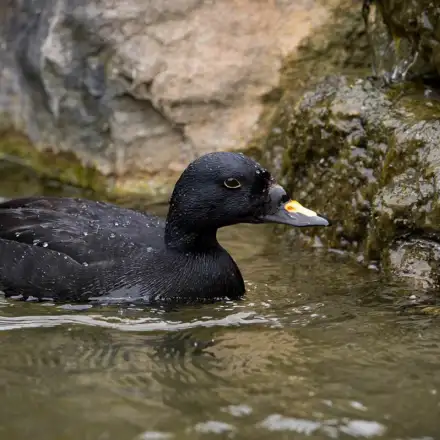
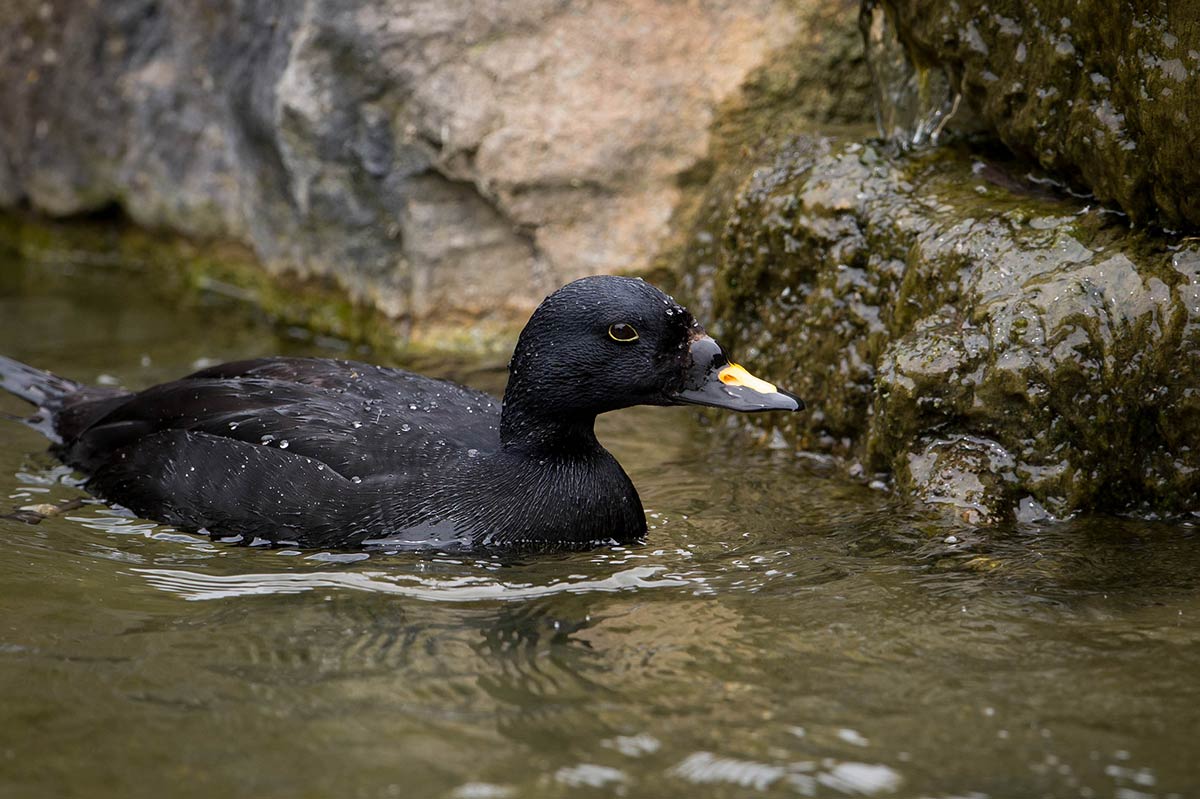
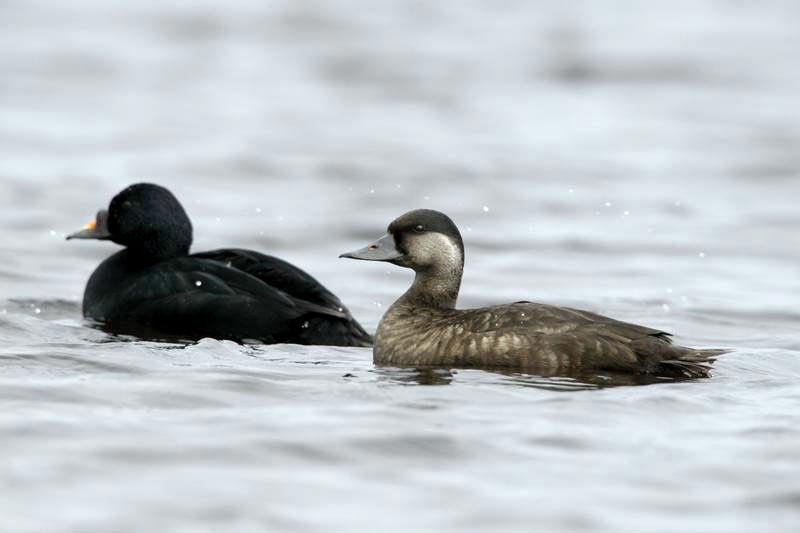
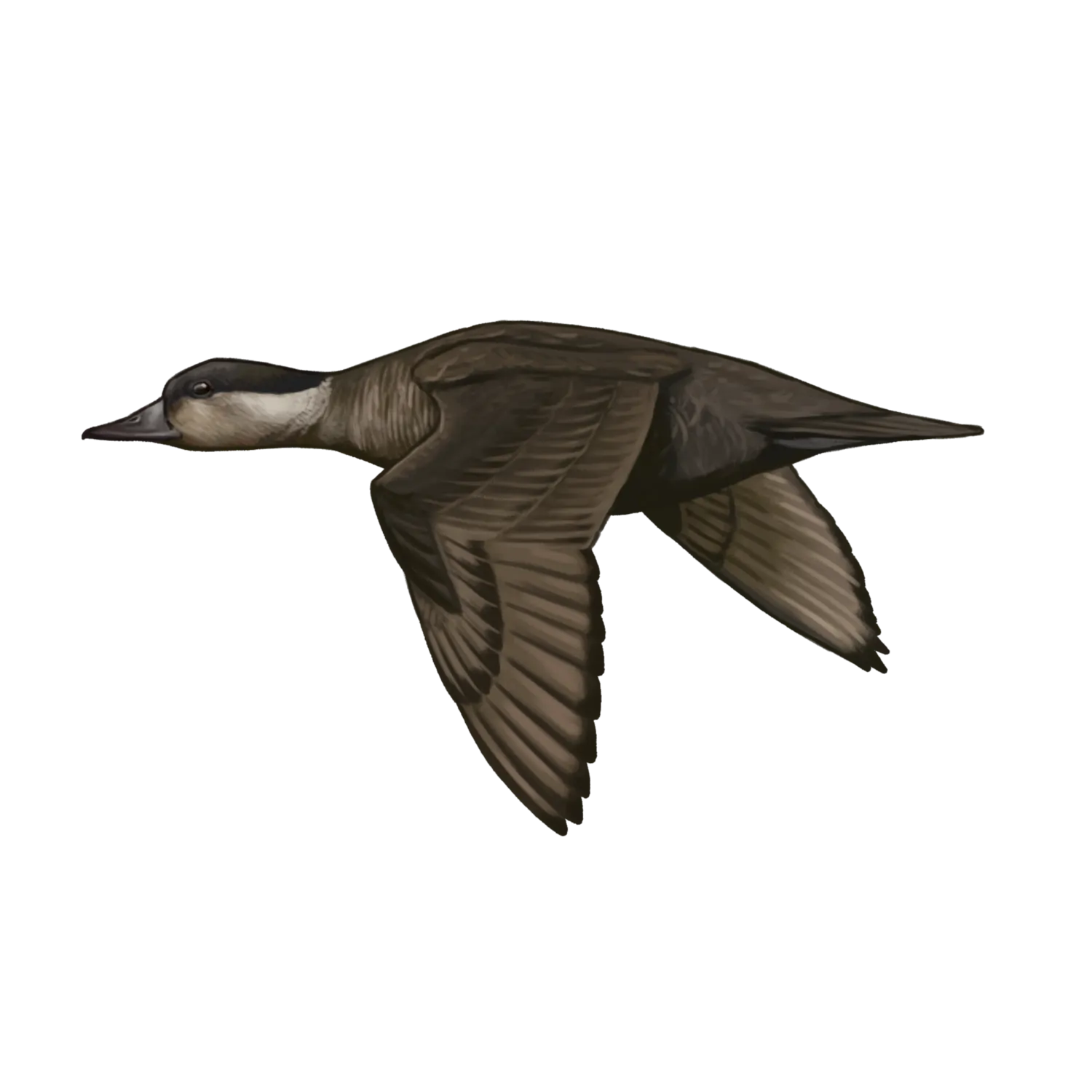
Common Scoter
Scientific name: Melanitta nigra
Family anatidae
Phenology
- Mainland
- Wintering and passage migrant
- Madeira
- Vagrant
- Azores
- Vagrant
Conservation status
Learn more- Mainland
- Madeira
- Azores
- IUCN Global
Data
Maps
Distribution | Breeding
Scale
Minimum value:
Maximum value:
Scale
Minimum value:
Maximum value:
Scale
Minimum value:
Maximum value:
Scale
Minimum value:>
Maximum value:<
Scale
Minimum value:
Maximum value:
Scale
Minimum value:>
Maximum value:>
Distribution based on seabird tracking data (locations/hexagone).
Colony(ies) of origin:
Device:
Data period / number of individuals:
Data period / number of individuals:
Distribution of seabird breeding colonies or sites (number of breeding pairs).
Distribution based on marine censuses (probability of occurrence).
Observed density based on marine censuses (birds/ km2).
Confirmed occurence during marines censuses.
Abundance of waders derived from Project Arenaria coastal surveys (birds/square).
Passage rates derived from RAM coastal surveys (birds/hour).
No data available for the selected period.
Presentation
Distribution, movements and phenology
The Common Scoter breeds between May and September in the north of the United Kingdom, eastern Greenland, Iceland, Scandinavia and northern Russia (Billerman et al. 2026). In Mainland Portugal, it has a strictly marine distribution and can be found practically all year round. However, it is during winter and the migratory periods that the population is most abundant. In winter, it is mainly concentrated between Cape Mondego and Espinho (Meirinho et al. 2014; Jesus 2018). Pre-breeding migration mainly takes place from March to April, whilst post-breeding migration is observed from at least August to October (Catry et al. 2010a). During migration, it occurs practically along the entire coast (Meirinho et al. 2014), possibly due to the movements of some birds to other wintering areas located further south, notably the Atlantic coast of Morocco (Aðalsteinsson et al. 2025). This pattern is also suggested by the individual tracking data presented in this work, although it is limited to just two birds, fitted in 2009–2013 with GLS devices in Iceland. In the Azores and Madeira, it occurs occasionally in the coastal waters of most of the islands, between autumn and spring (Correia-Fagundes et al. 2021; Birding Azores 2022).
Abundance and population trends
The global population has been estimated at around 1,600,000 individuals, with an unknown trend (BirdLife International 2025). In Mainland Portugal, it is more abundant in the north, with a population of 20,000 to 21,000 individuals recently estimated between the mouth of the Douro and Nazaré (Jesus 2018). It is frequently observed in large flocks ranging from tens to many hundreds of birds (Rufino & Neves 1990; Petronilho et al. 2004). Despite the lack of recent estimates for the southern half of the country, historically this population would not have exceeded three hundred birds (Rufino & Neves 2004). In general terms, the population appears to have undergone several fluctuations over the last few decades, maintaining a stable trend, which coincides with the Good Environmental Status resulting from the assessment in this work. In the Azores and Madeira, however, the population size is very low, both in winter and during migration (Equipa Atlas 2018), and there is no information regarding the trends of these populations.
Ecology and habitat
The Common Scoter is the only sea duck that regularly winters in Portugal, generally frequenting shallow coastal waters with sandy bottoms. It usually feeds just beyond the surf zone and up to two or three kilometres from the coastline. Molluscs, mainly bivalves, are its primary prey, which it catches by diving to depths of up to 10–20 metres (Billerman et al. 2026).
Threats and conservation
Globally, the Common Scoter appears to be particularly vulnerable to oil spills and chronic hydrocarbon pollution in its wintering grounds. Climate change also appears to have a negative impact, causing habitat loss and the degradation of the ecosystems it inhabits. In Portugal, the overexploitation of bivalves is considered its main threat (Cabral et al. 2005). However, there are no concrete data on its diet in our country (Catry et al. 2010a). Bycatch in fishing gear, particularly in beach seines and gillnets, is also a documented pressure on Portuguese waters (Oliveira et al. 2015). All these threats coincide with the causes cited for the admission of Common Scoters to rehabilitation centres, including poor plumage condition, emaciation, entanglement in fishing equipment, physical injuries and toxicity (Costa et al. 2021).
- Autores
Ib Krag Petersen, Nuno Oliveira
- Owners/sources of tracking data
Ib Krag Petersen
Rufino R & Neves R (2004). Wintering common scoter Melanitta nigra in Portugal: results of aerial surveys - 1991-1999. Regional Status Reports (unpublished report). Bibliography:
Oliveira N, Henriques A, Miodonski J, Pereira J, Marujo D, Almeida A, Barros N, Andrade J, Marçalo A, Santos J, Oliveira IB, Ferreira M, Araújo H, Monteiro S, Vingada J, Ramírez I (2015). Seabird bycatch in Portuguese mainland coastal fisheries: An assessment through on-board observations and fishermen interviews. Global Ecology and Conservation 3: 51-61. Bibliography:
Meirinho A, Barros N, Oliveira N, Catry P, Lecoq M, Paiva V, Geraldes P, Granadeiro JP, Ramírez I & Andrade J (2014). Atlas das Aves Marinhas de Portugal. Sociedade Portuguesa para o Estudo das Aves. Bibliography:
Jesus AGC (2018). Contribuição para a monitorização da negrola (Melanitta nigra) nas ZPEs Ria de Aveiro e Aveiro-Nazaré. Tese de mestrado em Ecologia Aplicada. Universidade de Aveiro. 52pp. Bibliography:
Equipa Atlas (2018). Atlas das Aves Invernantes e Migradoras de Portugal 2011-2013. Sociedade Portuguesa para o Estudo das Aves, LabOr- Laboratório de Ornitologia – ICAAM - Universidade de Évora, Instituto da Conservação da Natureza e das Florestas, Instituto das Florestas e Conservação da Natureza (Madeira), Secretaria Regional da Energia, Ambiente e Turismo (Açores) e Associação Portuguesa de Anilhadores de Aves. Lisboa. Bibliography:
Costa RA, Sá S, Pereira AT, Ferreira M, Vingada J & Eira C (2021). Threats to seabirds in Portugal: integrating data from a rehabilitation centre and stranding network. European Journal of Wildlife Research 67: 41. Bibliography:
Correia-Fagundes C, Romano H, Zino FJA & Biscoito M (2021). Birds of the archipelagos of Madeira and the Selvagens III. New records and checklist update (2010-2020). Boletim do Museu de História Natural do Funchal LXXI: 5-20. Bibliography:
BirdLife International (2025). IUCN Red List for birds. Downloaded from https://datazone.birdlife.org on 30.11.2025. Bibliography:
Birding Azores (2022). Birding Azores database. Downloaded from https://www.azoreswildlife.com/ on 23.12.2025. Bibliography:
Billerman SM, Keeney BL, Kirwan GM, Medrano F, Sly ND & Smith MG (eds.) (2026). Birds of the World. Cornell Laboratory of Ornithology, Ithaca, NY, USA. Bibliography:
Aðalsteinsson S, Petersen IK & Fox AD (2025). Wintering area and experience effects on spring migration strategies, timing and breeding success in Icelandic-nesting Common Scoters (Melanitta nigra). Ibis 167: 945-961. Bibliography:
Cabral MJ (coord.), Almeida J, Almeida PR, Dellinger T, Ferrand de Almeida N, Oliveira ME, Palmeirim JM, Queiroz AI, L Rogado L & Santos-Reis M (eds.) (2005). Livro Vermelho dos Vertebrados de Portugal. Instituto da Conservação da Natureza, Lisboa Bibliography:
Catry P, Costa H, Elias G & Matias R (2010a). Aves de Portugal, Ornitologia do Território Continental. Assírio e Alvim, Lisboa Bibliography:
Rufino R & Neves R (1990). Invernada de pato-negro Melanitta nigra na costa de Aveiro: Janeiro de 1990. Airo 2: 1-2 Bibliography:
Petronilho JM, Vingada JV, Ferreira M, Paulino NAC, Eira C, Costa RA & Tenreiro PJQ (2004). Seabird census along the Figueira da Foz-Aveiro coastline (Portugal) during August/September 2002. Airo 14: 94-100 Glossary:
A fine-meshed and generally visible net used by small vessels to catch small pelagic fish such as sardines, mackerel and horse mackerel, as well as demersal or benthic species. This fishing gear is typically deployed from a vessel and may be operated either from shore (usually a beach) or from the vessel itself. Glossary:
Molluscs with two shells, such as clams and cockles, common in intertidal environments. Glossary:
Persistent changes in global or regional climate patterns, influenced by natural and anthropogenic factors. Glossary:
Areas where birds remain outside the breeding season, generally associated with favourable conditions for feeding and survival. Glossary:
Equipment used to catch marine animals, such as nets, longlines or traps. Glossary:
Monitoring the movements of individuals using tracking devices. Glossary:
The direction of change in the size of a population over time (increase, decline or stability). Glossary:
A concept defined under the Marine Strategy Framework Directive (MSFD), referring to the condition of the elements of the marine environment, including birds. It aims to assess whether ecosystems are healthy, balanced and capable of supporting ecological functions and human uses in a sustainable manner. The ultimate goal is for the components and ecosystems to achieve Good Environmental Status. Glossary:
Refers to the unintentional capture of marine species during fishing. Animals may become entangled in hooks or fishing nets. It is usually associated with commercial fishing, but can also occur in recreational fishing. Bycatch is one of the main threats to seabirds at sea. Glossary:
A static net, often nearly invisible and with variable mesh size, used to catch a wide variety of fish. It is set in the sea at varying depths and later retrieved. It is a non-selective fishing gear that frequently catches seabirds, marine mammals and reptiles. Glossary:
Referring to the period preceding breeding. Glossary:
Referring to the period following breeding. Glossary:
A small device attached to birds to study their large-scale movements (usually migration), which works by recording light intensity (from which the duration of night and the local midday time are estimated, and consequently the latitude and longitude on each day).