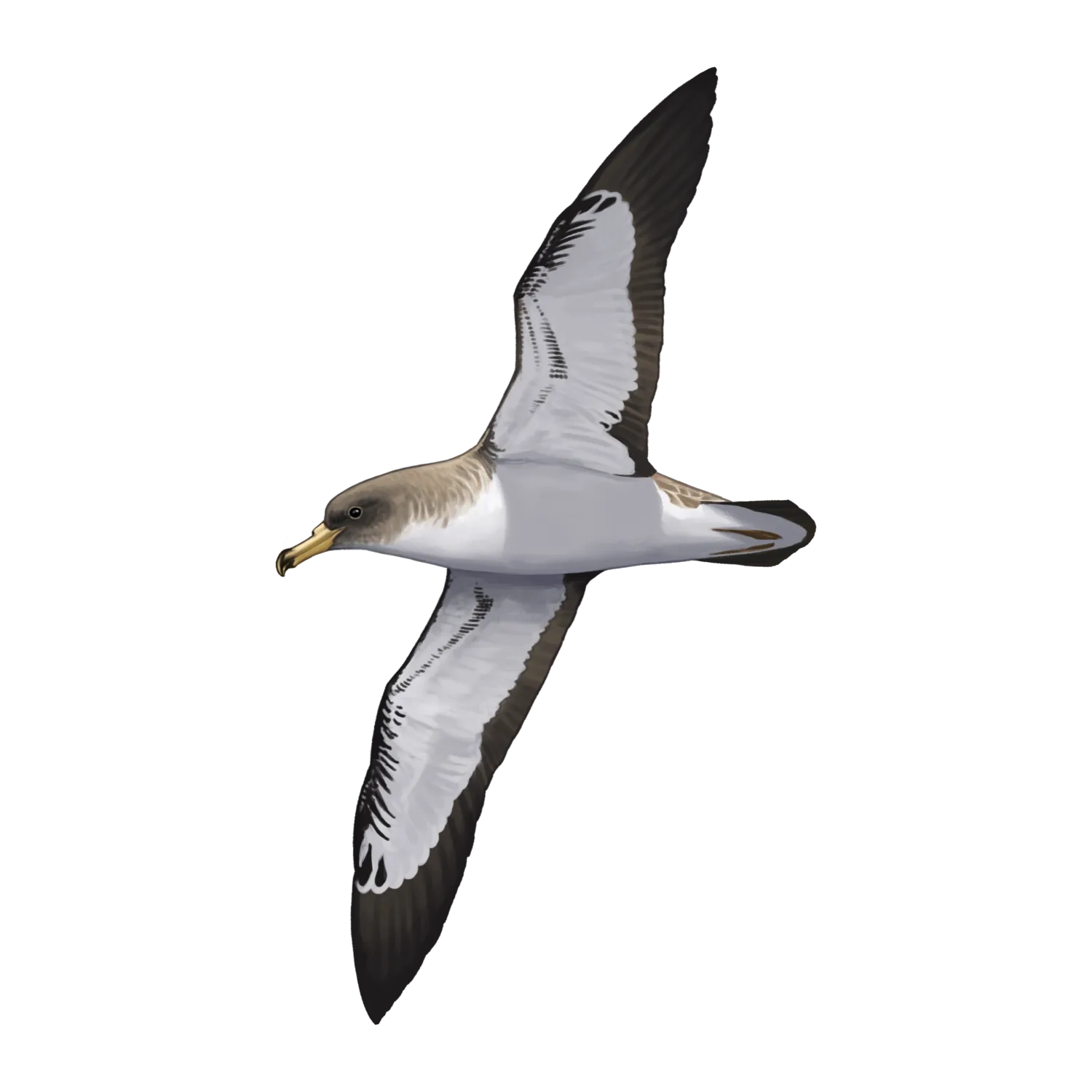
Cory's Shearwater
Scientific name: Calonectris borealis
Family procellariidae
Phenology
- Mainland
- Summer breeder
- Madeira
- Summer breeder
- Azores
- Summer breeder
Conservation status
Learn more- Mainland
- Madeira
- Azores
- IUCN Global
Data
Maps
Distribution | Breeding
Scale
Minimum value:
Maximum value:
Scale
Minimum value:
Maximum value:
Scale
Minimum value:
Maximum value:
Scale
Minimum value:>
Maximum value:<
Scale
Minimum value:
Maximum value:
Scale
Minimum value:>
Maximum value:>
Distribution based on seabird tracking data (locations/hexagone).
Colony(ies) of origin:
Device:
Data period / number of individuals:
Data period / number of individuals:
Distribution of seabird breeding colonies or sites (number of breeding pairs).
Distribution based on marine censuses (probability of occurrence).
Observed density based on marine censuses (birds/ km2).
Confirmed occurence during marines censuses.
Abundance of waders derived from Project Arenaria coastal surveys (birds/square).
Passage rates derived from RAM coastal surveys (birds/hour).
No data available for the selected period.
Presentation
Distribution, movements and phenology
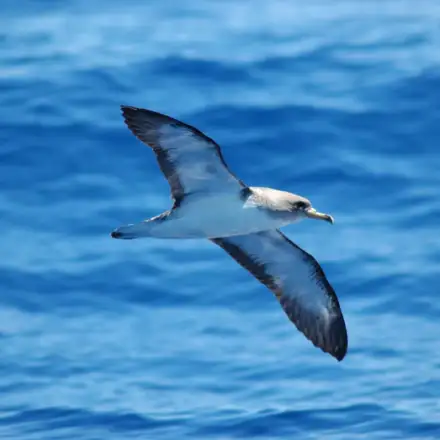
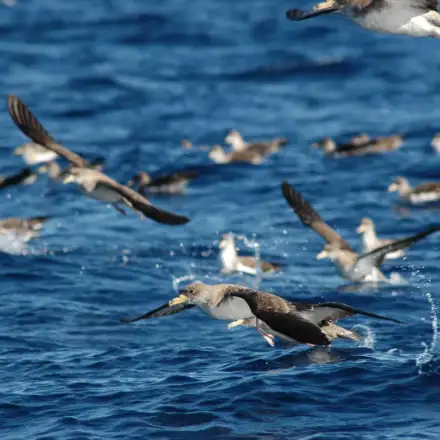
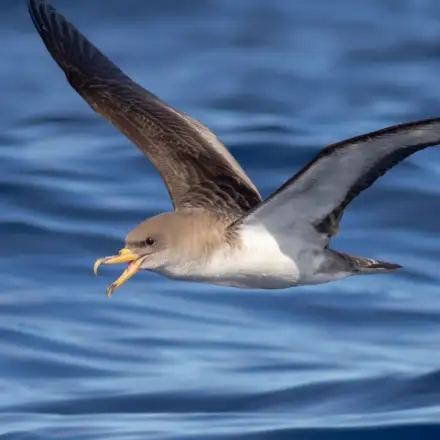
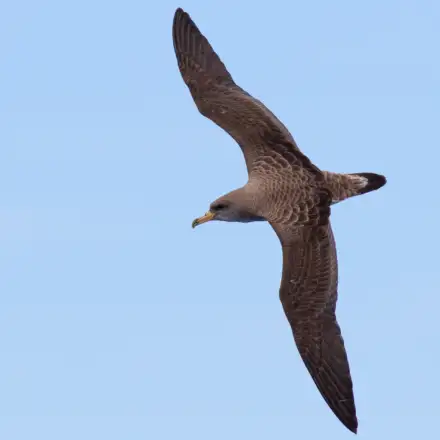
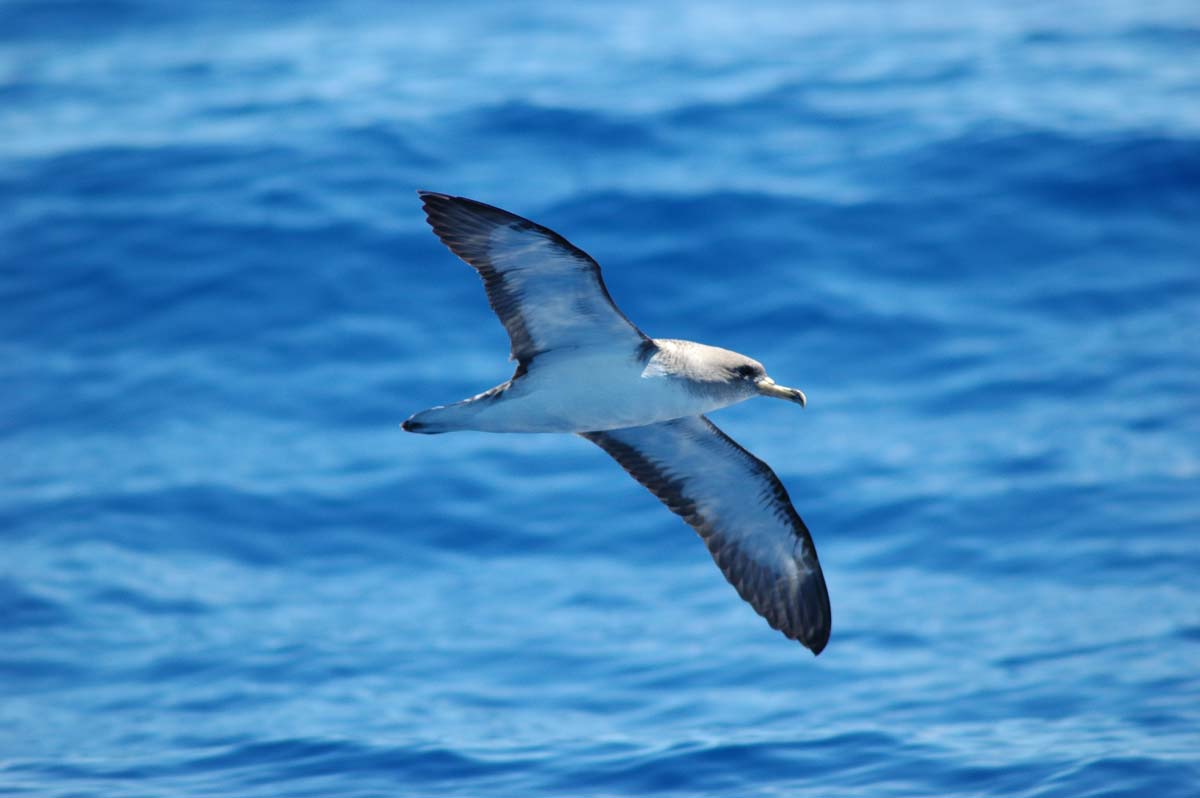
The Cory's Shearwater breeds in Portugal and Spain, specifically in the Azores, Madeira, Berlengas, Peniche, Canary Islands, and the islets off the Galician coast (Equipa Atlas 2022; Reyes-González 2022). The breeding range in Portugal has remained stable for over a century (Equipa Atlas 2022). During the breeding season, from March to November, the Cory’s Shearwater is common throughout the Portuguese EEZ, showing seasonal variations in its spatial distribution. It subsequently migrates mainly to the South Atlantic, although part of the population remains in the North Atlantic or reaches the Indian Ocean (Catry et al. 2011a; Dias et al. 2011).
The Cory’s Shearwater is one of the species whose movements have been most extensively studied. Based on the individual tracking of 529 birds from Azores, Madeira, the Berlengas and the Canary Islands, fitted with GPS and PTT devices, extensive use of the Portuguese EEZ during the breeding season is noted. Activity is concentrated both in the immediate vicinity of the colonies and in more distant areas, confirming the known distribution (Meirinho et al. 2014), although in the Azores it may be biased by the greater monitoring of birds from Corvo Island.
Abundance and population trends
The global population has been estimated at between 252,000 and 253,000 pairs, with an unknown trend (BirdLife International 2025). In Portugal, there is no current information for most colonies, with a few exceptions. In the Berlengas, the population has been estimated at 550 to 800 pairs (Equipa Atlas 2022). In the Azores, recent estimates are limited to a few islets with few hundreds of pairs, namely on Vila, Vila Franca do Campo, Praia and Baixo (Atchoi 2021; (Pipa & Silva 2021; Pipa et al. 2026). On Selvagem Grande (Madeira), 38,830 pairs were estimated (Catry et al. 2025).
The assessment of environmental status indicates that the species has not achieved Good Environmental Status, either in terms of the breeding success of the Mainland or for both indicators in the Azores. On the other hand, Selvagem Grande recorded an annual growth rate of 1.45% between 2009 and 2023 (Catry et al. 2025). This population appears to be recovering from the extensive hunting in the 1970s (Zino 1985), having achieved Good Environmental Status for both indicators.
Ecology and habitat
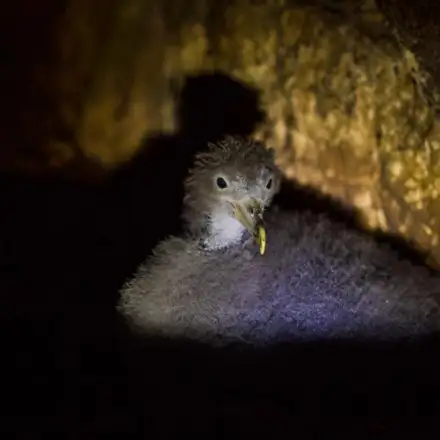
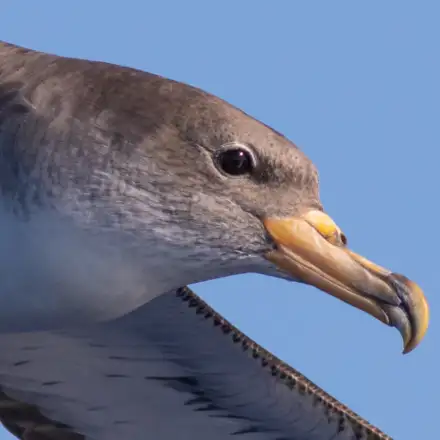
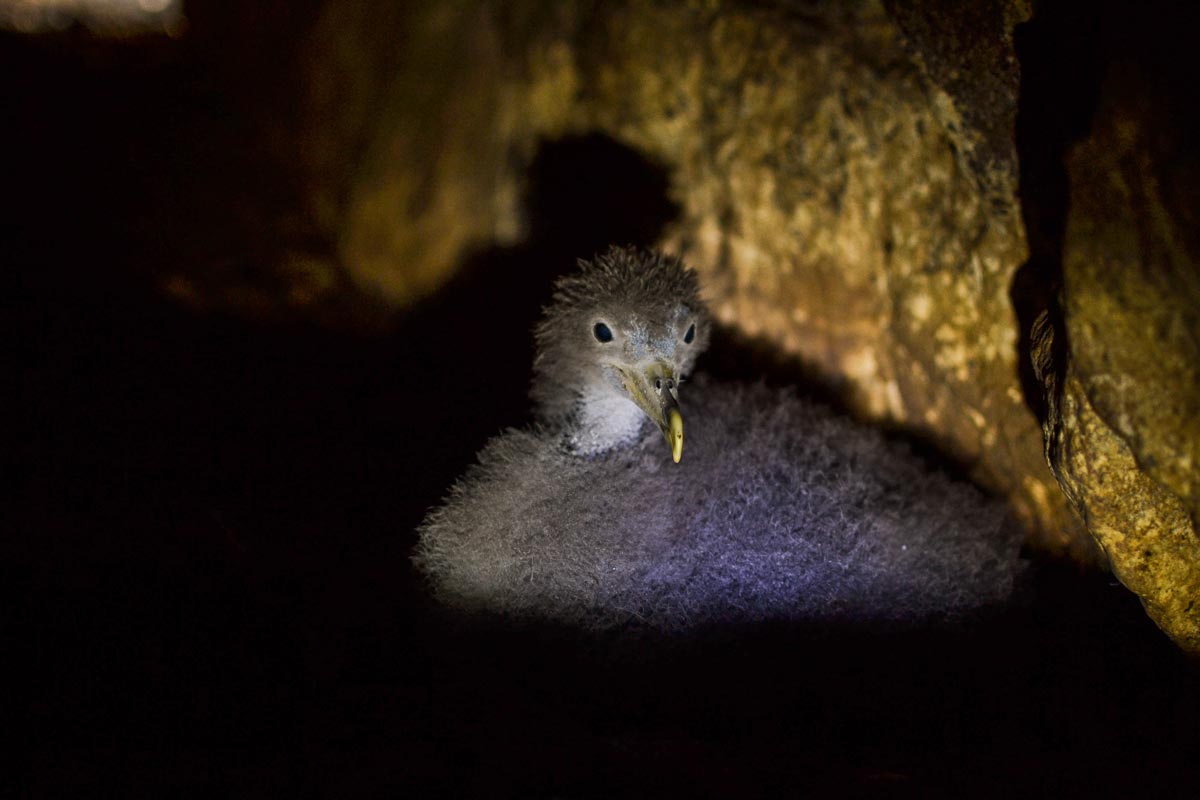
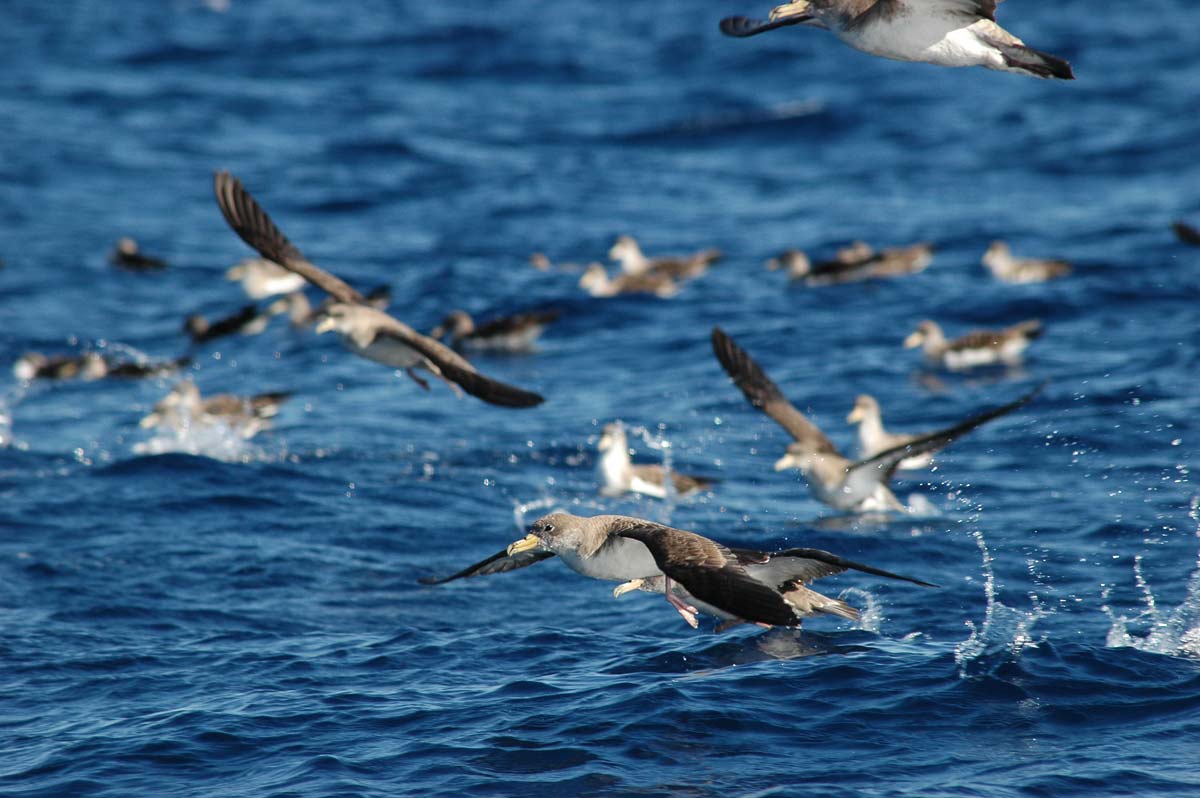
The Cory’s Shearwater is an essentially pelagic bird that inhabits a variety of habitats, including the vicinity of colonies, seamounts, slope zones and other areas of high productivity (Paiva et al. 2010b; Ramos et al. 2013b). It feeds mainly on small epipelagic fish and cephalopods, with variations between colonies (Xavier et al. 2011; Alonso et al. 2012; Paiva et al. 2013; Alonso et al. 2018; Romero et al. 2021). It nests in natural cavities and beneath vegetation, being very rare to find exposed nests.
Threats and conservation
Their main threats are predation by mammals introduced into breeding areas and bycatch at sea. Other relevant threats include light pollution (Fontaine et al. 2011) and the potential impact of marine litter (Rodríguez et al. 2024). Conservation priorities include bycatch mitigation (Oliveira et al. 2021), the eradication of introduced predators (Hervías et al. 2013), the installation of artificial nests (Oliveira et al. 2020), the reduction of light pollution and the continuation of rescue campaigns.
- Autores
Paulo Catry, Tânia Pipa, Virginia Morera, Jose Manuel Reyes-González, Diego Vicente-Sastre, Maria P. Dias
- Owners/sources of tracking data
Arcos 2006, Arcos 2010b, Catry & Granadeiro 2009, Catry & Granadeiro 2010, Catry & Granadeiro 2011, Catry & Granadeiro 2012, Catry & Granadeiro 2013, Gagliardo et al. 2013, Gonzalez-Solis 2015a, Gonzalez-Solis 2015b, Gonzalez-Solis 2020b, Gonzalez-Solis 2021c, Magalhães 2005, Paiva 2008, Paiva & Ramírez 2007a, Paiva & Ramírez 2007b, Paiva & Ramos 2014a, Paiva & Ramos 2014b, Paiva & Ramos 2015a, Paiva & Ramos 2015b, Paiva & Ramos 2015c, Paiva & Ramos 2015d, Tânia Pipa (SPEA BirdLife), Tiago Dias (SPEA BirdLife)
Pipa T, Martins B, Magalhães M, Codina J, Lourenço J, Aguiar L, Cunha B, Raposo P, Carreira G, Pereira D & De La Cruz A (2026). Monitorização de aves marinhas Procellariiformes 2023-2025. Relatório da Ação D3. Projeto LIFE NATURA@NIGHT (unpublished report). Bibliography:
Zino PA (1985). Pequeno apontamento histórico sobre a caça das cagarras na Selvagem Grande e desenvolvimentos recentes nesta ilha. Bocagiana 84: 1-14. Bibliography:
Xavier JC, Magalhães MC, Mendonça AS, Antunes M, Carvalho N, Machete M, Santos RS, Paiva V & Hamer KC (2011). Changes in diet of Cory’s shearwaters Calonectris diomedea breeding in the Azores. Marine Ornithology 39: 129-134. Bibliography:
Romero J, Catry P, Alonso H & Granadeiro JP (2021). Seabird diet analysis suggests sudden shift in the pelagic communities of the subtropical Northeast Atlantic. Marine Environmental Research 165: 105232. Bibliography:
Rodríguez Y, Rodríguez A, van Loon WM, Pereira JM, Frias J, Duncan EM, Garcia S, Herrera L, Marqués C, Neves V, Domínguez-Hernández C, Hernández-Borges J, Rodríguez B & Pham CK (2024). Cory’s shearwater as a key bioindicator for monitoring floating plastics. Environment International journal 108595. Bibliography:
Reyes-González JM (2022). Pardela cenicienta atlántica Calonectris borealis. In Molina B, Nebreda A, Muñoz AR, Seoane J, Real R, Bustamante J & del Moral JC. III Atlas de las aves en época de reproducción en España. SEO/BirdLife. Madrid. Bibliography:
Ramos R, Granadeiro JP, Rodríguez B, Navarro J, Paiva VH, Bécares J, Reyes‑González JM, Fagundes I, Ruiz A, Arcos JM, González‑Solís J & Catry P (2013b). Meta‐population feeding grounds of Cory's shearwater in the subtropical Atlantic Ocean: implications for the definition of Marine Protected Areas based on tracking studies. Diversity and Distributions 19(10): 1284-1298. Bibliography:
Pipa T & Silva C (2021) Projeto LuMinAves (2017-2020): Reduzir o impacto da luz artificial nas aves marinhas. Lisboa (unpublished report). Bibliography:
Paiva VH, Xavier J, Geraldes P, Ramirez I, Meirinho A, Ramos JA & Garthe S (2010b). Foraging ecology of Cory’s shearwaters in different ecological environments of the North Atlantic. Marine Ecology Progress Series 410: 257–268 Bibliography:
Oliveira N, Almeida A, Alonso H, Constantino E, Ferreira A, Gutierrez I, Santos AL, Silva E & Andrade J (2021). A contribution to reducing bycatch in a high priority area for seabird conservation in Portugal. Bird Conservation International 31(4): 553-572. Bibliography:
Oliveira N, Abreu P, Bores J, Fagundes A, Alonso H & Andrade J (2020). Evaluating the potential of artificial nests as a conservation measure for Cory’s Shearwaters Calonectris borealis breeding in Berlengas Archipelago, Portugal. Airo 27: 3–19. Bibliography:
Meirinho A, Barros N, Oliveira N, Catry P, Lecoq M, Paiva V, Geraldes P, Granadeiro JP, Ramírez I & Andrade J (2014). Atlas das Aves Marinhas de Portugal. Sociedade Portuguesa para o Estudo das Aves. Bibliography:
Fontaine R, Gimenez O & Bried J (2011). The impact of introduced predators, light-induced mortality of fledglings and poaching on the dynamics of the Cory’s shearwater (Calonectris diomedea) population from the Azores, northeastern subtropical Atlantic. Biological Conservation 144: 1998–2011. Bibliography:
Equipa Atlas (2022). III Atlas das Aves Nidificantes de Portugal (2016-2021). SPEA, ICNF, LabOr/UÉ, IFCN. Portugal. Bibliography:
Catry P, Dias M, Menezes D, Oliveira P, Lopes D, Alho M, Campioni L, Catry T, Gatt MC, Ventura F, Romero J & Granadeiro JP (2025). Fixed-plot monitoring as a tool to assess population trends of underground nesting seabirds: an example with Cory’s Shearwater at its world’s largest colony. Bird Conservation International 35: e3. Bibliography:
BirdLife International (2025). IUCN Red List for birds. Downloaded from https://datazone.birdlife.org on 30.11.2025. Bibliography:
Atchoi E (2021). Relatório Final LuMinAves – FRCT, 2021. Okeanos-UAç. Horta, Azores. Bibliography:
Alonso A, Granadeiro JP, Paiva VH, Dias AS, Ramos JA & Catry P (2012). Parent–offspring dietary segregation of Cory’s shearwaters breeding in contrasting environments. Marine Biology 159: 1197-1207. Bibliography:
Alonso H, Granadeiro JP, Dias MP, Catry T & Catry P (2018). Fine-scale tracking and diet information of a marine predator reveals the origin and contrasting spatial distribution of prey. Progress in Oceanography 162: 1-12. Bibliography:
Paiva VH , Geraldes P, Marques V, Rodríguez R, Garthe S & Ramos JA (2013a). Effects of environmental variability on different trophic levels of the North Atlantic food web. Marine Ecology Progress Series 477: 15-28 Bibliography:
Hervías S, Henriques A, Oliveira N, Pipa T, Cowen H, Ramos J A, Nogales M, Geraldes P, Silva C, Ybáñez R R & Oppel S (2013). Studying the effects of multiple invasive mammals on Cory’s shearwater nest survival. Biological Invasions 15: 143-155. Bibliography:
Dias MP, Granadeiro JP, Phillips RA, Alonso H & Catry P (2011). Breaking the routine: individual Cory’s shearwaters shift winter destinations between hemispheres and across ocean basins. Proceedings of the Royal Society B278: 1786–1793 Bibliography:
Catry P, Dias M, Phillips RA & Granadeiro JP (2011a). Different means to the same end: long-distance migrant seabirds from two colonies differ in behaviour, despite common wintering grounds. PLoS ONE 6: e26079 Data:
Paiva V & Ramos JA (2015d). Dataset 1058: Cory's Shearwater, Calonectris borealis, GPS, Berlengas, Portugal, Portugal, 2010–2015. BirdLife International Seabird Tracking Database. Downloaded from https://data.seabirdtracking.org/dataset/1058/ on 30.11.2025. Data:
Paiva V & Ramos JA (2015c). Dataset 1061: Cory's Shearwater, Calonectris borealis, GPS, Corvo, Azores, Portugal, 2010–2015. BirdLife International Seabird Tracking Database. Downloaded from https://data.seabirdtracking.org/dataset/1061/ on 30.11.2025. Data:
Paiva V & Ramos JA (2015b). Dataset 1060: Cory's Shearwater, Calonectris borealis, GPS, Corvo, Azores, Portugal, 2010–2015. BirdLife International Seabird Tracking Database. Downloaded from https://data.seabirdtracking.org/dataset/1060/ on 30.11.2025. Data:
Paiva V & Ramos JA (2015a). Dataset 1033: Cory's Shearwater, Calonectris borealis, GPS, Cima Islet, Madeira, Portugal, 2011–2015. BirdLife International Seabird Tracking Database. Downloaded from https://data.seabirdtracking.org/dataset/1033/ on 30.11.2025. Data:
Paiva V & Ramos JA (2014b). Dataset 1055: Cory's Shearwater, Calonectris borealis, GPS, Berlengas, Portugal, Portugal, 2010–2014. BirdLife International Seabird Tracking Database. Downloaded from https://data.seabirdtracking.org/dataset/1055/ on 30.11.2025. Data:
Paiva V & Ramos JA (2014a). Dataset 1057: Cory's Shearwater, Calonectris borealis, GPS, Berlengas, Portugal, Portugal, 2013–2014. BirdLife International Seabird Tracking Database. Downloaded from https://data.seabirdtracking.org/dataset/1057/ on 30.11.2025. Data:
Paiva V & Ramírez I (2007b). Dataset 510: Cory's Shearwater, Calonectris borealis, GPS, Berlengas, Azores, Portugal, 2007. BirdLife International Seabird Tracking Database. Downloaded from https://data.seabirdtracking.org/dataset/510/ on 30.11.2025. Data:
Paiva V & Ramírez I (2007a). Dataset 511: Cory's Shearwater, Calonectris borealis, GPS, Corvo, Azores, Portugal, 2007. BirdLife International Seabird Tracking Database. Downloaded from https://data.seabirdtracking.org/dataset/511/ on 30.11.2025. Data:
Paiva V (2008). Dataset 571: Cory's Shearwater, Calonectris borealis, GPS, Selvagens, Madeira, Portugal, 2008. BirdLife International Seabird Tracking Database. Downloaded from https://data.seabirdtracking.org/dataset/571/ on 30.11.2025. Data:
Magalhães M (2005). Dataset 686: Cory's Shearwater, Calonectris borealis, PTT, Vila, Azores, Portugal, 2005. BirdLife International Seabird Tracking Database. Downloaded from https://data.seabirdtracking.org/dataset/686/ on 30.11.2025. Data:
Gonzalez-Solis J (2021c). Dataset 1770: Cory's Shearwater, Calonectris borealis, GPS, M Clara, Canarias, Spain, 2021. BirdLife International Seabird Tracking Database. Downloaded from https://data.seabirdtracking.org/dataset/1770/ on 30.11.2025. Data:
Gonzalez-Solis J (2020b). Dataset 1640: Cory's Shearwater, Calonectris borealis, GPS, M Clara, Canarias, Spain, 2015. BirdLife International Seabird Tracking Database. Downloaded from https://data.seabirdtracking.org/dataset/1640/ on 30.11.2025. Data:
Gonzalez-Solis J (2015b). Dataset 1669: Cory's Shearwater, Calonectris borealis, GPS, M Clara, Canarias, Spain, 2015. BirdLife International Seabird Tracking Database. Downloaded from https://data.seabirdtracking.org/dataset/1669/ on 30.11.2025. Data:
Gonzalez-Solis J (2015a). Dataset 1710: Cory's Shearwater, Calonectris borealis, Geolocator (GLS), M Clara, Canarias, Spain, 2012–2015. BirdLife International Seabird Tracking Database. Downloaded from https://data.seabirdtracking.org/dataset/1710/ on 30.11.2025. Data:
Gagliardo A, Bried J, Lambardi P, Luschi P, Wikelski M & Bonadonna F (2013). Data from: Oceanic navigation in Cory’s shearwaters. Movebank Data Repository. Downloaded from https://www.doi.org/10.5441/001/1.nf80477p. Data:
Catry P & Granadeiro JP (2013). Dataset 1347: Cory's Shearwater, Calonectris borealis, GPS, Selvagens, Madeira, Portugal, 2013. BirdLife International Seabird Tracking Database. Downloaded from https://data.seabirdtracking.org/dataset/1347/ on 30.11.2025. Data:
Catry P & Granadeiro JP (2012). Dataset 1346: Cory's Shearwater, Calonectris borealis, GPS, Selvagens, Madeira, Portugal, 2012. BirdLife International Seabird Tracking Database. Downloaded from https://data.seabirdtracking.org/dataset/1346/ on 30.11.2025. Data:
Catry P & Granadeiro JP (2011). Dataset 1345: Cory's Shearwater, Calonectris borealis, GPS, Selvagens, Madeira, Portugal, 2011. BirdLife International Seabird Tracking Database. Downloaded from https://data.seabirdtracking.org/dataset/1345/ on 30.11.2025. Data:
Catry P & Granadeiro JP (2010). Dataset 1344: Cory's Shearwater, Calonectris borealis, GPS, Selvagens, Madeira, Portugal, 2010. BirdLife International Seabird Tracking Database. Downloaded from https://data.seabirdtracking.org/dataset/1344/ on 30.11.2025. Data:
Catry P & Granadeiro JP (2009). Dataset 1343: Cory's Shearwater, Calonectris borealis, GPS, Selvagens, Madeira, Portugal, 2009. BirdLife International Seabird Tracking Database. Downloaded from https://data.seabirdtracking.org/dataset/1343/ on 30.11.2025. Data:
Arcos JM (2010b). Dataset 859: Bulwer's Petrel, Bulweria bulwerii, PTT, Alegranza, Canarias, Spain, 2010. BirdLife International Seabird Tracking Database. Downloaded from https://data.seabirdtracking.org/dataset/859/ on 30.11.2025. Data:
Arcos JM (2006). Dataset 672: Cory's Shearwater, Calonectris borealis, PTT, Alegranza, Canarias, Spain, 2006. BirdLife International Seabird Tracking Database. Downloaded from https://data.seabirdtracking.org/dataset/672/ on 30.11.2025. Glossary:
The PTT (platform transmitter terminal) is a small device attached to birds to study their large-scale movements (generally migration and wintering, but also breeding). These devices use the Argos satellite system to obtain information on position, latitude, longitude and altitude, anywhere on Earth, via a network of satellites in orbit. They are as accurate as GPS devices. Glossary:
Artificial structures installed to provide alternative nesting sites and increase breeding success. Glossary:
A group of marine molluscs that includes squids, cuttlefish and octopuses. Glossary:
Alteration of natural night-time light levels due to artificial lighting. Glossary:
Complete removal of an invasive species from a specific area. Glossary:
Actions designed to reduce or minimise negative impacts on species or ecosystems. Glossary:
A species or parameter that reflects the state of an ecosystem or environmental changes. Glossary:
Monitoring the movements of individuals using tracking devices. Glossary:
The direction of change in the size of a population over time (increase, decline or stability). Glossary:
A concept defined under the Marine Strategy Framework Directive (MSFD), referring to the condition of the elements of the marine environment, including birds. It aims to assess whether ecosystems are healthy, balanced and capable of supporting ecological functions and human uses in a sustainable manner. The ultimate goal is for the components and ecosystems to achieve Good Environmental Status. Glossary:
A small device attached to birds to study their movements at a finer scale (usually during the breeding season). These devices use the Global Positioning System (GPS) to obtain information on position, latitude, longitude and altitude at any point on Earth, using a network of orbiting satellites. Glossary:
Refers to the unintentional capture of marine species during fishing. Animals may become entangled in hooks or fishing nets. It is usually associated with commercial fishing, but can also occur in recreational fishing. Bycatch is one of the main threats to seabirds at sea. Glossary:
Under the United Nations Convention on the Law of the Sea, coastal states are entitled to declare an EEZ comprising maritime area beyond their territorial waters. The national EEZ is delimited by an imaginary line situated 200 nautical miles from the coast, separating national waters from international or shared waters. Within its EEZ, each state has rights such as the exploitation of marine resources, the conduct of scientific research and the regulation of fishing by foreign vessels. Glossary:
A portion of the seabed with a very steep gradient lying between the continental shelf and the continental margin, where the abyssal plains begin. Glossary:
Quantity of organic matter produced per unit of time (usually one year). Primary productivity refers to the quantity of organic matter produced by primary producers: algae in aquatic or marine environments, or plants in terrestrial environments. Glossary:
The area or environment where organisms that do not depend on the seafloor normally live. It is the typical ecological environment of open ocean waters. The pelagic ecosystem does not include only the open sea; it also comprises the waters covering the continental shelf. The pelagic zone begins below the influence of tides and extends into the open ocean, at depths ranging from a few tens of metres to approximately 6,000 metres, and is divided into different layers. Glossary:
An underwater mountain rising from the ocean floor without reaching the surface, usually of volcanic origin, with a conical shape and a circular, elliptical or slightly elongated base. Only elevations exceeding 1,000 metres are considered seamounts. Glossary:
A term generally applied to a species introduced deliberately or accidentally into a specific location or region outside its original range. Depending on its adaptation to the new environment, an introduced species may or may not become naturalised and proliferate.