Desertas Petrel
Scientific name: Pterodroma deserta
Family procellariidae
Phenology
- Mainland
- Summering and passage migrant
- Madeira
- Summer breeder
- Azores
- Summering and passage migrant
Conservation status
Learn more- Mainland
- Madeira
- Azores
- IUCN Global
Data
Maps
Distribution | Breeding
Scale
Minimum value:
Maximum value:
Scale
Minimum value:
Maximum value:
Scale
Minimum value:
Maximum value:
Scale
Minimum value:>
Maximum value:<
Scale
Minimum value:
Maximum value:
Scale
Minimum value:>
Maximum value:>
Distribution based on seabird tracking data (locations/hexagone).
Colony(ies) of origin:
Device:
Data period / number of individuals:
Data period / number of individuals:
Distribution of seabird breeding colonies or sites (number of breeding pairs).
Distribution based on marine censuses (probability of occurrence).
Observed density based on marine censuses (birds/ km2).
Confirmed occurence during marines censuses.
Abundance of waders derived from Project Arenaria coastal surveys (birds/square).
Passage rates derived from RAM coastal surveys (birds/hour).
No data available for the selected period.
Presentation
Distribution, movements and phenology
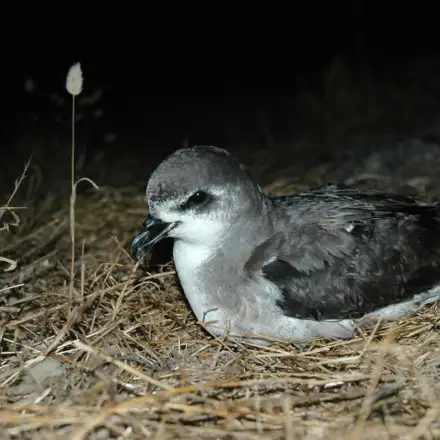
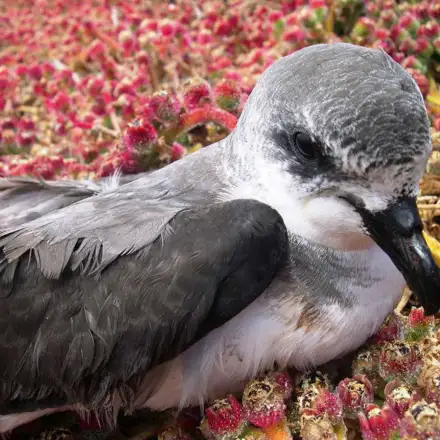
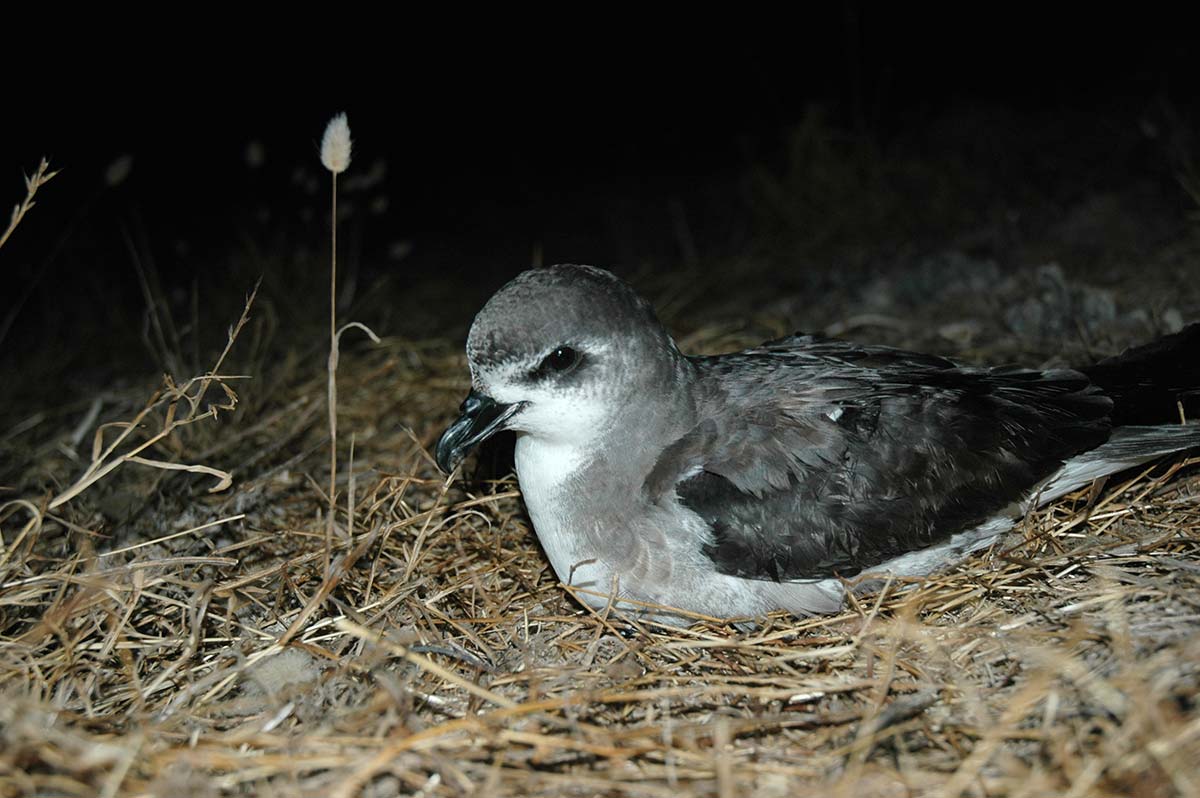
The Desertas Petrel breeds on the island of Bugio, in the Madeira archipelago, between late May and early January. There are strong indications that it also breeds on an adjacent island, Deserta Grande (Menezes et al. 2010a), including a recent record of vocalisations during the breeding season. During incubation, taking advantage of prevailing winds, adults undertake long journeys across the North Atlantic that can take them as far south as Cape Verde and as far west as Canada (Ventura et al. 2022; Ventura et al. 2024). Based on data obtained from tracking 20 birds fitted with GPS between 2008 and 2013, extensive use of the Portuguese EEZ during the breeding season was observed, particularly in the sub-areas of Madeira and the Azores, but also with some exploration of the deeper parts of the Mainland sub-area. It should be noted that marine censuses carried out in the past already pointed to this distribution pattern (Meirinho et al. 2014). After breeding, it winters mainly in the South and West Atlantic, with part of the population remaining in the waters off Cape Verde, and may also occasionally explore Azorean waters (Ramírez et al. 2013).
Abundance and population trends
The global population has been estimated at 160 to 180 breeding pairs, with a stable population trend, although its highly restricted distribution makes it susceptible to extreme weather events (Equipa Atlas 2022; BirdLife International 2025). The estimated number of breeding pairs has fluctuated over the years, with a maximum of 173 to 258 pairs in 2001 (Geraldes 2002) and a minimum of 120 to 150 pairs in 2006; however, these variations appear to be more closely related to differences in monitoring methods (Menezes et al. 2010b).
The breeding population has achieved Good Environmental Status for the abundance indicator. Conversely, this has not been achieved for the productivity indicator.
Ecology and habitat
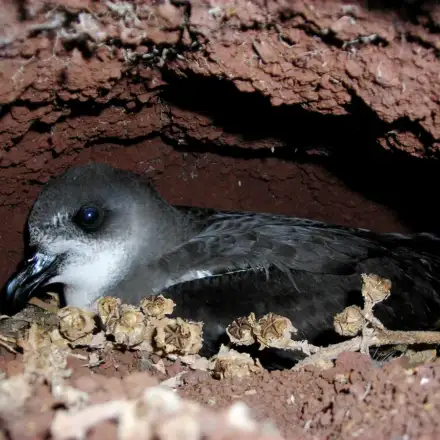
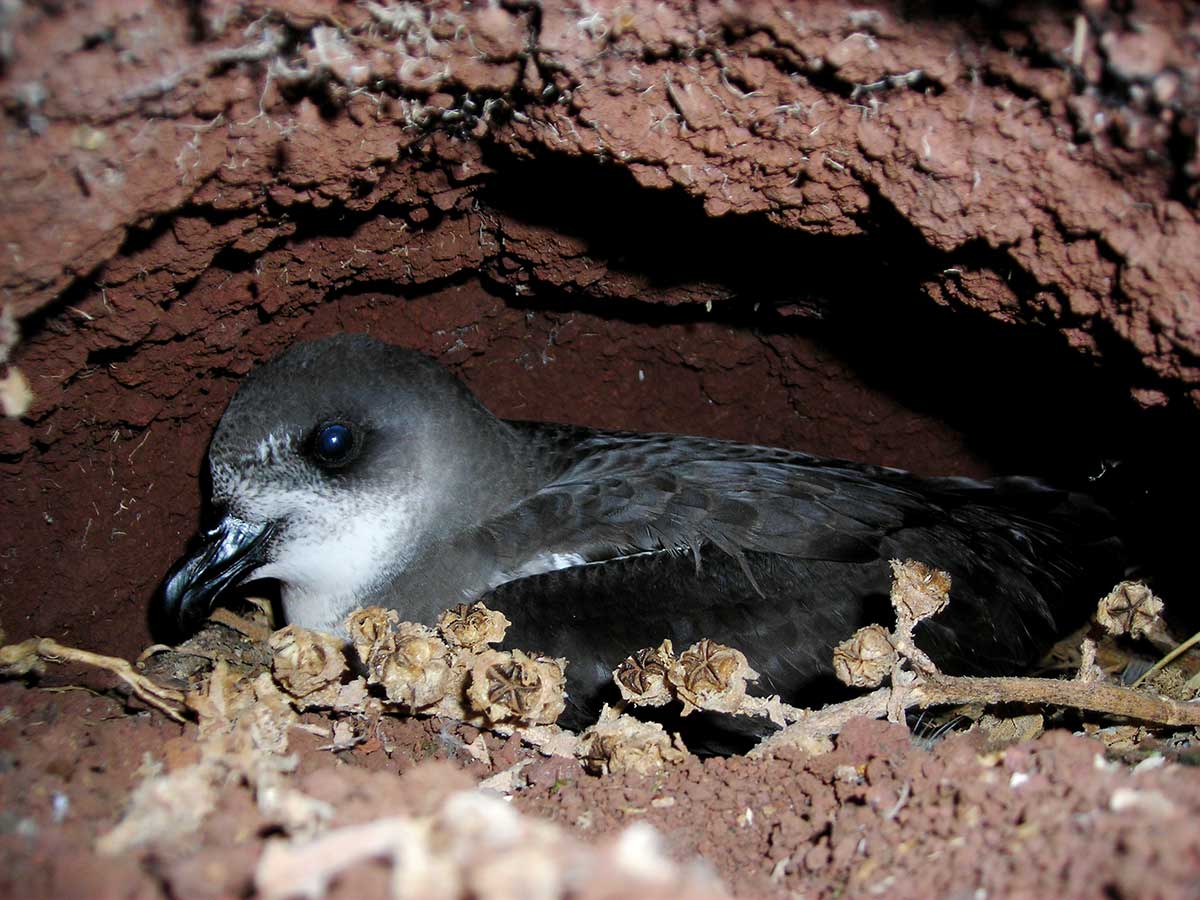
The Desertas Petrel nests at altitudes between 80 and 300 m, generally in burrows dug into the ground, although nests may also occur in rock crevices where there is no soil (BirdLife International 2025). Since 2008, 50 artificial nests have been constructed on the Bugio Plateau to increase habitat availability for the species, with an occupancy rate currently exceeding 80%. At sea, the species utilises a wide variety of habitats, although there is some individual specialisation (Ramírez et al. 2016). The diet consists mainly of cephalopods and fish (Menezes et al. 2010b).
Threats and conservation
Currently, the main threat to this species is the loss of nesting habitat due to erosion caused by wind and rain (Menezes et al. 2011). Predation by Yellow-legged Gulls Larus michahellis represents a potential threat in nesting areas. At sea, no specific threats to the species have yet been identified, although it is acknowledged that collisions with brightly lit vessels do occur. In terms of conservation, there is an action plan published in 1996 (Zino et al. 1996), which is in need of updating. Conservation priorities focus on maintaining existing artificial nests, constructing new nests, controlling native predatory and competing species, and gaining detailed knowledge of breeding phenology.
- Autores
Dília Menezes, Paulo Catry, Francis Zino, Manuel Biscoito, Tânia Nascimento
- Owners/sources of tracking data
Catry & Granadeiro 2017, Paiva & Ramírez 2013, Zino & Biscoito 2012
Zino F, Heredia B & Biscoito MJ (1996). Action plan for Fea's Petrel (Pterodroma feae). In Heredia B, Rose L & Painter M (eds.). Globally threatened birds in Europe: action plans. Council of Europe and BirdLife International, Strasbourg: 25-31. Bibliography:
Ventura F, Granadeiro J, Catry P, Gjerdrum C, De Pascalis F, Viveiros F, Silva I, Menezes D, Paiva VH & Silva MC (2024). Allochrony is shaped by foraging niche segregation rather than adaptation to the windscape in long-ranging seabirds. Movement Ecology 12: 27. Bibliography:
Ventura F, Catry P, Dias MP, Breed G, Folch A, Granadeiro JP (2022). A central place foraging seabird flies at right angles to the wind to jointly optimize locomotor and olfactory search efficiency. Proceedings of the Royal Society B 289: 20220895. Bibliography:
Ramírez I, Paiva VH, Fagundes I, Menezes D, Silva I, Ceia F, Phillips RA, Ramos JA & Garthe S (2016). Conservation implications of consistent foraging and trophic ecology in a rare petrel species. Animal Conservation 19: 139–152. Bibliography:
Ramírez I, Paiva VH , Menezes D, Silva I, Phillips RA, Ramos JA & Garthe S (2013). Year-round distribution and habitat preferences of the Bugio petrel. Marine Ecology Progress Series 476: 269–284. Bibliography:
Menezes D, Oliveira P & Ramírez I (2011). Medidas Urgentes para a Recuperação da Freira do Bugio Pterodroma feae e do seu Habitat. Relatório Final. Serviço do Parque Natura da Madeira/ Sociedade Portuguesa para o Estudo das Aves Bibliography:
Menezes D, Oliveira P & Ramírez I (2010b). Medidas urgentes para a Recuperação da Freira do Bugio Pterodroma feae e do seu Habitat. Segundo Relatório de Progresso. Serviço do Parque Natura da Madeira/ Sociedade Portuguesa para o Estudo das Aves Bibliography:
Menezes D, Oliveira P & Ramírez I (2010a). Pterodromas do arquipélago da Madeira. Duas espécies em recuperação. Serviço do Parque Natural da Madeira, Funchal. Bibliography:
Meirinho A, Barros N, Oliveira N, Catry P, Lecoq M, Paiva V, Geraldes P, Granadeiro JP, Ramírez I & Andrade J (2014). Atlas das Aves Marinhas de Portugal. Sociedade Portuguesa para o Estudo das Aves. Bibliography:
Geraldes P (2002). Plano de Acção para a Freira do Bugio, Pterodroma feae: Revisão e Actualização. Relatório de Estágio. Faculdade de Ciências da Universidade de Lisboa, Lisboa. Bibliography:
Equipa Atlas (2022). III Atlas das Aves Nidificantes de Portugal (2016-2021). SPEA, ICNF, LabOr/UÉ, IFCN. Portugal. Bibliography:
BirdLife International (2025). IUCN Red List for birds. Downloaded from https://datazone.birdlife.org on 30.11.2025. Data:
Zino F & Biscoito M (2012). Dataset 1120: Desertas Petrel, Pterodroma deserta, Geolocator (GLS), Bugio, Madeira, Portugal, 2009–2012. BirdLife International Seabird Tracking Database. Downloaded from https://data.seabirdtracking.org/dataset/1120/ on 30.11.2025. Data:
Paiva V & Ramírez I (2013). Dataset 1031: Desertas Petrel, Pterodroma deserta, Geolocator (GLS), Bugio, Madeira, Portugal, 2008–2013. BirdLife International Seabird Tracking Database. Downloaded from https://data.seabirdtracking.org/dataset/1031/ on 30.11.2025. Data:
Catry P & Granadeiro JP (2017). Dataset 1463: Desertas Petrel, Pterodroma deserta, GPS, Bugio, Madeira, Portugal, 2015–2017. BirdLife International Seabird Tracking Database. Downloaded from https://data.seabirdtracking.org/dataset/1463/ on 30.11.2025. Glossary:
Artificial structures installed to provide alternative nesting sites and increase breeding success. Glossary:
A group of marine molluscs that includes squids, cuttlefish and octopuses. Glossary:
Intense meteorological phenomena such as storms, heatwaves or droughts. Glossary:
A species or parameter that reflects the state of an ecosystem or environmental changes. Glossary:
Standardised bird counts carried out at sea to estimate abundance and distribution. Glossary:
The direction of change in the size of a population over time (increase, decline or stability). Glossary:
A measure of a population’s breeding success, generally expressed as the average number of chicks produced per pair. Glossary:
A concept defined under the Marine Strategy Framework Directive (MSFD), referring to the condition of the elements of the marine environment, including birds. It aims to assess whether ecosystems are healthy, balanced and capable of supporting ecological functions and human uses in a sustainable manner. The ultimate goal is for the components and ecosystems to achieve Good Environmental Status. Glossary:
A small device attached to birds to study their movements at a finer scale (usually during the breeding season). These devices use the Global Positioning System (GPS) to obtain information on position, latitude, longitude and altitude at any point on Earth, using a network of orbiting satellites. Glossary:
Under the United Nations Convention on the Law of the Sea, coastal states are entitled to declare an EEZ comprising maritime area beyond their territorial waters. The national EEZ is delimited by an imaginary line situated 200 nautical miles from the coast, separating national waters from international or shared waters. Within its EEZ, each state has rights such as the exploitation of marine resources, the conduct of scientific research and the regulation of fishing by foreign vessels. Glossary:
The study of periodic phenomena in living organisms and their relationship with the environment, such as temperature, light and humidity. Some of these cyclical phenomena include, for example, bird migration or plant flowering.