Eurasian Oystercatcher
Scientific name: Haematopus ostralegus
Family haematopodidae
Phenology
- Mainland
- Wintering and passage migrant
- Madeira
- Vagrant
- Azores
- Vagrant
Conservation status
Learn more- Mainland
- Breeding population Wintering population
- Madeira
- Azores
- IUCN Global
Data
Maps
Arenaria | Winter
Scale
Minimum value:
Maximum value:
Scale
Minimum value:
Maximum value:
Scale
Minimum value:
Maximum value:
Scale
Minimum value:>
Maximum value:<
Scale
Minimum value:
Maximum value:
Scale
Minimum value:>
Maximum value:>
Distribution based on seabird tracking data (locations/hexagone).
Colony(ies) of origin:
Device:
Data period / number of individuals:
Data period / number of individuals:
Distribution of seabird breeding colonies or sites (number of breeding pairs).
Distribution based on marine censuses (probability of occurrence).
Observed density based on marine censuses (birds/ km2).
Confirmed occurence during marines censuses.
Abundance of waders derived from Project Arenaria coastal surveys (birds/square).
Passage rates derived from RAM coastal surveys (birds/hour).
No data available for the selected period.
Presentation
Distribution, movements and phenology
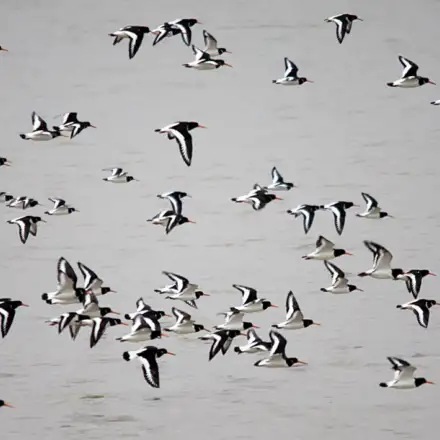
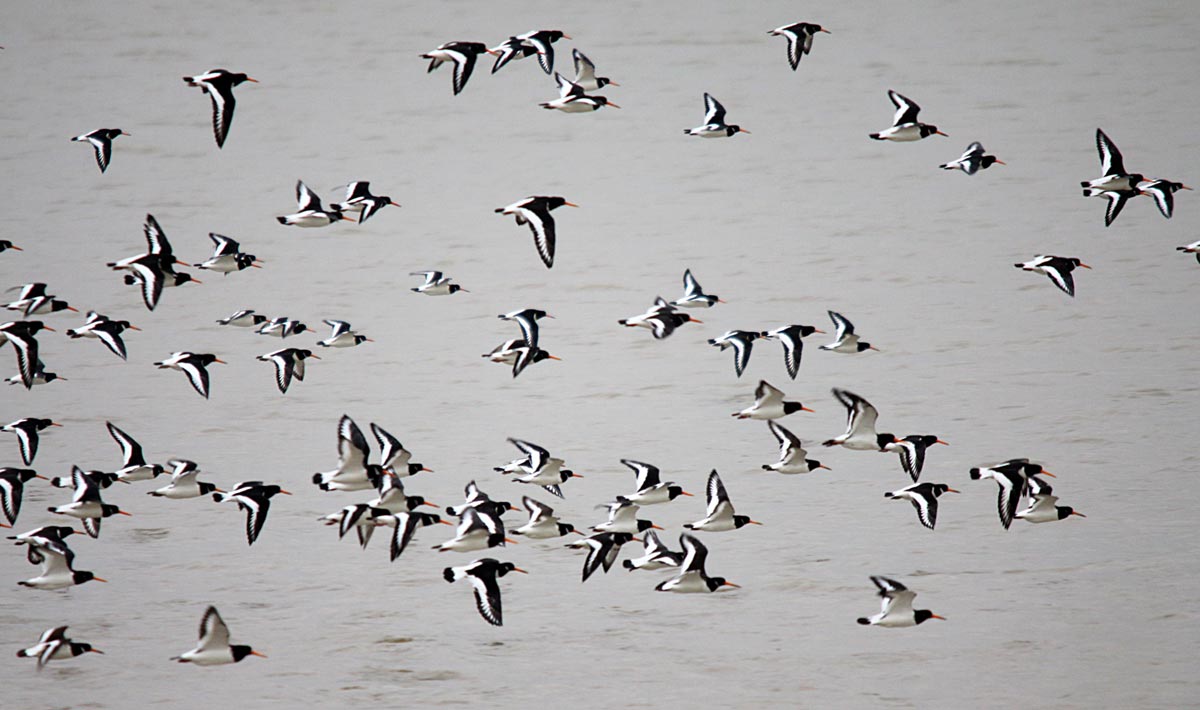
The Eurasian Oystercatcher breeds from April to September across almost the whole of Europe, particularly along the coast, and in vast areas of Asia (Billerman et al. 2026). The majority of the European population migrates relatively short distances; however, a few long-distance migrants reach West Africa (Delany et al. 2009). The birds that winter in Mainland Portugal come from Northern Europe (Scandinavia and Iceland) and the coasts of central and northern Europe (the United Kingdom, Germany and the Netherlands). Here, Eurasian Oystercatchers begin to increase in abundance from August, reaching peak numbers in winter. They also occur during the migratory periods, with some non-breeding birds remaining throughout the breeding season (Catry et al. 2010a). The species occurs predominantly along the coast, particularly in the Ria Formosa and the Sado estuary, but also in the Minho and Tagus estuaries, the Rias of Aveiro and Alvor, Óbidos Lagoon and the Aljezur coast, with occasional sightings along the remaining non-estuarine coastline (Meirinho et al. 2014; Equipa Atlas 2018). In the Azores and Madeira, however, the species occurs accidentally during the winter, particularly during migration.
Abundance and population trends
The global population has been estimated at between 925,000 and 1,030,000 individuals (Wetlands International 2025), with a declining trend (BirdLife International 2025). In Mainland Portugal, the Eurasian Oystercatcher bred during the first half of the 20th century, notably in the Sado estuary, where it became extinct due to probable persecution and egg looting (Catry et al. 2010a). The wintering population was estimated at 1,240 individuals (Equipa Atlas 2018), of which around 170 use the Mainland coastline (Lecoq et al. 2013). The Ria Formosa, followed by the Sado estuary, hosts three-quarters of the national population. This population is thought to have increased in the late 20th century (Catry et al. 2010a), consistent with the Good Environmental Status achieved for the abundance indicator. In the Azores and Madeira, the species occurs very rarely (Equipa Atlas 2018); however, the Azorean population appears to have achieved Good Environmental Status. In the case of Madeira, the available information did not allow for this assessment.
Ecology and habitat
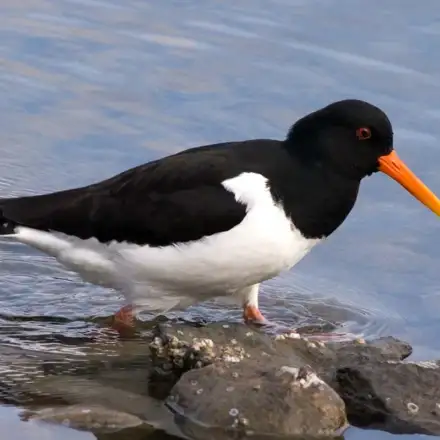
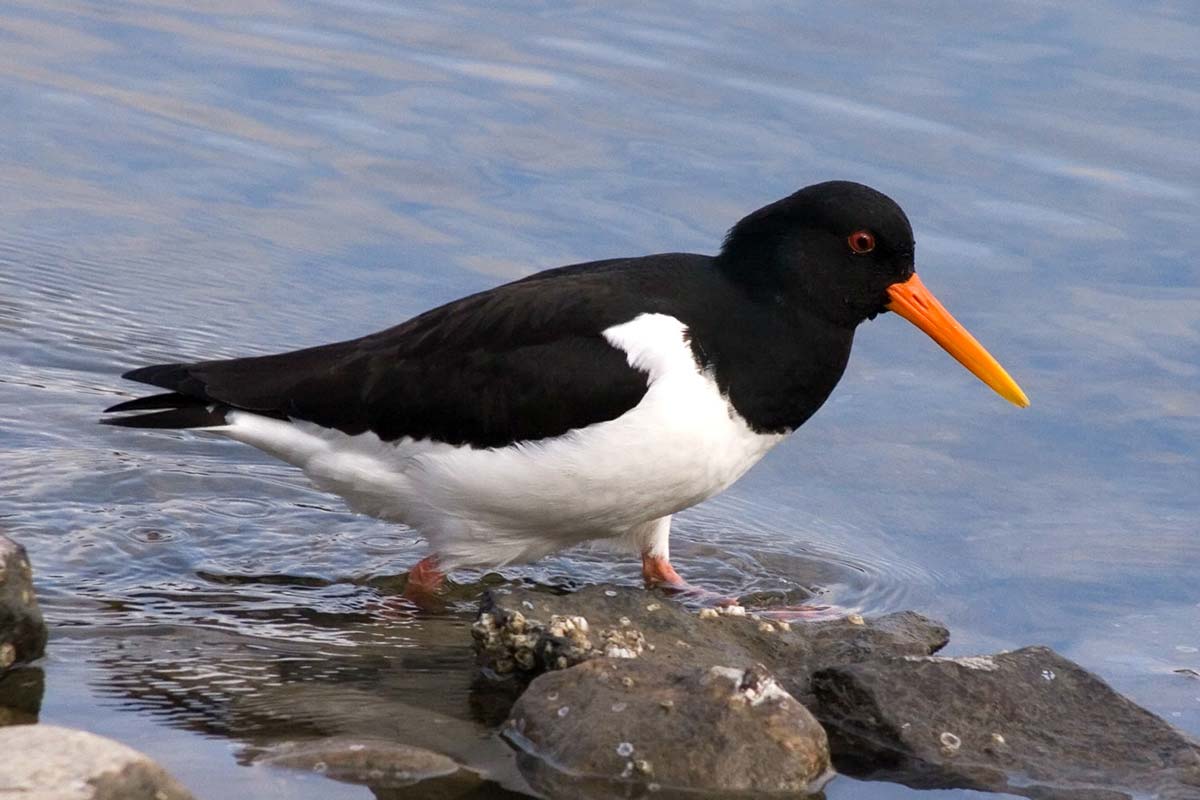
During the wintering period in Portugal, it occurs mainly in coastal wetlands. A smaller proportion utilises the marine coastline, particularly in areas with extensive rocky intertidal zones (Lourenço et al. 2013). It feeds primarily on invertebrates in soft sediments, such as clams, razor clams and polychaetes (Cidraes-Vieira 1992). On the Portuguese coast, its diet is likely to be similar to that recorded in other areas, where it is dominated by molluscs, notably mussels, limpets and small whelks (Billerman et al. 2026).
Threats and conservation
Globally, the greatest threat to this species appears to be linked to the over-exploitation of benthic molluscs and the disappearance of some of the key species in its diet (BirdLife International 2025). Habitat degradation, through pollution and changes in coastal dynamics and land use, is another threat to which they are subject at their wintering sites. Eurasian Oystercatchers actively avoid disturbed areas; however, there is no correlation between human presence and the occurrence of this species on the Portuguese coast (Lourenço et al. 2013). Nevertheless, it must be acknowledged that the increasing use of beaches during the winter for recreational activities may have some impact on this species.
- Autor
Nuno Oliveira
Wetlands International (2025). Waterbird Population Estimates. Downloaded from http://wpe.wetlands.org on 30.11.2025. Bibliography:
Meirinho A, Barros N, Oliveira N, Catry P, Lecoq M, Paiva V, Geraldes P, Granadeiro JP, Ramírez I & Andrade J (2014). Atlas das Aves Marinhas de Portugal. Sociedade Portuguesa para o Estudo das Aves. Bibliography:
Lourenço PM, Catry P, Lecoq M, Ramírez I & Granadeiro JP (2013). Role of disturbance, geology and other environmental factors in determining abundance and diversity in coastal avian communities during winter. Marine Ecology Progress Series 479: 223-234. Bibliography:
Lecoq M, Lourenço PM, Catry P, Andrade J & Granadeiro JP (2013). Wintering waders on the Portuguese mainland non-estuarine coast: results of the 2009-2011 survey. Wader Study Group Bulletin 120: 66-70. Bibliography:
Equipa Atlas (2018). Atlas das Aves Invernantes e Migradoras de Portugal 2011-2013. Sociedade Portuguesa para o Estudo das Aves, LabOr- Laboratório de Ornitologia – ICAAM - Universidade de Évora, Instituto da Conservação da Natureza e das Florestas, Instituto das Florestas e Conservação da Natureza (Madeira), Secretaria Regional da Energia, Ambiente e Turismo (Açores) e Associação Portuguesa de Anilhadores de Aves. Lisboa. Bibliography:
Delany S, Dodman T, Stroud D & Scott D (2009). An atlas of wader population in Africa and western Eurasia. Wetlands International, Wageningen. Bibliography:
Cidraes-Vieira N (1992). Ecologia do ostraceiro Haematopus ostralegus na Ria Formosa - flutuações populacionais, alimentação e impacto na moluscicultura. Relatório de Estágio. Faculdade de Ciências da Universidade de Lisboa, Lisboa. Bibliography:
BirdLife International (2025). IUCN Red List for birds. Downloaded from https://datazone.birdlife.org on 30.11.2025. Bibliography:
Billerman SM, Keeney BL, Kirwan GM, Medrano F, Sly ND & Smith MG (eds.) (2026). Birds of the World. Cornell Laboratory of Ornithology, Ithaca, NY, USA. Bibliography:
Catry P, Costa H, Elias G & Matias R (2010a). Aves de Portugal, Ornitologia do Território Continental. Assírio e Alvim, Lisboa Glossary:
Organisms that live associated with the seabed or sediments. Glossary:
The coastal area that is exposed at low tide and submerged at high tide. Glossary:
Areas where birds remain outside the breeding season, generally associated with favourable conditions for feeding and survival. Glossary:
A species or parameter that reflects the state of an ecosystem or environmental changes. Glossary:
The direction of change in the size of a population over time (increase, decline or stability). Glossary:
Annelid worms belonging to the class Polychaeta. Glossary:
A period generally corresponding to the winter months, which may include part of autumn.