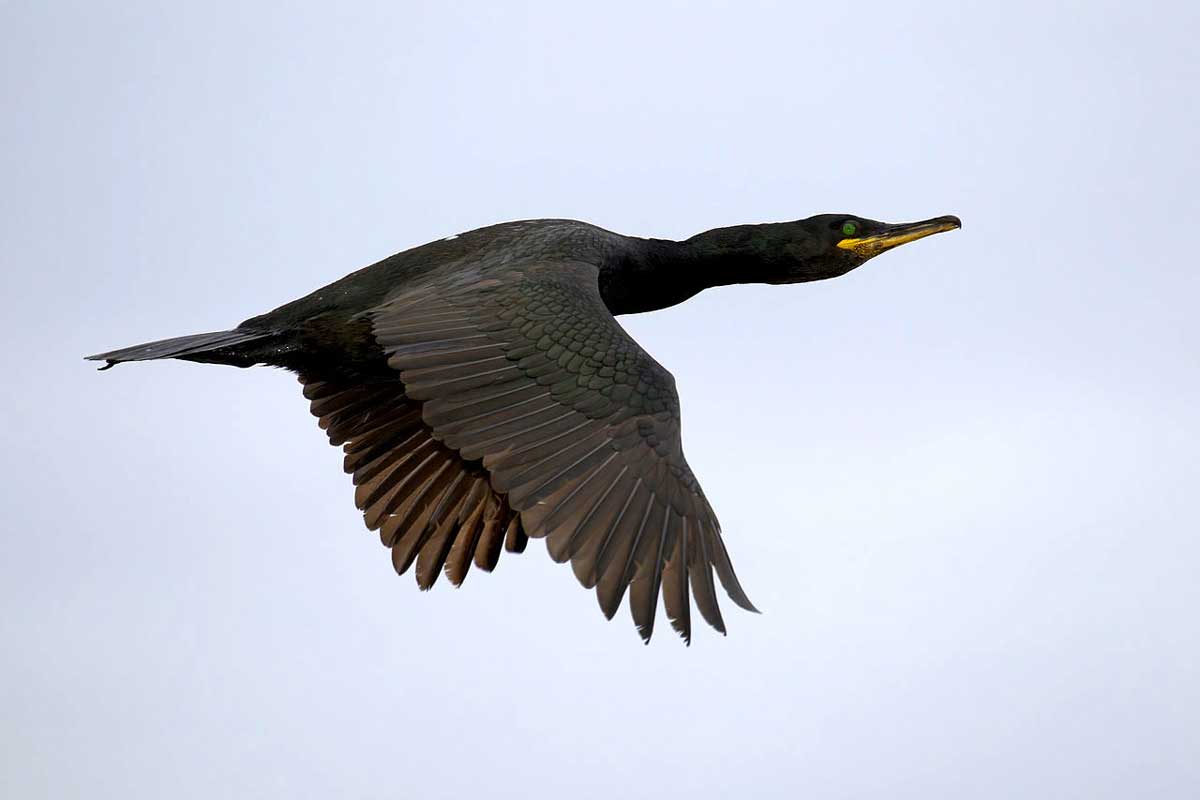
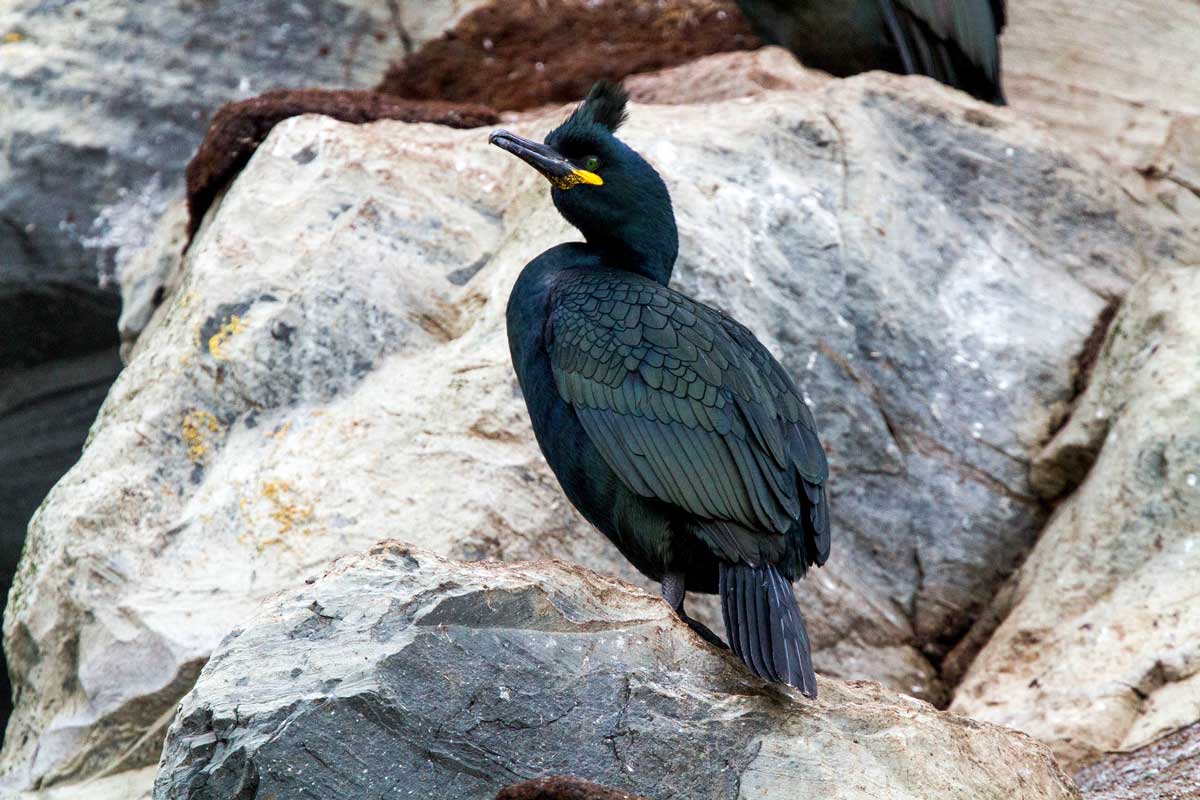
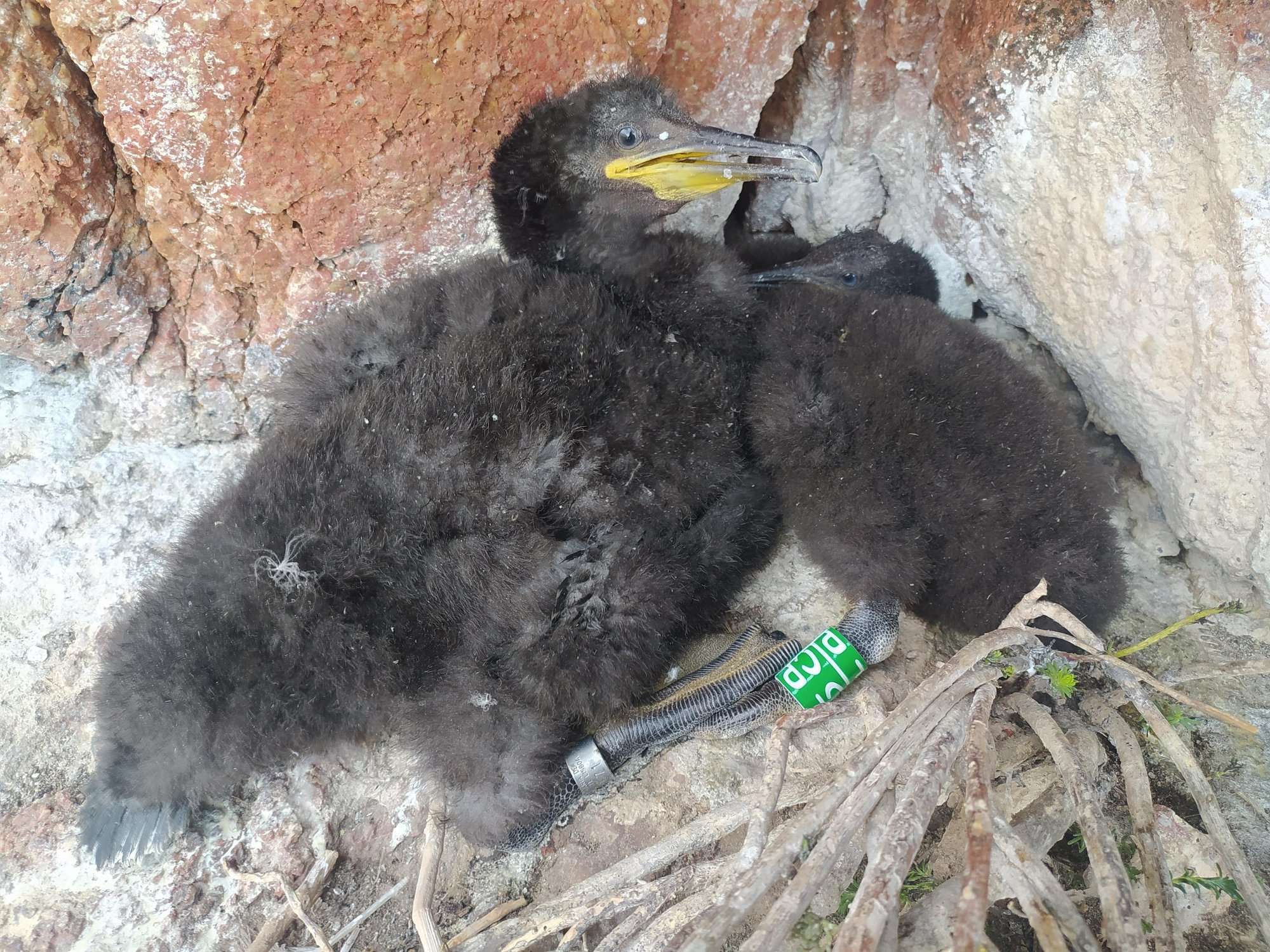
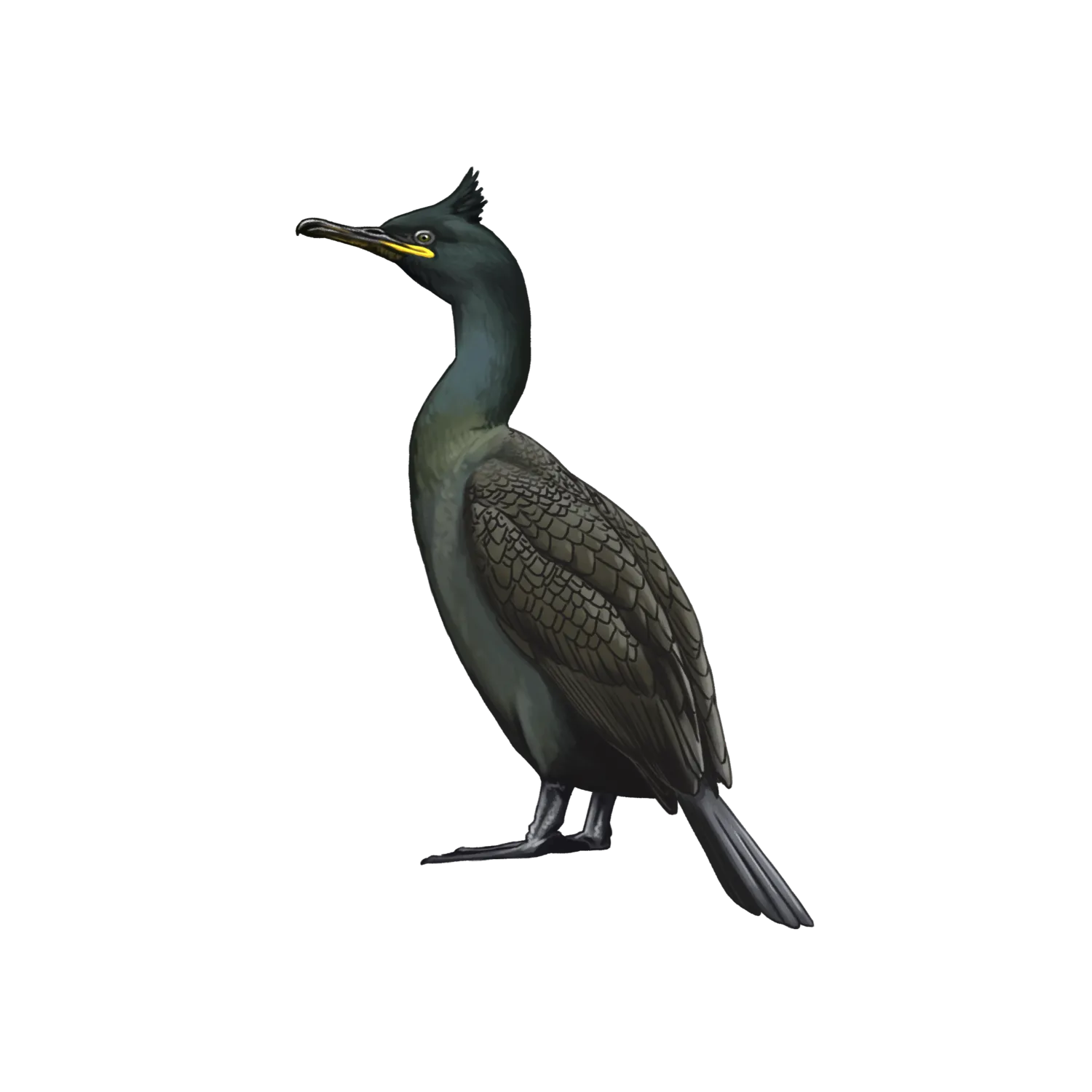
European Shag
Scientific name: Gulosus aristotelis
Family phalacrocoracidae
Phenology
- Mainland
- Resident and wintering
- Madeira
- Vagrant
- Azores
- Absent
Conservation status
Learn more- Mainland
- Madeira
- Azores
- IUCN Global
Data
Maps
Distribution | Breeding
Scale
Minimum value:
Maximum value:
Scale
Minimum value:
Maximum value:
Scale
Minimum value:
Maximum value:
Scale
Minimum value:>
Maximum value:<
Scale
Minimum value:
Maximum value:
Scale
Minimum value:>
Maximum value:>
Distribution based on seabird tracking data (locations/hexagone).
Colony(ies) of origin:
Device:
Data period / number of individuals:
Data period / number of individuals:
Distribution of seabird breeding colonies or sites (number of breeding pairs).
Distribution based on marine censuses (probability of occurrence).
Observed density based on marine censuses (birds/ km2).
Confirmed occurence during marines censuses.
Abundance of waders derived from Project Arenaria coastal surveys (birds/square).
Passage rates derived from RAM coastal surveys (birds/hour).
No data available for the selected period.
Presentation
Distribution, movements and phenology
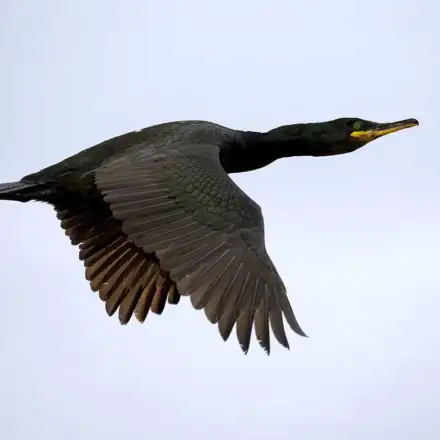
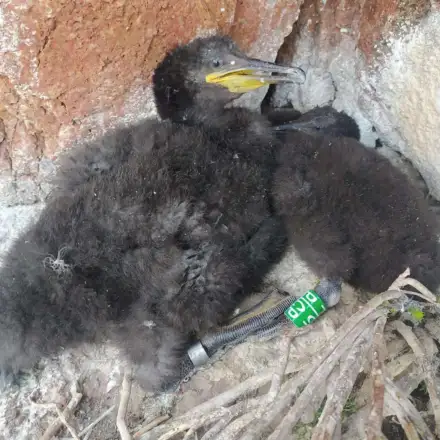
The European Shag breeds between February and August, and is found along the European Atlantic coast, in north-west Africa, the Mediterranean and the Black Sea (Billerman et al. 2026). It is a predominantly sedentary species, concentrating its distribution around colonies throughout the year (Velando et al. 2005; Nascimento et al. 2023b). However, some birds undertake short-distance migrations during winter and juveniles exhibit some dispersive movements.
In Portugal, it breeds exclusively on the Mainland, in the Berlengas archipelago and on the rocky coast between Cape Carvoeiro and Albufeira (del Moral & Oliveira 2019). Individual tracking confirmed the localised distribution around breeding colonies. Juveniles undertook more extensive dispersal movements, with one reaching the coastal area between Matosinhos and Caminha during its first winter. Previous records in this part of the country were attributed to individuals originating from Galician colonies (Catry et al. 2010a). There are no known records of the European Shag in the Azores (Meirinho et al. 2014; Birding Azores 2022) and although the species is recognised as occasional in the Madeira archipelago (Correia-Fagundes et al. 2021), only one record of an individual was confirmed in the 1990s (Zino et al. 1995a).
Abundance and population trends
The global population has been estimated at 230,000 to 240,000 individuals (Wetlands International 2025), with a declining trend (BirdLife International 2025). In Portugal, it is a scarce species. In 2017, 101 breeding pairs were recorded along the Portuguese Mainland coast (del Moral & Oliveira 2019). The largest colony, comprising 62 pairs, was located in the Berlengas archipelago, followed by the Arrábida/Cape Espichel area, where 20 pairs were recorded. No substantial change in the species’ distribution has been recorded since the last census, carried out in 2002 (Equipa Atlas 2022). However, a considerable decline in the population size of the Berlengas archipelago and the south-west coast should be noted. The assessment of environmental status is consistent with this trend, with the population failing to achieve Good Environmental Status for either indicator, abundance or productivity.
Ecology and habitat
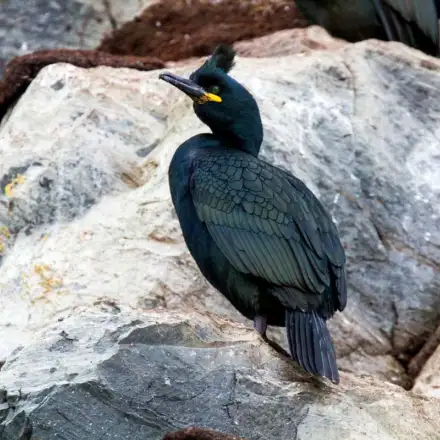
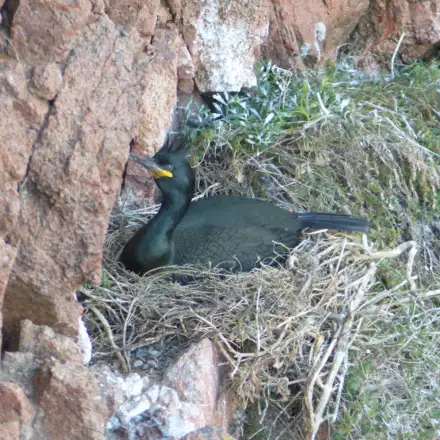
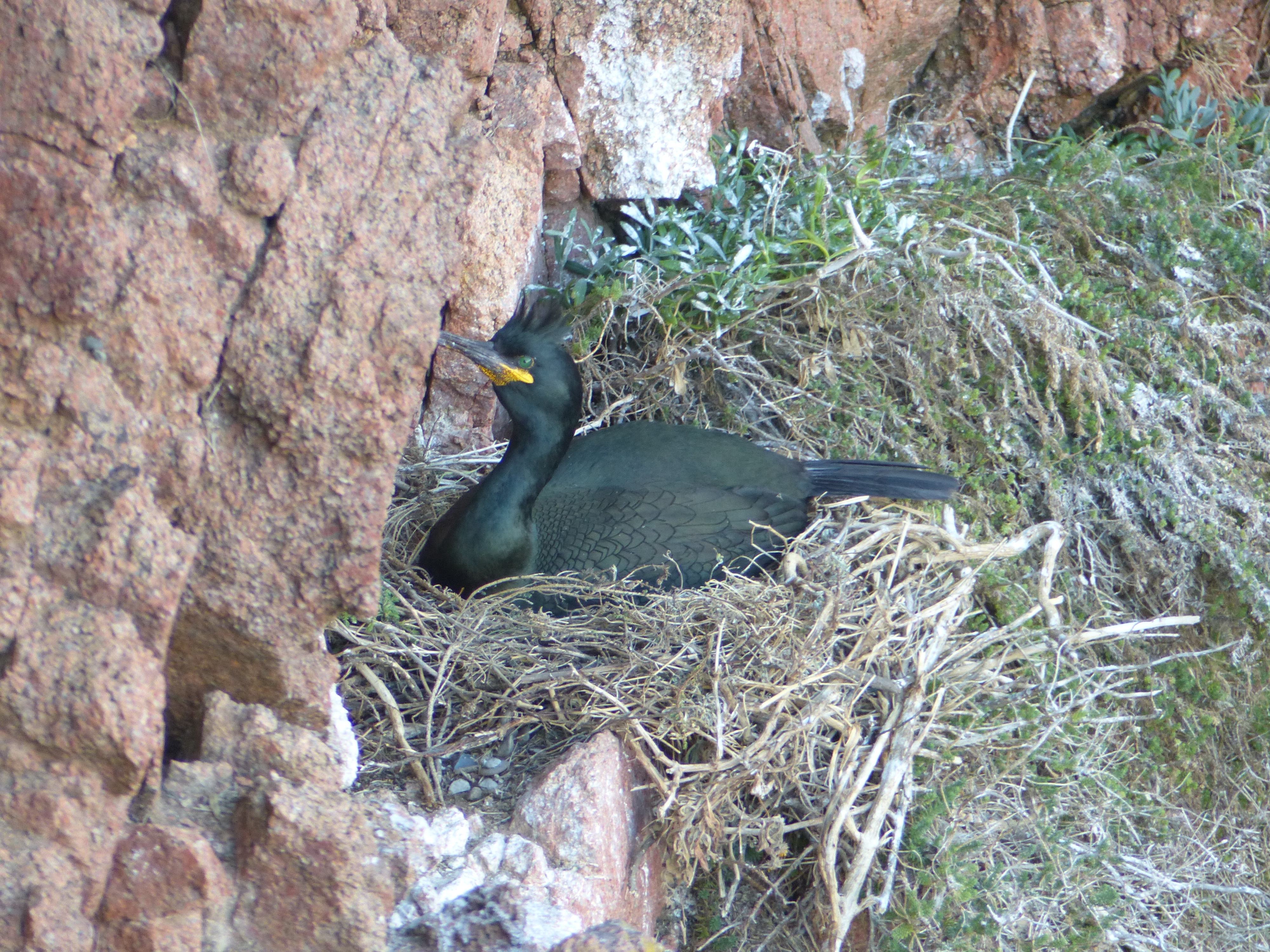
It is a coastal species that inhabits rocky habitats and does not venture out into the open sea. It feeds on a wide variety of pelagic, demersal and benthic fish, with the sand eel being the main species consumed during the breeding season in Portugal (Nascimento et al. 2021). Outside this period, the European Shag has an even more diverse diet, being particularly rich in gadids and sparids. It nests singly or in small colonies on coastal cliffs, islands and islets. The nest is built on ledges, in crevices and caves, which are generally sheltered.
Threats and conservation
Although its diet is relatively flexible, the species depends on certain prey, and a shortage of these resources could jeopardise its survival (BirdLife International 2025). Climate change contributes to a decline in prey numbers and an increase in the frequency of extreme weather events. Oil pollution causes direct mortality and indirect ecological impacts on the habitat (Velando et al. 2005). The species is also vulnerable to competition with commercial fisheries as they exploit shared prey (Nascimento et al. 2021; Nascimento et al. 2023b). This trophic overlap is particularly relevant during winter, when prey availability may be lower. The species is also vulnerable to bycatch in gillnets and longlines (Oliveira et al. 2021).
- Autor
Tânia Nascimento
- Owners/sources of tracking data
SPEA BirdLife
Zino F, Biscoito MJ & Zino PA (1995a). Birds of the archipelago of Madeira and the Selvagens. New records and checklist. Boletim do Museu Municipal do Funchal 47(262): 61-100. Bibliography:
Wetlands International (2025). Waterbird Population Estimates. Downloaded from http://wpe.wetlands.org on 30.11.2025. Bibliography:
Velando A, Munilla I & Leyenda PM (2005). Short-term indirect effects of the 'Prestige' oil spill on European Shags: changes in availability of prey. Marine Ecology Progress Series 302: 263-274. Bibliography:
Oliveira N, Almeida A, Alonso H, Constantino E, Ferreira A, Gutierrez I, Santos AL, Silva E & Andrade J (2021). A contribution to reducing bycatch in a high priority area for seabird conservation in Portugal. Bird Conservation International 31(4): 553-572. Bibliography:
Nascimento T, Oliveira N & Luís A (2023b). Spatial overlap between the European Shag and commercial fisheries in a special protected area: implications for conservation. Fisheries Research 263: 106689. Bibliography:
Nascimento T, Oliveira N & Luís A (2021). Hey, that's my fish – Overlap in prey composition between European Shag and local fisheries in Portugal. Ardea 109(1): 77-90. Bibliography:
Meirinho A, Barros N, Oliveira N, Catry P, Lecoq M, Paiva V, Geraldes P, Granadeiro JP, Ramírez I & Andrade J (2014). Atlas das Aves Marinhas de Portugal. Sociedade Portuguesa para o Estudo das Aves. Bibliography:
Equipa Atlas (2022). III Atlas das Aves Nidificantes de Portugal (2016-2021). SPEA, ICNF, LabOr/UÉ, IFCN. Portugal. Bibliography:
del Moral JC & Oliveira N (2019). A galheta na Península Ibérica. População reprodutora em 2017 e método de censo. SEO/BirdLife. Madrid Bibliography:
Correia-Fagundes C, Romano H, Zino FJA & Biscoito M (2021). Birds of the archipelagos of Madeira and the Selvagens III. New records and checklist update (2010-2020). Boletim do Museu de História Natural do Funchal LXXI: 5-20. Bibliography:
BirdLife International (2025). IUCN Red List for birds. Downloaded from https://datazone.birdlife.org on 30.11.2025. Bibliography:
Birding Azores (2022). Birding Azores database. Downloaded from https://www.azoreswildlife.com/ on 23.12.2025. Bibliography:
Billerman SM, Keeney BL, Kirwan GM, Medrano F, Sly ND & Smith MG (eds.) (2026). Birds of the World. Cornell Laboratory of Ornithology, Ithaca, NY, USA. Bibliography:
Catry P, Costa H, Elias G & Matias R (2010a). Aves de Portugal, Ornitologia do Território Continental. Assírio e Alvim, Lisboa Glossary:
A marine organism, usually a fish, that spends most of its life on the seabed, associated with the marine substrate, which may be sandy or rocky. However, these organisms are capable of active swimming, thus differing from benthic organisms. Glossary:
Organisms that live associated with the seabed or sediments. Glossary:
Intense meteorological phenomena such as storms, heatwaves or droughts. Glossary:
Persistent changes in global or regional climate patterns, influenced by natural and anthropogenic factors. Glossary:
A species or parameter that reflects the state of an ecosystem or environmental changes. Glossary:
Monitoring the movements of individuals using tracking devices. Glossary:
The direction of change in the size of a population over time (increase, decline or stability). Glossary:
A measure of a population’s breeding success, generally expressed as the average number of chicks produced per pair. Glossary:
A concept defined under the Marine Strategy Framework Directive (MSFD), referring to the condition of the elements of the marine environment, including birds. It aims to assess whether ecosystems are healthy, balanced and capable of supporting ecological functions and human uses in a sustainable manner. The ultimate goal is for the components and ecosystems to achieve Good Environmental Status. Glossary:
Refers to the unintentional capture of marine species during fishing. Animals may become entangled in hooks or fishing nets. It is usually associated with commercial fishing, but can also occur in recreational fishing. Bycatch is one of the main threats to seabirds at sea. Glossary:
A static net, often nearly invisible and with variable mesh size, used to catch a wide variety of fish. It is set in the sea at varying depths and later retrieved. It is a non-selective fishing gear that frequently catches seabirds, marine mammals and reptiles. Glossary:
The area or environment where organisms that do not depend on the seafloor normally live. It is the typical ecological environment of open ocean waters. The pelagic ecosystem does not include only the open sea; it also comprises the waters covering the continental shelf. The pelagic zone begins below the influence of tides and extends into the open ocean, at depths ranging from a few tens of metres to approximately 6,000 metres, and is divided into different layers. Glossary:
A fishing gear consisting of a main line (mother line) from which secondary lines with hooks attached branch off. It is left in the sea and can be placed on the seabed to catch deep-sea species (e.g. scabbardfish) or at the surface to catch large pelagic fish (e.g. swordfish). Glossary:
A generic common name given to various species of bony fish of the genus Ammodytes.