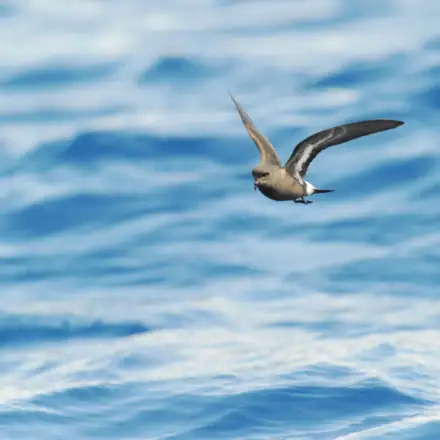
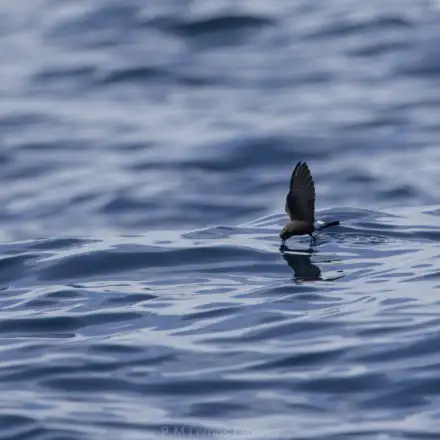
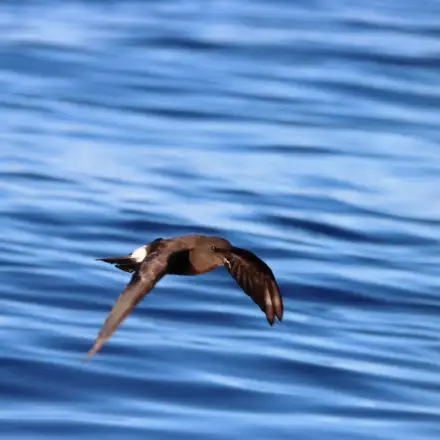
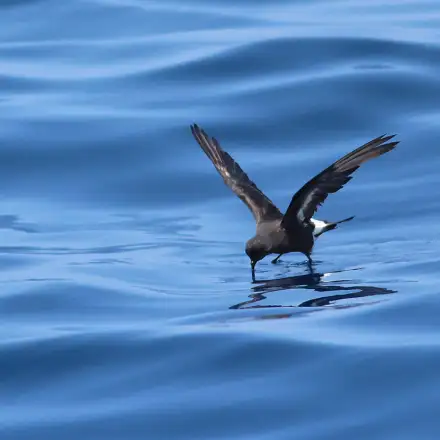
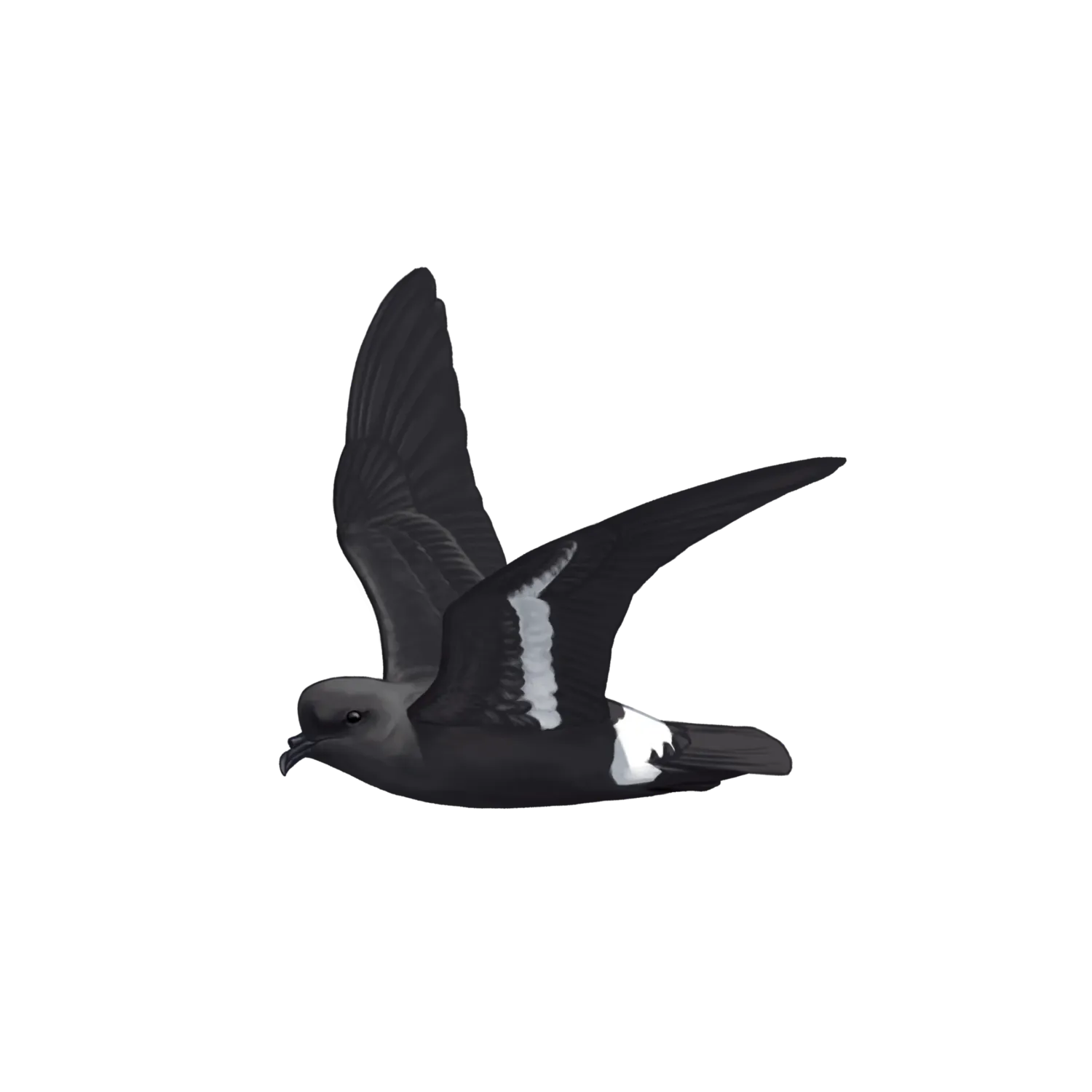
European Storm-petrel
Scientific name: Hydrobates pelagicus
Family hydrobatidae
Phenology
- Mainland
- Wintering and passage migrant
- Madeira
- Passage migrant
- Azores
- Vagrant
Conservation status
Learn more- Mainland
- Madeira
- Azores
- IUCN Global
Data
Maps
Distribution | Breeding
Scale
Minimum value:
Maximum value:
Scale
Minimum value:
Maximum value:
Scale
Minimum value:
Maximum value:
Scale
Minimum value:>
Maximum value:<
Scale
Minimum value:
Maximum value:
Scale
Minimum value:>
Maximum value:>
Distribution based on seabird tracking data (locations/hexagone).
Colony(ies) of origin:
Device:
Data period / number of individuals:
Data period / number of individuals:
Distribution of seabird breeding colonies or sites (number of breeding pairs).
Distribution based on marine censuses (probability of occurrence).
Observed density based on marine censuses (birds/ km2).
Confirmed occurence during marines censuses.
Abundance of waders derived from Project Arenaria coastal surveys (birds/square).
Passage rates derived from RAM coastal surveys (birds/hour).
No data available for the selected period.
Presentation
Distribution, movements and phenology
The European Storm-petrel breeds between May and October in north-west Europe (the Faroe Islands, the United Kingdom, Ireland and Iceland), with small colonies found across various countries in southern and northern Europe, including Spain, France, Norway, Italy, Greece and Malta (Billerman et al. 2026).
It is a migratory species, wintering mainly in the South Atlantic, on the west and south coasts of Africa. However, part of the population is thought to remain in the waters off Mainland Portugal throughout the winter. Although it is more common in Portugal in autumn, during post-breeding migration, and in spring, during pre-breeding migration, it can be observed during the rest of the year (Meirinho et al. 2014). The north-central coast of the region is indeed one of the most important areas for the species in the Iberian Peninsula (De la Cruz et al. 2023). Individual tracking data from 8 birds fitted with GLS tags from colonies in Malta and Spain corroborate this distribution and phenology, with an increased use of the rest of the Mainland coast and deeper ocean waters, especially to the west and south. The Madeira sub-area appears to be used to a lesser extent and only during the wintering period, mainly in the eastern half. These data further reinforce the scarce occurrence in the Azores.
Abundance and population trends
The global population has been estimated at between 430,000 and 519,999 mature individuals, with an unknown trend (BirdLife International 2025). The breeding of the species in Portugal has also never been confirmed, despite suspicions and the presence of suitable habitat (Poot 2008). Based on the data used for the environmental status assessment, it was estimated that there are around 4,500 to 11,500 individuals on the continental shelf of Mainland Portugal, in line with the high number of historical records for the region (Catry et al. 2010a). Alongside the wide variation in abundance figures for the continental shelf, this population has not achieved Good Environmental Status for the respective indicator. In the case of Madeira and the Azores, there is no information regarding population trends, thus preventing the assessment of their environmental status.
Ecology and habitat
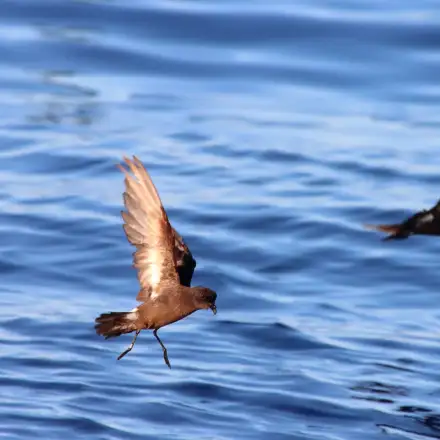
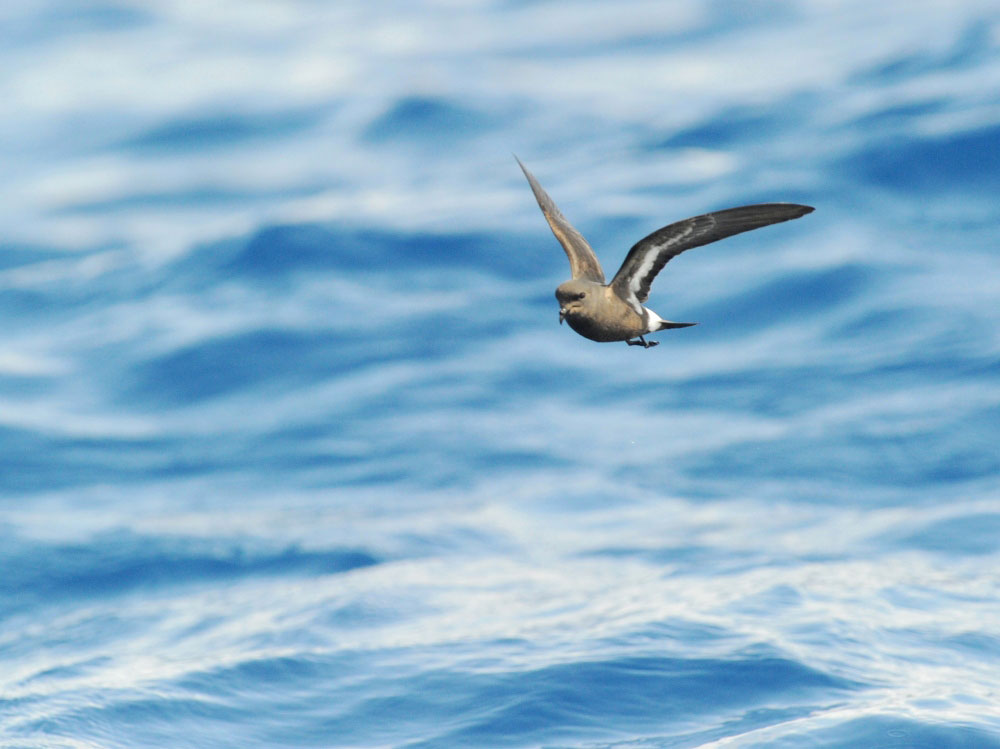
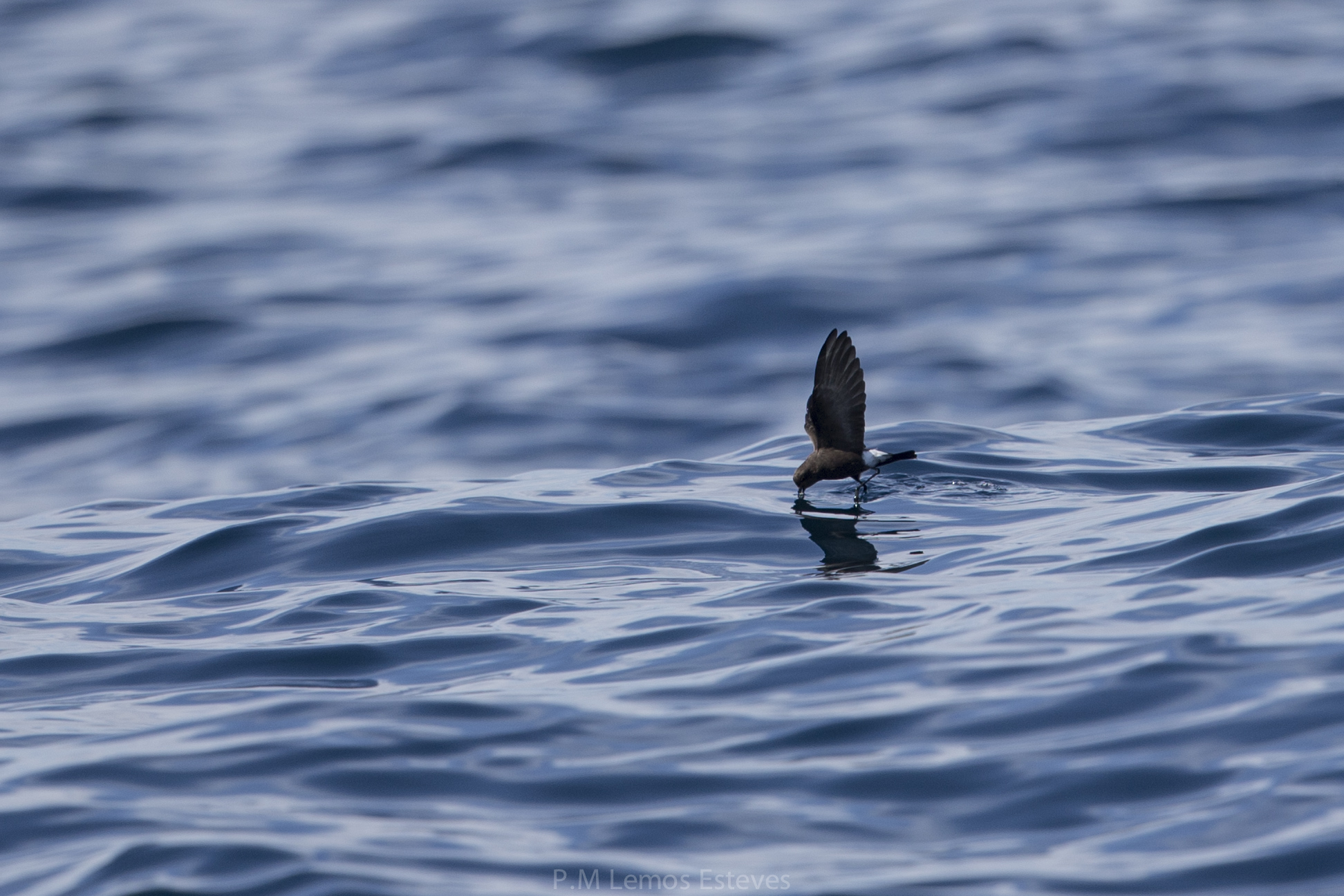
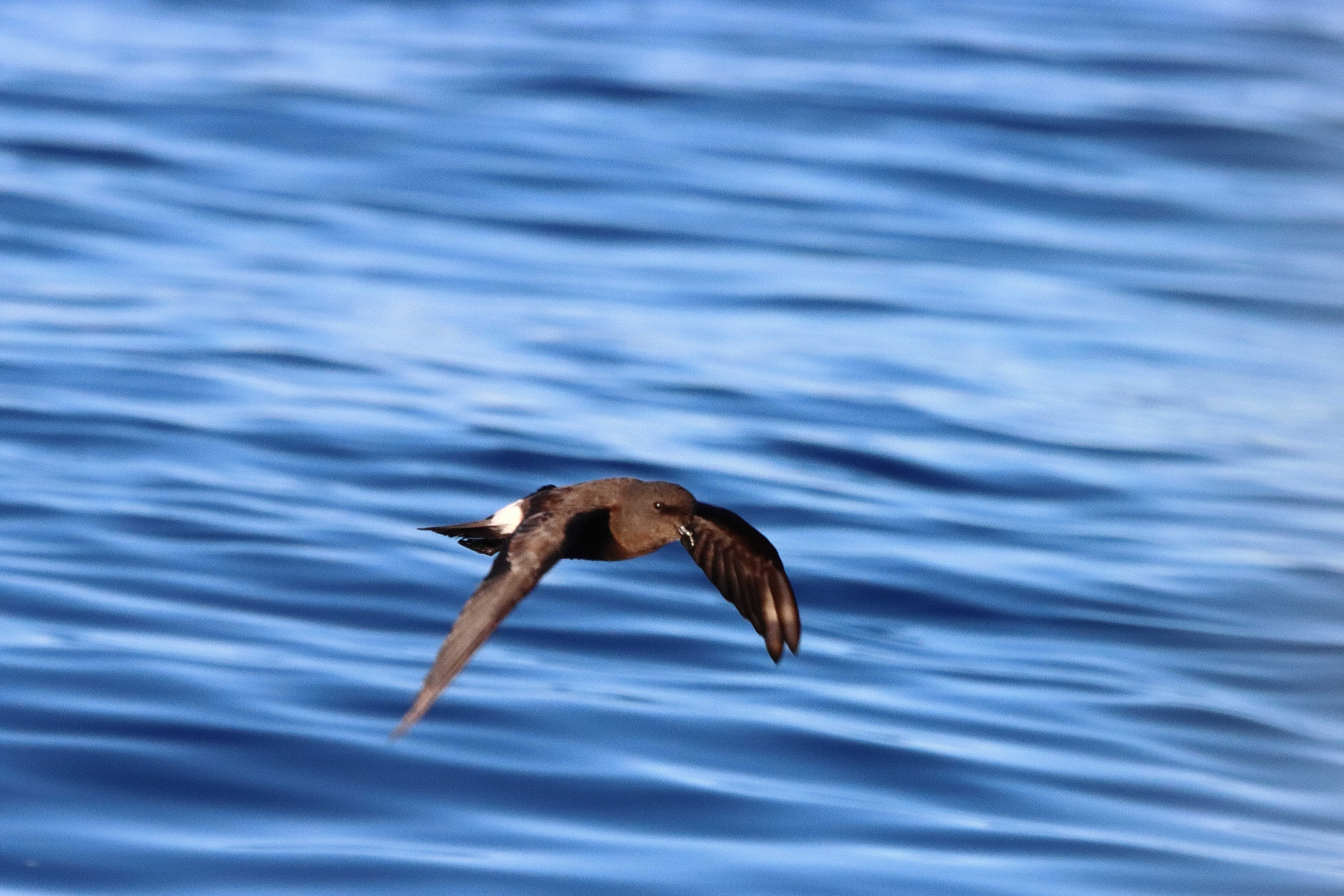
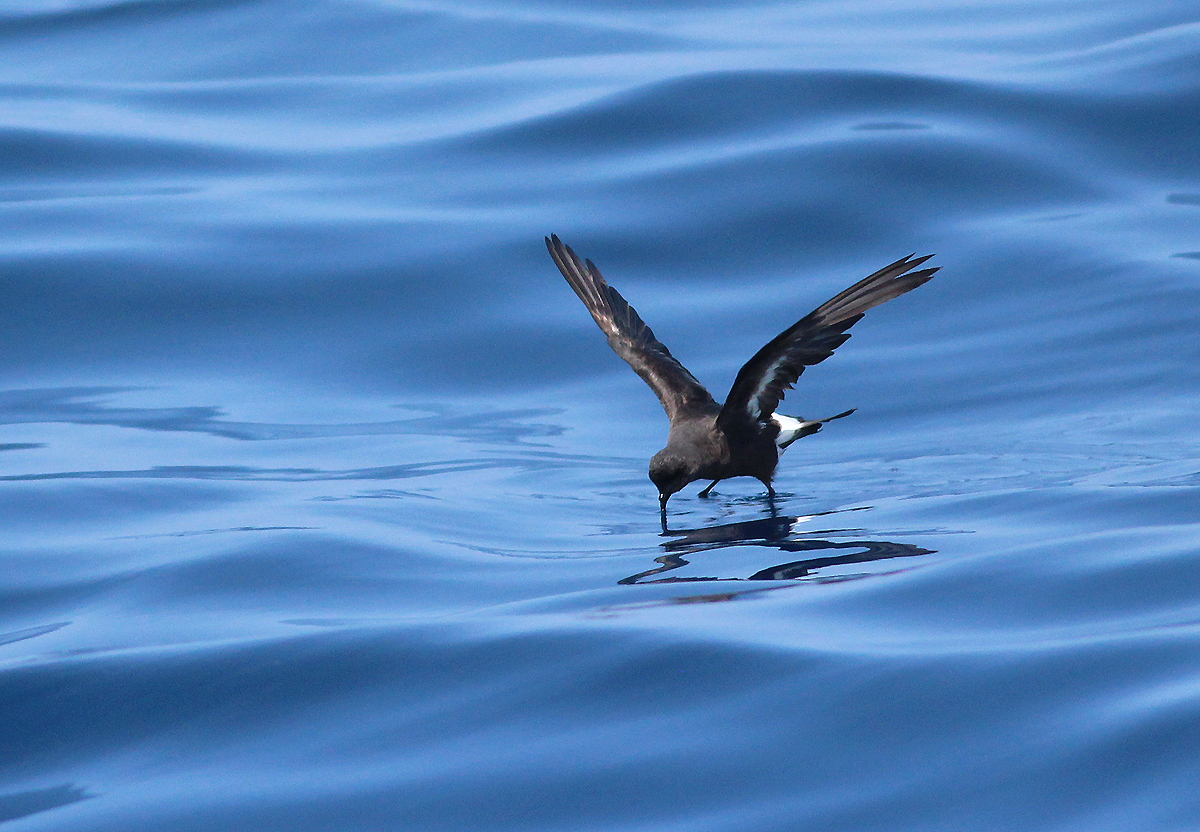
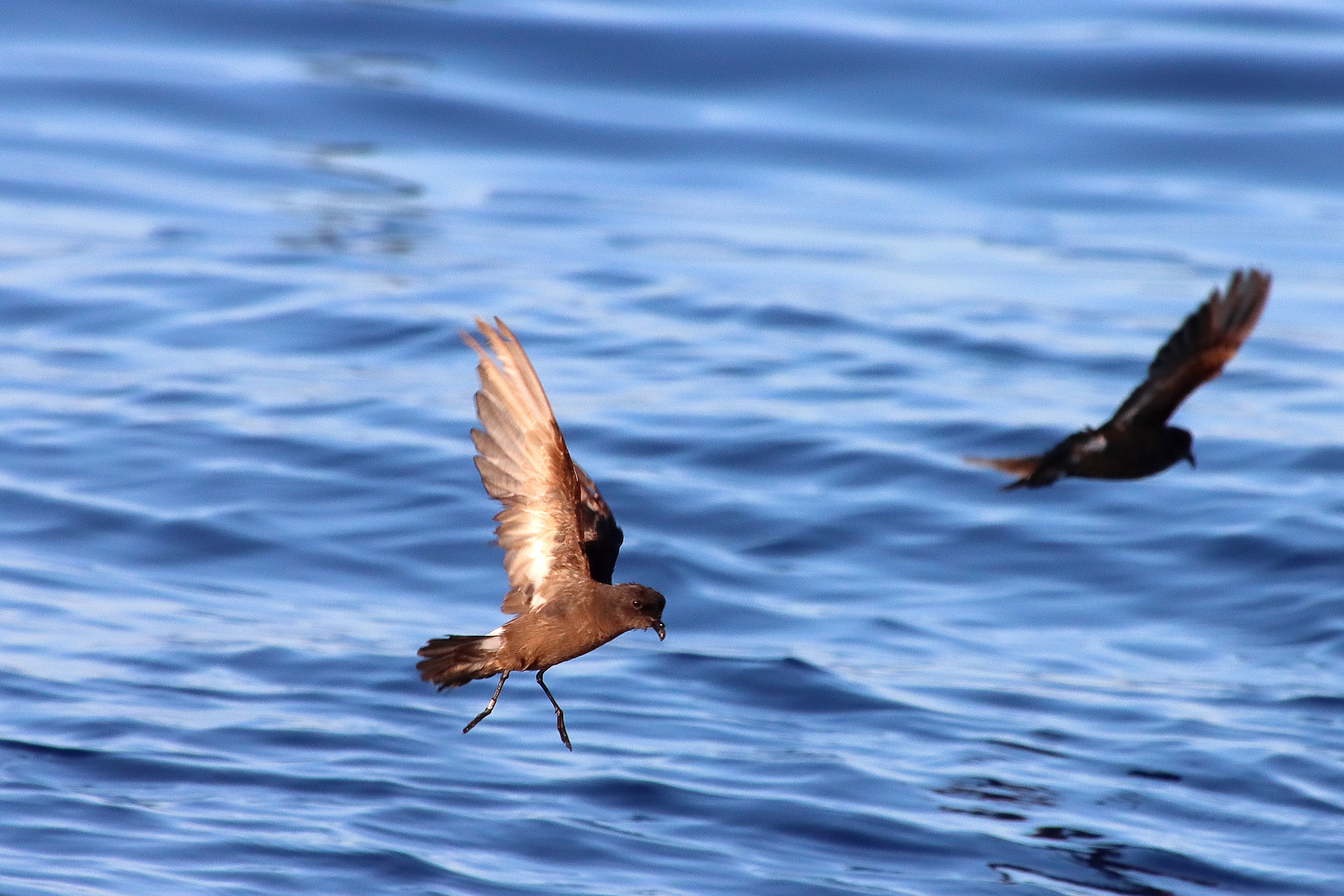
The European Storm-petrel is an essentially pelagic bird. It can occasionally be seen very close to the coast or even inside harbours. Its diet consists of small fish, squid and crustaceans (Catry et al. 2010a; Billerman et al. 2026), and it occasionally follows fishing vessels to feed on discards.
Threats and conservation
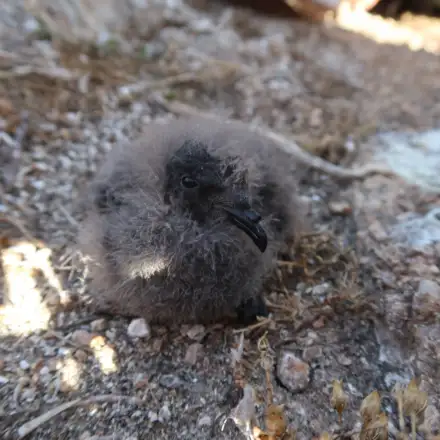
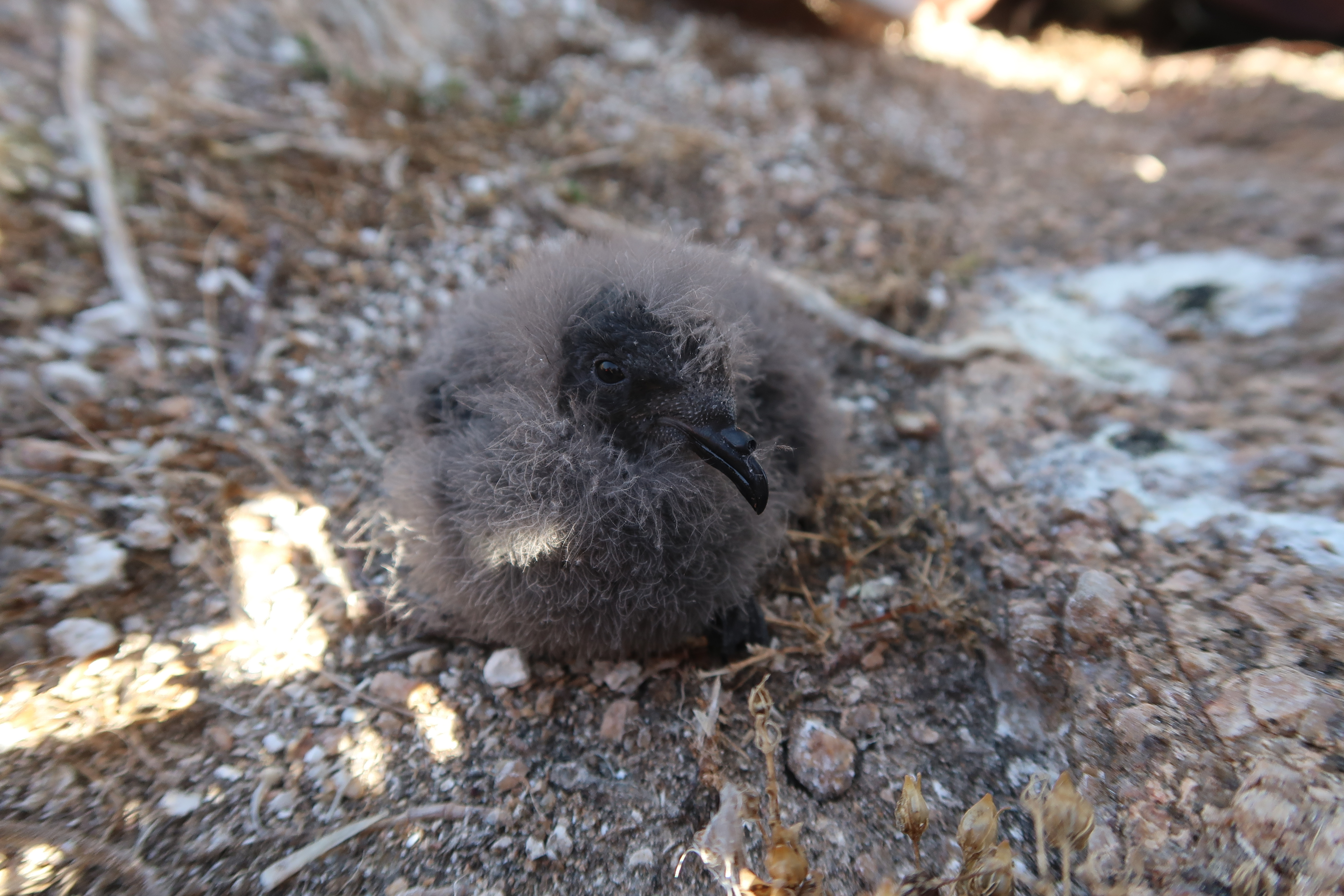
In breeding areas, the greatest threats relate to predation of adults and chicks by rats and cats, and the destruction of nesting sites. Predator eradication and control measures are an effective conservation strategy, as is the provision of artificial nests, which increase breeding success (BirdLife International 2025). In the marine environment, the creation of protected areas or the expansion of existing ones would be a measure that could ensure the effective protection of the species (De la Cruz et al. 2023).
- Autor
Tânia Nascimento
- Owners/sources of tracking data
Poot M (2008). Nocturnal and diurnal nearshore foraging of European Storm Petrels Hydrobates sp. along the Lisbon coast, Portugal. Airo 18: 13-21. Bibliography:
Meirinho A, Barros N, Oliveira N, Catry P, Lecoq M, Paiva V, Geraldes P, Granadeiro JP, Ramírez I & Andrade J (2014). Atlas das Aves Marinhas de Portugal. Sociedade Portuguesa para o Estudo das Aves. Bibliography:
De la Cruz A, Pereira JM, Paiva VH, Ramos JA, Oliveira N, Alonso H, Saavedra C, Vázquez JA, García-Barón I, Arcos JM & Arroyo GM (2023). Using long-term data series to design adequate protected areas that ensure the conservation of inconspicuous small petrel species. Journal of Applied Ecology 60: 2586–2601. Bibliography:
BirdLife International (2025). IUCN Red List for birds. Downloaded from https://datazone.birdlife.org on 30.11.2025. Bibliography:
Billerman SM, Keeney BL, Kirwan GM, Medrano F, Sly ND & Smith MG (eds.) (2026). Birds of the World. Cornell Laboratory of Ornithology, Ithaca, NY, USA. Bibliography:
Catry P, Costa H, Elias G & Matias R (2010a). Aves de Portugal, Ornitologia do Território Continental. Assírio e Alvim, Lisboa Data:
Ramos R (2020a). Dataset 1848: European Storm-petrel, Hydrobates pelagicus, Geolocator (GLS), Benidorm, Benidorm Island, Spain, 2019–2020. BirdLife International Seabird Tracking Database. Downloaded from https://data.seabirdtracking.org/dataset/1848/ on 30.11.2025. Data:
Lago P, Metzger B & BirdLife Malta (2017). Dataset 1443: European Storm-petrel, Hydrobates pelagicus, Geolocator (GLS), Filfla, Filfla, Malta, 2016–2017. BirdLife International Seabird Tracking Database. Downloaded from https://data.seabirdtracking.org/dataset/1443/ on 30.11.2025. Glossary:
Artificial structures installed to provide alternative nesting sites and increase breeding success. Glossary:
Individuals capable of breeding, used as a reference in population estimates. Glossary:
A group of marine arthropods that are important in the marine food chain. Glossary:
Population management of invasive species without total elimination. Glossary:
Complete removal of an invasive species from a specific area. Glossary:
A species or parameter that reflects the state of an ecosystem or environmental changes. Glossary:
Monitoring the movements of individuals using tracking devices. Glossary:
The direction of change in the size of a population over time (increase, decline or stability). Glossary:
A concept defined under the Marine Strategy Framework Directive (MSFD), referring to the condition of the elements of the marine environment, including birds. It aims to assess whether ecosystems are healthy, balanced and capable of supporting ecological functions and human uses in a sustainable manner. The ultimate goal is for the components and ecosystems to achieve Good Environmental Status. Glossary:
Waters situated away from the coast, beyond the continental shelf. It is used in matters relating to maritime activities, such as fishing, the oil industry and the exploitation of renewable energy. These waters are characterised by being located in the open sea, at great depths and far from coastal influences such as rivers and estuaries. They are thus distinguished from coastal waters. Glossary:
The portion of the catch taken by commercial fishing vessels that is returned to the sea, often dead or dying. Discarded fish often belong to species of no commercial value, individuals below the minimum legal landing size, or individuals whose landing is not permitted, for example due to quota restrictions. Discards may also consist of parts of the catch, namely offal and heads, which, after on-board processing, are rejected and discarded at sea. Discards have a strong impact on marine ecosystems and influence many aspects of the distribution, foraging behaviour and population dynamics of seabirds, particularly species and individuals that habitually follow vessels. Glossary:
Referring to the period preceding breeding. Glossary:
Referring to the period following breeding. Glossary:
The portion of the seabed that begins at the coastline and slopes gently downwards to the continental slope (where the slope is much steeper). On average, the continental shelf extends to a depth of 200 metres. Glossary:
The area or environment where organisms that do not depend on the seafloor normally live. It is the typical ecological environment of open ocean waters. The pelagic ecosystem does not include only the open sea; it also comprises the waters covering the continental shelf. The pelagic zone begins below the influence of tides and extends into the open ocean, at depths ranging from a few tens of metres to approximately 6,000 metres, and is divided into different layers. Glossary:
A period generally corresponding to the winter months, which may include part of autumn. Glossary:
A small device attached to birds to study their large-scale movements (usually migration), which works by recording light intensity (from which the duration of night and the local midday time are estimated, and consequently the latitude and longitude on each day). Glossary:
The study of periodic phenomena in living organisms and their relationship with the environment, such as temperature, light and humidity. Some of these cyclical phenomena include, for example, bird migration or plant flowering.