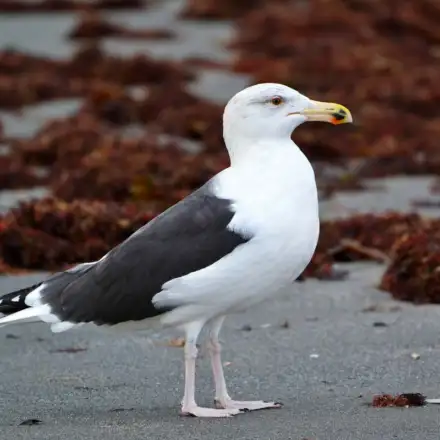
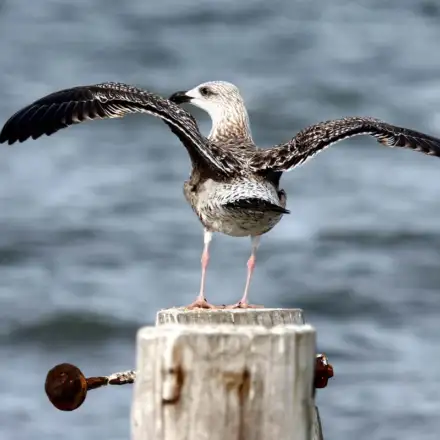
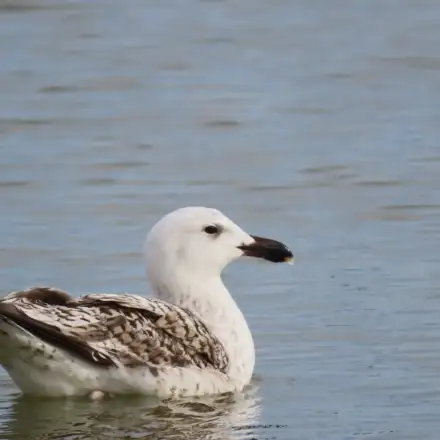
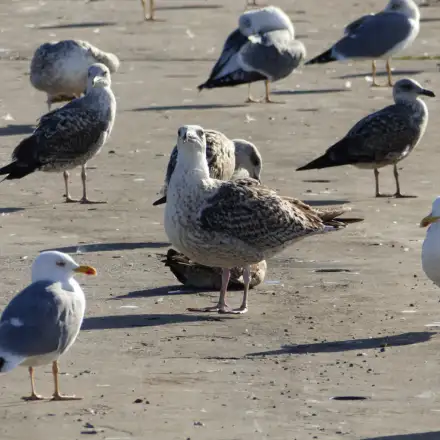
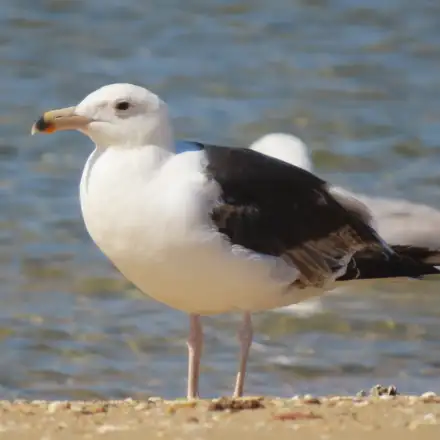
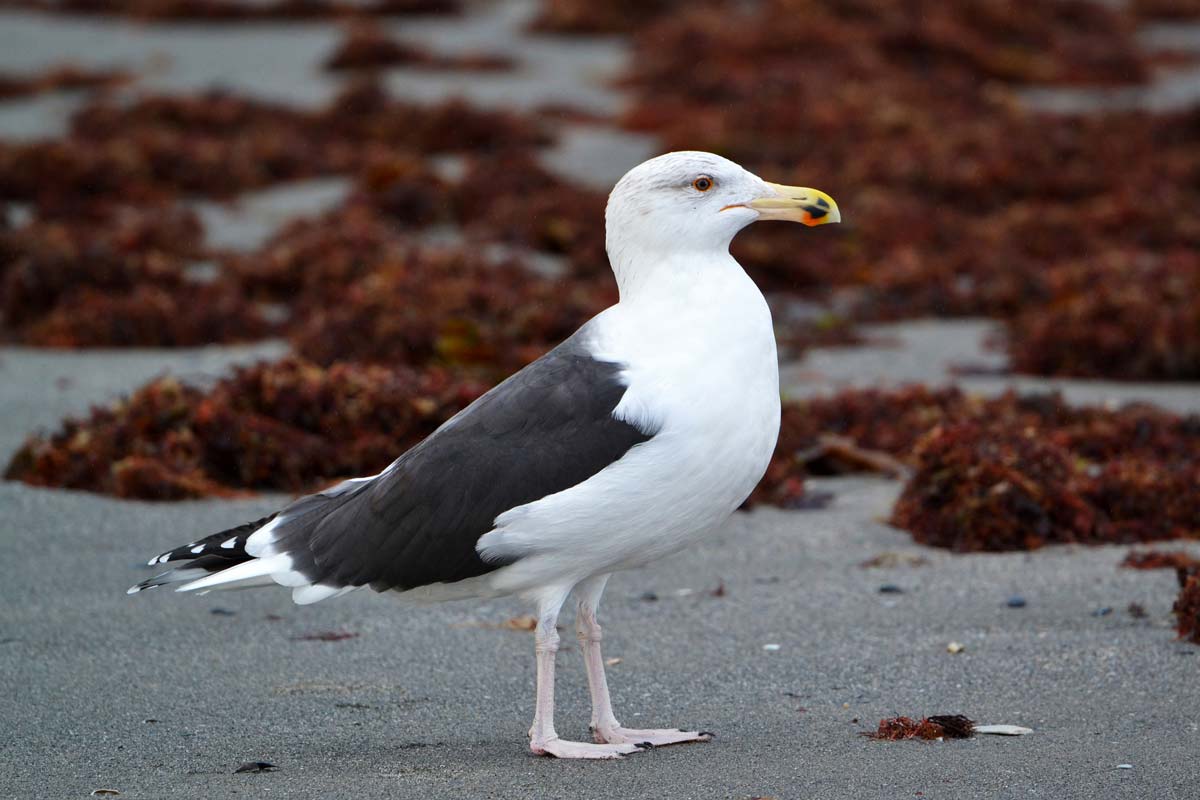
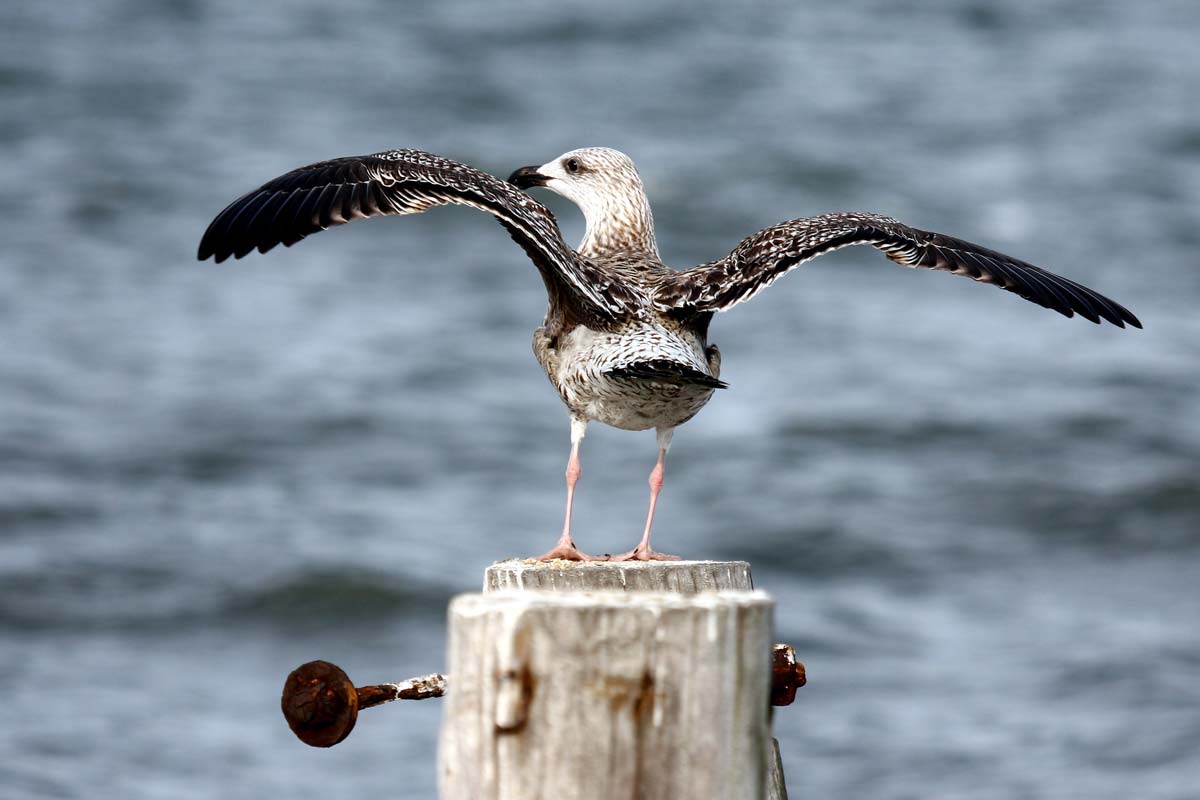
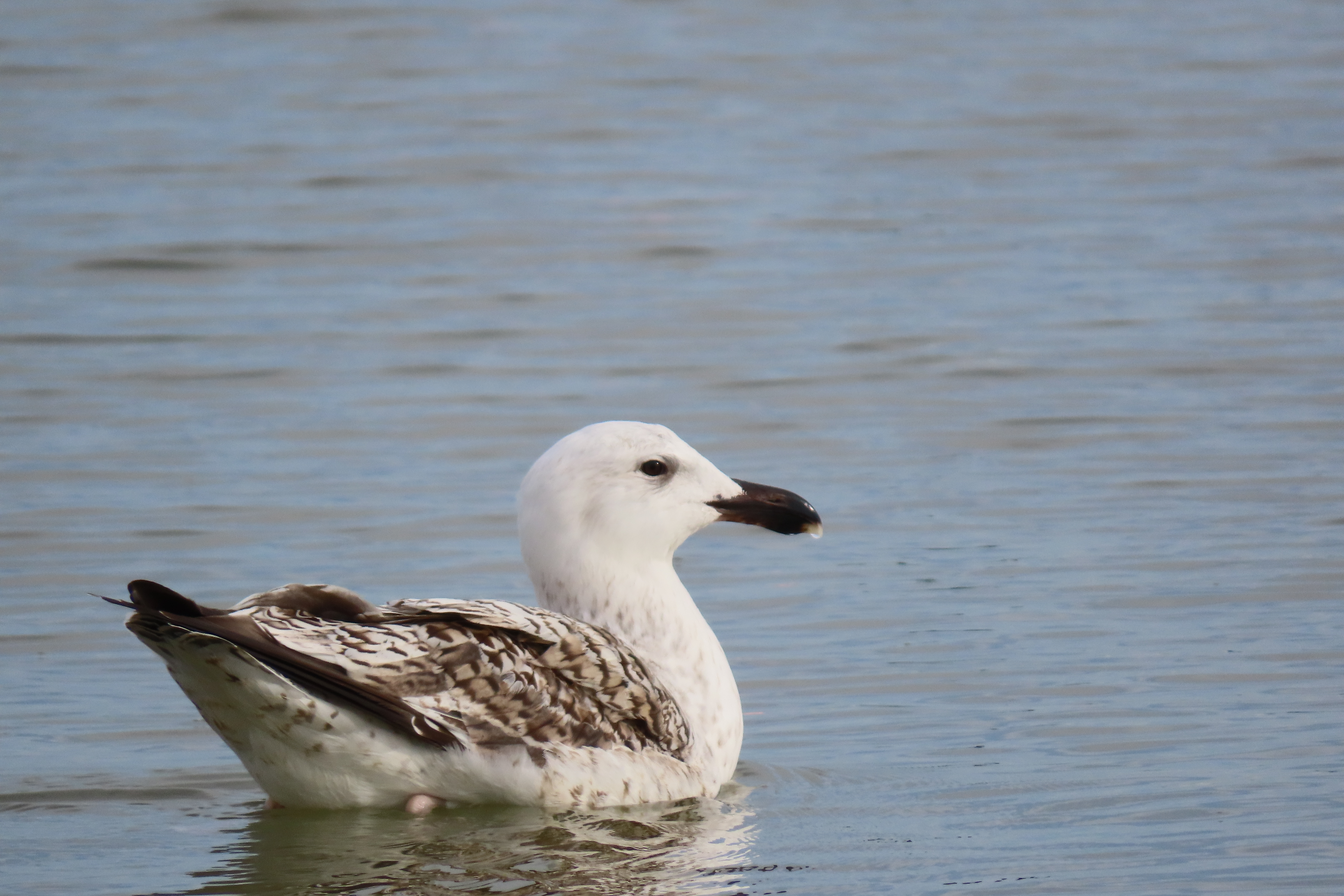
Great Black-backed Gull
Scientific name: Larus marinus
Family laridae
Phenology
- Mainland
- Wintering
- Madeira
- Vagrant
- Azores
- Wintering
Conservation status
Learn more- Mainland
- Madeira
- Azores
- IUCN Global
Data
Maps
Occurrence | Spring
Scale
Minimum value:
Maximum value:
Scale
Minimum value:
Maximum value:
Scale
Minimum value:
Maximum value:
Scale
Minimum value:>
Maximum value:<
Scale
Minimum value:
Maximum value:
Scale
Minimum value:>
Maximum value:>
Distribution based on seabird tracking data (locations/hexagone).
Colony(ies) of origin:
Device:
Data period / number of individuals:
Data period / number of individuals:
Distribution of seabird breeding colonies or sites (number of breeding pairs).
Distribution based on marine censuses (probability of occurrence).
Observed density based on marine censuses (birds/ km2).
Confirmed occurence during marines censuses.
Abundance of waders derived from Project Arenaria coastal surveys (birds/square).
Passage rates derived from RAM coastal surveys (birds/hour).
No data available for the selected period.
Presentation
Distribution, movements and phenology
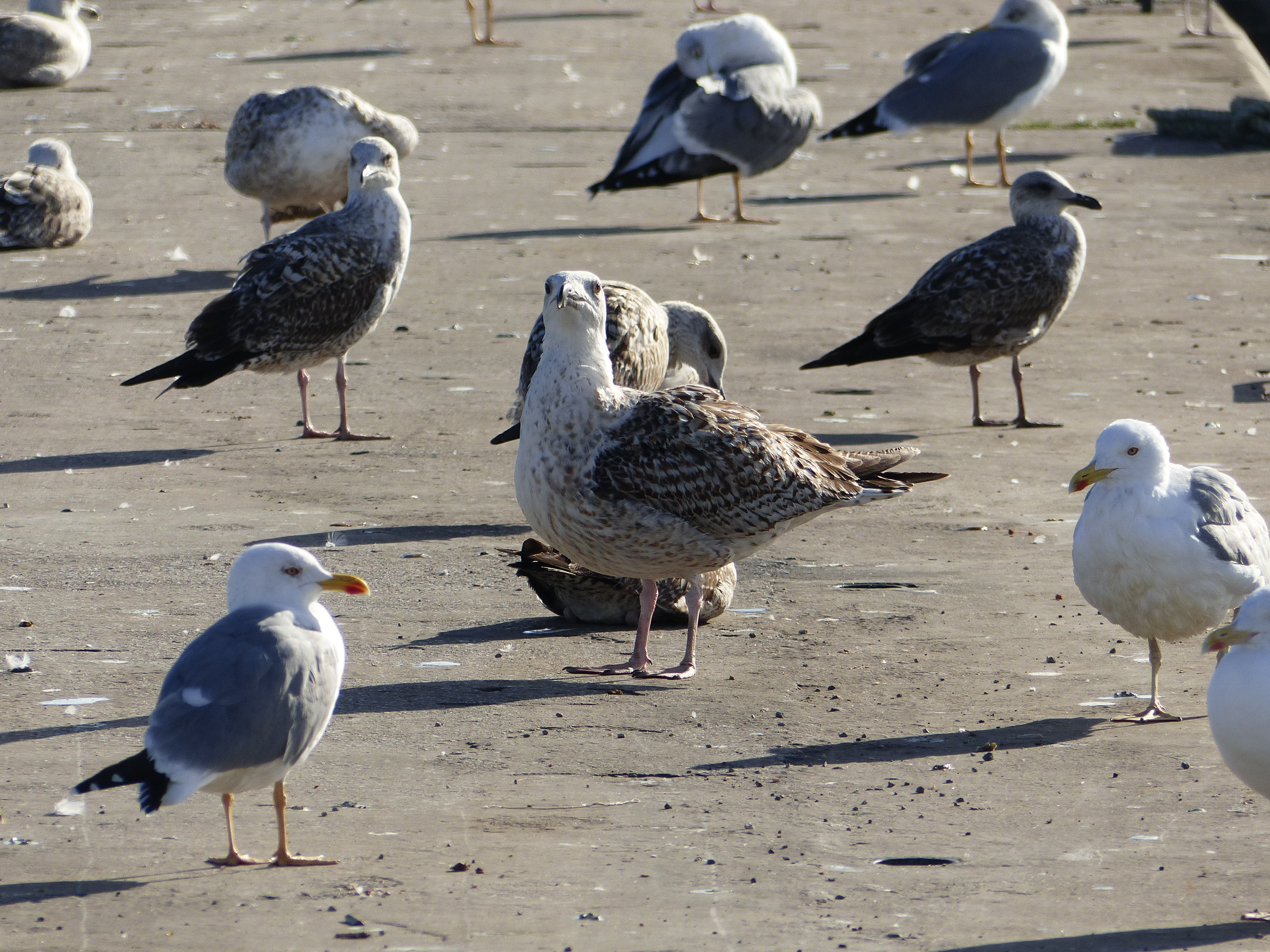
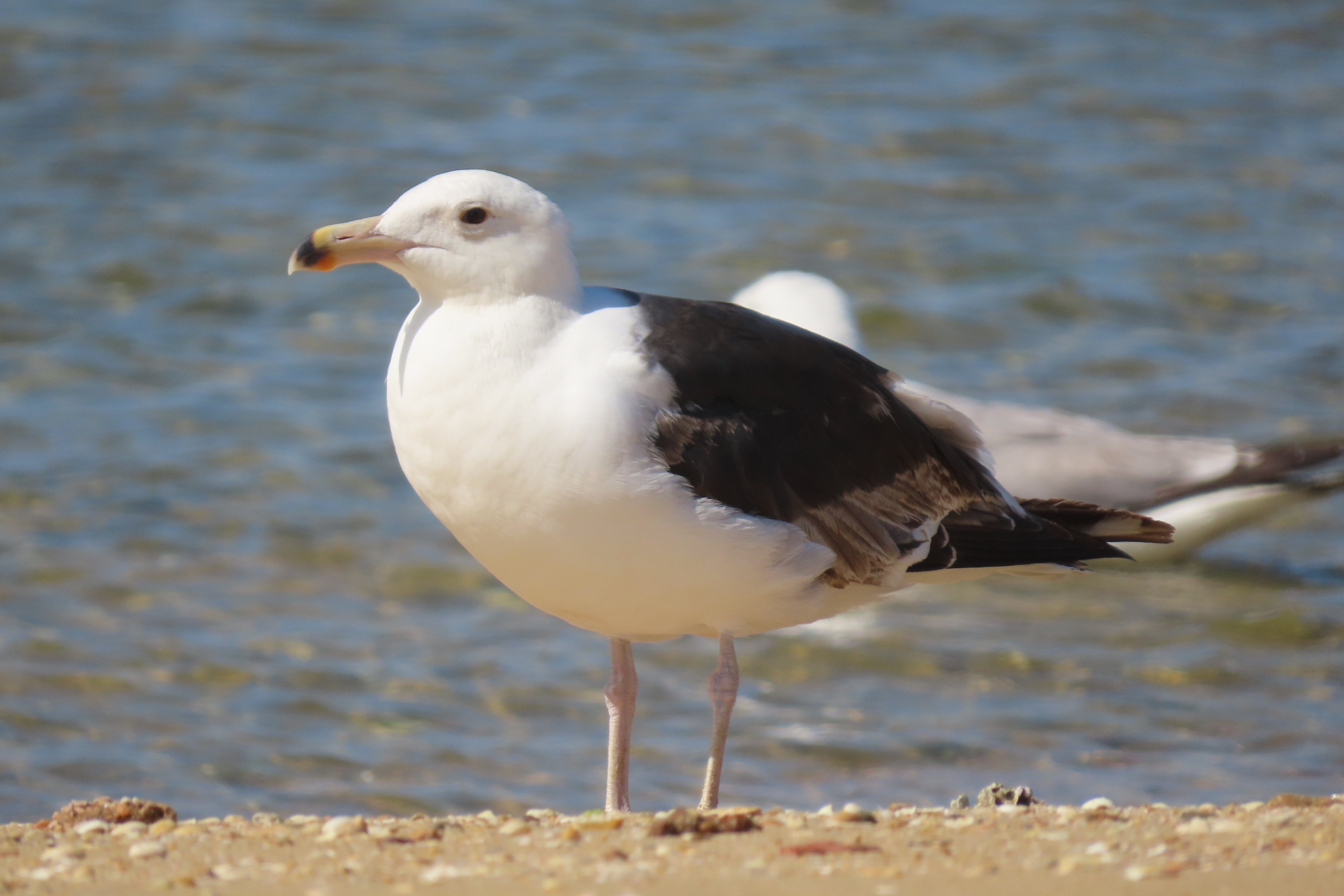
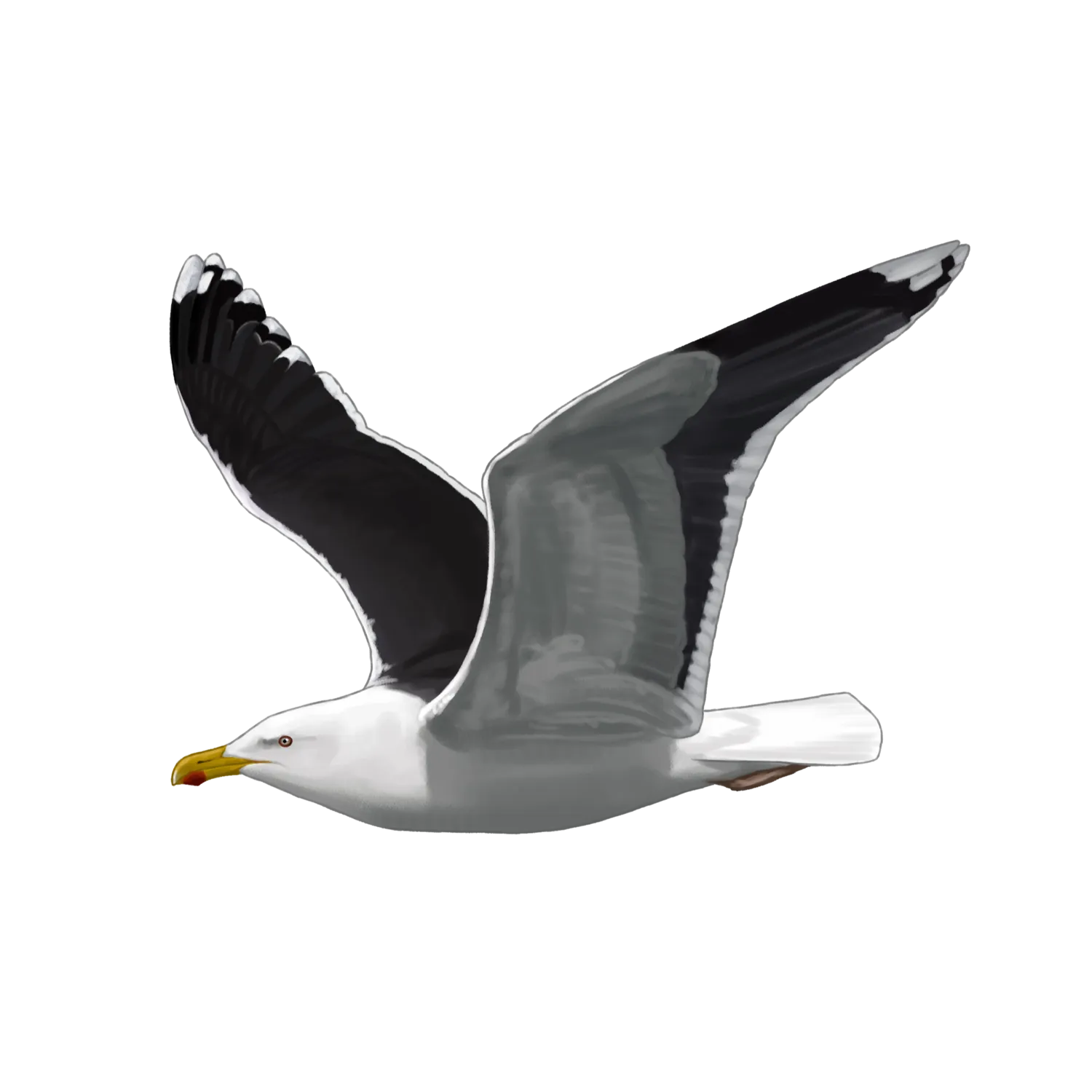
The Great Black-legged Gull breeds from the far north-west of Russia, including Scandinavia and the Baltic Sea coast, the United Kingdom, Ireland and north-west France, through Iceland and southern Greenland, to the Atlantic coasts of Canada and the northern United States (del Hoyo et al. 1992). In winter, its northernmost populations migrate to milder latitudes, with Portugal marking the southern limit of its European range (del Hoyo et al. 1992). In Mainland Portugal, it is found along the entire coast, mainly frequenting the northern half of the country, as far as the Sado estuary (Catry et al. 2010a). The species occurs from mid-September onwards, with the majority of birds observed during the wintering period (Ornithological Reports; Catry et al. 2010a). There are also records of non-breeding individuals during the spring and summer months (Leitão et al. 1998; Catry et al. 2010a). At sea, it appears to be more common in autumn and spring. Recaptures of ringed individuals indicate that the birds arriving in Portugal generally originate from European colonies, such as those in Ireland or northern France (Harris 1962; Bernis 1967), but a bird from Canada has also been observed in the north of the country (Catry et al. 2010a). The species is a regular visitor to all the islands of the Azores, in small numbers and mainly during the non-breeding season (Birding Azores 2014).
Abundance and population trends
The species is very scarce in Portugal, and its abundance may depend on the severity of winters in northern Europe. Sightings of this gull have been increasing on the Mainland and in the Azores (Ornithological Reports), possibly due to the greater number of observers. Globally, the trend for the species has been one of slight increase, with American populations remaining stable (Delany & Scott 2006). However, in some key European populations, such as those in the United Kingdom, a progressive decline has been recorded, particularly in recent years (Taylor & Tipling 2014).
Ecology and habitat
Outside the breeding season, this gull is frequently observed in mixed flocks with the Lesser Black-backed Gull, which sometimes makes it difficult to detect. It is usually seen resting on sandy beaches, rocky coastlines or in harbour areas, and sometimes occurs offshore on the continental shelf (Catry et al. 2010a). The Great Black-legged Gull is an opportunistic species and therefore has a varied diet. In breeding areas, this may include small fish, eggs, juvenile or adult birds, small mammals, insects, or even carrion and organic waste (del Hoyo et al. 1992).
Threats and conservation
No specific threats to this gull are known in Portuguese waters. As a species with opportunistic habits, it may be locally affected by the ban on discards from fishing vessels (Taylor & Tipling 2014). Its recent decline in the United Kingdom has led to the cessation of population control measures for this species, such as culling and the destruction of nests under licence (Taylor & Tipling 2014). In Denmark, it is considered a game species (Bregnballe et al. 2006).
- Autor
Bregnballe T, Noer H, Christensen TK, Clausen P, Asferg T, Fox AD & Delany S (2006). Sustainable hunting of migratory waterbirds: the Danish approach. In Boere G, Galbraith C, Stroud D (eds.). Waterbirds around the world. The Stationary Office, Edinburgh, UK: 854-860. Bibliography:
Taylor M & Tipling D (2014). RSPB Seabirds. Bloombury Publishing, London. Bibliography:
Bernis F (1967). Aves Migradoras Ibéricas Ségun Anillamientos en Europa, fasc. 5. Publicacion especial de la Sociedad Española de Ornitologia. SEO, Madrid. Bibliography:
Harris MP (1962). Recoveries of ringed Great Black-backed Gull as shown in ringing data. Bird Study 17: 174-182. Bibliography:
Leitão D, Catry P, Costa H, Elias G & Reino LM (1998). As aves do estuário do Tejo. ICN, Lisboa. Bibliography:
Delany S & Scott D (2006). Waterbird population estimates. Wetlands International, Wageningen, The Netherlands. Bibliography:
Observations published in Ornithological Reports, see Book Atlas of Seabirds of Portugal – pp. 207. Bibliography:
Meirinho A, Barros N, Oliveira N, Catry P, Lecoq M, Paiva V, Geraldes P, Granadeiro JP, Ramírez I & Andrade J (2014). Atlas das Aves Marinhas de Portugal. Sociedade Portuguesa para o Estudo das Aves. Bibliography:
Birding Azores (2014). http://www.birdingazores.com/ Bibliography:
Catry P, Costa H, Elias G & Matias R (2010a). Aves de Portugal, Ornitologia do Território Continental. Assírio e Alvim, Lisboa Bibliography:
del Hoyo J, Elliott A & Sargatal J (eds.) (1992). Handbook of the birds of the world. Vol. 1. Lynx Edicions, Barcelona, Spain Glossary:
The portion of the catch taken by commercial fishing vessels that is returned to the sea, often dead or dying. Discarded fish often belong to species of no commercial value, individuals below the minimum legal landing size, or individuals whose landing is not permitted, for example due to quota restrictions. Discards may also consist of parts of the catch, namely offal and heads, which, after on-board processing, are rejected and discarded at sea. Discards have a strong impact on marine ecosystems and influence many aspects of the distribution, foraging behaviour and population dynamics of seabirds, particularly species and individuals that habitually follow vessels. Glossary:
The portion of the seabed that begins at the coastline and slopes gently downwards to the continental slope (where the slope is much steeper). On average, the continental shelf extends to a depth of 200 metres. Glossary:
A period generally corresponding to the winter months, which may include part of autumn.