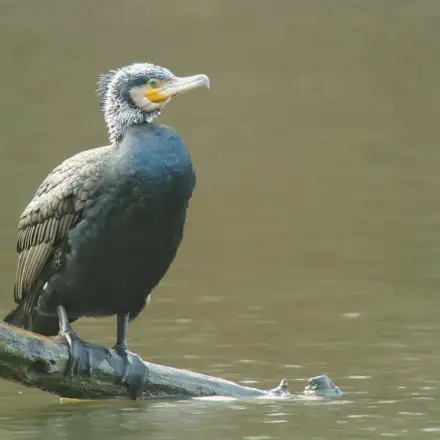
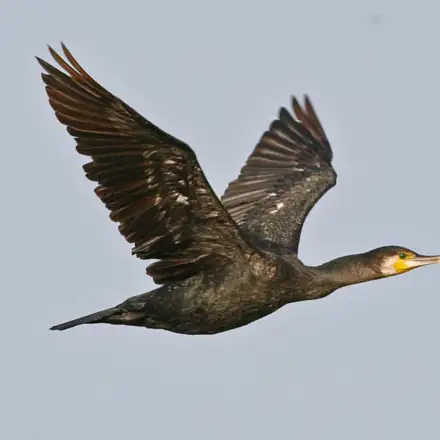
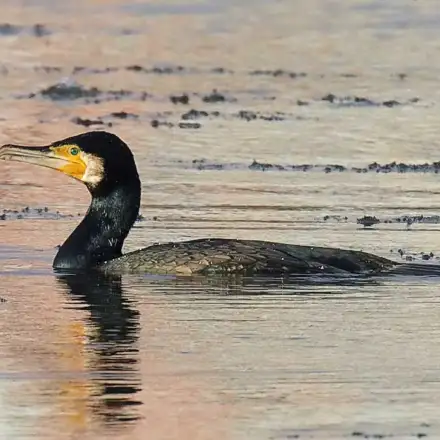
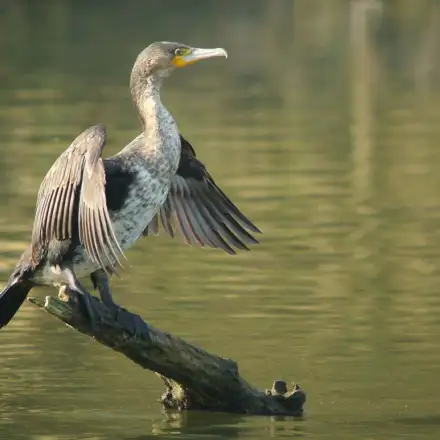
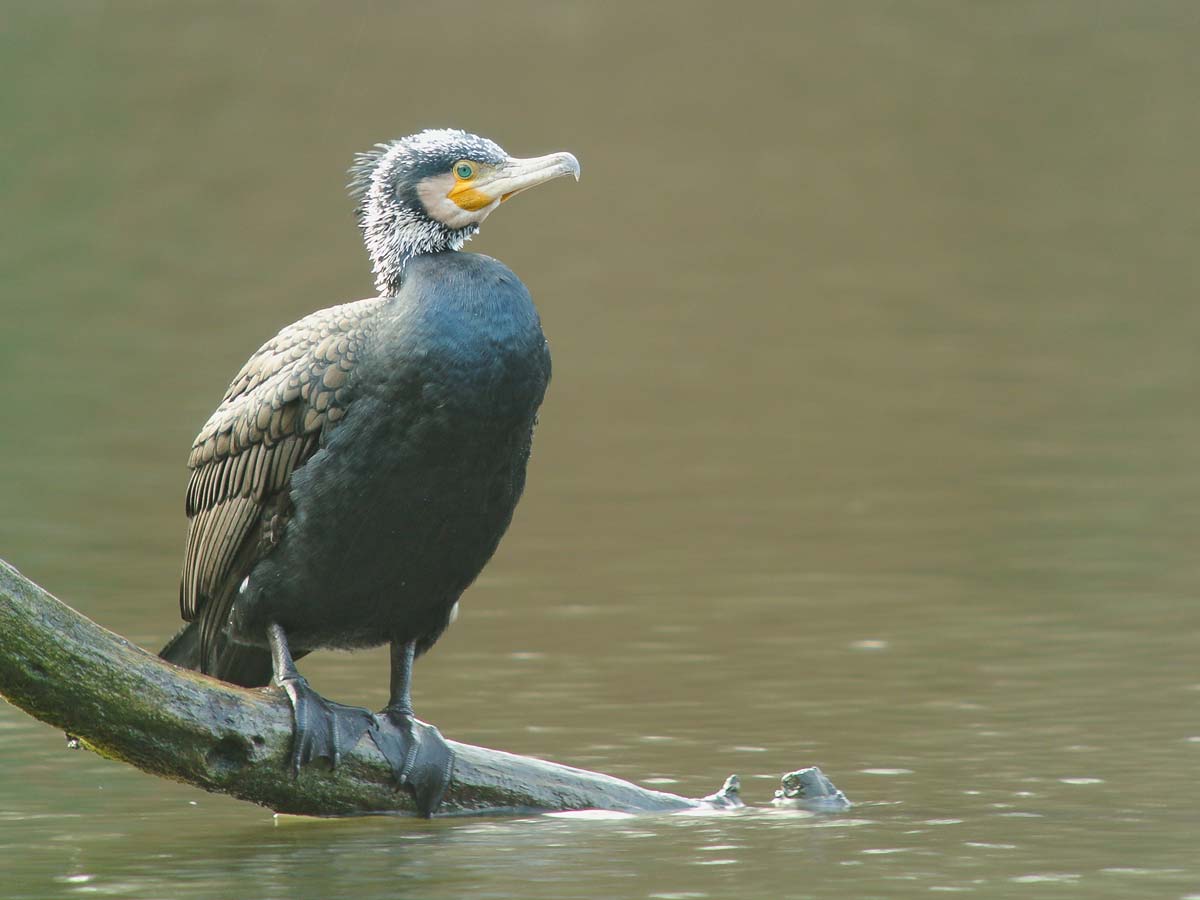
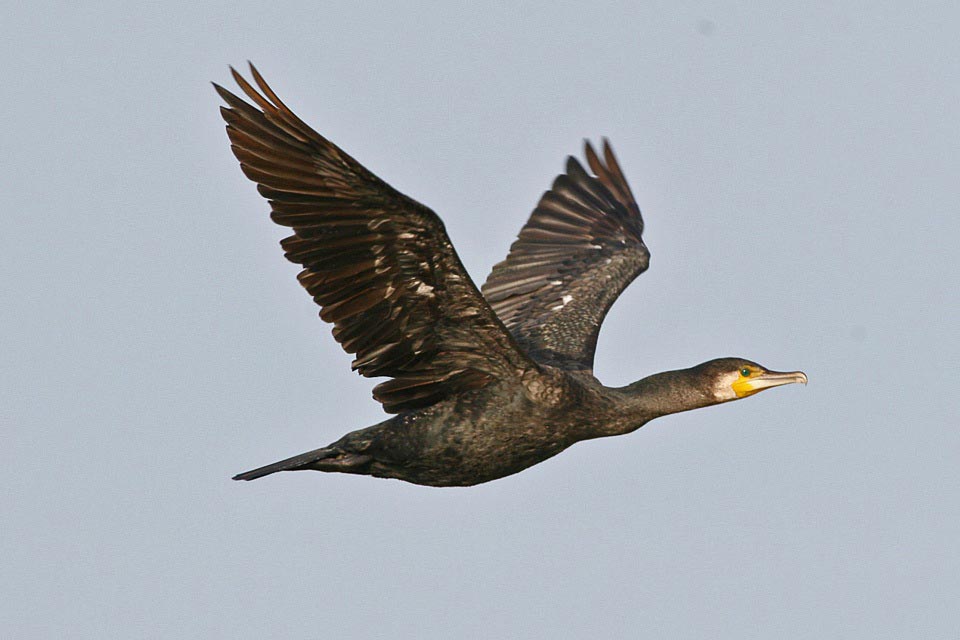
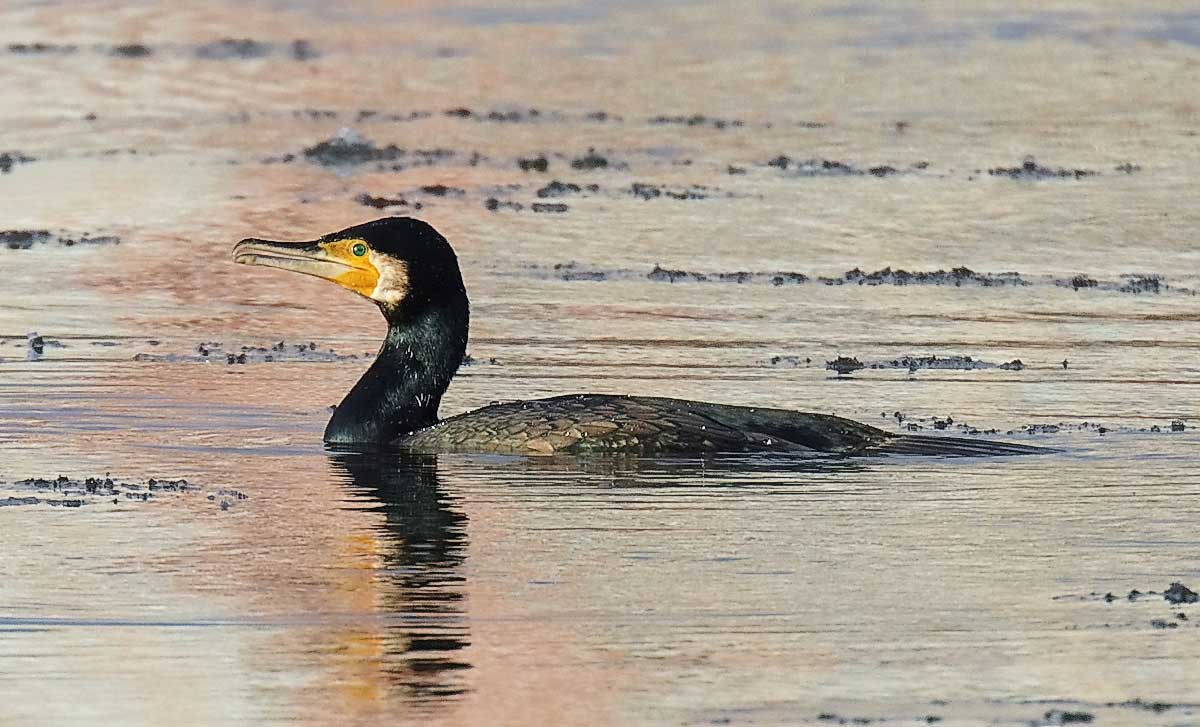
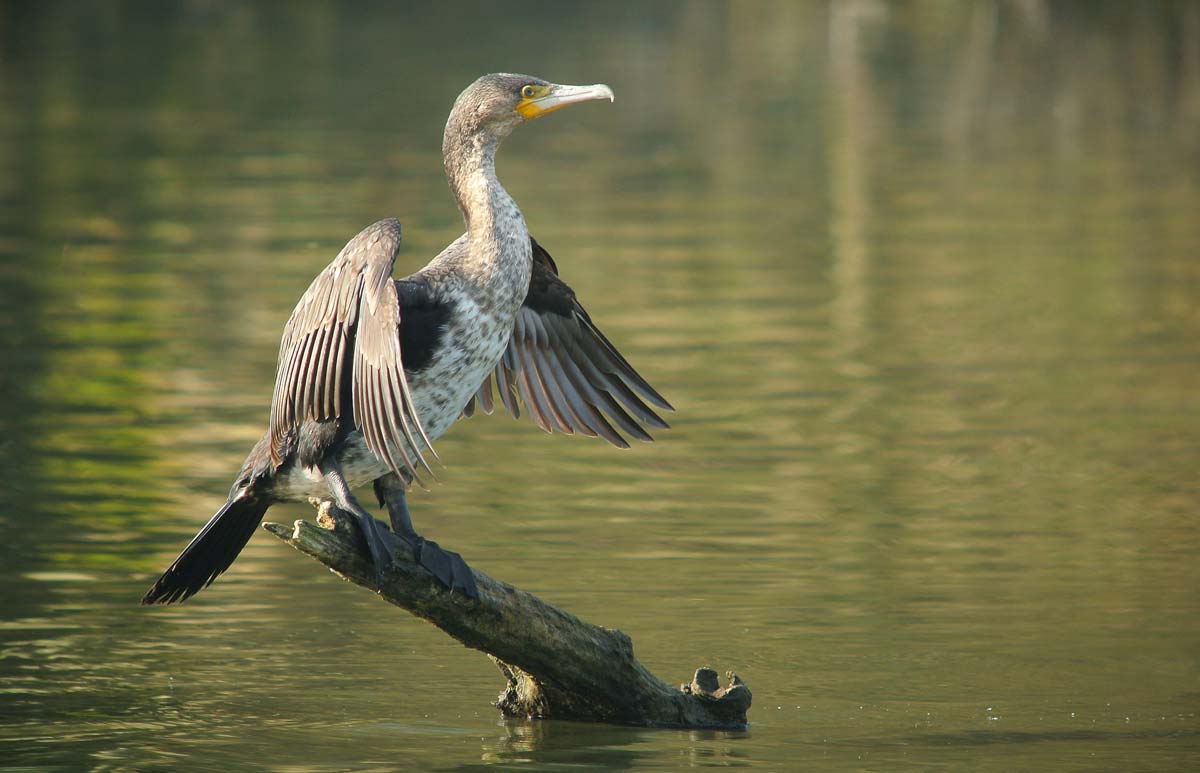
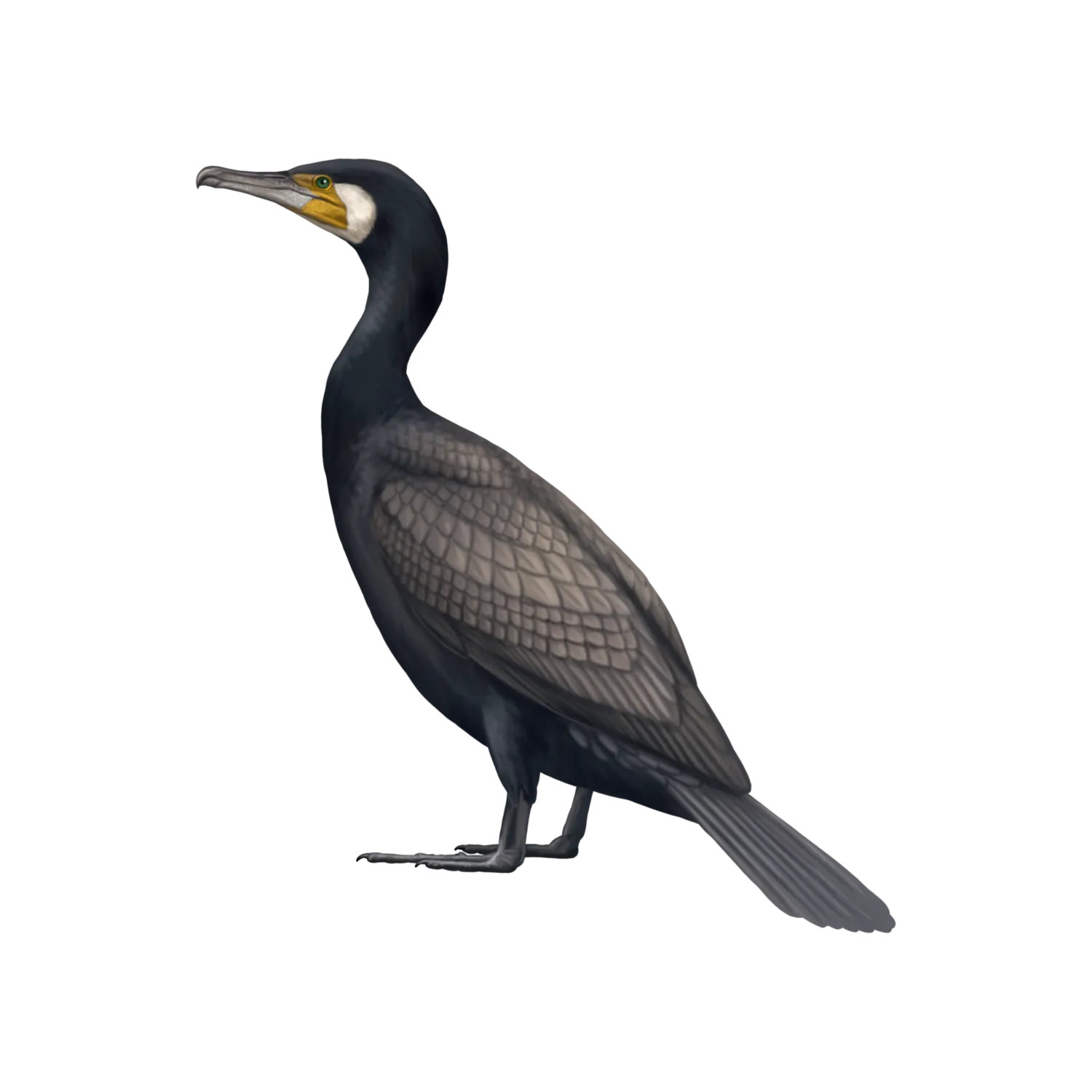
Great Cormorant
Scientific name: Phalacrocorax carbo
Family phalacrocoracidae
Phenology
- Mainland
- Resident and wintering
- Madeira
- Vagrant
- Azores
- Vagrant
Conservation status
Learn more- Mainland
- Breeding population Wintering population
- Madeira
- Azores
- IUCN Global
Data
Mainland
Abundance Indicator Assessment
Breeding
Non-breeding
Maps
Colonies | Breeding
Scale
Minimum value:
Maximum value:
Scale
Minimum value:
Maximum value:
Scale
Minimum value:
Maximum value:
Scale
Minimum value:>
Maximum value:<
Scale
Minimum value:
Maximum value:
Scale
Minimum value:>
Maximum value:>
Distribution based on seabird tracking data (locations/hexagone).
Colony(ies) of origin:
Device:
Data period / number of individuals:
Data period / number of individuals:
Distribution of seabird breeding colonies or sites (number of breeding pairs).
Distribution based on marine censuses (probability of occurrence).
Observed density based on marine censuses (birds/ km2).
Confirmed occurence during marines censuses.
Abundance of waders derived from Project Arenaria coastal surveys (birds/square).
Passage rates derived from RAM coastal surveys (birds/hour).
No data available for the selected period.
Presentation
Distribution, movements and phenology
The Great Cormorant has a wide distribution across all continents, with the exception of South America and Antarctica (Billerman et al. 2026). European populations breed between April and June. Some of the populations from northern and central Europe migrate and winter mainly in the south of the continent, both along the Atlantic and Mediterranean coasts (Birdlife International 2025).
In Portugal, it occurs mainly as a winter visitor from September to April, frequenting mainly coastal wetlands, but may occur across much of the Mainland (Equipa Atlas 2018). There has also been a breeding population since 2007 (Almeida 2008), located and almost entirely confined to inland Alentejo (Equipa Atlas 2022), with the main colonies situated mainly in the Guadiana River basin and, to a lesser extent, in the Sado and Tagus River basins. In the archipelagos of the Azores and Madeira, it occurs sporadically, with records mainly during autumn and winter (Meirinho et al. 2014).
Abundance and population trends
The global population is estimated at between 1,400,000 and 2,100,000 individuals, with the European population accounting for over 40%, showing an upward trend (BirdLife International 2025).
The breeding population in Mainland Portugal is estimated at 511 pairs (Equipa Atlas 2022). The wintering population in wetlands was estimated at around 1,000 individuals in 1981 (Teixeira 1984), 8,000–10,000 in the 1990s (Costa & Granadeiro 1997) and just over 15,000 individuals in 2013 (Leitão et al. 2013), with recent estimates being underestimated. Along the coast, wintering numbers show an upward trend (Alonso et al. 2022), with 1,425 individuals recorded in the winter of 2021–2022 (Fagundes & Catry 2022). Both the breeding and wintering populations have achieved Good Environmental Status for the abundance indicator.
Ecology and habitat
The Great Cormorant occurs in coastal and inland habitats, avoiding deep waters and rarely straying far from the coast (Billerman et al. 2026). In Portugal, its diet is generalist, consisting of fish such as grey mullets, Lusitanian toadfish, European eel, sand smelt and various species of annular seabream, white seabream and soles (Catry et al. 2010a; Dias et al. 2012; Granadeiro et al. 2013; Catry et al. 2017). It nests colonially in trees located on the banks of wetlands (Equipa Atlas 2022).
Threats and conservation
The main threat to the Great Cormorant appears to be associated with persecution resulting from conflicts with human activities. The perception that it has a negative impact on fish populations has led to conflicts with the fishing and aquaculture sectors, recently resulting in a proposal for a European management plan for the species, which includes measures such as culling. However, an approach based on local, proportionate measures adapted to each ecological and socio-economic context would be more advisable (Marzano et al. 2013).
In Portugal, predation on fish species of commercial value is low (Catry et al. 2010a; Granadeiro et al. 2013; Catry et al. 2017), although cases of interaction between Great Cormorants and aquaculture, recreational fishing and commercial fishing have been documented (Vieite et al. 2022). The Great Cormorant is one of the species accidentally captured as bycatch in gillnets (Oliveira et al. 2015), and is one of the most frequently encountered in the eastern Algarve (Pereira et al. 2025a).
- Autor
Joana Andrade
- Owners/sources of tracking data
NA
Vieite B, Braga HO, Costa Neto EM & Azeiteiro UM (2022). Fishermen’s knowledge and conservation attitudes: focus on the great cormorant Phalacrocorax carbo (Linnaeus, 1758) in the Minho River, Portugal. Aquatic Ecology 56(3): 667–684. Bibliography:
Teixeira AM (1984). Aves Marinhas nidificantes no litoral português. Actas do Colóquio Nacional para a Conservação das Zonas Ribeirinhas. Boletim da Liga para a Protecção da Natureza 18(3): 105-115. Bibliography:
Pereira JM, Ramos JA, Almeida A, Marçalo A, Carvalho F, Fagundes, I, Gonçalves JMS, Frade M, Oliveira N, Nascimento T & Paiva VH (2025a). Seasonal variation in seabird abundance and bycatch at artisanal bottom-set net fisheries in the southern Iberian Atlantic coast. Ocean & Coastal Management 267: 107660. Bibliography:
Oliveira N, Henriques A, Miodonski J, Pereira J, Marujo D, Almeida A, Barros N, Andrade J, Marçalo A, Santos J, Oliveira IB, Ferreira M, Araújo H, Monteiro S, Vingada J, Ramírez I (2015). Seabird bycatch in Portuguese mainland coastal fisheries: An assessment through on-board observations and fishermen interviews. Global Ecology and Conservation 3: 51-61. Bibliography:
Meirinho A, Barros N, Oliveira N, Catry P, Lecoq M, Paiva V, Geraldes P, Granadeiro JP, Ramírez I & Andrade J (2014). Atlas das Aves Marinhas de Portugal. Sociedade Portuguesa para o Estudo das Aves. Bibliography:
Marzano M, Carss D & Cheyne I (2013). Managing European cormorant-fisheries conflicts: Problems, practicalities and policy. Fisheries Management and Ecology 20: 401-413. Bibliography:
Leitão D, Encarnação V & Sampaio H (2013). Censo nacional de corvos marinhos invernantes – Janeiro 2013. Relatório não publicado. Sociedade Portuguesa para o Estudo das Aves / Instituto da Conservação da Natureza e das Florestas. Lisboa Bibliography:
Granadeiro JP, Catry T, Catry P, Pereira S & Campos A (2013). Distribuição e impacto do corvo-marinho-de-faces-brancas sobre as comunidades ictiológicas do estuário do Sado. Relatório para o ICNF/Tróia-Natura, Lisboa. Bibliography:
Fagundes AI & Catry P (2022). Projeto Arenaria, 2009–2022. In Alonso H, Andrade J, Teodósio J & Lopes A (coords.). O estado das aves em Portugal, 2022 (2nd ed.). Sociedade Portuguesa para o Estudo das Aves. Bibliography:
Equipa Atlas (2022). III Atlas das Aves Nidificantes de Portugal (2016-2021). SPEA, ICNF, LabOr/UÉ, IFCN. Portugal. Bibliography:
Equipa Atlas (2018). Atlas das Aves Invernantes e Migradoras de Portugal 2011-2013. Sociedade Portuguesa para o Estudo das Aves, LabOr- Laboratório de Ornitologia – ICAAM - Universidade de Évora, Instituto da Conservação da Natureza e das Florestas, Instituto das Florestas e Conservação da Natureza (Madeira), Secretaria Regional da Energia, Ambiente e Turismo (Açores) e Associação Portuguesa de Anilhadores de Aves. Lisboa. Bibliography:
Dias E, Morais P, Leopold M, Campos J & Antunes C (2012). Natural born indicators: great cormorant Phalacrocorax carbo (Aves: Phalacrocoracidae) as monitors of river discharge influence on estuarine ichthyofauna. Journal of Sea Research 73: 101–108. Bibliography:
Costa LT & Granadeiro JP (1997). The cormorant Phalacrocorax carbo in Portugal. Ekologia Polska 45(1): 39-42. Bibliography:
Catry P, Campos A, Catry T, Assis CA, Pereira S & Granadeiro JP (2017). Diet of great cormorants Phalacrocorax carbo in the Sado estuary, Portugal, and possible impacts on local fisheries and aquaculture. Airo 24: 36-46. Bibliography:
BirdLife International (2025). IUCN Red List for birds. Downloaded from https://datazone.birdlife.org on 30.11.2025. Bibliography:
Billerman SM, Keeney BL, Kirwan GM, Medrano F, Sly ND & Smith MG (eds.) (2026). Birds of the World. Cornell Laboratory of Ornithology, Ithaca, NY, USA. Bibliography:
Alonso H, Andrade J, Teodósio J & Lopes A (coord.) (2022). O estado das aves em Portugal, 2022. 2ª edição. Sociedade Portuguesa para o Estudo das Aves, Lisboa. Bibliography:
Almeida JL (2008). Primeiros casos de nidificação do corvo-marinho Phalacrocorax carbo em Portugal. Anuário Ornitológico 6: 94. Bibliography:
Catry P, Costa H, Elias G & Matias R (2010a). Aves de Portugal, Ornitologia do Território Continental. Assírio e Alvim, Lisboa Glossary:
A species or parameter that reflects the state of an ecosystem or environmental changes. Glossary:
The direction of change in the size of a population over time (increase, decline or stability). Glossary:
A static net, often nearly invisible and with variable mesh size, used to catch a wide variety of fish. It is set in the sea at varying depths and later retrieved. It is a non-selective fishing gear that frequently catches seabirds, marine mammals and reptiles.