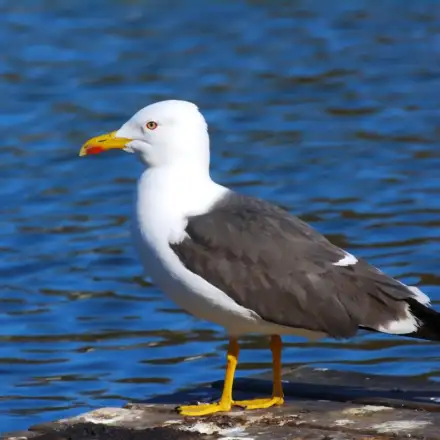
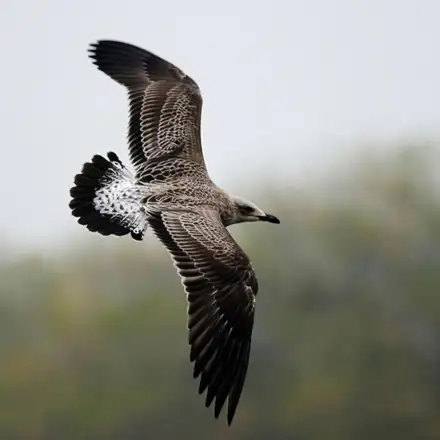
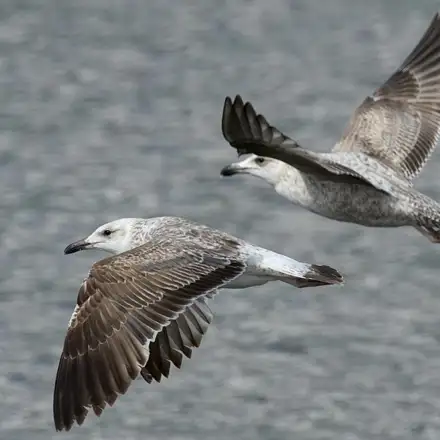
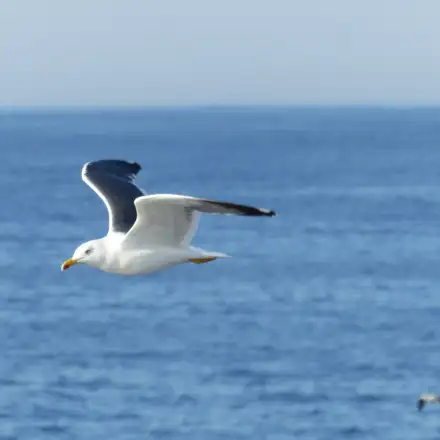
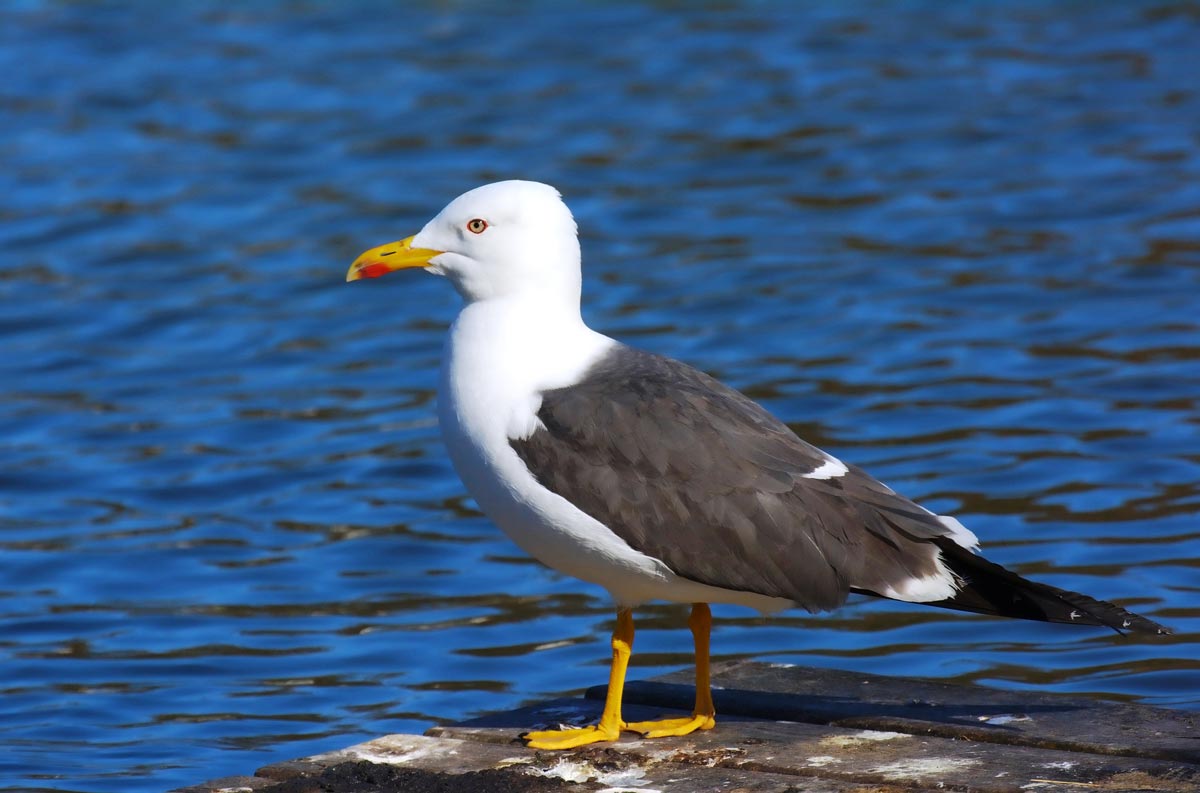
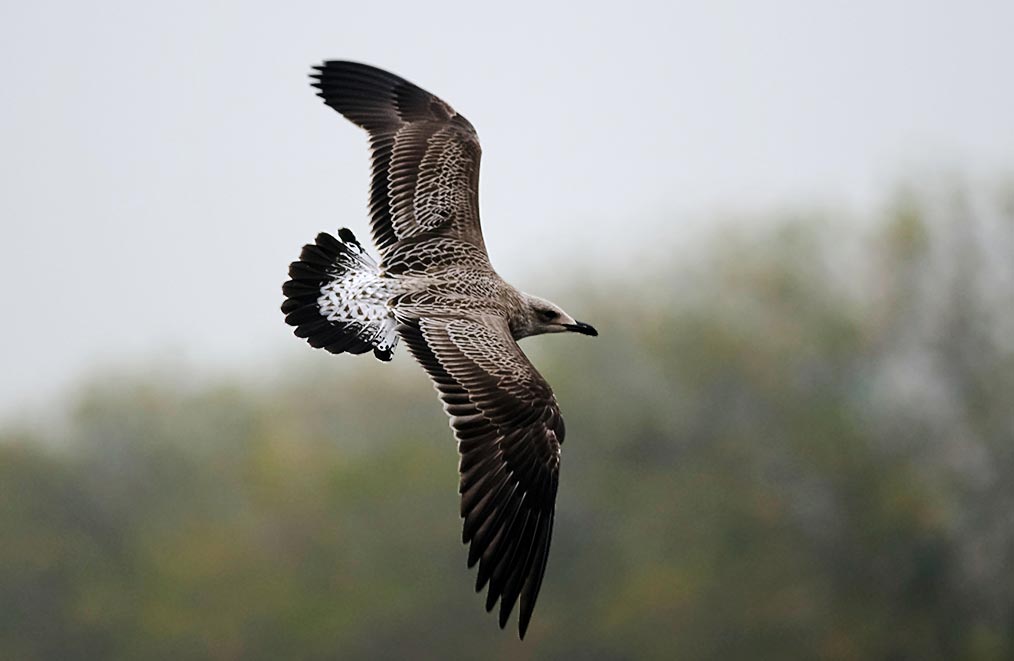
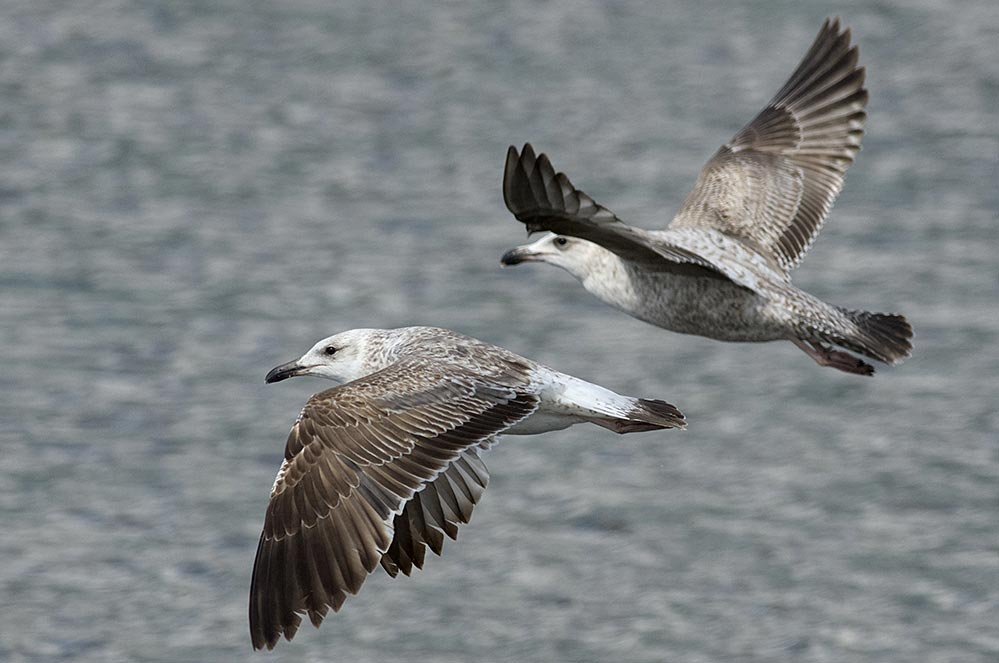
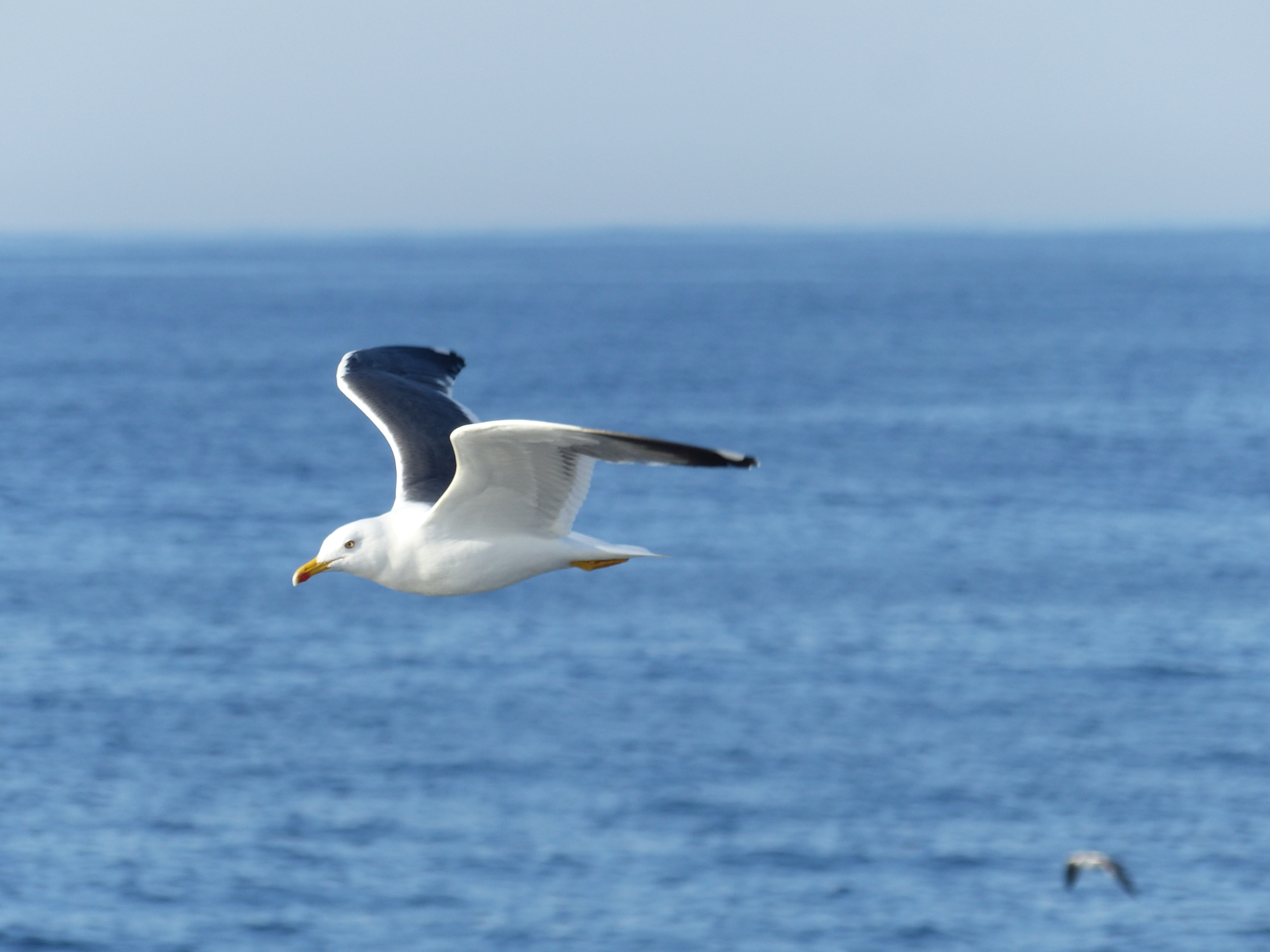
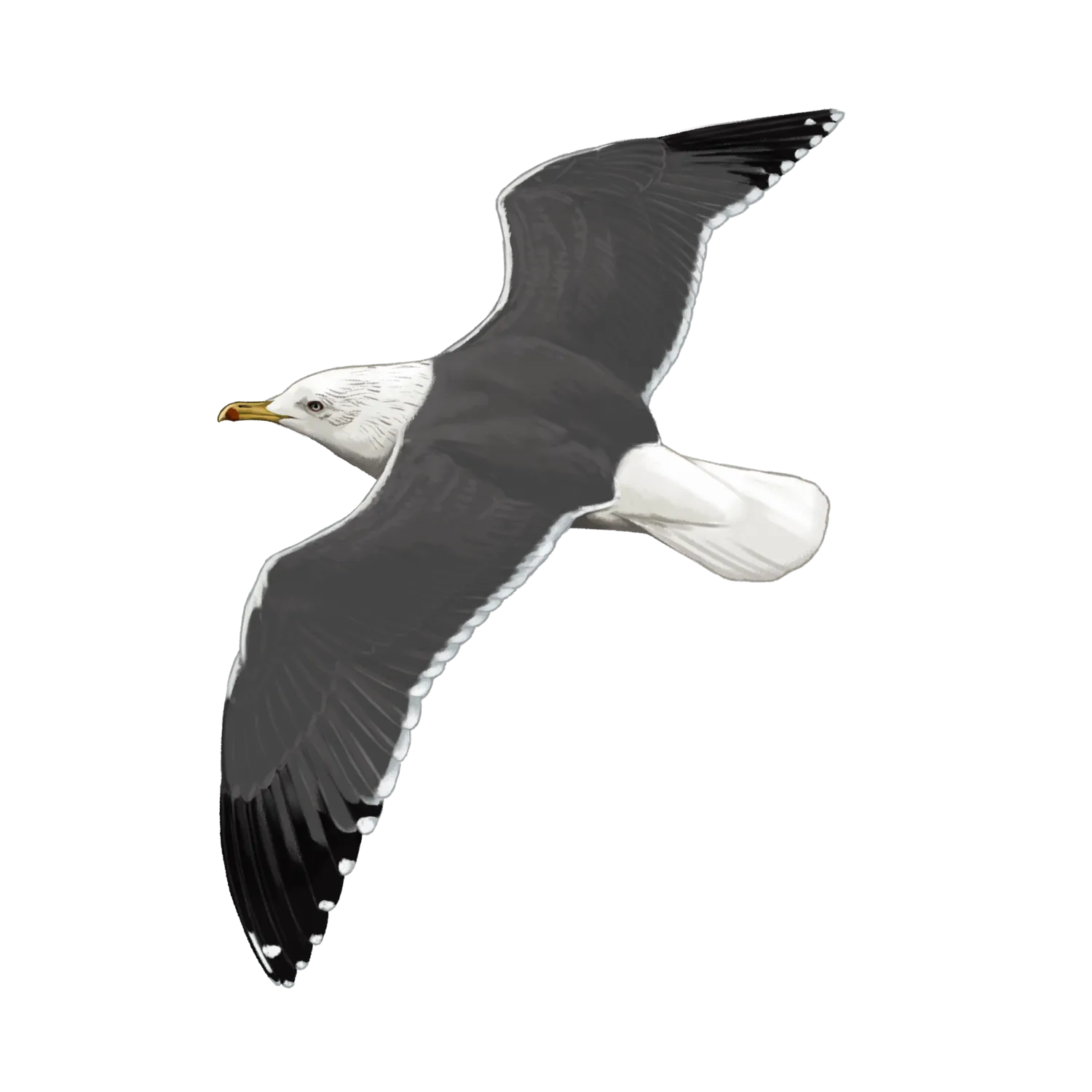
Lesser Black-backed Gull
Scientific name: Larus fuscus
Family laridae
Phenology
- Mainland
- Summer breeder, wintering and passage migrant
- Madeira
- Wintering and passage migrant
- Azores
- Wintering and passage migrant
Conservation status
Learn more- Mainland
- Breeding population Wintering population
- Madeira
- Azores
- IUCN Global
Data
Mainland
Abundance Indicator Assessment
Breeding
Non-breeding
Maps
Distribution | Breeding
Scale
Minimum value:
Maximum value:
Scale
Minimum value:
Maximum value:
Scale
Minimum value:
Maximum value:
Scale
Minimum value:>
Maximum value:<
Scale
Minimum value:
Maximum value:
Scale
Minimum value:>
Maximum value:>
Distribution based on seabird tracking data (locations/hexagone).
Colony(ies) of origin:
Device:
Data period / number of individuals:
Data period / number of individuals:
Distribution of seabird breeding colonies or sites (number of breeding pairs).
Distribution based on marine censuses (probability of occurrence).
Observed density based on marine censuses (birds/ km2).
Confirmed occurence during marines censuses.
Abundance of waders derived from Project Arenaria coastal surveys (birds/square).
Passage rates derived from RAM coastal surveys (birds/hour).
No data available for the selected period.
Presentation
Distribution, movements and phenology
The Lesser Black-backed Gull breeds between April and July in Europe, from Russia to the Iberian Peninsula, including Iceland. In winter, it is widely distributed along the coasts of south-western Europe and North Africa (Billerman et al. 2026). A substantial proportion of the Western European population winters in Portugal, occurring mainly along the Mainland coastline (Catry et al. 2010a). At sea, it is concentrated mainly on the continental shelf and slope (Meirinho et al. 2014). Immature birds usually remain in Portugal throughout the year. The breeding population is restricted to the metropolitan area of Porto and the islands of Berlenga and Deserta (Ria Formosa). In the Azores and Madeira, the species is most common between September and February, with nesting attempts occurring on the islands of Terceira and São Miguel in the Azores, and on the islet of Desembarcadouro in Madeira (Equipa Atlas 2022).
Individual tracking data from 112 birds fitted with GPS, originating from Germany, Belgium, the Netherlands and the United Kingdom, confirm intensive use of the Portuguese EEZ, particularly the Mainland coastal zone, with significantly less occurrence in Madeira. No records were obtained for the Azores.
Abundance and population trends
The global population has been estimated at between 940,000 and 2,070,000 individuals, with an upward population trend, although some European populations are declining (BirdLife International 2025). In Portugal, the breeding population is small, with fewer than 100 pairs and an upward trend. Of particular note is the recent colonisation of Deserta Island (Ria Formosa), where no breeding had been confirmed until 2005 (Equipa Atlas 2008; Equipa Atlas 2022), and which now hosts more than 50 pairs. Outside the breeding season, it is the most abundant gull on the Mainland, particularly along the coastline, although there has been a sharp decline in the population using the non-estuarine coastal area (Velde 2025). The assessment of environmental status indicates that the breeding population has achieved Good Environmental Status on the Mainland, mainly due to the growth of the Ria Formosa colony. Conversely, the non-breeding population in the same region has not achieved Good Environmental Status, in line with the declines reported for this same population at some of its source sites (BirdLife International 2021).
Ecology and habitat
In Portugal, it nests on both rocky and sandy islands, as well as in urban areas, usually in mixed colonies with Yellow-legged Gulls Larus michahellis. Wintering birds typically roost at sea, in coastal lagoons and in wetlands, whilst feeding takes place mainly on land, where the gull utilises a wide variety of habitats, including sewage treatment plants, landfill sites, urban areas, coastal lagoons, reservoirs, flooded rice paddy stubble and large rivers (Catry et al. 2010a). Their diverse diet includes fish, fishing discards, invertebrates (marine and freshwater crustaceans, and bivalves), detritus from landfill sites and sewage outlets, and even other birds, such as the Domestic Pigeon (Catry et al. 2010a; Lourenço 2019).
Threats and conservation
Declines in some European colonies of the Lesser Black-backed Gull have been attributed to environmental pollutants (Bustnes 2006; Hario et al. 2000). In Portugal, the species is primarily affected by bycatch in fishing gear (Calado et al. 2021).
- Autores
Eric Stienen, Tânia Nascimento
- Owners/sources of tracking data
Corman et al. 2016, Hayley Douglas, SEATRACK, Stienen et al. 2019, Stienen et al. 2021, Stienen et al. 2023
Velde PMV (2025). Analysis of population trends of overwintering coastal birds in continental Portugal in relation to habitat type. Tese de Mestrado em Biologia Marinha. Faculdade de Ciências e Tecnologia. Universidade do Algarve. Bibliography:
Meirinho A, Barros N, Oliveira N, Catry P, Lecoq M, Paiva V, Geraldes P, Granadeiro JP, Ramírez I & Andrade J (2014). Atlas das Aves Marinhas de Portugal. Sociedade Portuguesa para o Estudo das Aves. Bibliography:
Lourenço PM (2019). Internet photography forums as sources of avian dietary data: bird diets in Continental Portugal. Airo 26:3-26. Bibliography:
Hario M, Himberg K, Hollmén T & Rudbäck E (2000). Polychlorinated biphenyls in diseased lesser black-backed gull (Larus fuscus fuscus) chicks from the Gulf of Finland. Environmental Pollution 107(1): 53-60. Bibliography:
Equipa Atlas (2022). III Atlas das Aves Nidificantes de Portugal (2016-2021). SPEA, ICNF, LabOr/UÉ, IFCN. Portugal. Bibliography:
Equipa Atlas (2008). Atlas das Aves Nidificantes em Portugal (1999-2005). Instituto da Conservação da Natureza e da Biodiversidade, Sociedade Portuguesa para o Estudo das Aves, Parque Natural da Madeira e Secretaria Regional do Ambiente e do Mar. Assírio & Alvim, Lisboa. Bibliography:
Calado JG, Ramos JA, Almeida A, Oliveira N & Paiva VH (2021). Seabird-fishery interactions and bycatch at multiple gears in the Atlantic Iberian coast. Ocean & Coastal Management 200: 105306. Bibliography:
Bustnes JO (2006). Environmental pollutants in endangered vs. increasing subspecies of the lesser black-backed gull on the Norwegian Coast. Environmental Pollution 144: 893-901. Bibliography:
BirdLife International (2025). IUCN Red List for birds. Downloaded from https://datazone.birdlife.org on 30.11.2025. Bibliography:
BirdLife International (2021). European Red List of Birds. Publications Office of the European Union, Luxembourg. Bibliography:
Billerman SM, Keeney BL, Kirwan GM, Medrano F, Sly ND & Smith MG (eds.) (2026). Birds of the World. Cornell Laboratory of Ornithology, Ithaca, NY, USA. Bibliography:
Catry P, Costa H, Elias G & Matias R (2010a). Aves de Portugal, Ornitologia do Território Continental. Assírio e Alvim, Lisboa Data:
Stienen EWM, Buijs R-J, de Visser J, Fijn R, Govaert S, Lilipaly S, Platteeuw M & Desmet P (2023). DELTATRACK - Herring gulls (Larus argentatus, Laridae) and lesser black-backed gulls (Larus fuscus, Laridae) breeding at Neeltje Jans (Netherlands). Dataset. https://doi.org/10.5281/zenodo.10209520 Data:
Stienen EWM, Müller W, Lens L, Govaert S, Milotic T & Desmet P (2021). LBBG_JUVENILE - Juvenile lesser black-backed gulls (Larus fuscus, Laridae) and herring gulls (Larus argentatus, Laridae) hatched in Zeebrugge (Belgium). Dataset. https://doi.org/10.5281/zenodo.5075868 Data:
Stienen EWM, Desmet P, Milotic T, Hernandez F, Deneudt K, Bouten W, Müller W, Matheve H & Lens L (2019). LBBG_ZEEBRUGGE - Lesser black-backed gulls (Larus fuscus, Laridae) breeding at the southern North Sea coast (Belgium and the Netherlands). Dataset. https://doi.org/10.5281/zenodo.3540799 Data:
Corman A-M, Mendel B, Voigt CC & Garthe S (2016). Varying foraging patterns in response to competition? A multicolony approach in a generalist seabird. Ecology and Evolution 6: 974-986. Glossary:
Molluscs with two shells, such as clams and cockles, common in intertidal environments. Glossary:
A group of marine arthropods that are important in the marine food chain. Glossary:
Equipment used to catch marine animals, such as nets, longlines or traps. Glossary:
Monitoring the movements of individuals using tracking devices. Glossary:
The direction of change in the size of a population over time (increase, decline or stability). Glossary:
A concept defined under the Marine Strategy Framework Directive (MSFD), referring to the condition of the elements of the marine environment, including birds. It aims to assess whether ecosystems are healthy, balanced and capable of supporting ecological functions and human uses in a sustainable manner. The ultimate goal is for the components and ecosystems to achieve Good Environmental Status. Glossary:
A small device attached to birds to study their movements at a finer scale (usually during the breeding season). These devices use the Global Positioning System (GPS) to obtain information on position, latitude, longitude and altitude at any point on Earth, using a network of orbiting satellites. Glossary:
Refers to the unintentional capture of marine species during fishing. Animals may become entangled in hooks or fishing nets. It is usually associated with commercial fishing, but can also occur in recreational fishing. Bycatch is one of the main threats to seabirds at sea. Glossary:
Under the United Nations Convention on the Law of the Sea, coastal states are entitled to declare an EEZ comprising maritime area beyond their territorial waters. The national EEZ is delimited by an imaginary line situated 200 nautical miles from the coast, separating national waters from international or shared waters. Within its EEZ, each state has rights such as the exploitation of marine resources, the conduct of scientific research and the regulation of fishing by foreign vessels. Glossary:
A portion of the seabed with a very steep gradient lying between the continental shelf and the continental margin, where the abyssal plains begin. Glossary:
The portion of the catch taken by commercial fishing vessels that is returned to the sea, often dead or dying. Discarded fish often belong to species of no commercial value, individuals below the minimum legal landing size, or individuals whose landing is not permitted, for example due to quota restrictions. Discards may also consist of parts of the catch, namely offal and heads, which, after on-board processing, are rejected and discarded at sea. Discards have a strong impact on marine ecosystems and influence many aspects of the distribution, foraging behaviour and population dynamics of seabirds, particularly species and individuals that habitually follow vessels. Glossary:
The portion of the seabed that begins at the coastline and slopes gently downwards to the continental slope (where the slope is much steeper). On average, the continental shelf extends to a depth of 200 metres. Glossary:
An environment in which the biotic community carries out its activities. It generally exhibits regularity in environmental conditions and in animal and plant populations. Forests, lakes, a puddle of water, tree canopies, or even the backs of animals can be considered biotopes.