Little Tern
Scientific name: Sternula albifrons
Family laridae
Phenology
- Mainland
- Summer breeder and passage migrant
- Madeira
- Vagrant
- Azores
- Vagrant
Conservation status
Learn more- Mainland
- Madeira
- Azores
- IUCN Global

Data
Maps
Distribution | Breeding
Scale
Minimum value:
Maximum value:
Scale
Minimum value:
Maximum value:
Scale
Minimum value:
Maximum value:
Scale
Minimum value:>
Maximum value:<
Scale
Minimum value:
Maximum value:
Scale
Minimum value:>
Maximum value:>
Distribution based on seabird tracking data (locations/hexagone).
Colony(ies) of origin:
Device:
Data period / number of individuals:
Data period / number of individuals:
Distribution of seabird breeding colonies or sites (number of breeding pairs).
Distribution based on marine censuses (probability of occurrence).
Observed density based on marine censuses (birds/ km2).
Confirmed occurence during marines censuses.
Abundance of waders derived from Project Arenaria coastal surveys (birds/square).
Passage rates derived from RAM coastal surveys (birds/hour).
No data available for the selected period.
Presentation
Distribution, movements and phenology
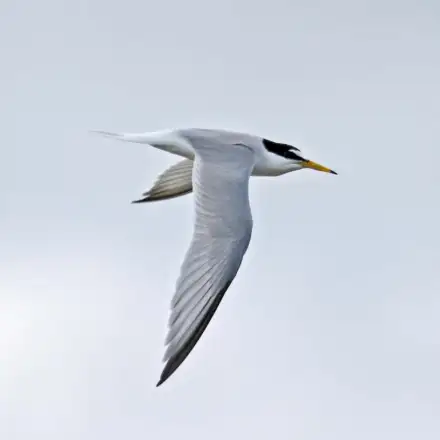
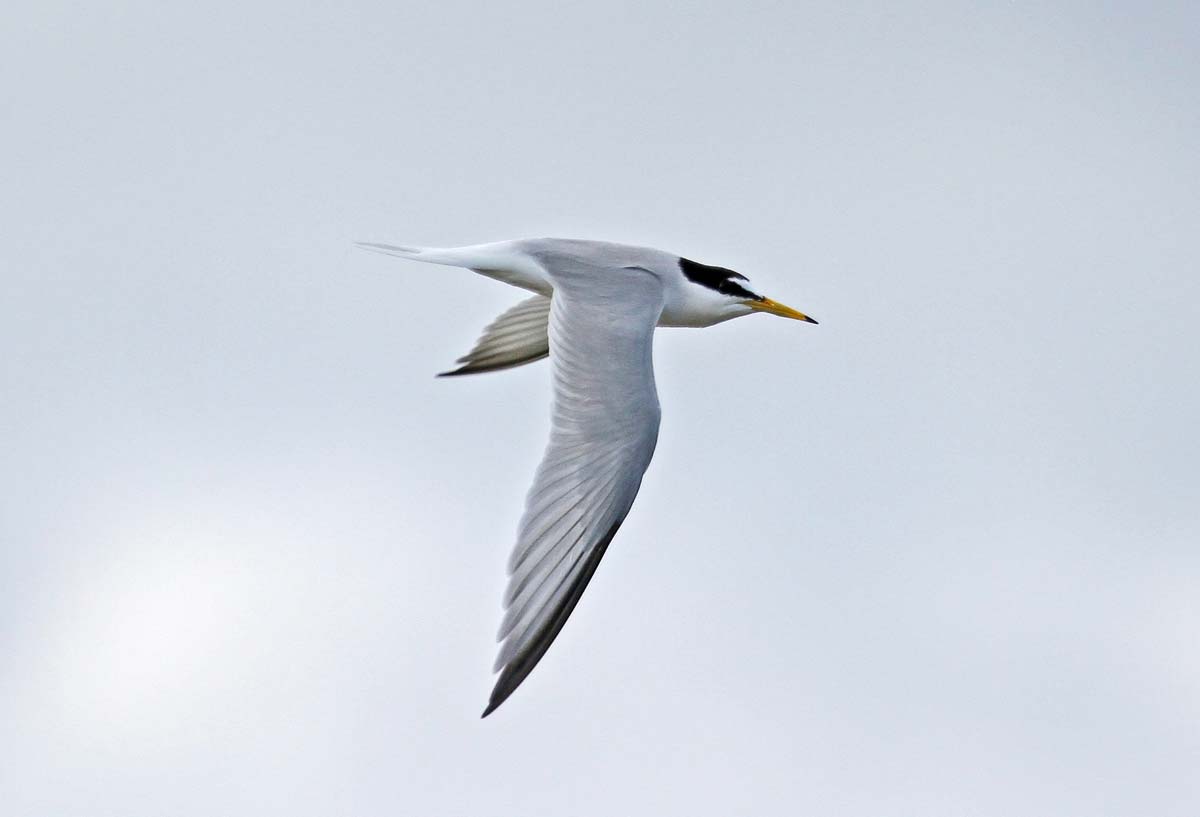
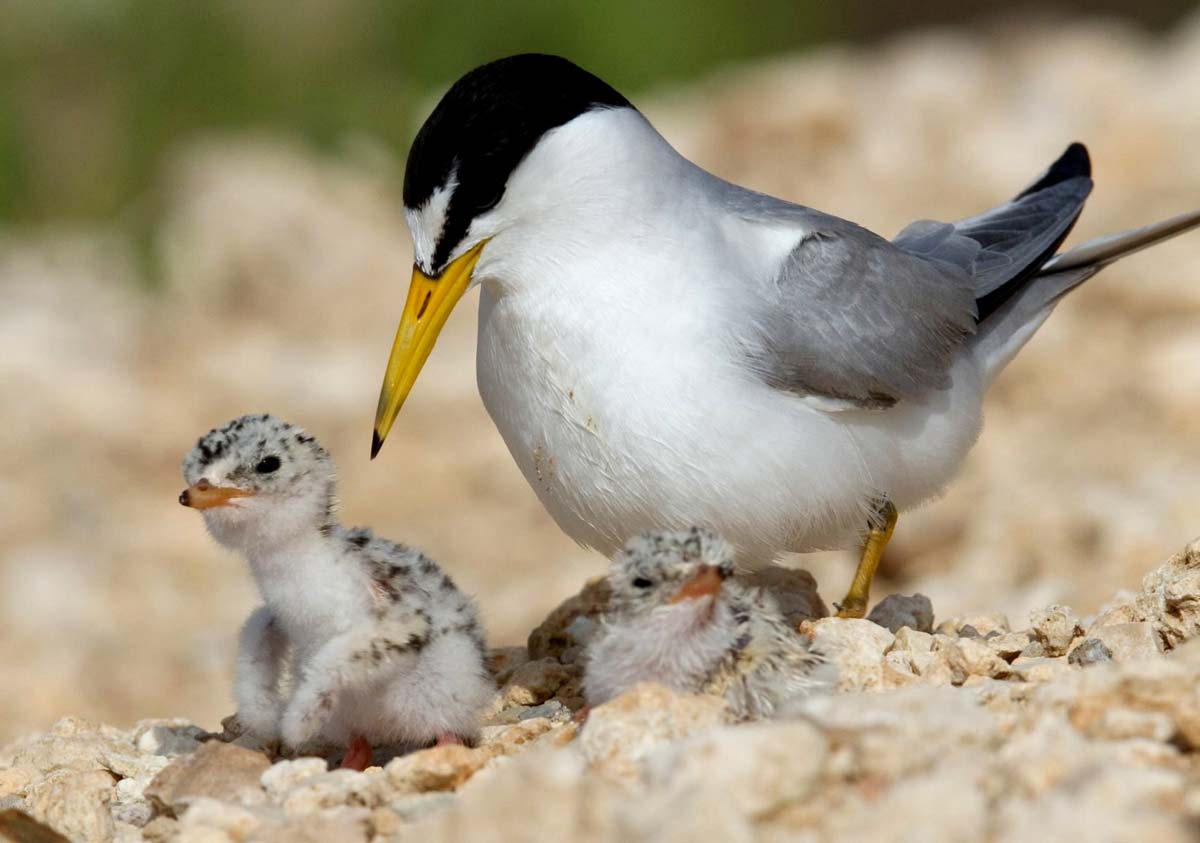
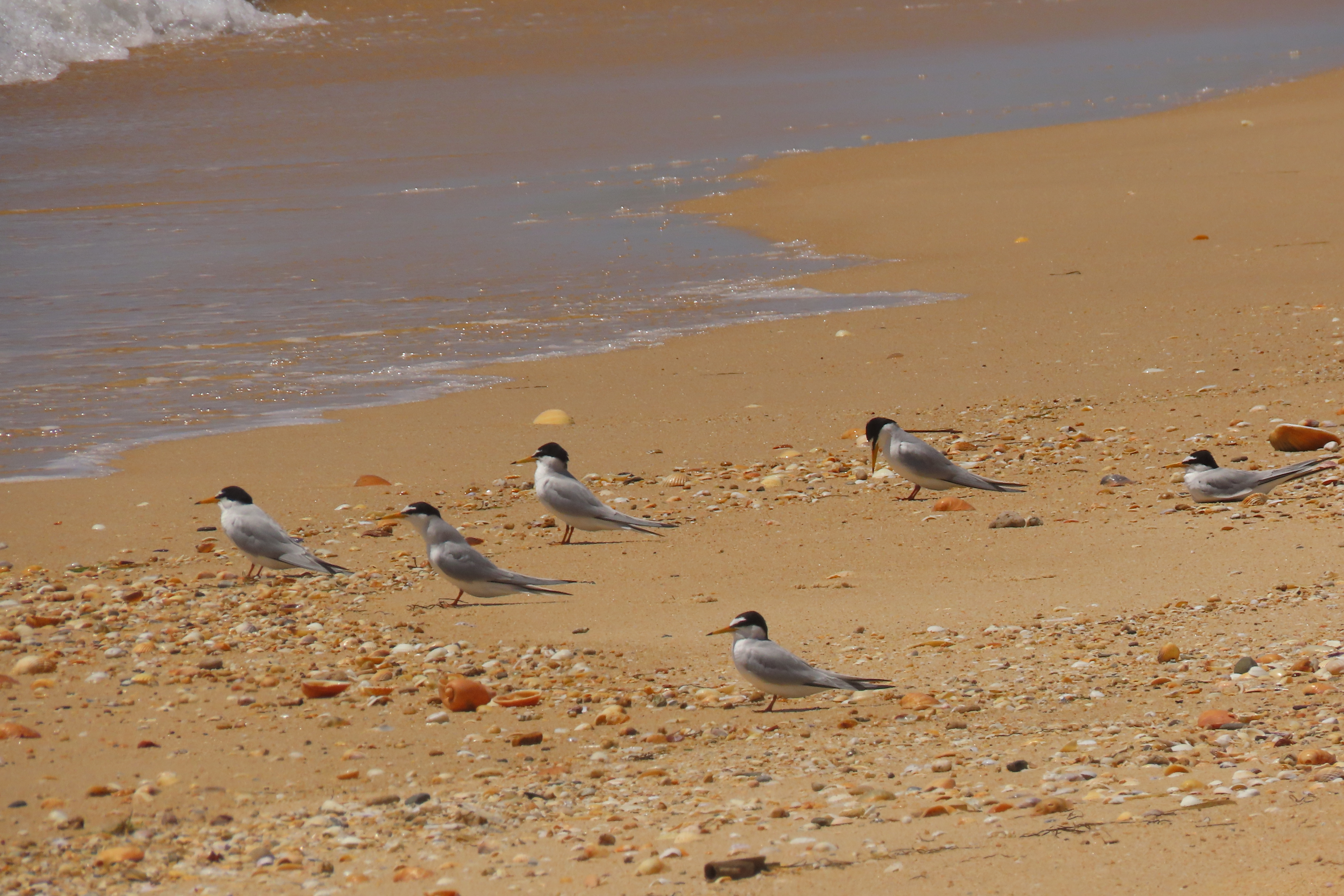
The Little Tern breeds in Eurasia, Africa and Australia (Billerman et al. 2026). In Europe, it occurs as a subspecies, with the breeding season taking place between April and July. In Mainland Portugal, the largest colonies are found on the sandy islands of the Ria Formosa, with an increasingly rare occurrence in the salt pans of this area. In smaller numbers, it nests in other wetlands and coastal areas, such as the Ria de Aveiro and the estuaries of the Mondego, Tagus and Sado rivers, or inland, in the Caia and Alqueva reservoirs (Equipa Atlas 2022). During the post-breeding period, between August and September, breeding birds are also found in other European countries, en route to the west coast of Africa (Equipa Atlas 2018), a destination also common to the national population (Catry et al. 2010a). Data from 20 birds fitted with GPS between 2021 and 2025 on Barreta Island (Ria Formosa) indicate that they are found primarily in the lagoon, salt pans and sea adjacent to the breeding colonies, and may undertake offshore journeys of up to 20 km (Cerveira et al. 2025). It is worth noting that one individual, after losing its clutch, crossed the Gulf of Cádiz to Spain. In the archipelagos of Madeira and the Azores, the species is rare.
Abundance and population trends
The global population has been estimated at between 190,000 and 410,000 individuals, of which 36,000 to 53,000 pairs breed in Europe (BirdLife International 2025). The breeding population in Portugal has shown marked fluctuations over the years, with the most recent estimate pointing to 558 to 943 pairs (Equipa Atlas 2022). The Ria Formosa hosts Portugal’s main breeding concentration, with an estimated population of 303 to 522 pairs between 2020 and 2025, mostly on sandy beaches near the tidal inlets. Despite localised declines in some colonies, the significant increase in the Ria Formosa population appears to account for the positive trend at national level. This pattern was corroborated by the assessment presented in this work, which indicates that the species has achieved Good Environmental Status for the abundance indicator. Regarding the migratory population or the situation in the Azores and Madeira, there is no information on abundance that would allow an assessment of its environmental status.
Ecology and habitat
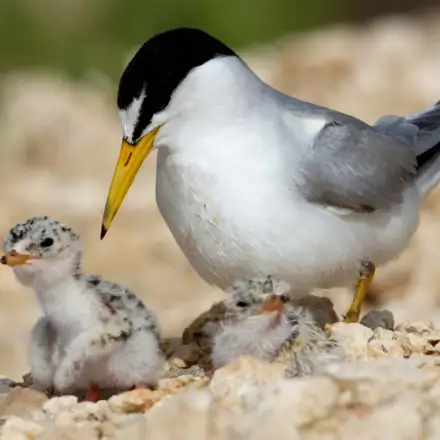
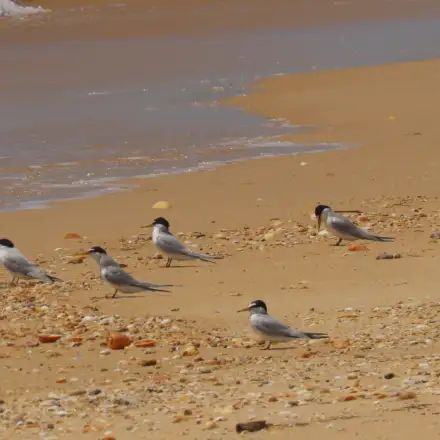
The Little Tern nests in coastal wetlands, sandy beaches, sandbanks and salt pans with little disturbance (Equipa Atlas 2008; Catry et al. 2010a) and reduced vegetation cover (Lopes et al. 2015). It uses a small depression in the sand or soil as a nest. The species forages around its breeding areas, exploiting inland waters, salt pans, aquaculture sites and also shallow coastal waters (Paiva et al. 2008). The main prey of the Little Tern are small fish, particularly sand smelt and gobies in Portuguese waters (Catry et al. 2006; Ramos et al. 2013a). To a lesser extent, it also consumes white seabreams, garfish, sardines, crustaceans and insects (Correia et al. 2016).
Threats and conservation
In Portugal, the main threats to the Little Tern are human disturbance in breeding areas and the abandonment of salt pans, with the consequent increase in vegetation cover around the ponds (Medeiros et al. 2007; Equipa Atlas 2022). Predation by mammals and birds, particularly by dogs, cats, Eurasian Thick-knee Burhinus oedicnemus or Carrion Crows Corvus corone, is also a significant threat (Catry et al. 2004). Human disturbance in breeding areas can be controlled and reduced through fencing and temporary closure of the main breeding colonies (Medeiros et al. 2007). Vegetation management, predator control and the construction of artificial islands in these same areas increase the productivity and stability of the colonies. Such measures are being implemented in the Ria Formosa.
- Autor
Jaime A. Ramos
- Owners/sources of tracking data
Vitor H. Paiva (MARE-UCoimbra)
Ramos JA, Pedro P, Matos A & Paiva VH (2013a). Relation between climatic factors, diet and reproductive parameters of Little Terns over a decade. Acta Oecologica 53: 56-52. Bibliography:
Paiva VH , Ramos JA, Martins J, Almeida A & Carvalho A (2008). Feeding habitat selection of Little Terns Sterna albifrons in an estuarine lagoon system of southern Portugal. Ibis 150: 18-31. Bibliography:
Medeiros R, Ramos JA, Paiva VH, Almeida A, Pedro P & Antunes S (2007) Signage reduces the impact of disturbance in Little Tern nesting success in Portugal. Biological Conservation 135: 99-106. Bibliography:
Lopes CS, Ramos JA & Paiva VH (2015). Changes in vegetation cover explain shifts of colony sites by Little Terns (Sternula albifrons) in coastal Portugal. Waterbirds 38(3): 260-268. Bibliography:
Equipa Atlas (2022). III Atlas das Aves Nidificantes de Portugal (2016-2021). SPEA, ICNF, LabOr/UÉ, IFCN. Portugal. Bibliography:
Equipa Atlas (2018). Atlas das Aves Invernantes e Migradoras de Portugal 2011-2013. Sociedade Portuguesa para o Estudo das Aves, LabOr- Laboratório de Ornitologia – ICAAM - Universidade de Évora, Instituto da Conservação da Natureza e das Florestas, Instituto das Florestas e Conservação da Natureza (Madeira), Secretaria Regional da Energia, Ambiente e Turismo (Açores) e Associação Portuguesa de Anilhadores de Aves. Lisboa. Bibliography:
Equipa Atlas (2008). Atlas das Aves Nidificantes em Portugal (1999-2005). Instituto da Conservação da Natureza e da Biodiversidade, Sociedade Portuguesa para o Estudo das Aves, Parque Natural da Madeira e Secretaria Regional do Ambiente e do Mar. Assírio & Alvim, Lisboa. Bibliography:
Correia A, Ramos JA & Paiva VH (2016). Identifying the diet of the Little Tern (Sternula albifrons). Waterbirds 39: 318-322. Bibliography:
Cerveira L, Pereira JM, Verissimo SN, Paiva VH & Ramos JA (2025). Spatial and trophic ecology of the estuarine Little Tern Sternula albifrons. Current Zoology 71: 603-612. Bibliography:
Catry T, Ramos JA, Martins J, Peste F, Trigo S, Paiva VH , Almeida A, Luís A, Palma J & Andrade PJ (2006). Intercolony and annual differences in the diet and feeding ecology of little tern adults and chicks in Portugal. Condor 108: 366-376. Bibliography:
Catry T, Ramos JA, Catry I, Allen-Revez M & Grade M (2004). Are salinas a suitable alternative breeding habitat for Little Terns? Ibis 146: 247-257. Bibliography:
BirdLife International (2025). IUCN Red List for birds. Downloaded from https://datazone.birdlife.org on 30.11.2025. Bibliography:
Billerman SM, Keeney BL, Kirwan GM, Medrano F, Sly ND & Smith MG (eds.) (2026). Birds of the World. Cornell Laboratory of Ornithology, Ithaca, NY, USA. Bibliography:
Catry P, Costa H, Elias G & Matias R (2010a). Aves de Portugal, Ornitologia do Território Continental. Assírio e Alvim, Lisboa Glossary:
A group of marine arthropods that are important in the marine food chain. Glossary:
Population management of invasive species without total elimination. Glossary:
A species or parameter that reflects the state of an ecosystem or environmental changes. Glossary:
The direction of change in the size of a population over time (increase, decline or stability). Glossary:
A measure of a population’s breeding success, generally expressed as the average number of chicks produced per pair. Glossary:
A concept defined under the Marine Strategy Framework Directive (MSFD), referring to the condition of the elements of the marine environment, including birds. It aims to assess whether ecosystems are healthy, balanced and capable of supporting ecological functions and human uses in a sustainable manner. The ultimate goal is for the components and ecosystems to achieve Good Environmental Status. Glossary:
A small device attached to birds to study their movements at a finer scale (usually during the breeding season). These devices use the Global Positioning System (GPS) to obtain information on position, latitude, longitude and altitude at any point on Earth, using a network of orbiting satellites. Glossary:
Referring to the period following breeding.