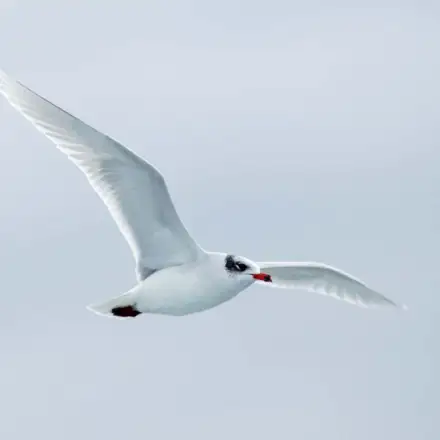
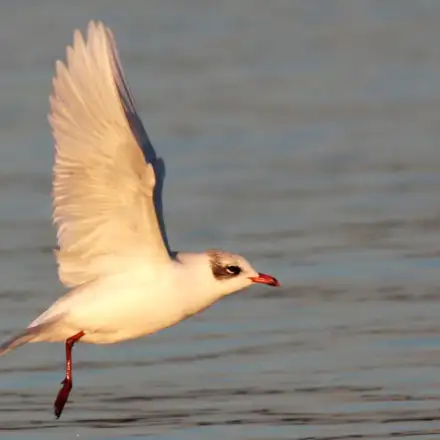
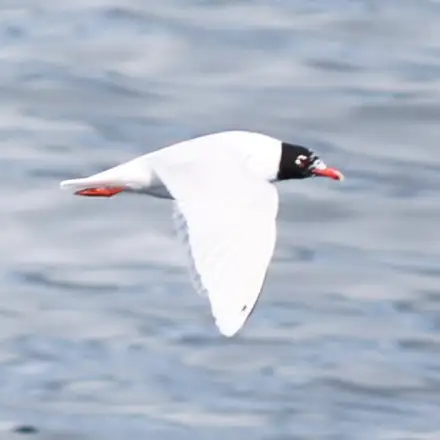
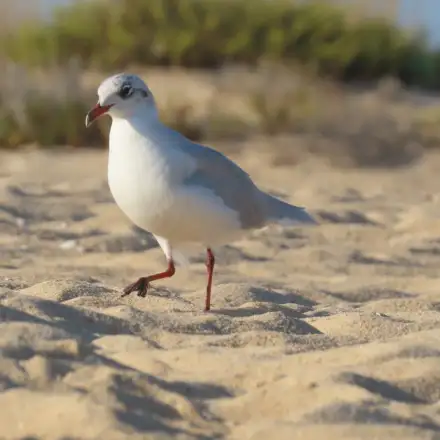
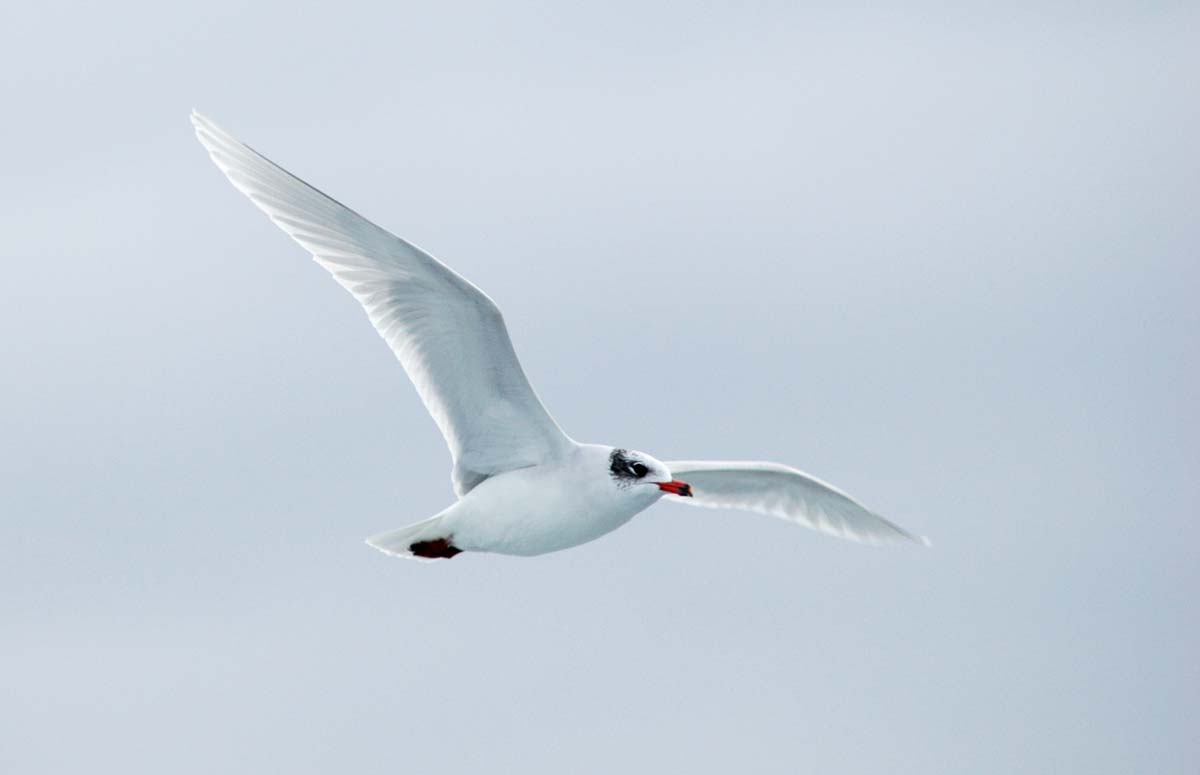
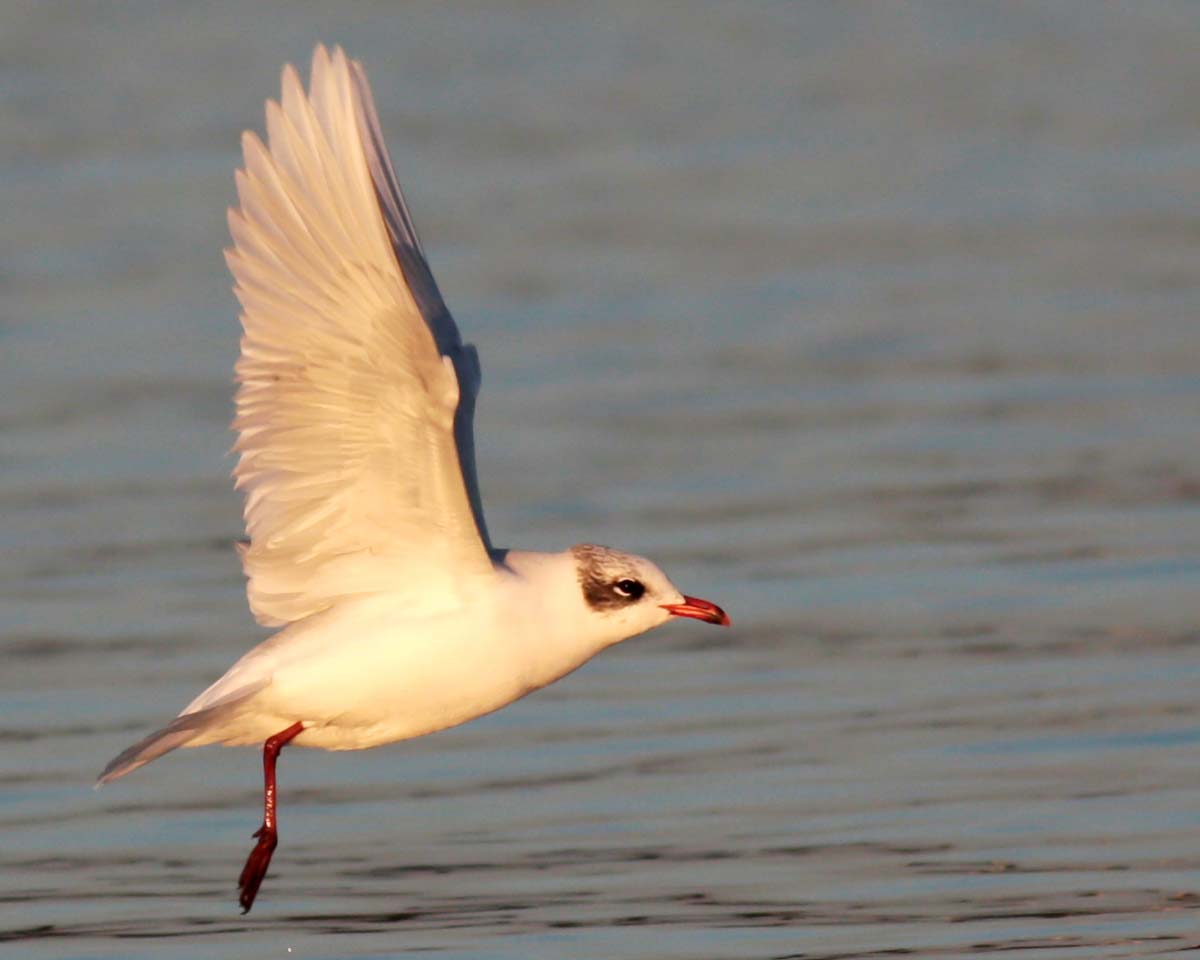
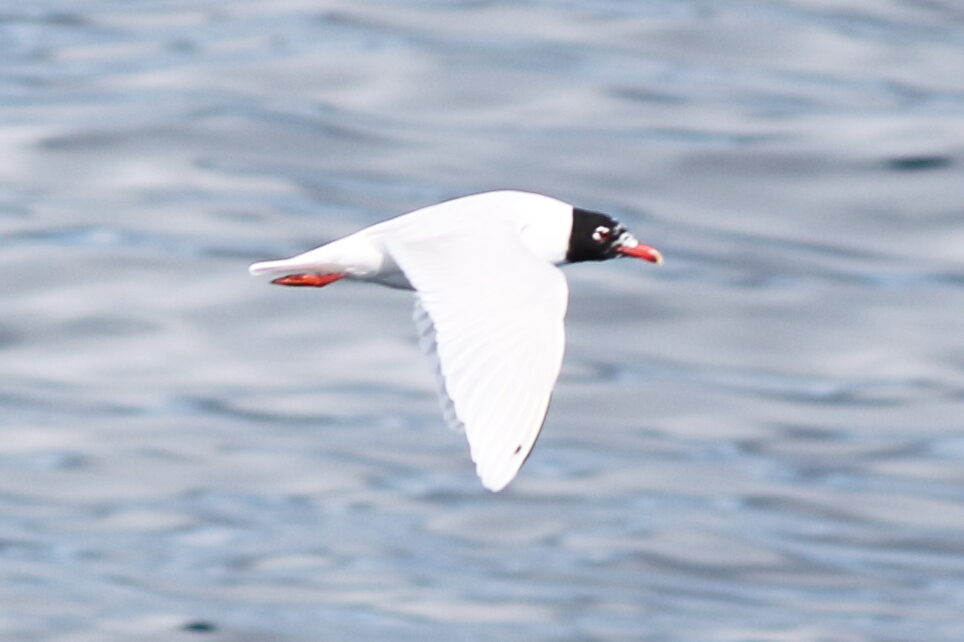
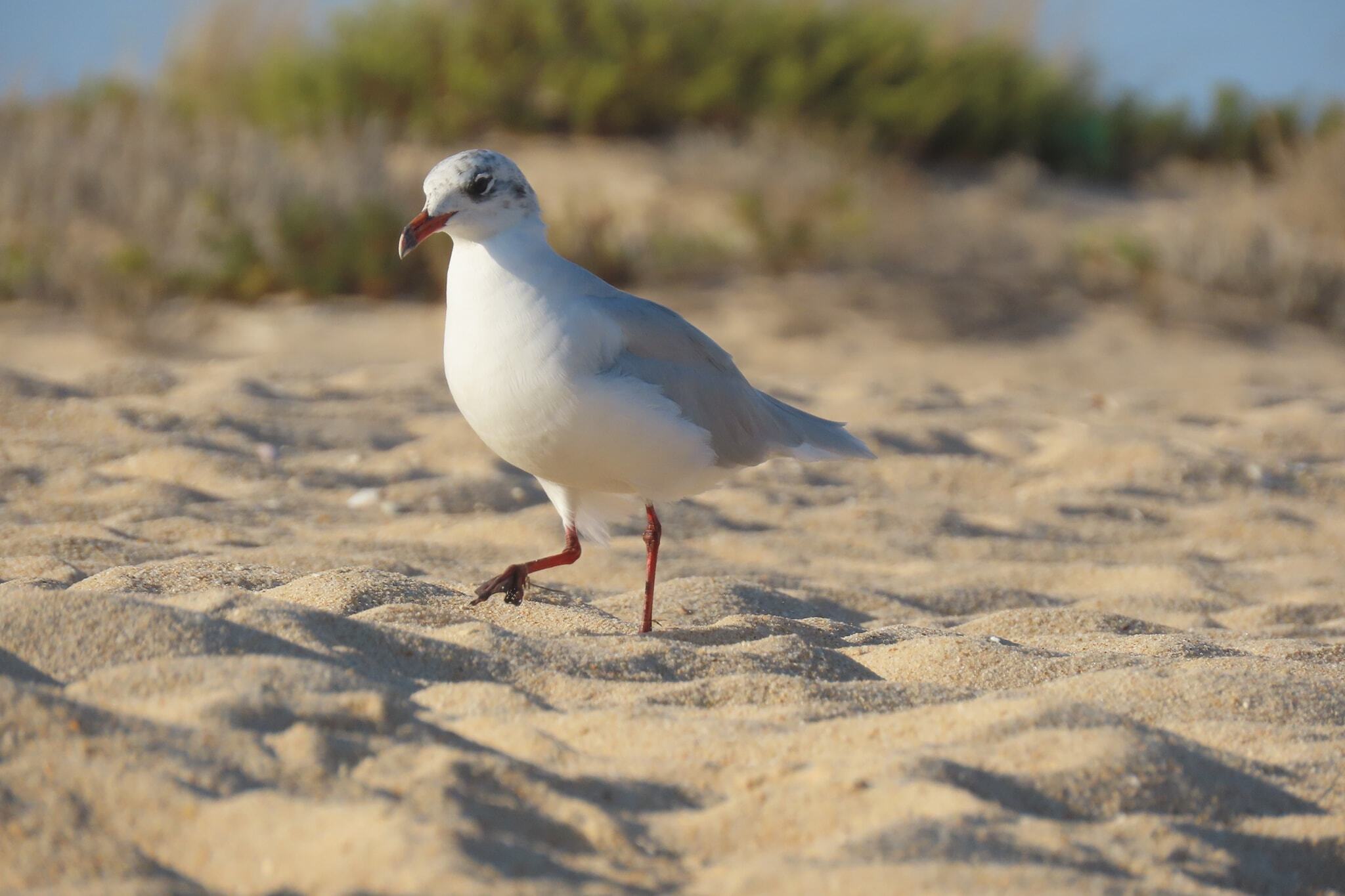
Mediterranean Gull
Scientific name: Larus melanocephalus
Family laridae
Phenology
- Mainland
- Wintering and passage migrant
- Madeira
- Vagrant
- Azores
- Vagrant
Conservation status
Learn more- Mainland
- Madeira
- Azores
- IUCN Global
Data
Maps
Distribution | Non-breeding
Scale
Minimum value:
Maximum value:
Scale
Minimum value:
Maximum value:
Scale
Minimum value:
Maximum value:
Scale
Minimum value:>
Maximum value:<
Scale
Minimum value:
Maximum value:
Scale
Minimum value:>
Maximum value:>
Distribution based on seabird tracking data (locations/hexagone).
Colony(ies) of origin:
Device:
Data period / number of individuals:
Data period / number of individuals:
Distribution of seabird breeding colonies or sites (number of breeding pairs).
Distribution based on marine censuses (probability of occurrence).
Observed density based on marine censuses (birds/ km2).
Confirmed occurence during marines censuses.
Abundance of waders derived from Project Arenaria coastal surveys (birds/square).
Passage rates derived from RAM coastal surveys (birds/hour).
No data available for the selected period.
Presentation
Distribution, movements and phenology
The Mediterranean Gull has a predominantly European range, breeding between April and June from eastern Europe to southern France and Spain, with populations scattered across central Europe and the Mediterranean. During the winter, it is found along the coasts of the Black Sea, the Mediterranean, the European Atlantic and north-west Africa (Billerman et al. 2026).
In Mainland Portugal, it occurs along the entire coastline (Equipa Atlas 2018). It ventures out to sea, as far as the continental slope, but with higher concentrations near the mouths of the Tagus and Mira rivers and in the eastern Algarve (Meirinho et al. 2014). Post-breeding migration takes place between mid-June and November and pre-breeding migration between February and April, involving individuals from much of the breeding range (Moore 1992; Poot & Flamant 2006). In the Azores and Madeira, there are some records of isolated birds or small numbers in harbours and sheltered coastal areas between November and March.
Individual tracking of birds visiting the Portuguese coast is still very limited. Based on data from just two birds fitted with GPS in Italy and Belgium, but over several years, the preference for areas already known to the species is confirmed.
Abundance and population trends
The European population has been estimated at between 118,000 and 328,000 breeding pairs, and appears to be expanding its range, although the population size is declining (Keller et al. 2020; BirdLife International 2025). In Portugal, the latest known estimates indicated more than 7,000 individuals during the winter (Poot & Flamant 2006). Based on the data used for the environmental status assessment, an estimate of around 500 to 4,500 individuals was obtained for the continental shelf in 2024. This population has not achieved Good Environmental Status for the abundance indicator, in line with the global trend. Conversely, the population inhabiting the non-estuarine coastal zone appears to have been increasing in recent years (Velde 2025). In the case of Madeira and the Azores, there is no information on population trends, thus preventing an assessment of their environmental status.
Ecology and habitat
The Mediterranean Gull is relatively common along the coast, where it uses the shoreline primarily for resting, particularly on beaches, in fishing harbours, estuaries and salt pans. It feeds mainly in coastal waters up to the edge of the continental shelf, and may also be found locally near submarine outfalls (Poot & Flamant 2006). During the winter, its diet consists of fish, molluscs, insects, earthworms, berries and seeds (Billerman et al. 2026). It is also associated with fishing vessels (Poot 2003), feeding on discards. It is occasionally observed feeding on refuse.
Threats and conservation
The main threats to this species are felt in breeding areas due to predation and disturbance (Billerman et al. 2026; BirdLife International 2025). In Portugal, the greatest threat appears to be related to disturbance caused by the significant increase in human use of beaches and other habitats typically used by the species for wintering. The degradation of wetlands may also have a negative impact on the Mediterranean Gull. There are no known incidents of bycatch in fishing gear.
- Autores
Eric Stienen, Tânia Nascimento
- Owners/sources of tracking data
Lorenzo Serra, Simone Pirrello & Jacopo G. Cecere (ISPRA & Ministero dell'Ambiente e della Sicurezza Energetica), Stienen et al. 2022
Velde PMV (2025). Analysis of population trends of overwintering coastal birds in continental Portugal in relation to habitat type. Tese de Mestrado em Biologia Marinha. Faculdade de Ciências e Tecnologia. Universidade do Algarve. Bibliography:
Poot MJM & Flamant R (2006). Numbers, behaviour and origin of Mediterranean Gulls (Larus Melanocephalus) wintering along the west coast of southern Portugal. Airo 16: 13-22. Bibliography:
Poot M (2003). Offshore foraging of Mediterranean Gulls Larus melanocephalus in Portugal during the winter. Atlantic Seabirds 5(1): 1-12. Bibliography:
Moore CC (1992). The Mediterranean Gull Larus melanocephalus in the Tagus estuary: numbers, ages classes and possible origins. Airo 3: 83-86. Bibliography:
Meirinho A, Barros N, Oliveira N, Catry P, Lecoq M, Paiva V, Geraldes P, Granadeiro JP, Ramírez I & Andrade J (2014). Atlas das Aves Marinhas de Portugal. Sociedade Portuguesa para o Estudo das Aves. Bibliography:
Keller V, Herrando S, Voříšek P, Franch M, Kipson M, Milanesi P, Martí D, Anton M, Klvaňová A, Kalyakin MV et al. (2020). European Breeding Bird Atlas 2: Distribution, Abundance and Change. European Bird Census Council & Lynx Edicions: Barcelona, Spain. Bibliography:
Equipa Atlas (2018). Atlas das Aves Invernantes e Migradoras de Portugal 2011-2013. Sociedade Portuguesa para o Estudo das Aves, LabOr- Laboratório de Ornitologia – ICAAM - Universidade de Évora, Instituto da Conservação da Natureza e das Florestas, Instituto das Florestas e Conservação da Natureza (Madeira), Secretaria Regional da Energia, Ambiente e Turismo (Açores) e Associação Portuguesa de Anilhadores de Aves. Lisboa. Bibliography:
BirdLife International (2025). IUCN Red List for birds. Downloaded from https://datazone.birdlife.org on 30.11.2025. Bibliography:
Billerman SM, Keeney BL, Kirwan GM, Medrano F, Sly ND & Smith MG (eds.) (2026). Birds of the World. Cornell Laboratory of Ornithology, Ithaca, NY, USA. Data:
Stienen EWM, Desmet P, Govaert S, Milotic T, Spanoghe G & Janssens K (2022). MEDGULL_ANTWERPEN - Mediterranean gulls (Ichthyaetus melanocephalus, Laridae) breeding near Antwerp (Belgium). Dataset. https://doi.org/10.5281/zenodo.6599272 Glossary:
Equipment used to catch marine animals, such as nets, longlines or traps. Glossary:
A species or parameter that reflects the state of an ecosystem or environmental changes. Glossary:
Monitoring the movements of individuals using tracking devices. Glossary:
The direction of change in the size of a population over time (increase, decline or stability). Glossary:
A concept defined under the Marine Strategy Framework Directive (MSFD), referring to the condition of the elements of the marine environment, including birds. It aims to assess whether ecosystems are healthy, balanced and capable of supporting ecological functions and human uses in a sustainable manner. The ultimate goal is for the components and ecosystems to achieve Good Environmental Status. Glossary:
A small device attached to birds to study their movements at a finer scale (usually during the breeding season). These devices use the Global Positioning System (GPS) to obtain information on position, latitude, longitude and altitude at any point on Earth, using a network of orbiting satellites. Glossary:
Refers to the unintentional capture of marine species during fishing. Animals may become entangled in hooks or fishing nets. It is usually associated with commercial fishing, but can also occur in recreational fishing. Bycatch is one of the main threats to seabirds at sea. Glossary:
A portion of the seabed with a very steep gradient lying between the continental shelf and the continental margin, where the abyssal plains begin. Glossary:
The portion of the catch taken by commercial fishing vessels that is returned to the sea, often dead or dying. Discarded fish often belong to species of no commercial value, individuals below the minimum legal landing size, or individuals whose landing is not permitted, for example due to quota restrictions. Discards may also consist of parts of the catch, namely offal and heads, which, after on-board processing, are rejected and discarded at sea. Discards have a strong impact on marine ecosystems and influence many aspects of the distribution, foraging behaviour and population dynamics of seabirds, particularly species and individuals that habitually follow vessels. Glossary:
Referring to the period preceding breeding. Glossary:
Referring to the period following breeding. Glossary:
The portion of the seabed that begins at the coastline and slopes gently downwards to the continental slope (where the slope is much steeper). On average, the continental shelf extends to a depth of 200 metres. Glossary:
A period generally corresponding to the winter months, which may include part of autumn. Glossary:
A structure that discharges wastewater into the sea after it has undergone a certain level of treatment at a wastewater treatment plant (WWTP). The dynamics of marine waters promote the natural processes of dilution, dispersion and degradation of these waters.