Monteiro's Storm-petrel
Scientific name: Hydrobates monteiroi
Family hydrobatidae
Phenology
- Mainland
- Absent
- Madeira
- Absent
- Azores
- Summer breeder
Conservation status
Learn more- Mainland
- Madeira
- Azores
- IUCN Global
Data
Maps
Distribution | Breeding
Scale
Minimum value:
Maximum value:
Scale
Minimum value:
Maximum value:
Scale
Minimum value:
Maximum value:
Scale
Minimum value:>
Maximum value:<
Scale
Minimum value:
Maximum value:
Scale
Minimum value:>
Maximum value:>
Distribution based on seabird tracking data (locations/hexagone).
Colony(ies) of origin:
Device:
Data period / number of individuals:
Data period / number of individuals:
Distribution of seabird breeding colonies or sites (number of breeding pairs).
Distribution based on marine censuses (probability of occurrence).
Observed density based on marine censuses (birds/ km2).
Confirmed occurence during marines censuses.
Abundance of waders derived from Project Arenaria coastal surveys (birds/square).
Passage rates derived from RAM coastal surveys (birds/hour).
No data available for the selected period.
Presentation
Distribution, movements and phenology
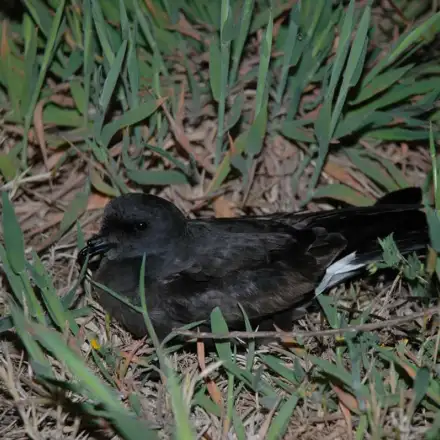
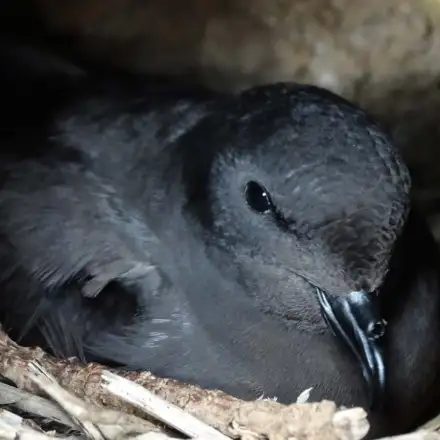
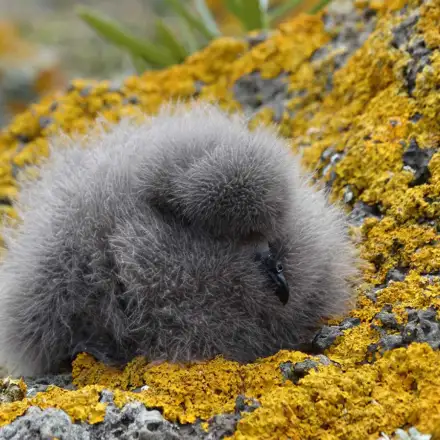
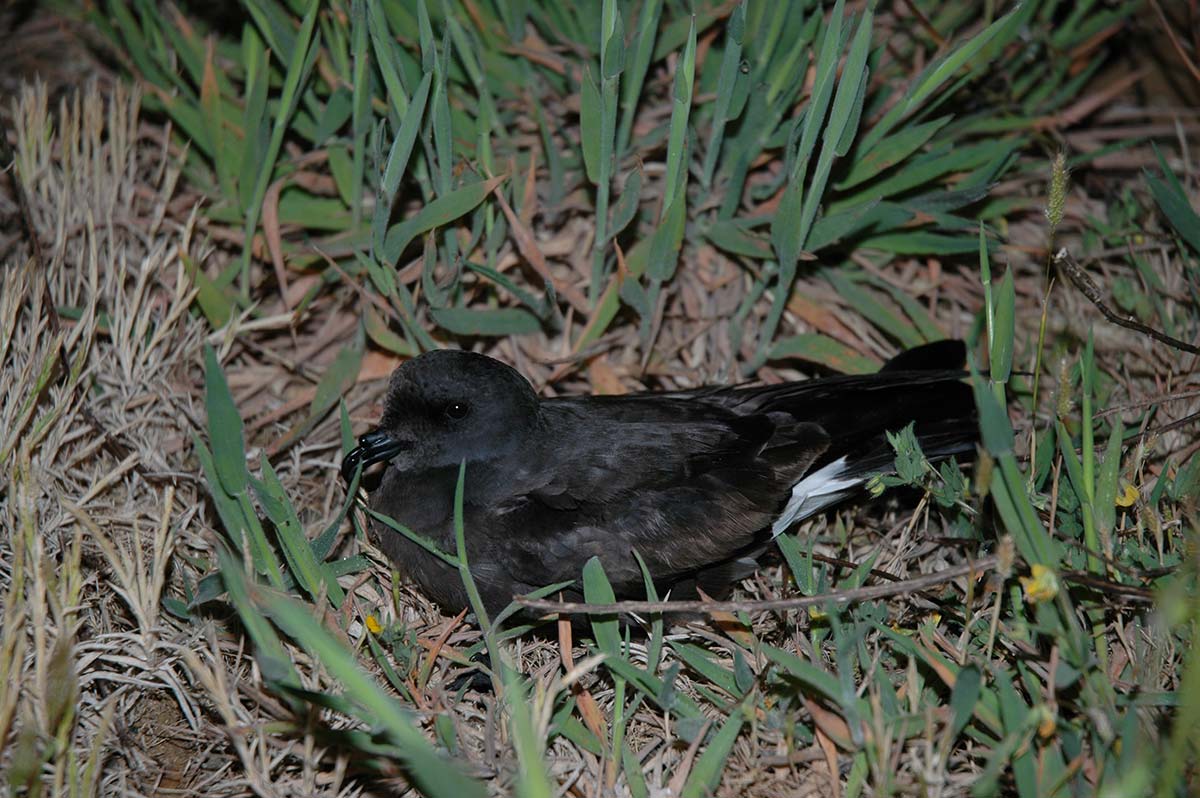
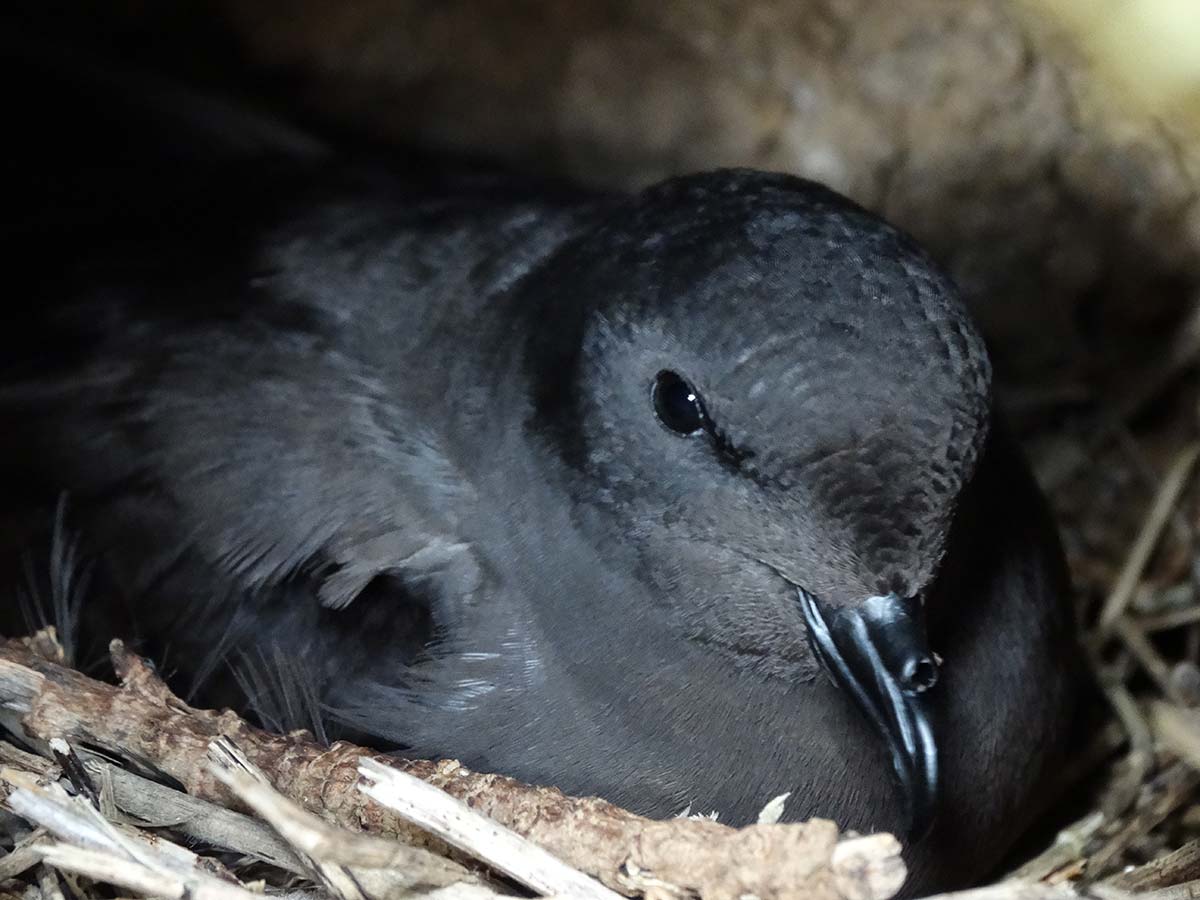
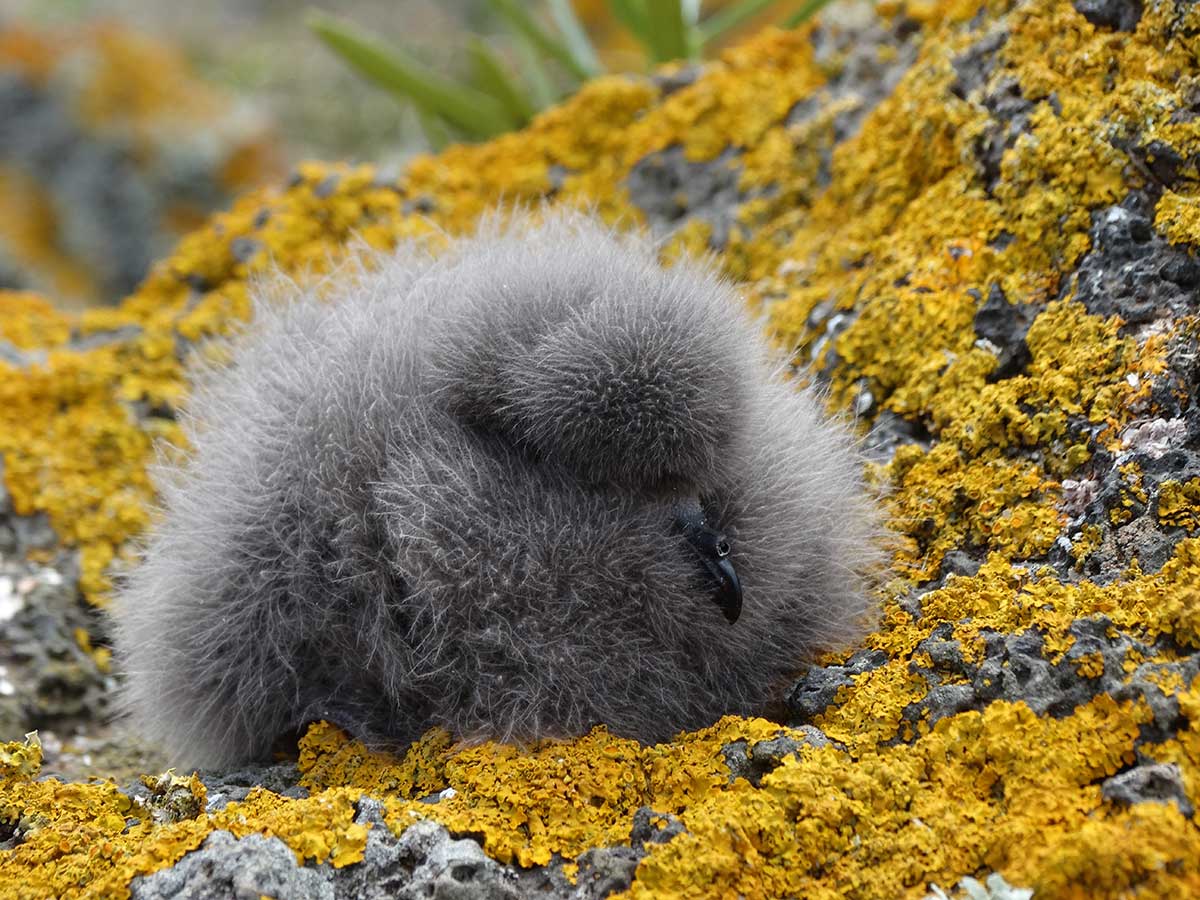
The Monteiro's Storm-petrel is an endemic species to the Azores archipelago, breeding from March to October on the islets of Praia, Baixo (Graciosa), Sentado (Flores) and Topo (São Jorge), with breeding also suspected on the islet of Ponta do Marco, on Corvo (Monteiro et al. 1999; Oliveira 2018; Pipa & Silva 2021; Pipa et al. 2023; Pipa et al. 2024). After the breeding season, most of the population is expected to migrate to the east coast of South America (Raül Ramos & Beñat Garcia‑Urdangarin pers. comm.), although it was previously assumed that the species would remain in the vicinity of the Azores, given the results of the analysis of its diet using stable isotopes (Bolton et al. 2008).
Based on individual tracking of 63 birds from the islet of Praia, fitted with GPS between 2018 and 2021 during the breeding season, it is confirmed that the Portuguese EEZ is used exclusively within the Azores sub-area, with a distribution preference for areas to the north and north-west of the colony. There is a geographical segregation between the distribution of males and females, with the former using deeper areas but relatively closer to the colony, whilst females appear to use shallower waters, but further away (Paiva et al. 2018).
Abundance and population trends
The total population, restricted to the Azores, was estimated at between 301 and 503 pairs between 2017 and 2019 (Pipa & Silva 2021; Pipa et al. 2023), although not all possible colonies of the species were surveyed. Based on passive acoustic monitoring studies, it was estimated that, for the period 2015 to 2023, there were approximately 135 pairs on the islet of Baixo, 112 pairs on the islet of Praia and 9 pairs on the islet of Topo (Pipa et al. 2024). The scarcity of data for other colonies limits the assessment of the species’ overall population trend, although it is currently considered stable (BirdLife International 2025). The environmental assessment carried out in this study for the abundance indicator shows, however, a decline from 2020 onwards, despite having achieved Good Environmental Status. With regard to the productivity indicator, the population has not achieved Good Environmental Status, confirming its unfavourable conservation status.
Ecology and habitat
The Monteiro's Storm-petrel nests in flat, low-lying areas with little disturbance, but also on cliffs, in small cavities and crevices (Oliveira 2018). It is a pelagic bird that feeds on planktonic crustaceans, small pelagic and deep-sea fish, and cephalopods (Monteiro et al. 1998; Carreiro et al. 2022).
Threats and conservation
Introduced or native predators pose the main threat to the Monteiro's Storm-petrel, notably the Madeiran Wall Lizard Teira dugesii, Yellow-legged Gull Larus michahellis, Long-eared Owl Asio otus, mustelids, cats and rats (Oliveira 2018; Neves et al. 2017; Bolton et al. 2008). Competition with larger seabirds for nesting cavities (Ramos et al. 1997; Bolton et al. 2008), habitat loss, pollution (including oil spills and plastics) and climate change are other significant threats, alongside bycatch in fisheries, human disturbance, light pollution, wind farms and natural disasters (Oliveira 2018). The installation of artificial nests has contributed to an increase in the availability of nesting sites, as well as to increased breeding success (Bolton et al. 2004; Bolton et al. 2008; Bried et al. 2009a).
- Autores
Tânia Pipa, Ben Porter, Hannah F. R. Hereward, Petra Quillfeldt, Verónica Neves, Wiebke Schäfer
- Owners/sources of tracking data
Ramos JA, Monteiro LR , Sola E & Moniz Z (1997). Characteristics and competition for nest cavities in burrowing Procelariiformes. The Condor 99: 634-641. Bibliography:
Pipa T, Silva C, Atchoi E, Hervías-Parejo S, Oliveira N, Ramírez J & Martín A (2023). Estimativa populacional bioacústica de roque-de-castro Hydrobates castro e painho-de-monteiro Hydrobates monteiroi nos Açores. XI Congresso SPEA II Jornadas da Macaronésia. São Miguel, Açores, 22-26 Novembro 2023. Bibliography:
Pipa T & Silva C (2021) Projeto LuMinAves (2017-2020): Reduzir o impacto da luz artificial nas aves marinhas. Lisboa (unpublished report). Bibliography:
Pipa T, Martins B, Silva C, Heber S, Magalhães M, Carriço R, Câmara R, Lourenço J, Aguiar L, Cunha B, Raposo P, Raposo A, Coelho R, Huamán M, Pinto F, Sequeira R, Carreira G, Pereira D & De la Cruz A (2024). Monitorização de aves marinhas Procellariiformes 2020-2023: Relatório da Ação D5.1. Projeto LIFE IP AZORES NATURA - LIFE17 IPE/PT/00010. Unpublished report. Bibliography:
Paiva VH, Ramos JA, Nava C, Neves V, Bried J & Magalhães MC (2018). Inter-sexual habitat and isotopic niche segregation of the endangered Monteiro’s storm-petrel during breeding. Zoology 126: 29–35. Bibliography:
Oliveira N (compiler) (2018). International Single Species Action Plan for the conservation of Monteiro’s Storm Petrel Hydrobates monteiroi (2018 to 2028). European Commission Technical Report, May-2018. Bibliography:
Neves VC, Nava C, Monteiro EV, Monteiro PR & Bried J (2017). Depredation of Monteiro's Storm-petrel (Hydrobates monteiroi) chicks by Madeiran wall lizards (Lacerta dugesii). Waterbirds 40(1): 82-86. Bibliography:
Monteiro LR , Ramos JA, Pereira JC, Monteiro PR, Feio RS, Thompson DR, Bearshop S, Furness RW, Laranjo M, Hilton G, Neves VC, Groz MP & Thompson KR (1999). Status and distribution of Fea’s Petrel, Bulwer’s Petrel, Manx Shearwater, Little Shearwater and Band-rumped Storm-Petrel in the Azores Archipelago. Waterbirds 22(3): 358-366. Bibliography:
Monteiro LR , Granadeiro JP & Furness RW (1998). Relationship between mercury levels and diet in Azores seabirds. Marine Ecology Progress Series 166: 259-265. Bibliography:
Carreiro AR, Bried J, Deakin Z, Jones KB, Thomas RJ, Symondson WOC, Ramos JA & Medeiros R (2022). First Insights into the diet composition of Madeiran and Monteiro’s Storm Petrels (Hydrobates castro and H. monteiroi) Breeding in the Azores. Waterbirds 44: 300–307. Bibliography:
Bried J, Magalhães MC, Bolton M, Neves VC, Bell E, Pereira JC, Aguiar L, Monteiro LR & Santos RS (2009a). Seabird habitat restoration on Praia Islet, Azores Archipelago. Ecological Restoration 27(1): 27–36. Bibliography:
Bolton M, Smith AL, Gómez-Díaz E, Friesen VL , Medeiros R, Bried J, Roscales JL & Furness RW (2008). Monteiro’s Storm Petrel Oceanodroma monteiroi: a new species from the Azores. Ibis 150(4): 717-727. Bibliography:
Bolton M, Medeiros R, Hothersall B & Campos A (2004). The use of artificial breeding chambers as a conservation measure for cavity-nesting procellariiform seabirds: a case study of the Madeiran Storm Petrel (Oceanodroma castro). Biological Conservation 116: 73–80. Bibliography:
BirdLife International (2025). IUCN Red List for birds. Downloaded from https://datazone.birdlife.org on 30.11.2025. Data:
Neves V, Quillfeldt P & Schäfer W (2021). Dataset 1549: Monteiro's Storm-petrel, Hydrobates monteiroi, GPS, Country Island, Country Island, Canada, 2018–2021. BirdLife International Seabird Tracking Database. Downloaded from https://data.seabirdtracking.org/dataset/1549/ on 30.11.2025. Data:
Hereward HFR, Porter B & Neves V (2020). Dataset 1630: Monteiro's Storm-petrel, Hydrobates monteiroi, GPS, Country Island, Country Island, Canada, 2020. BirdLife International Seabird Tracking Database. Downloaded from https://data.seabirdtracking.org/dataset/1630/ on 30.11.2025. Glossary:
Artificial structures installed to provide alternative nesting sites and increase breeding success. Glossary:
A group of marine arthropods that are important in the marine food chain. Glossary:
A group of marine molluscs that includes squids, cuttlefish and octopuses. Glossary:
Alteration of natural night-time light levels due to artificial lighting. Glossary:
Persistent changes in global or regional climate patterns, influenced by natural and anthropogenic factors. Glossary:
Wind energy production infrastructures installed at sea. Glossary:
A species or parameter that reflects the state of an ecosystem or environmental changes. Glossary:
Monitoring the movements of individuals using tracking devices. Glossary:
The direction of change in the size of a population over time (increase, decline or stability). Glossary:
A measure of a population’s breeding success, generally expressed as the average number of chicks produced per pair. Glossary:
A concept defined under the Marine Strategy Framework Directive (MSFD), referring to the condition of the elements of the marine environment, including birds. It aims to assess whether ecosystems are healthy, balanced and capable of supporting ecological functions and human uses in a sustainable manner. The ultimate goal is for the components and ecosystems to achieve Good Environmental Status. Glossary:
A small device attached to birds to study their movements at a finer scale (usually during the breeding season). These devices use the Global Positioning System (GPS) to obtain information on position, latitude, longitude and altitude at any point on Earth, using a network of orbiting satellites. Glossary:
Refers to the unintentional capture of marine species during fishing. Animals may become entangled in hooks or fishing nets. It is usually associated with commercial fishing, but can also occur in recreational fishing. Bycatch is one of the main threats to seabirds at sea. Glossary:
Under the United Nations Convention on the Law of the Sea, coastal states are entitled to declare an EEZ comprising maritime area beyond their territorial waters. The national EEZ is delimited by an imaginary line situated 200 nautical miles from the coast, separating national waters from international or shared waters. Within its EEZ, each state has rights such as the exploitation of marine resources, the conduct of scientific research and the regulation of fishing by foreign vessels. Glossary:
The area or environment where organisms that do not depend on the seafloor normally live. It is the typical ecological environment of open ocean waters. The pelagic ecosystem does not include only the open sea; it also comprises the waters covering the continental shelf. The pelagic zone begins below the influence of tides and extends into the open ocean, at depths ranging from a few tens of metres to approximately 6,000 metres, and is divided into different layers. Glossary:
Carnivorous mammals belonging to the family Mustelidae. This family, the largest in the order Carnivora, includes ferrets, weasels, martens, otters, badgers and many more. Glossary:
Classification of the threat level of a species according to its probability of extinction. The criteria for this classification generally follow internationally recognised rules defined by the International Union for Conservation of Nature (IUCN) (http://www.redlist.org) and are based on population size, range and population trend. This status may be national or international. Glossary:
A term generally applied to a species introduced deliberately or accidentally into a specific location or region outside its original range. Depending on its adaptation to the new environment, an introduced species may or may not become naturalised and proliferate. Glossary:
A term used in biology (endemism, from the Greek endemos, meaning indigenous) to describe living organisms whose range is confined to a restricted region (e.g. a mountain, an island or a country).