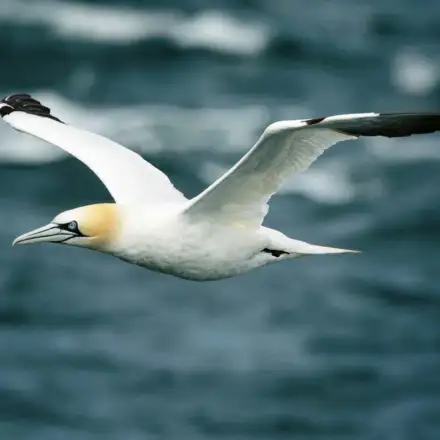
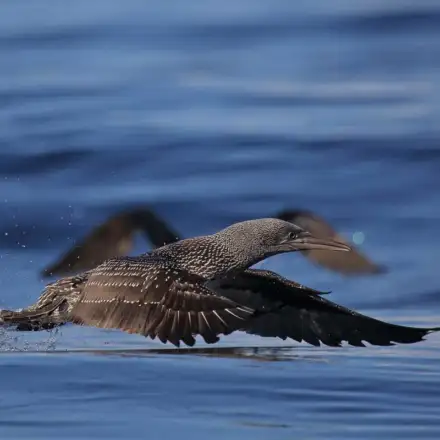
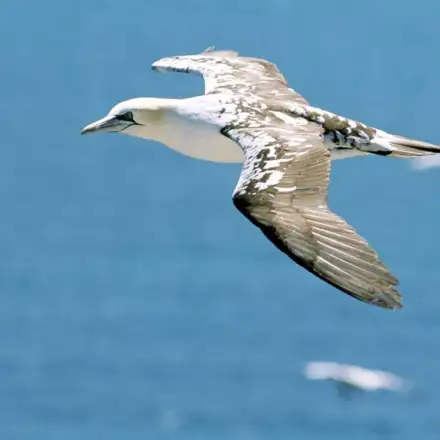
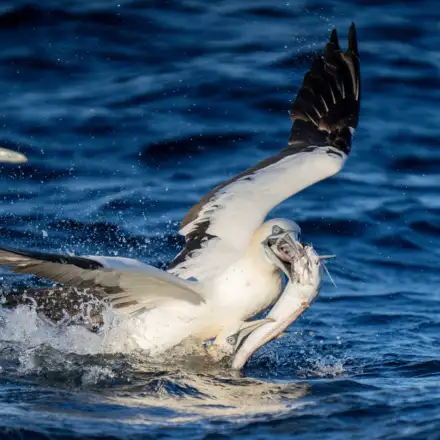
Northern Gannet
Scientific name: Morus bassanus
Family sulidae
Phenology
- Mainland
- Wintering and passage migrant
- Madeira
- Wintering and passage migrant
- Azores
- Wintering and passage migrant
Conservation status
Learn more- Mainland
- Madeira
- Azores
- IUCN Global
Data
Maps
Distribution | Non-breeding
Scale
Minimum value:
Maximum value:
Scale
Minimum value:
Maximum value:
Scale
Minimum value:
Maximum value:
Scale
Minimum value:>
Maximum value:<
Scale
Minimum value:
Maximum value:
Scale
Minimum value:>
Maximum value:>
Distribution based on seabird tracking data (locations/hexagone).
Colony(ies) of origin:
Device:
Data period / number of individuals:
Data period / number of individuals:
Distribution of seabird breeding colonies or sites (number of breeding pairs).
Distribution based on marine censuses (probability of occurrence).
Observed density based on marine censuses (birds/ km2).
Confirmed occurence during marines censuses.
Abundance of waders derived from Project Arenaria coastal surveys (birds/square).
Passage rates derived from RAM coastal surveys (birds/hour).
No data available for the selected period.
Presentation
Distribution, movements and phenology
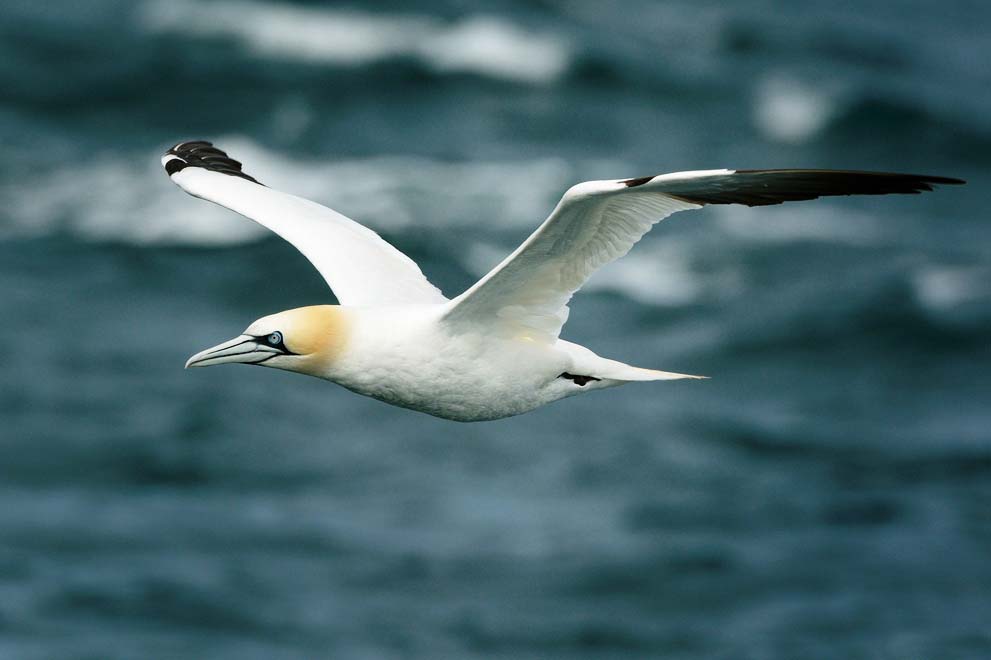
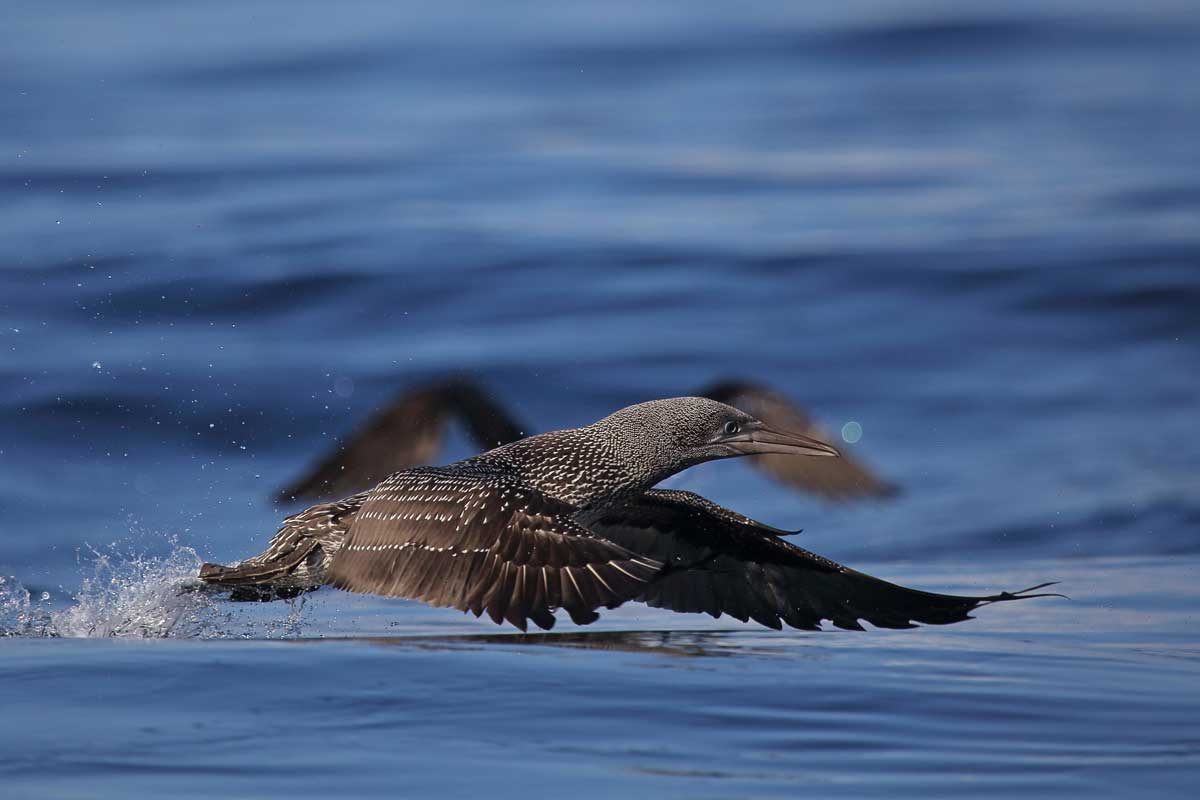
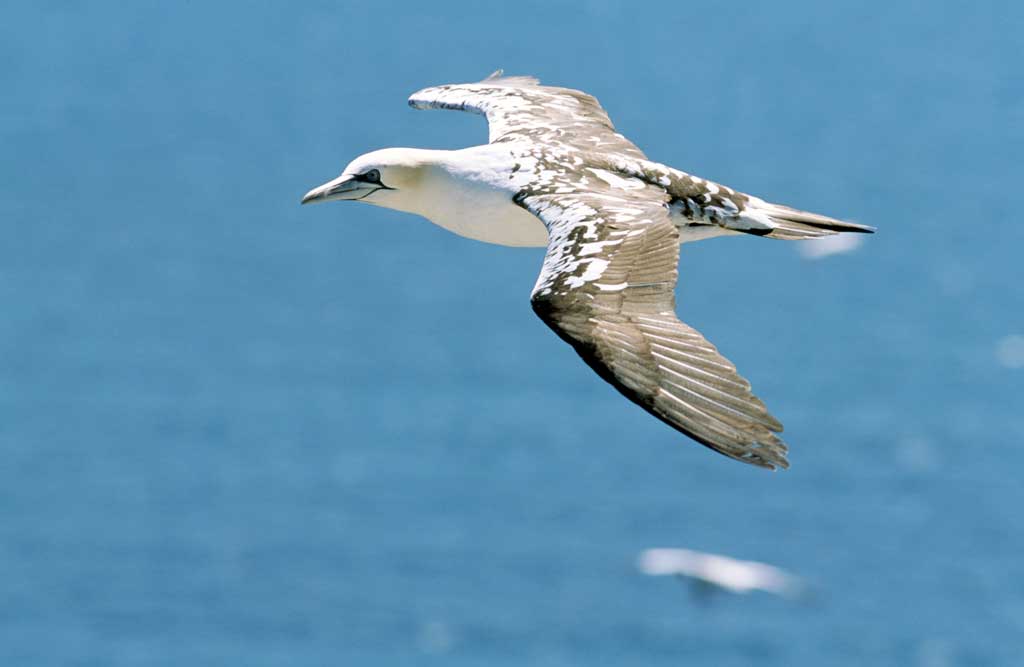
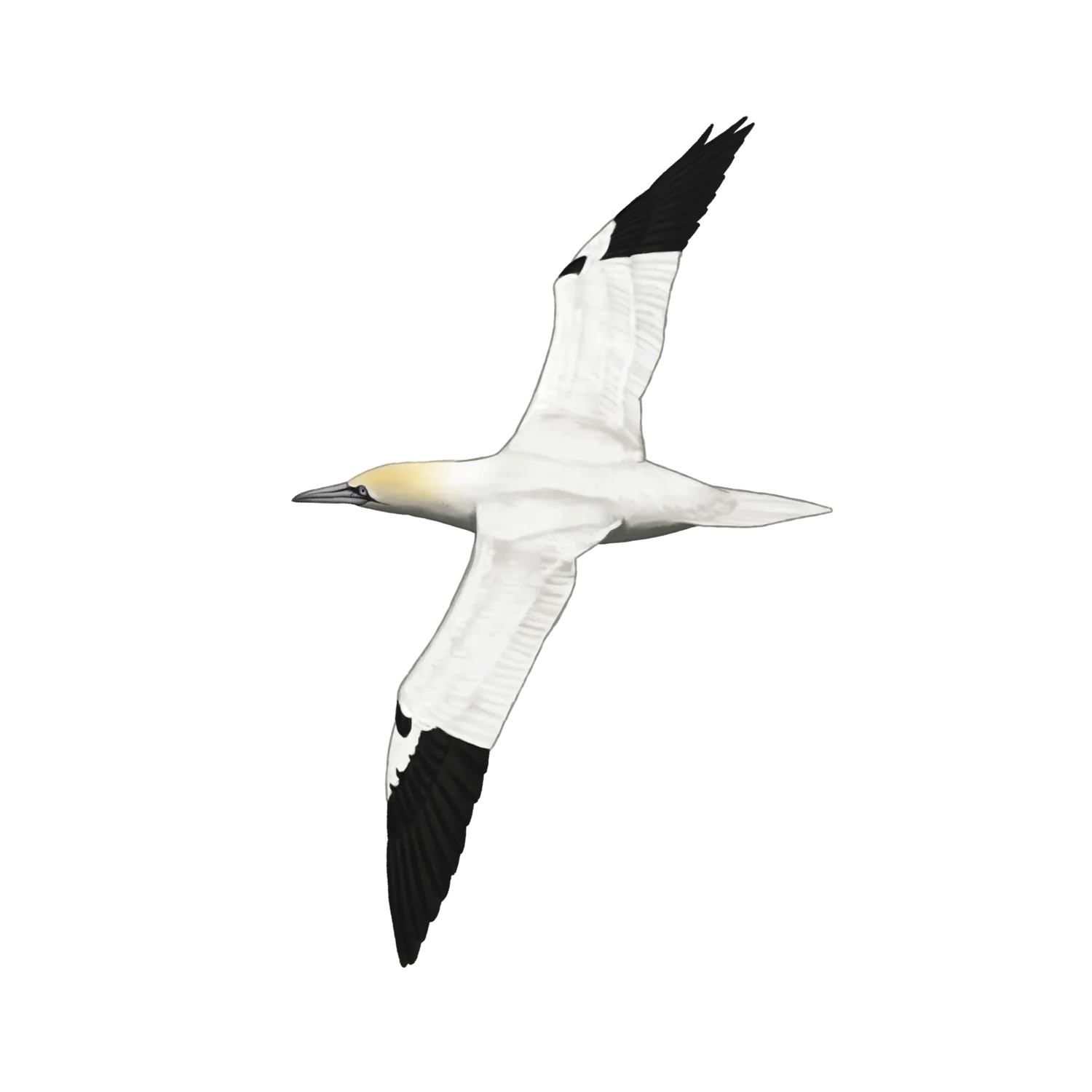
The Northern Gannet breeds in the North Atlantic between March and August, mainly in north-west Europe and Canada. Between September and November, the European population migrates to the coasts of West Africa and the European Atlantic, with a portion entering the Mediterranean (Billerman et al. 2026). They use the Portuguese Mainland coast as a migratory corridor, occurring along the entire continental shelf (Meirinho et al. 2014; Bernard et al. 2026). Furthermore, the Mainland is also an important wintering area for birds from some colonies (Grecian et al. 2019; Garthe et al. 2024). A large number of immature birds remain in these waters throughout the year (Catry et al. 2010a). In the Azores and Madeira, it occurs in small numbers, mainly during migration (Meirinho et al. 2014).
Data obtained from 15 birds fitted with GPS tags in 2018 and 2019, originating from the United Kingdom, confirm the known distribution of the species in the Mainland region. Of note is the higher concentration between Caminha and Ericeira, with some use of deeper waters. Based on these data, no occurrences were recorded in the sub-areas of the Azores or Madeira.
Abundance and population trends
The global population has been estimated at between 1.5 and 1.8 million mature individuals, showing an upward trend, of which 1.37 million breed in Europe (BirdLife International 2025). In Mainland Portugal, the Northern Gannet is one of the most abundant seabirds, particularly between September and March. Between 2010 and 2015, the population was estimated at between 79,518 and 101,700, representing up to 10% of the global population (Araújo et al. 2022b). Furthermore, during the post-breeding migration in 2015, more than 200,000 birds were counted passing southwards from Cape Carvoeiro (Elmberg et al. 2020). The highest densities of the species are recorded in the central and northern parts of the Mainland, with a moderate upward trend observed in the migratory flow during the pre-breeding season (Fagundes et al. 2024).
However, this population has not achieved Good Environmental Status for the abundance indicator. There is no information regarding abundance or population trends for the Azores and Madeira, making it impossible to assess the environmental status.
Ecology and habitat
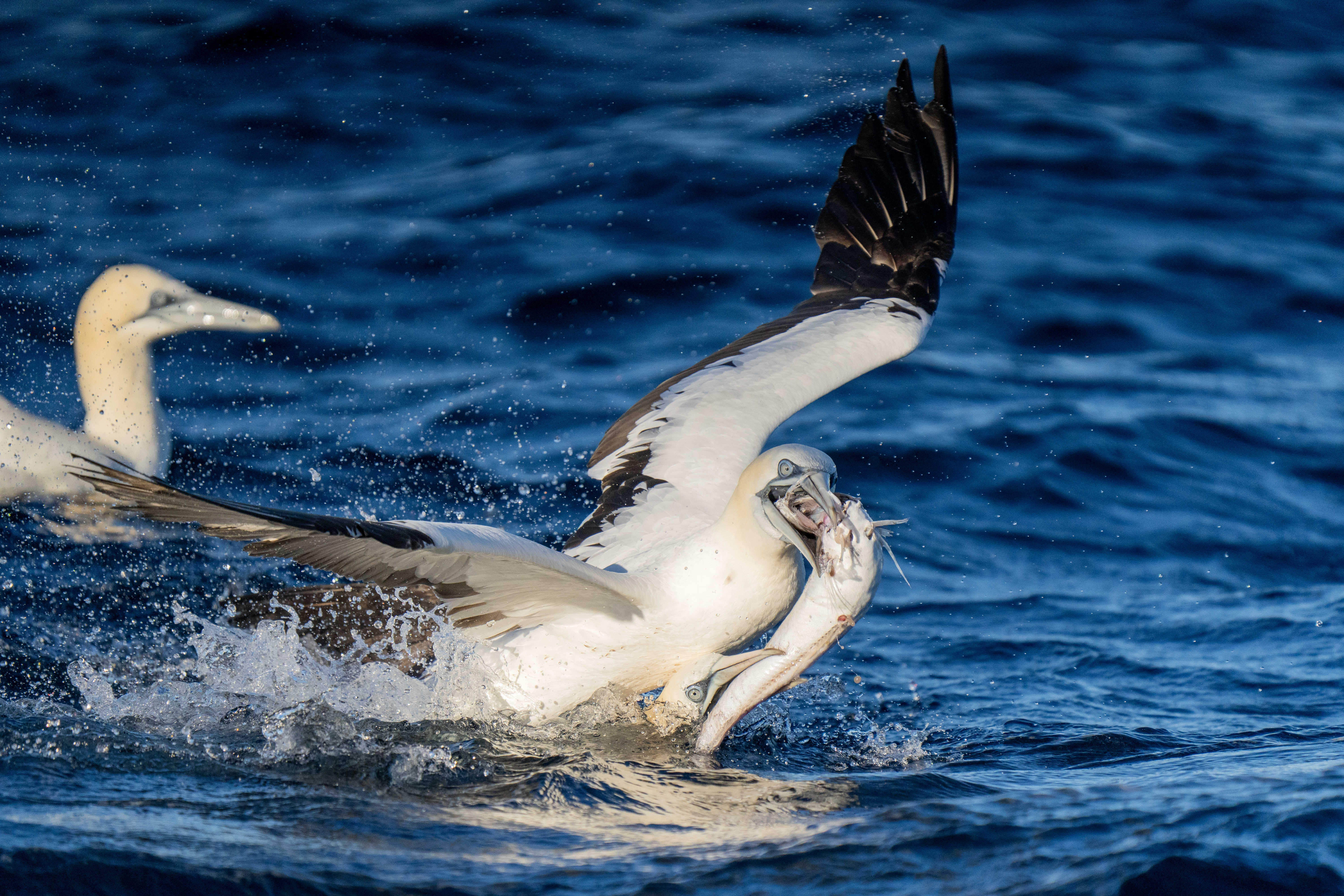
It is a marine species found in areas of the continental shelf and slope, and may be observed either alone or in large groups (Catry et al. 2010a). It feeds on schools of pelagic fish, such as mackerel, horse mackerel, sardines and needlefish, taking advantage of discards from commercial fishing (Billerman et al. 2026).
Threats and conservation
The Northern Gannet is one of the species most frequently captured as bycatch in fishing gear in Portugal, with a particular incidence in demersal longline fishing (Oliveira et al 2015; Calado et al. 2021). The implementation of fishing methods that minimise this risk of mortality should be a priority for the conservation of the species (BirdLife International 2025). It is also particularly vulnerable to collisions with wind turbines in offshore wind farms (Bradbury et al. 2014), which raises further concerns at a time of rapid expansion in this sector. The impacts of marine pollution, particularly from plastics, have not yet been fully quantified, but are believed to compromise breeding success. Furthermore, outbreaks of diseases such as avian influenza have caused localised population declines and represent an emerging threat (Lane et al. 2024).
- Autor
Tânia Nascimento
- Owners/sources of tracking data
Oliveira N, Henriques A, Miodonski J, Pereira J, Marujo D, Almeida A, Barros N, Andrade J, Marçalo A, Santos J, Oliveira IB, Ferreira M, Araújo H, Monteiro S, Vingada J, Ramírez I (2015). Seabird bycatch in Portuguese mainland coastal fisheries: An assessment through on-board observations and fishermen interviews. Global Ecology and Conservation 3: 51-61. Bibliography:
Meirinho A, Barros N, Oliveira N, Catry P, Lecoq M, Paiva V, Geraldes P, Granadeiro JP, Ramírez I & Andrade J (2014). Atlas das Aves Marinhas de Portugal. Sociedade Portuguesa para o Estudo das Aves. Bibliography:
Lane JV, Jeglinski JWE, Avery‑Gomm S, Ballstaedt E, Banyard AC, Barychka T, Brown IH, Brugger B, Burt TV, Careen N, Castenschiold JHF, Christensen‑Dalsgaard S, Clifford S, Collins SM, Cunningham E, Danielsen J, Daunt F, D’Entremont KJN, Doiron P, Duffy S, English MD, Falchieri M, Giacinti J, Gjerset B, Granstad S, Grémillet D, Guillemette M, Hallgrímsson GT, Hamer KC, Hammer S, Harrison K, Hart JD, Hatsell C, Humpidge R, James J, Jenkinson A, Jessopp M, Jones MEB, Lair S, Lewis T, Malinowska AA, McCluskie A, McPhail G, Moe B, Montevecchi WA, Morgan G, Nichol C, Nisbet C, Olsen B, Provencher J, Provost P, Purdie A, Rail JF, Robertson G, Seyer Y, Sheddan M, Soos C, Stephens N, Strøm H, Svansson V, Tierney TD, Tyler G, Wade T, Wanless S, Ward CRE, Wilhelm SI, Wischnewski S, Wright LJ, Zonfrillo B, Matthiopoulos J & Votier SC (2024). High pathogenicity avian influenza (H5N1) in Northern Gannets (Morus bassanus): Global spread, clinical signs and demographic consequences. Ibis 166: 633–650. Bibliography:
Grecian WJ, Williams HJ, Votier SC, Bearhop S, Cleasby IR, Grémillet D, Hamer KC, Le Nuz M, Lescroël A, Newton J, Patrick SC, Phillips RA, Wakefield ED & Bodey TW (2019). Individual Spatial Consistency and Dietary Flexibility in the Migratory Behavior of Northern Gannets Wintering in the Northeast Atlantic. Frontiers in Ecology and Evolution 7: 214. Bibliography:
Garthe S, Peschko V, Fifield DA, Borkenhagen K, Nyegaard T & Dierschke J (2024). Migratory pathways and winter destinations of Northern Gannets breeding at Helgoland (North Sea): known patterns and increasing importance of the Baltic Sea. Journal of Ornithology 165: 869–880. Bibliography:
Fagundes AI, Godinho C, Ramos JA, Oliveira N, Andrade J, Alonso H, Silva E, Ferreira A, Meirinho A, Santos A, Santos C, Cardoso H, Rocha L, Mendes M, Barros N, Ramalho P, Caldeira T & Paiva VH (2024). Temporal Changes in Migratory Seabird Abundance on the Portuguese Coast Revealed by a Citizen Science Project. Ardeola 71(1): 119-143. Bibliography:
Elmberg J, Hirschfeld E, Cardoso H & Hessel R (2020). Seabird migration at Cabo Carvoeiro (Peniche, Portugal) in autumn 2015. Marine Ornithology 48: 231-244. Bibliography:
Calado JG, Ramos JA, Almeida A, Oliveira N & Paiva VH (2021). Seabird-fishery interactions and bycatch at multiple gears in the Atlantic Iberian coast. Ocean & Coastal Management 200: 105306. Bibliography:
Bradbury G, Trinder M, Furness B, Banks AN, Caldow RWG & Hume D (2014). Mapping seabird sensitivity to offshore wind farms. PLoS ONE 9(9): e106366. Bibliography:
BirdLife International (2025). IUCN Red List for birds. Downloaded from https://datazone.birdlife.org on 30.11.2025. Bibliography:
Billerman SM, Keeney BL, Kirwan GM, Medrano F, Sly ND & Smith MG (eds.) (2026). Birds of the World. Cornell Laboratory of Ornithology, Ithaca, NY, USA. Bibliography:
Bernard A, Courbin N, Tornos J, Martin TJ, Lejeune M, Prudor A, Provost P, Lambrechts A, Gaskin CP, Cabelguen J, Bécot M, Jiguet F & Grémillet D (2026). The responsibility of Western European coastal states for the conservation of two emblematic migratory seabirds in the context of offshore wind farms. Biological Conservation 314: 111678. Bibliography:
Araújo H, Rodrigues PC, Bastos-Santos J, Ferreira M, Pereira A, Martínez-Cedeira J, Vingada J & Eira C (2022b). Monitoring abundance and distribution of northern gannets Morus bassanus in Western Iberian waters in autumn by aerial surveys. Ardeola 69(2): 179-202. Bibliography:
Catry P, Costa H, Elias G & Matias R (2010a). Aves de Portugal, Ornitologia do Território Continental. Assírio e Alvim, Lisboa Data:
Hamer K & Lane J (2019). Dataset 1815: Northern Gannet, Morus bassanus, GPS, Bass Rock, East Lothian, United Kingdom, 2018–2019. BirdLife International Seabird Tracking Database. Downloaded from https://data.seabirdtracking.org/dataset/1815/ on 30.11.2025. Data:
Gremillet D & Dossa J (2011). Dataset 1023: Northern Gannet, Morus bassanus, Geolocator (GLS), Ile Rouzic, Brittany, France, 2010–2011. BirdLife International Seabird Tracking Database. Downloaded from https://data.seabirdtracking.org/dataset/1023/ on 30.11.2025. Glossary:
A marine organism, usually a fish, that spends most of its life on the seabed, associated with the marine substrate, which may be sandy or rocky. However, these organisms are capable of active swimming, thus differing from benthic organisms. Glossary:
Individuals capable of breeding, used as a reference in population estimates. Glossary:
Preferred routes and geographical areas where the movement of individuals is concentrated during migrations. Glossary:
A sudden increase in the incidence of a disease within a population or region. Glossary:
Wind energy production infrastructures installed at sea. Glossary:
Equipment used to catch marine animals, such as nets, longlines or traps. Glossary:
A species or parameter that reflects the state of an ecosystem or environmental changes. Glossary:
The direction of change in the size of a population over time (increase, decline or stability). Glossary:
A concept defined under the Marine Strategy Framework Directive (MSFD), referring to the condition of the elements of the marine environment, including birds. It aims to assess whether ecosystems are healthy, balanced and capable of supporting ecological functions and human uses in a sustainable manner. The ultimate goal is for the components and ecosystems to achieve Good Environmental Status. Glossary:
A small device attached to birds to study their movements at a finer scale (usually during the breeding season). These devices use the Global Positioning System (GPS) to obtain information on position, latitude, longitude and altitude at any point on Earth, using a network of orbiting satellites. Glossary:
A portion of the seabed with a very steep gradient lying between the continental shelf and the continental margin, where the abyssal plains begin. Glossary:
The portion of the catch taken by commercial fishing vessels that is returned to the sea, often dead or dying. Discarded fish often belong to species of no commercial value, individuals below the minimum legal landing size, or individuals whose landing is not permitted, for example due to quota restrictions. Discards may also consist of parts of the catch, namely offal and heads, which, after on-board processing, are rejected and discarded at sea. Discards have a strong impact on marine ecosystems and influence many aspects of the distribution, foraging behaviour and population dynamics of seabirds, particularly species and individuals that habitually follow vessels. Glossary:
Referring to the period following breeding. Glossary:
The portion of the seabed that begins at the coastline and slopes gently downwards to the continental slope (where the slope is much steeper). On average, the continental shelf extends to a depth of 200 metres. Glossary:
The area or environment where organisms that do not depend on the seafloor normally live. It is the typical ecological environment of open ocean waters. The pelagic ecosystem does not include only the open sea; it also comprises the waters covering the continental shelf. The pelagic zone begins below the influence of tides and extends into the open ocean, at depths ranging from a few tens of metres to approximately 6,000 metres, and is divided into different layers. Glossary:
A fishing gear consisting of a main line (mother line) from which secondary lines with hooks attached branch off. It is left in the sea and can be placed on the seabed to catch deep-sea species (e.g. scabbardfish) or at the surface to catch large pelagic fish (e.g. swordfish). Glossary:
A period generally corresponding to the winter months, which may include part of autumn.