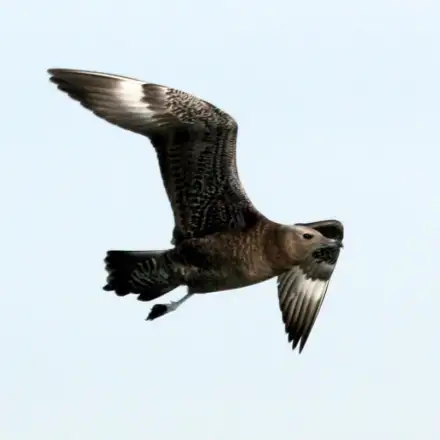
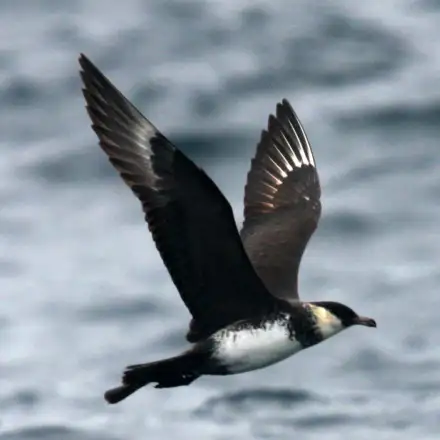
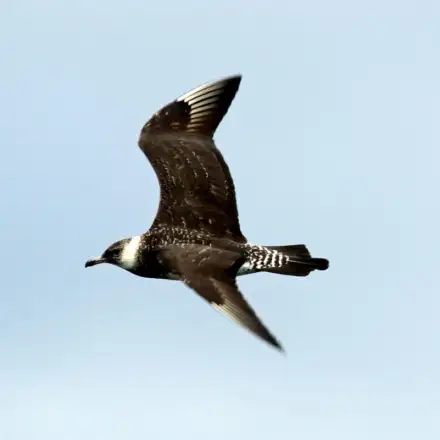
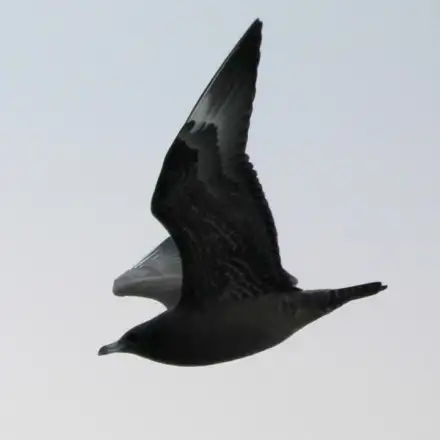
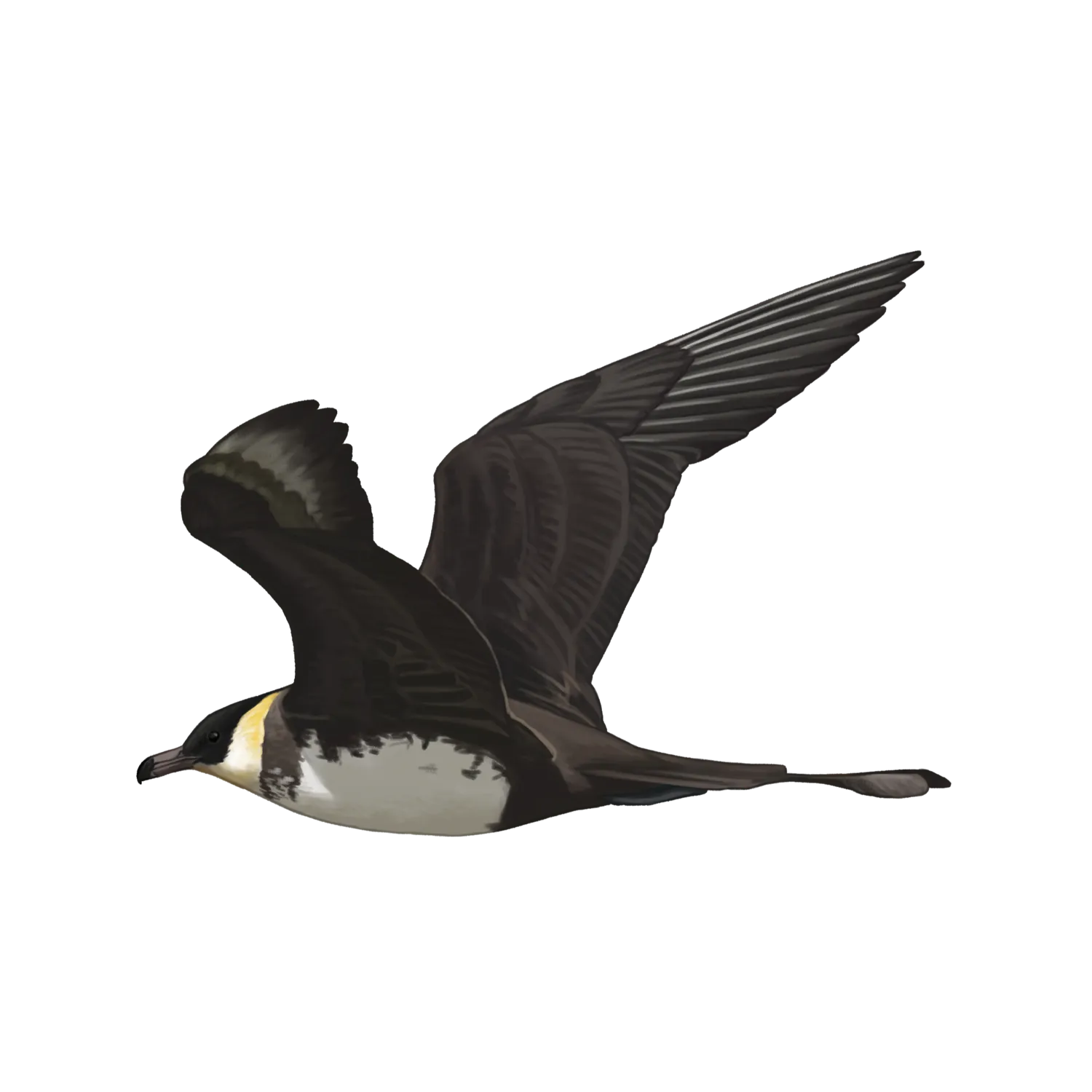
Pomarine Jaeger
Scientific name: Stercorarius pomarinus
Family stercorariidae
Phenology
- Mainland
- Passage migrant
- Madeira
- Passage migrant
- Azores
- Passage migrant
Conservation status
Learn more- Mainland
- Madeira
- Azores
- IUCN Global
Data
Maps
Occurrence | Spring
Scale
Minimum value:
Maximum value:
Scale
Minimum value:
Maximum value:
Scale
Minimum value:
Maximum value:
Scale
Minimum value:>
Maximum value:<
Scale
Minimum value:
Maximum value:
Scale
Minimum value:>
Maximum value:>
Distribution based on seabird tracking data (locations/hexagone).
Colony(ies) of origin:
Device:
Data period / number of individuals:
Data period / number of individuals:
Distribution of seabird breeding colonies or sites (number of breeding pairs).
Distribution based on marine censuses (probability of occurrence).
Observed density based on marine censuses (birds/ km2).
Confirmed occurence during marines censuses.
Abundance of waders derived from Project Arenaria coastal surveys (birds/square).
Passage rates derived from RAM coastal surveys (birds/hour).
No data available for the selected period.
Presentation
Distribution, movements and phenology
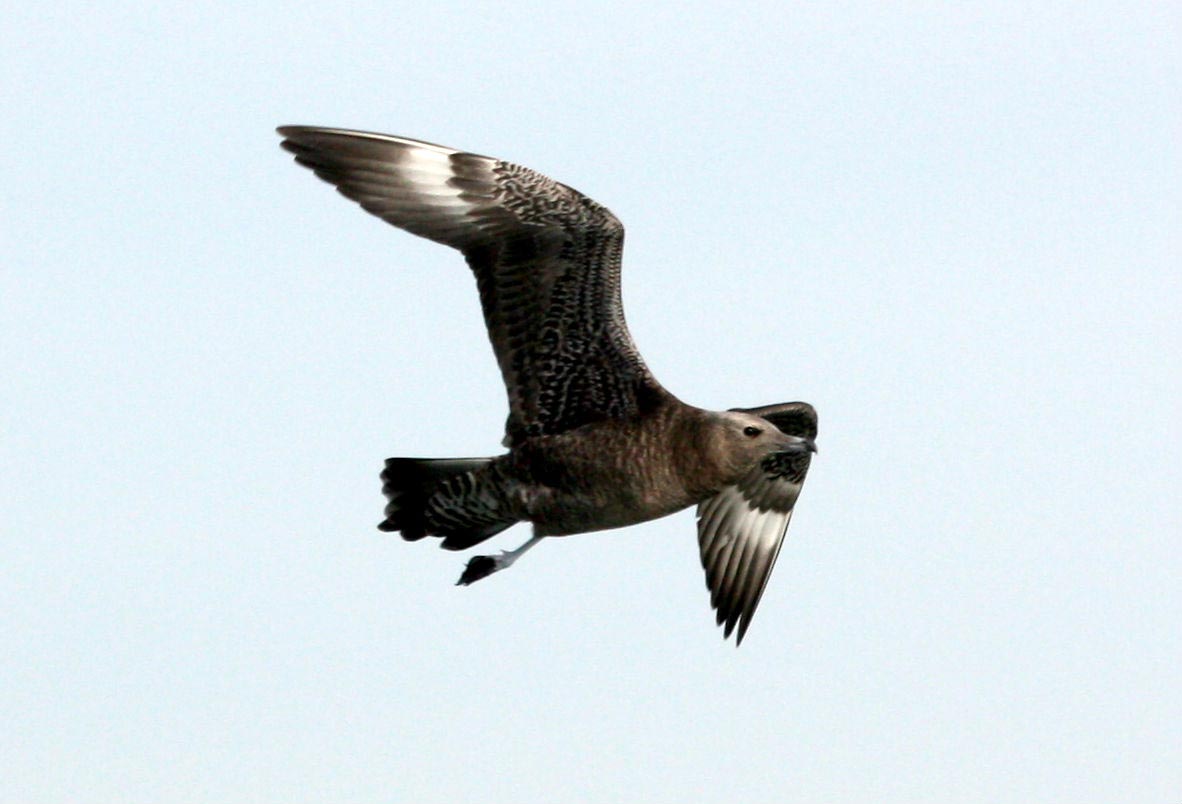
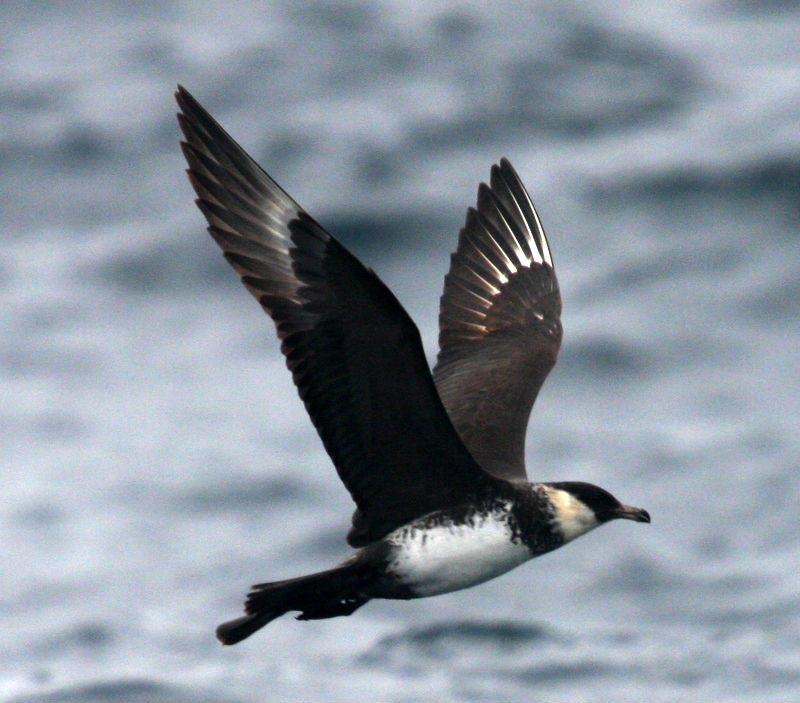
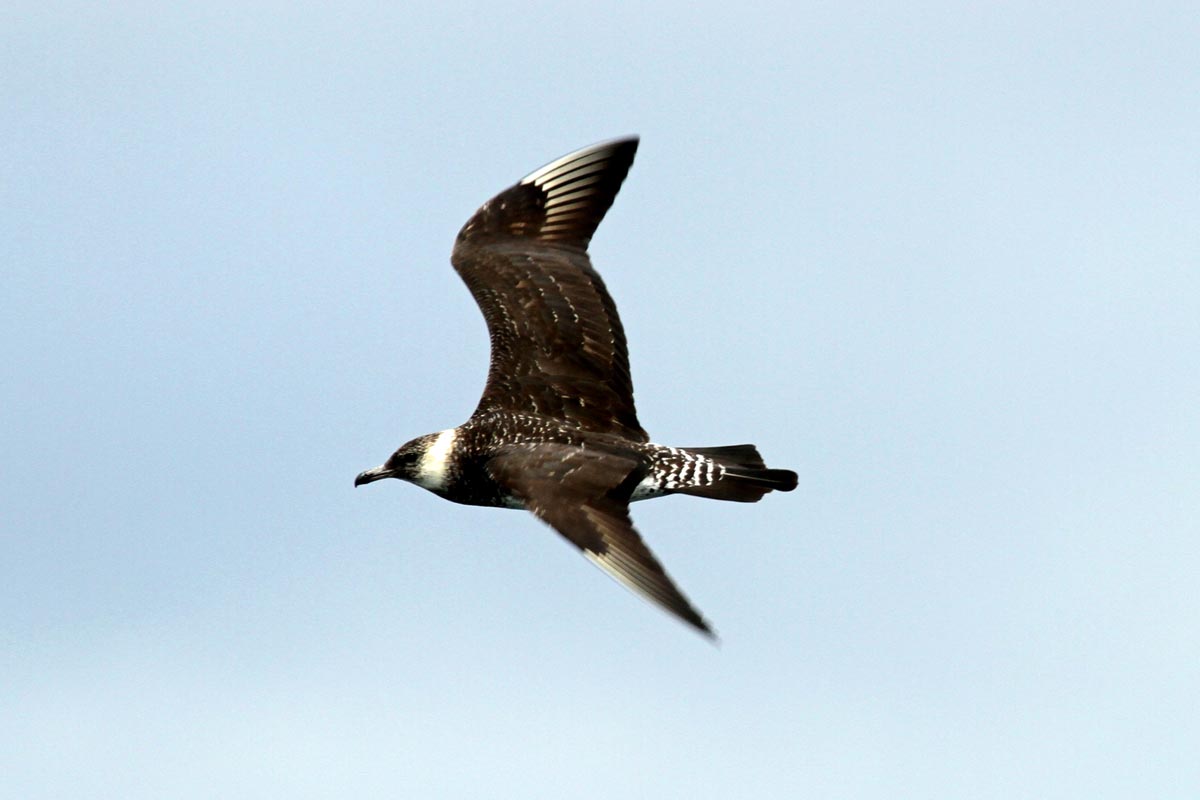
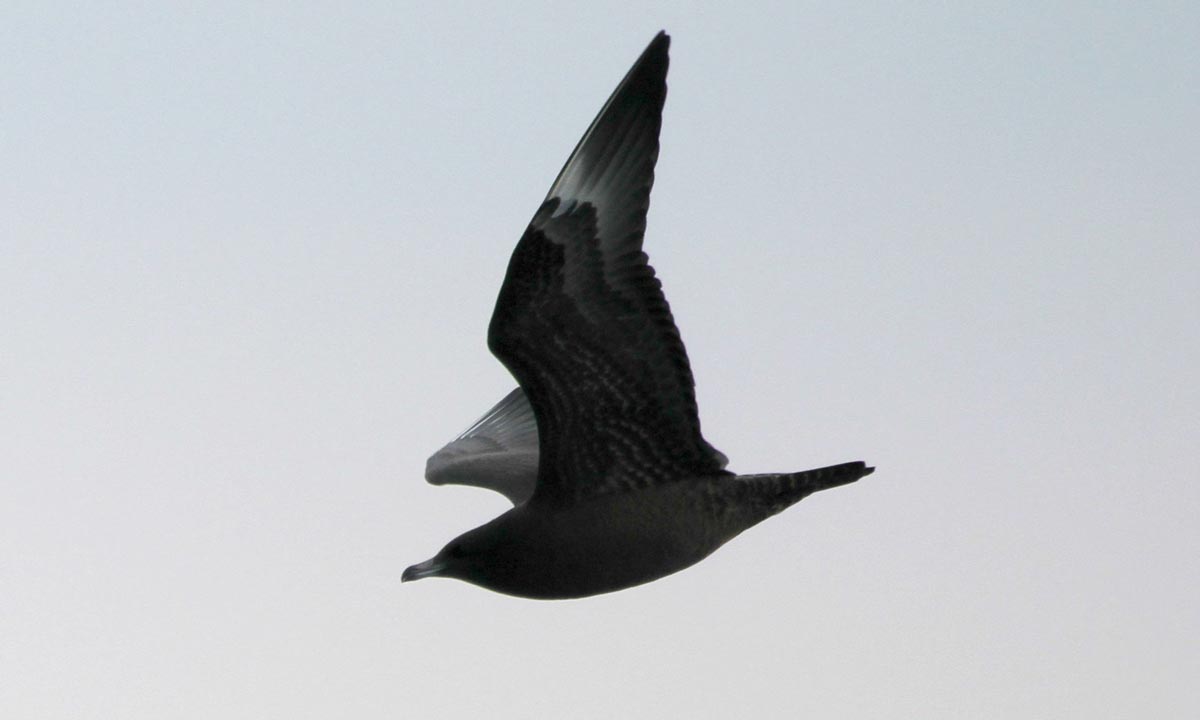
The Pomarine Jaeger breeds between May and August in the high Arctic regions of Eurasia and North America, and winters in the tropical and subtropical waters of the Atlantic, Indian and Pacific Oceans, along the coasts of Argentina, South Africa and Australia (Billerman et al. 2026). In Mainland Portugal, it occurs in the waters of the continental shelf and slope, and may also be observed in oceanic waters or near the coast (Meirinho et al. 2014; Calderón & Fagundes 2022). It is a passage migrant, with some birds still occurring at the end of the breeding season (likely due to early completion of the breeding season) or already during the typical post-breeding migration, from July to November, and in lower numbers during the pre-breeding migration, between March and April (Catry et al. 2010a). In the Azores and Madeira, it is a regular visitor during post-breeding migration (Alfrey & Legrand 2025). It has not been possible to obtain individual tracking data demonstrating use of the Portuguese EEZ.
Abundance and population trends
The global population has been estimated at around 400,000 mature individuals, with a stable trend, of which 20,000 pairs breed in Europe (BirdLife International 2025). There is little information regarding the number of Pomarine Jaegers occurring in the Portuguese EEZ, despite an increase in the number of sightings, likely as a result of greater observation efforts from land. During the post-breeding migration in 2015, 1,124 birds were counted passing south from Cape Carvoeiro (Elmberg et al. 2020). Based on the data used for the environmental status assessment, an estimate of approximately 900 to 9,800 individuals was obtained for the continental shelf in 2024. Despite these values showing large interannual variability, the Mainland population appears to have achieved Good Environmental Status for the abundance indicator. In the case of Madeira and the Azores, there is no information regarding population trends, thus preventing an assessment of their environmental status.
Ecology and habitat
The Pomarine Jaeger nests in a scattered manner across the Arctic tundra. During the breeding season, it feeds primarily on lemmings and other rodents. It also preys on the eggs and chicks of waterbirds (BirdLife International 2025). During the non-breeding season, it remains relatively close to the coast in upwelling areas, feeding mainly on fish, sometimes through kleptoparasitism, but it may also prey on small seabirds (Billerman et al. 2026).
Threats and conservation
The population of this species appears to be stable; however, productivity is heavily dependent on the availability of lemmings, which may experience sharp fluctuations and declines associated with climate change. Although the future impact on populations is still unknown, there is potential for significant negative effects on productivity. If such effects persist over several years, they could result in a population decline (BirdLife International 2025).
- Autor
Tânia Nascimento
Meirinho A, Barros N, Oliveira N, Catry P, Lecoq M, Paiva V, Geraldes P, Granadeiro JP, Ramírez I & Andrade J (2014). Atlas das Aves Marinhas de Portugal. Sociedade Portuguesa para o Estudo das Aves. Bibliography:
Elmberg J, Hirschfeld E, Cardoso H & Hessel R (2020). Seabird migration at Cabo Carvoeiro (Peniche, Portugal) in autumn 2015. Marine Ornithology 48: 231-244. Bibliography:
Calderón J & Fagundes AI (2022). Seabird and Marine Mammal Monitoring Network (RAM). Report for 2020-2021 in Portugal mainland. Sociedade Portuguesa para o Estudo das Aves. Lisboa. Bibliography:
BirdLife International (2025). IUCN Red List for birds. Downloaded from https://datazone.birdlife.org on 30.11.2025. Bibliography:
Billerman SM, Keeney BL, Kirwan GM, Medrano F, Sly ND & Smith MG (eds.) (2026). Birds of the World. Cornell Laboratory of Ornithology, Ithaca, NY, USA. Bibliography:
Alfrey P & Legrand V (2025). Pelagic birding at Banco da Fortuna, Azores. Dutch Birding 47: 104-113. Bibliography:
Catry P, Costa H, Elias G & Matias R (2010a). Aves de Portugal, Ornitologia do Território Continental. Assírio e Alvim, Lisboa Glossary:
Individuals capable of breeding, used as a reference in population estimates. Glossary:
A species or parameter that reflects the state of an ecosystem or environmental changes. Glossary:
Monitoring the movements of individuals using tracking devices. Glossary:
The direction of change in the size of a population over time (increase, decline or stability). Glossary:
A measure of a population’s breeding success, generally expressed as the average number of chicks produced per pair. Glossary:
A concept defined under the Marine Strategy Framework Directive (MSFD), referring to the condition of the elements of the marine environment, including birds. It aims to assess whether ecosystems are healthy, balanced and capable of supporting ecological functions and human uses in a sustainable manner. The ultimate goal is for the components and ecosystems to achieve Good Environmental Status. Glossary:
Waters situated away from the coast, beyond the continental shelf. It is used in matters relating to maritime activities, such as fishing, the oil industry and the exploitation of renewable energy. These waters are characterised by being located in the open sea, at great depths and far from coastal influences such as rivers and estuaries. They are thus distinguished from coastal waters. Glossary:
Under the United Nations Convention on the Law of the Sea, coastal states are entitled to declare an EEZ comprising maritime area beyond their territorial waters. The national EEZ is delimited by an imaginary line situated 200 nautical miles from the coast, separating national waters from international or shared waters. Within its EEZ, each state has rights such as the exploitation of marine resources, the conduct of scientific research and the regulation of fishing by foreign vessels. Glossary:
The name given to the extensive plains with low-growing vegetation and no trees, characteristic of Arctic and sub-Arctic regions. The tundra is generally a very cold region with low precipitation. Glossary:
A portion of the seabed with a very steep gradient lying between the continental shelf and the continental margin, where the abyssal plains begin. Glossary:
Referring to the period preceding breeding. Glossary:
Referring to the period following breeding. Glossary:
The portion of the seabed that begins at the coastline and slopes gently downwards to the continental slope (where the slope is much steeper). On average, the continental shelf extends to a depth of 200 metres. Glossary:
Name given to a group of small herbivorous rodents found in the Arctic tundra and sub-Arctic regions, belonging to the family Cricetidae. Glossary:
A feeding method in which one individual steals food from another. Glossary:
A phenomenon involving interaction between the ocean and the atmosphere, in which warm surface waters move away from the coast and are replaced by cooler, nutrient-rich waters from the depths.