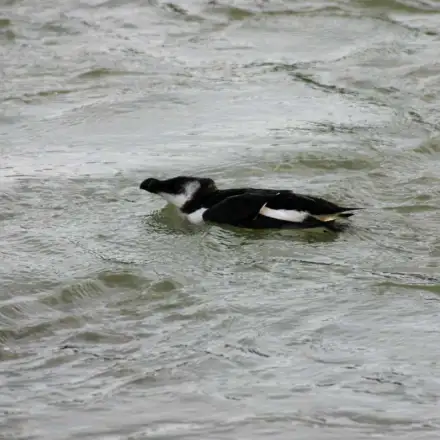
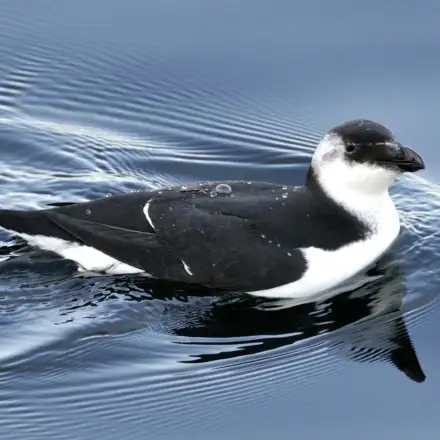
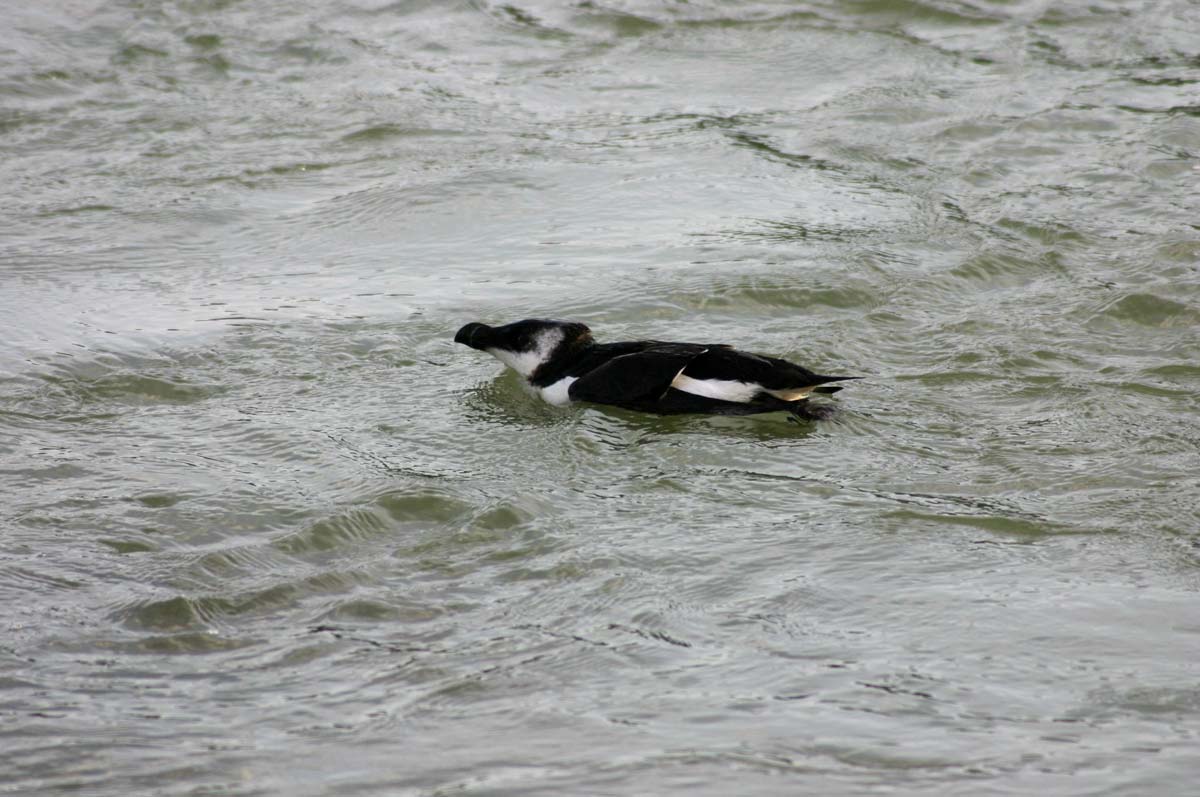
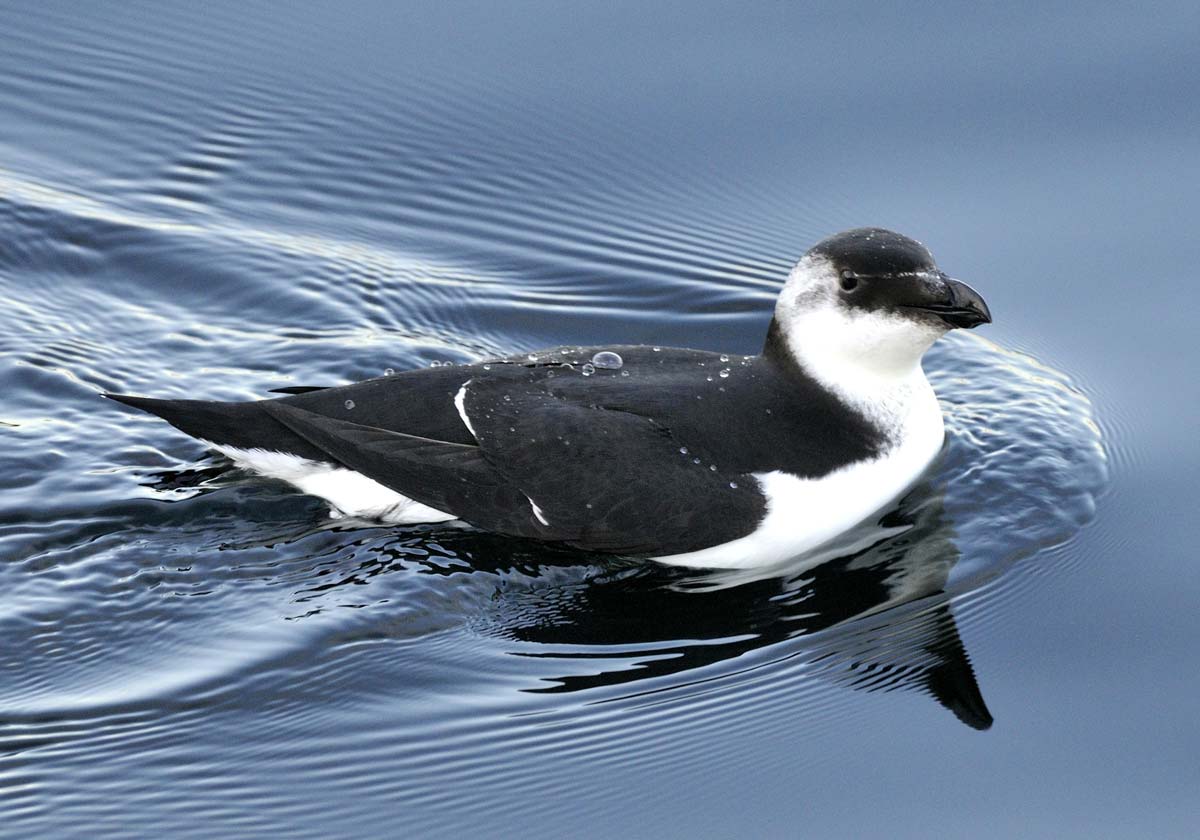
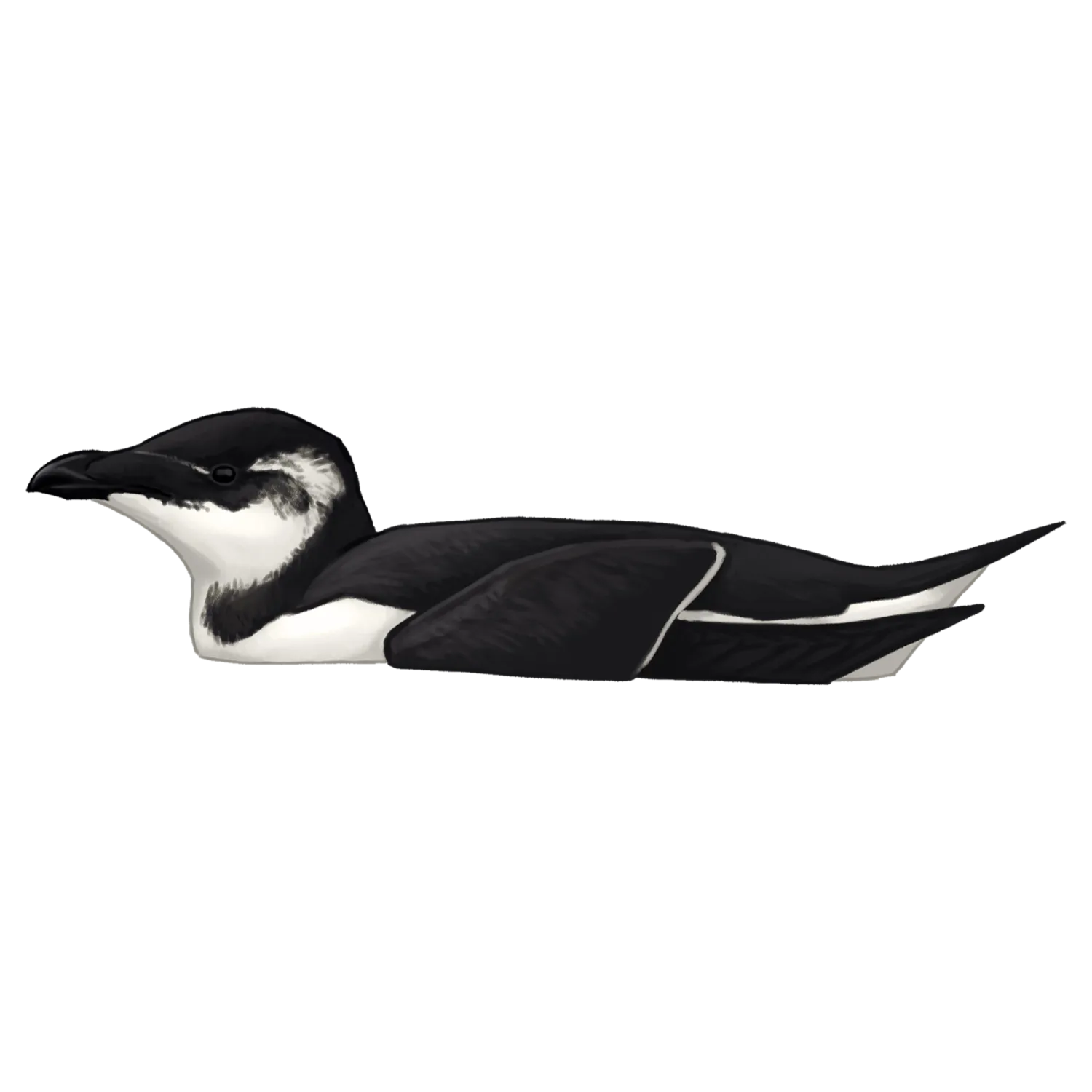
Razorbill
Scientific name: Alca torda
Family alcidae
Phenology
- Mainland
- Wintering and passage migrant
- Madeira
- Vagrant
- Azores
- Vagrant
Conservation status
Learn more- Mainland
- Madeira
- Azores
- IUCN Global
Data
Maps
Distribution | Breeding
Scale
Minimum value:
Maximum value:
Scale
Minimum value:
Maximum value:
Scale
Minimum value:
Maximum value:
Scale
Minimum value:>
Maximum value:<
Scale
Minimum value:
Maximum value:
Scale
Minimum value:>
Maximum value:>
Distribution based on seabird tracking data (locations/hexagone).
Colony(ies) of origin:
Device:
Data period / number of individuals:
Data period / number of individuals:
Distribution of seabird breeding colonies or sites (number of breeding pairs).
Distribution based on marine censuses (probability of occurrence).
Observed density based on marine censuses (birds/ km2).
Confirmed occurence during marines censuses.
Abundance of waders derived from Project Arenaria coastal surveys (birds/square).
Passage rates derived from RAM coastal surveys (birds/hour).
No data available for the selected period.
Presentation
Distribution, movements and phenology
The Razorbill breeds between April and July on islands and in coastal areas of the North Atlantic and the lower Arctic. After breeding, most birds migrate south, with European populations reaching their distribution limit in the western Mediterranean and North Africa (Billerman et al. 2026).
In Portugal, it occurs as a passage migrant and winter visitor along the entire Mainland coast, with the highest numbers in the north-central part of the country (Meirinho et al. 2014). Post-breeding migration begins in October, peaking in November (Fagundes et al. 2024). Pre-breeding migration is visible from January, continuing until April. The species has been recorded very sporadically in the Azores (Birding Azores 2022), and no previous records were known for the Madeira archipelago (Meirinho et al. 2014; Correia-Fagundes et al. 2021).
Individual tracking of birds visiting Portuguese waters is still very limited. Based on data from four birds fitted with GLS tags in Iceland in 2013 and 2014, there was little use of the Portuguese EEZ, restricted to the period between April and September. Most records occurred in the Azores sub-area, with only one record detected on the Mainland and another in Madeira.
Abundance and population trends
The global population has been estimated at between 838,000 and 1,660,000 mature individuals (BirdLife International 2025). The species has shown significant growth in Europe, which is home to over 90% of the global population. However, this increase has not been observed in wintering areas further south. For example, data collected in the Strait of Gibraltar indicate a recent decline (De la Cruz et al. 2022b), which may point to a contraction in the winter distribution. In Mainland Portugal, the species is most abundant between November and April, with an estimated 2,000 to 11,000 birds on the continental shelf for the winter of 2024, based on the data used here for the environmental status assessment. Its abundance has shown significant fluctuations (Fagundes et al. 2024), which, together with the decline in numbers, has resulted in non-compliance with Good Environmental Status for the abundance indicator, consistent with its current unfavourable conservation status in the region.
Ecology and habitat
It is mainly found in the shallow waters of the continental shelf (Huettmann et al. 2005). In Portugal, it is frequently found in areas close to the coast and may enter fishing harbours, marinas or the interior of harbour bars to seek shelter during and after major storms. It is an excellent diver, capable of reaching depths of several tens of metres in search of its prey. It feeds on small pelagic fish, mainly sardines, but also preys on anchovies and sand eels (Beja 1989; Gomes 2015).
Threats and conservation
The Razorbill is one of the species most frequently found stranded on Portuguese beaches (SPEA 2023). The cause of death is not usually identified due to the advanced state of decomposition of the carcasses. However, bycatch in gillnets and drift-nets is cited as one of the main causes of mortality (Costa et al. 2019). Prolonged spells of bad weather can lead to food shortages and cause mass mortality events (Loring 2023; Oliveira et al. 2023c). Other notable threats to the species include hydrocarbon contamination resulting from accidental spills (Munilla et al. 2011) and reduced prey availability (Costa et al. 2019). Conservation priorities focus on minimising bycatch in fishing gear.
- Autor
Tânia Nascimento
- Owners/sources of tracking data
Thorarinsson & Kolbeinsson 2014a, Thorarinsson & Kolbeinsson 2015a, Thorarinsson & Kolbeinsson 2015b
SPEA (2023). Monitorização de arrojamentos. Resultados da monitorização 2011-2022 e de um evento extraordinário em 2023. Infografia. Sociedade Portuguesa para o Estudo das Aves. Bibliography:
Oliveira N, Varanda IC, Harris MP, Almeida A, Alonso H, Bouça A, Ferreira M, Georg M, Lopes J, Sequeira M, Hilário F & Andrade J (2023c). Caracterização do arrojamento massivo de papagaio-do-mar no inverno de 2022-23 em Portugal Continental. Sociedade Portuguesa para o Estudo das Aves, Lisboa (unpublished report). Bibliography:
Munilla I, Arcos JM, Oro D, Álvarez D, Leyenda PM & Velando A (2011). Mass mortality of seabirds in the aftermath of the Prestige oil spill. Ecosphere 2(7): 1-14. Bibliography:
Meirinho A, Barros N, Oliveira N, Catry P, Lecoq M, Paiva V, Geraldes P, Granadeiro JP, Ramírez I & Andrade J (2014). Atlas das Aves Marinhas de Portugal. Sociedade Portuguesa para o Estudo das Aves. Bibliography:
Loring SA (2023). Disentangling the main causes and potential origin of an unusual razorbill (Alca torda) die-off in the Mediterranean Sea: an interdisciplinary approach. Universitat Autònoma de Barcelona. Bibliography:
Huettmann F, Diamond AW, Dalzell B & Macintosh K (2005). Winter distribution, ecology and movements of razorbills Alca torda and other auks in the outer Bay of Fundy, Atlantic Canada. Marine Ornithology 33: 161-171. Bibliography:
Gomes FCB (2015). Dieta da torda-mergulheira, Alca torda, capturada acidentalmente em Portugal Continental. Dissertação de Mestrado em Ecologia. Universidade do Minho. Bibliography:
Fagundes AI, Godinho C, Ramos JA, Oliveira N, Andrade J, Alonso H, Silva E, Ferreira A, Meirinho A, Santos A, Santos C, Cardoso H, Rocha L, Mendes M, Barros N, Ramalho P, Caldeira T & Paiva VH (2024). Temporal Changes in Migratory Seabird Abundance on the Portuguese Coast Revealed by a Citizen Science Project. Ardeola 71(1): 119-143. Bibliography:
de la Cruz A, Rollán L, Pérez B, Guerrero M, Elorriaga J, Benjumea R, González M, Seminario Y, Arroyo GM & Ramírez J (2022b). Phenology and wintering population estimates of auks in the Mediterranean Sea based on counts from a strategic coastal location in the Strait of Gibraltar. Ardeola 69 (2): 303-317. Bibliography:
Costa RA, Pereira AT, Costa E, Henriques AC, Miodonski J, Ferreira M, Vingada JV & Eira C (2019). Razorbill Alca torda mortality in the Portuguese west coast. European Journal of Wildlife Research 65: 1-7. Bibliography:
Correia-Fagundes C, Romano H, Zino FJA & Biscoito M (2021). Birds of the archipelagos of Madeira and the Selvagens III. New records and checklist update (2010-2020). Boletim do Museu de História Natural do Funchal LXXI: 5-20. Bibliography:
BirdLife International (2025). IUCN Red List for birds. Downloaded from https://datazone.birdlife.org on 30.11.2025. Bibliography:
Birding Azores (2022). Birding Azores database. Downloaded from https://www.azoreswildlife.com/ on 23.12.2025. Bibliography:
Billerman SM, Keeney BL, Kirwan GM, Medrano F, Sly ND & Smith MG (eds.) (2026). Birds of the World. Cornell Laboratory of Ornithology, Ithaca, NY, USA. Bibliography:
Beja R (1989). A note on the diet of Razorbills Alca torda wintering off Portugal. Seabird 12: 11-13. Data:
Thorarinsson TL & Kolbeinsson Y (2015b). Dataset 1077: Razorbill, Alca torda, Geolocator (GLS), Latrabjarg, Iceland, Iceland, 2013–2015. BirdLife International Seabird Tracking Database. Downloaded from https://data.seabirdtracking.org/dataset/1077/ on 30.11.2025. Data:
Thorarinsson TL & Kolbeinsson Y (2015a). Dataset 1076: Razorbill, Alca torda, Geolocator (GLS), Grimsey, Iceland, Iceland, 2013–2015. BirdLife International Seabird Tracking Database. Downloaded from https://data.seabirdtracking.org/dataset/1076/ on 30.11.2025. Data:
Thorarinsson TL & Kolbeinsson Y (2014a). Dataset 1075: Razorbill, Alca torda, Geolocator (GLS), Langanes, Iceland, Iceland, 2013–2014. BirdLife International Seabird Tracking Database. Downloaded from https://data.seabirdtracking.org/dataset/1075/ on 30.11.2025. Glossary:
Individuals capable of breeding, used as a reference in population estimates. Glossary:
Areas where birds remain outside the breeding season, generally associated with favourable conditions for feeding and survival. Glossary:
Equipment used to catch marine animals, such as nets, longlines or traps. Glossary:
A species or parameter that reflects the state of an ecosystem or environmental changes. Glossary:
Monitoring the movements of individuals using tracking devices. Glossary:
A concept defined under the Marine Strategy Framework Directive (MSFD), referring to the condition of the elements of the marine environment, including birds. It aims to assess whether ecosystems are healthy, balanced and capable of supporting ecological functions and human uses in a sustainable manner. The ultimate goal is for the components and ecosystems to achieve Good Environmental Status. Glossary:
Refers to the unintentional capture of marine species during fishing. Animals may become entangled in hooks or fishing nets. It is usually associated with commercial fishing, but can also occur in recreational fishing. Bycatch is one of the main threats to seabirds at sea. Glossary:
Under the United Nations Convention on the Law of the Sea, coastal states are entitled to declare an EEZ comprising maritime area beyond their territorial waters. The national EEZ is delimited by an imaginary line situated 200 nautical miles from the coast, separating national waters from international or shared waters. Within its EEZ, each state has rights such as the exploitation of marine resources, the conduct of scientific research and the regulation of fishing by foreign vessels. Glossary:
A static net, often nearly invisible and with variable mesh size, used to catch a wide variety of fish. It is set in the sea at varying depths and later retrieved. It is a non-selective fishing gear that frequently catches seabirds, marine mammals and reptiles. Glossary:
Referring to the period preceding breeding. Glossary:
Referring to the period following breeding. Glossary:
The portion of the seabed that begins at the coastline and slopes gently downwards to the continental slope (where the slope is much steeper). On average, the continental shelf extends to a depth of 200 metres. Glossary:
The area or environment where organisms that do not depend on the seafloor normally live. It is the typical ecological environment of open ocean waters. The pelagic ecosystem does not include only the open sea; it also comprises the waters covering the continental shelf. The pelagic zone begins below the influence of tides and extends into the open ocean, at depths ranging from a few tens of metres to approximately 6,000 metres, and is divided into different layers. Glossary:
A small device attached to birds to study their large-scale movements (usually migration), which works by recording light intensity (from which the duration of night and the local midday time are estimated, and consequently the latitude and longitude on each day). Glossary:
A generic common name given to various species of bony fish of the genus Ammodytes. Glossary:
Classification of the threat level of a species according to its probability of extinction. The criteria for this classification generally follow internationally recognised rules defined by the International Union for Conservation of Nature (IUCN) (http://www.redlist.org) and are based on population size, range and population trend. This status may be national or international. Glossary:
A small bony fish of the family Engraulidae, whose scientific name is Engraulis encrasicolus, also known as the European anchovy. Glossary:
A dead or moribund animal that is brought ashore by the action of winds and ocean currents.