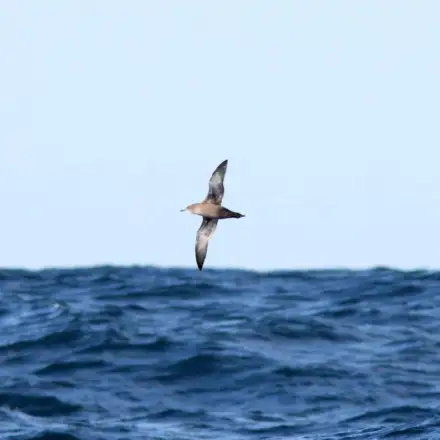
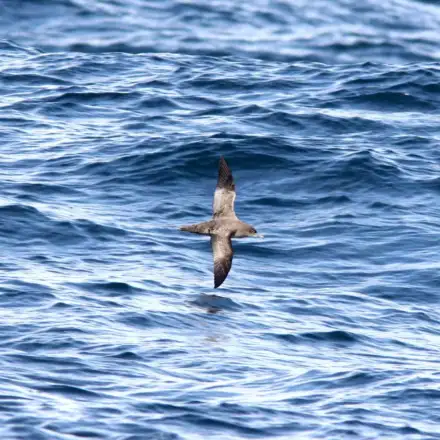
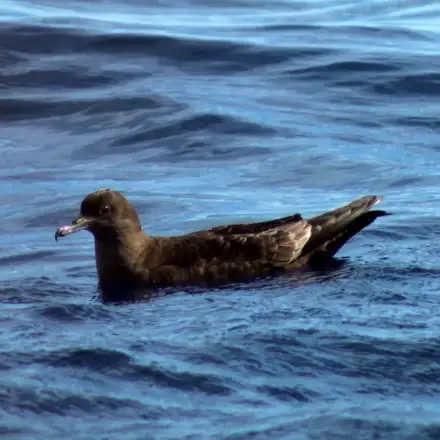
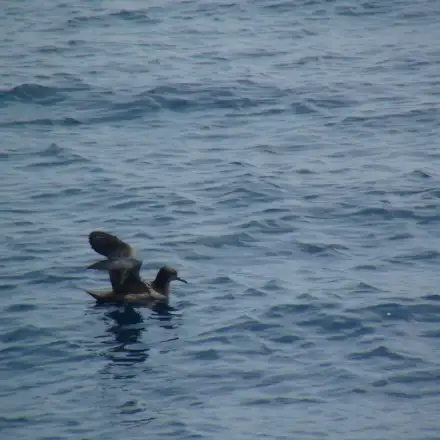
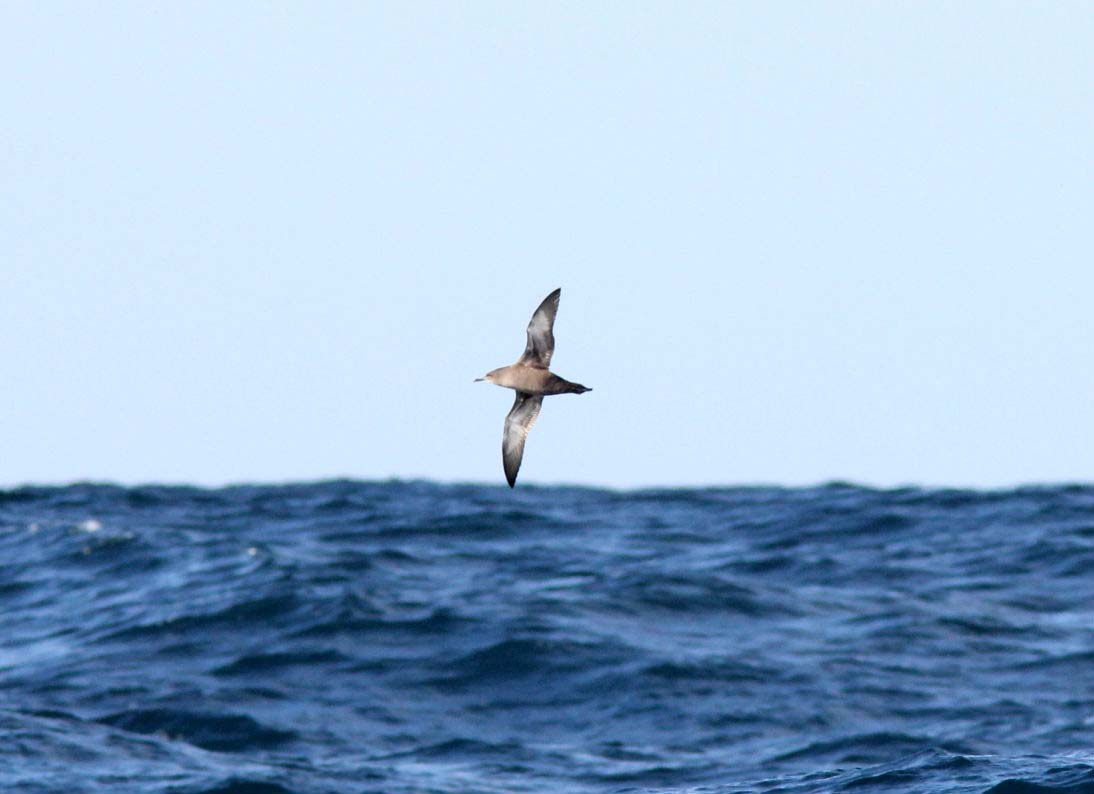
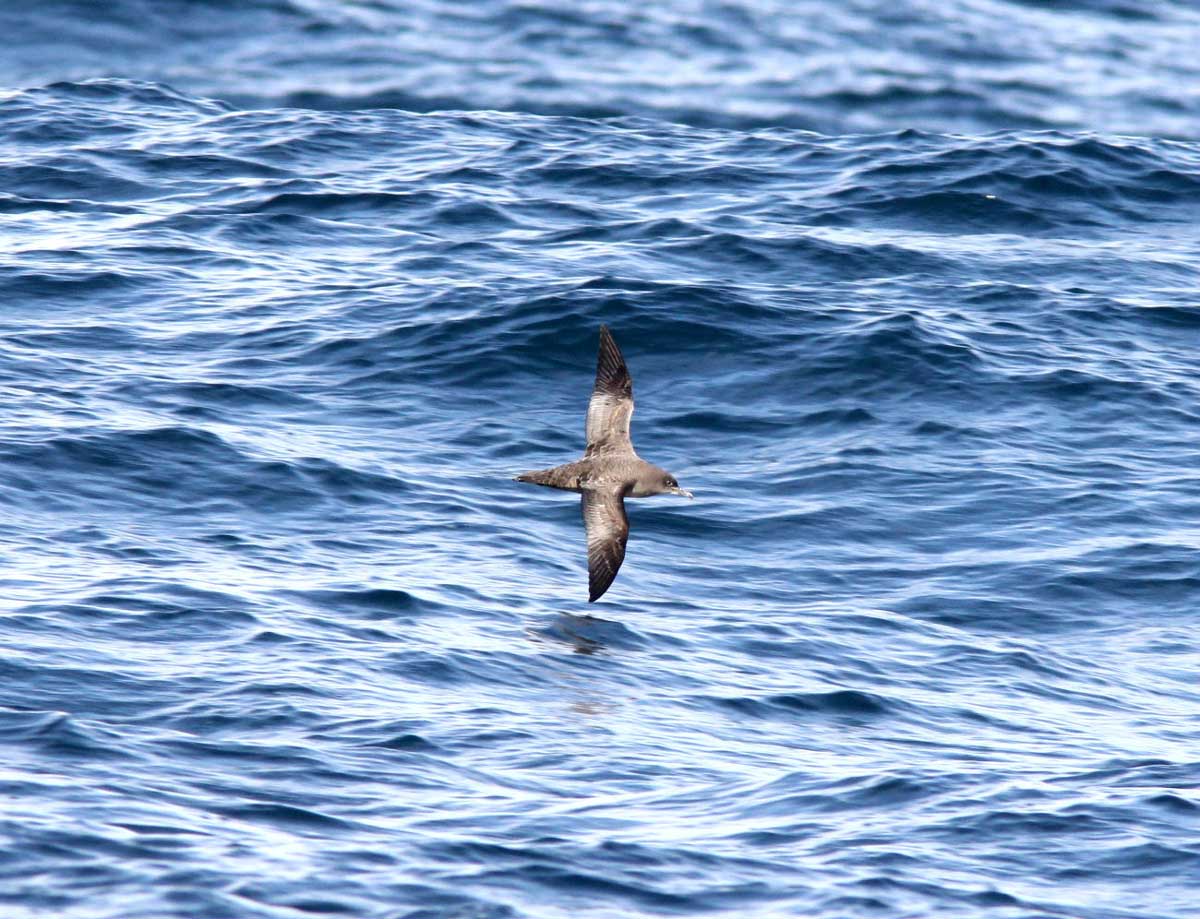
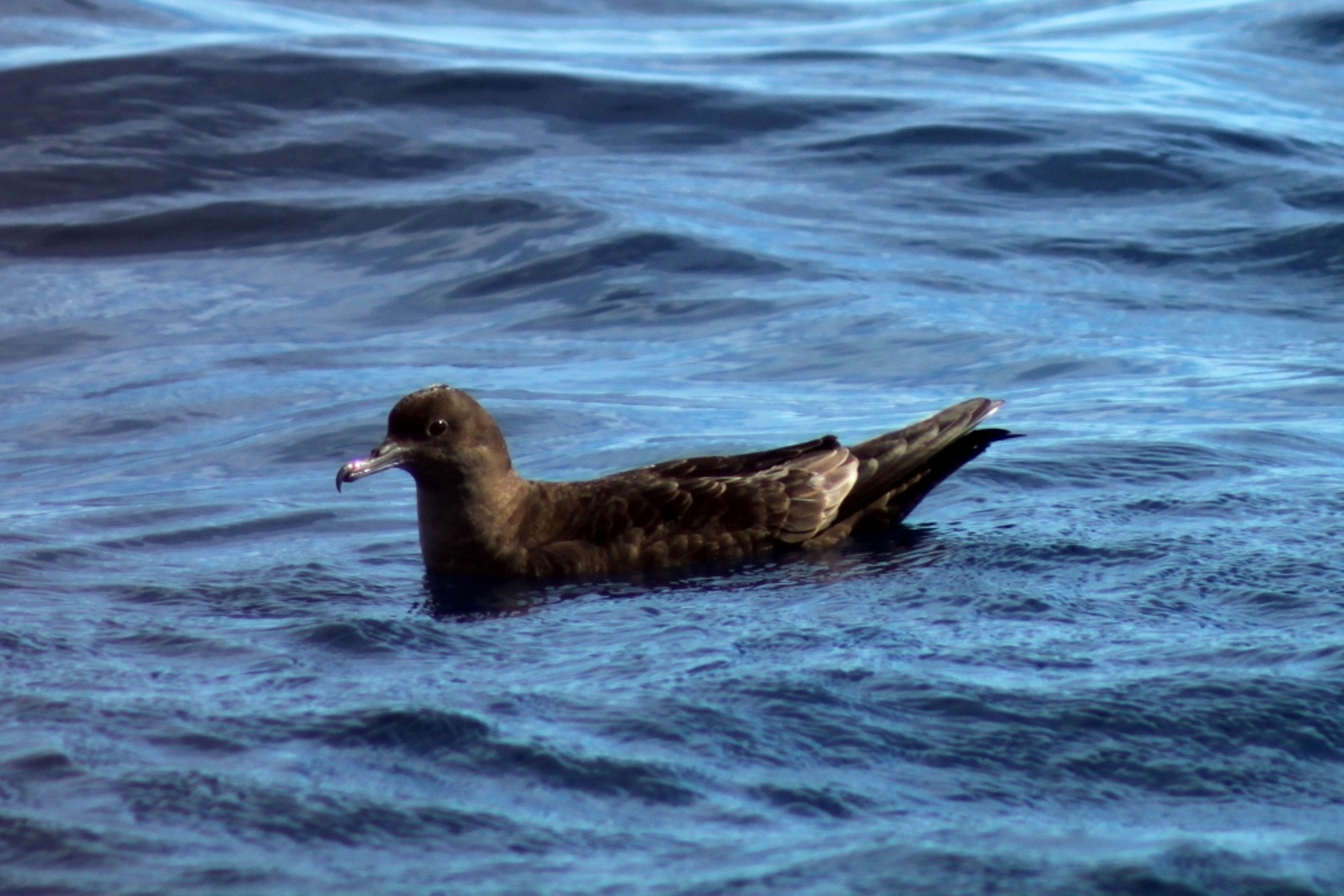
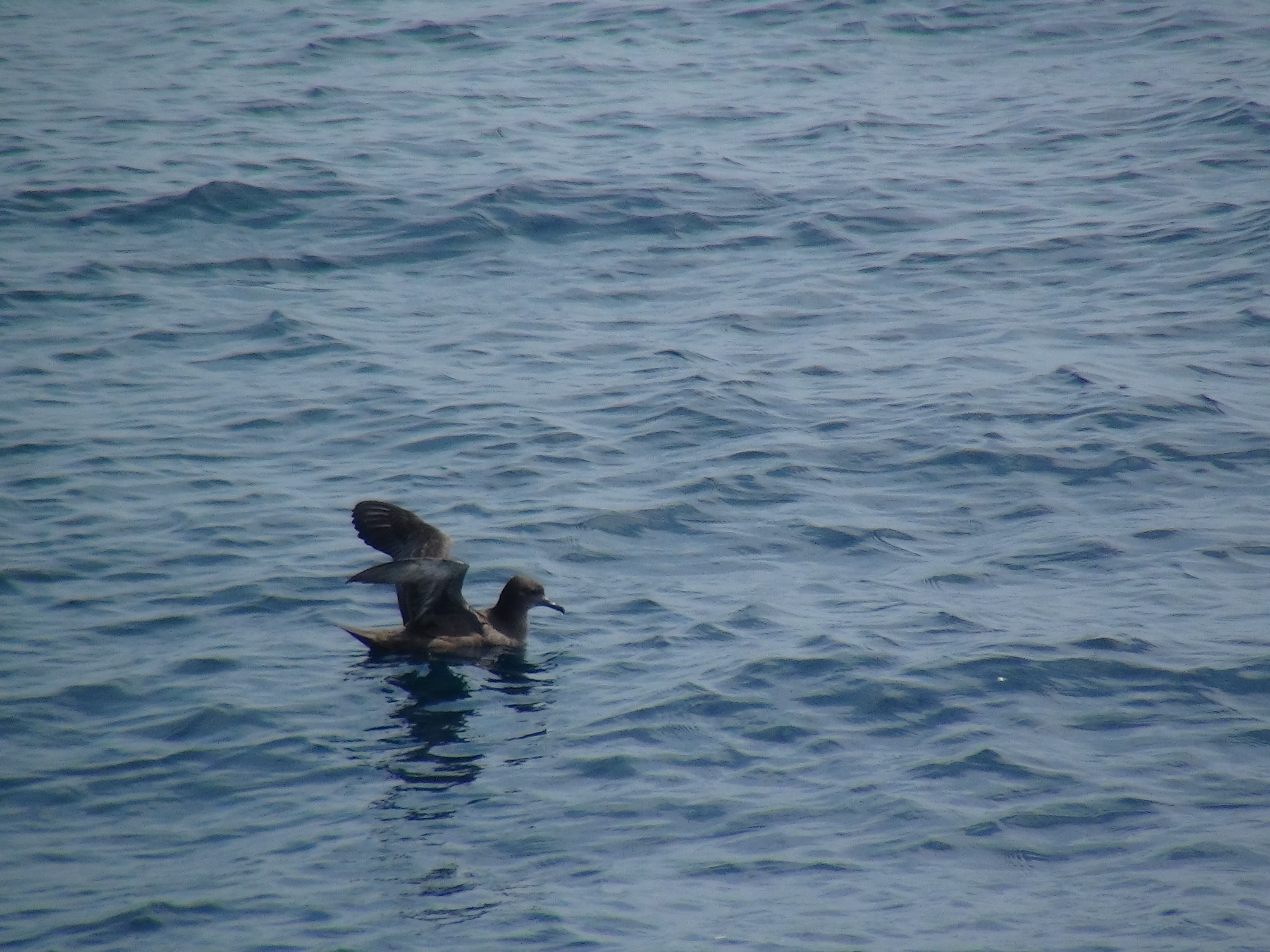
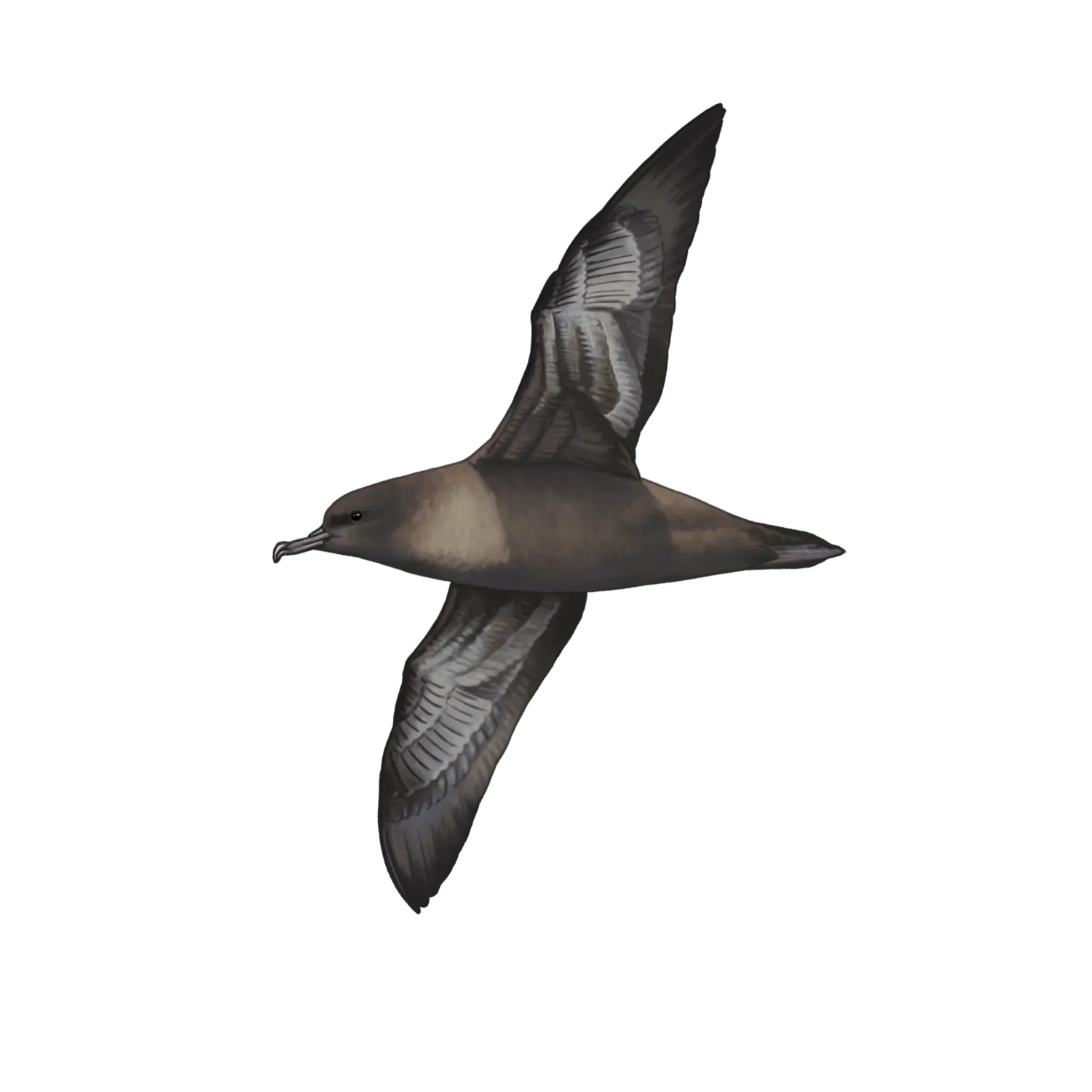
Sooty Shearwater
Scientific name: Ardenna grisea
Family procellariidae
Phenology
- Mainland
- Passage migrant
- Madeira
- Passage migrant
- Azores
- Passage migrant
Conservation status
Learn more- Mainland
- Madeira
- Azores
- IUCN Global
Data
Maps
Distribution | Breeding
Scale
Minimum value:
Maximum value:
Scale
Minimum value:
Maximum value:
Scale
Minimum value:
Maximum value:
Scale
Minimum value:>
Maximum value:<
Scale
Minimum value:
Maximum value:
Scale
Minimum value:>
Maximum value:>
Distribution based on seabird tracking data (locations/hexagone).
Colony(ies) of origin:
Device:
Data period / number of individuals:
Data period / number of individuals:
Distribution of seabird breeding colonies or sites (number of breeding pairs).
Distribution based on marine censuses (probability of occurrence).
Observed density based on marine censuses (birds/ km2).
Confirmed occurence during marines censuses.
Abundance of waders derived from Project Arenaria coastal surveys (birds/square).
Passage rates derived from RAM coastal surveys (birds/hour).
No data available for the selected period.
Presentation
Distribution, movements and phenology
The Sooty Shearwater breeds between October and April on islands off the coasts of New Zealand, Australia, and Chile, as well as in the Falkland Islands (BirdLife International 2025). After the breeding season, the species embarks on one of the largest known mass migrations. It heads north to spend the wintering period at the far reaches of the Pacific and Atlantic Oceans, respectively (Hedd et al. 2012). The species is regularly observed in Portuguese waters between spring and autumn (Meirinho et al. 2014), with particular importance during the pre-breeding migration (Catry et al. 2010a). Data from 29 birds fitted with GLS in 2008 and 2017 in the Falklands confirm that the species remains in the Portuguese EEZ throughout the non-breeding period, from May to November. This pattern is particularly evident in the Azores, where the species has a fairly wide distribution, but with a higher concentration in the western half. In Mainland waters, the distribution appears to be less extensive, centring mainly on the continental shelf and slope. This pattern appears to be similar to that found in the waters of Madeira.
Abundance and population trends
The global population has been estimated at 4,400,000 breeding pairs, with a declining trend (BirdLife International 2025). This decline has been observed over recent decades, particularly in North America and New Zealand. In Mainland Portugal, the species has shown fluctuations in abundance, with figures ranging from 0 to 0.03 birds/km². Despite the lack of more concrete estimates, this population appears to be in Good Environmental Status for the abundance indicator. There is no up-to-date information on abundance or population trends for the Azores and Madeira.
Ecology and habitat
During its wintering period, the Sooty Shearwater shows a preference for the waters of the continental shelf and slope, using deep-sea areas less frequently. During its migrations, however, it appears to prefer the latter. It feeds on small fish, cephalopods, and crustaceans, often joining other seabirds in veritable feeding frenzies (Billerman et al. 2026). It is common for them to approach fishing vessels in large numbers, particularly trawlers and longliners.
Threats and conservation
At sea, bycatch in longlines, trawls, and gillnets is one of the main threats to the species (Uhlmann 2003), although there is no evidence of this occurring in Portugal. The species is also susceptible to prey depletion due to overfishing and climate change (Hyrenbach & Veit 2003; Uhlmann 2003). On land, the main threats relate to predation by introduced mammals and the capture of juveniles for human consumption, with the latter being a commercial and legally established activity in New Zealand (Billerman et al. 2026). Conservation priorities have focused on the legal designation of nesting areas, the eradication of introduced predators, and the use of mitigation measures to reduce bycatch (BirdLife International 2025).
- Autor
Inês Lacerda
- Owners/sources of tracking data
Uhlmann S (2003). Fisheries bycatch mortalities of sooty shearwaters (Puffinus griseus) and short-tailed shearwaters (P. tenuirostris). DOC Science Internal Series 92, Department of Conservation, New Zealand. Bibliography:
Meirinho A, Barros N, Oliveira N, Catry P, Lecoq M, Paiva V, Geraldes P, Granadeiro JP, Ramírez I & Andrade J (2014). Atlas das Aves Marinhas de Portugal. Sociedade Portuguesa para o Estudo das Aves. Bibliography:
Hyrenbach KD & Veit RR (2003). Ocean warming and seabird communities of the southern Californian current system (1987–98): response at multiple temporal scales. Deep-sea Research. Part II, Topical Studies in Oceanography 50: 2537–2565. Bibliography:
Hedd A, Montevecchi W, Otley H, Phillips R & Fifield D (2012). Trans-equatorial migration and habitat use by sooty shearwaters Puffinus griseus from the South Atlantic during the nonbreeding season. Marine Ecology Progress Series 449: 277–290. Bibliography:
BirdLife International (2025). IUCN Red List for birds. Downloaded from https://datazone.birdlife.org on 30.11.2025. Bibliography:
Billerman SM, Keeney BL, Kirwan GM, Medrano F, Sly ND & Smith MG (eds.) (2026). Birds of the World. Cornell Laboratory of Ornithology, Ithaca, NY, USA. Bibliography:
Catry P, Costa H, Elias G & Matias R (2010a). Aves de Portugal, Ornitologia do Território Continental. Assírio e Alvim, Lisboa Data:
Wakefield E (2018a). Dataset 1587: Sooty Shearwater, Ardenna grisea, Geolocator (GLS), Kidney Island, Falkland Islands (Islas Malvinas), Falkland Islands (Malvinas), 2017–2018. BirdLife International Seabird Tracking Database. Downloaded from https://data.seabirdtracking.org/dataset/1587/ on 30.11.2025. Data:
Ronconi P & Westgate A (2009). Dataset 656: Sooty Shearwater, Ardenna grisea, PTT, At-Sea, Gough, At-Sea, High Seas, 2007–2009. BirdLife International Seabird Tracking Database. Downloaded from https://data.seabirdtracking.org/dataset/656/ on 30.11.2025. Glossary:
A group of marine arthropods that are important in the marine food chain. Glossary:
A group of marine molluscs that includes squids, cuttlefish and octopuses. Glossary:
Complete removal of an invasive species from a specific area. Glossary:
Persistent changes in global or regional climate patterns, influenced by natural and anthropogenic factors. Glossary:
Actions designed to reduce or minimise negative impacts on species or ecosystems. Glossary:
A species or parameter that reflects the state of an ecosystem or environmental changes. Glossary:
The direction of change in the size of a population over time (increase, decline or stability). Glossary:
A concept defined under the Marine Strategy Framework Directive (MSFD), referring to the condition of the elements of the marine environment, including birds. It aims to assess whether ecosystems are healthy, balanced and capable of supporting ecological functions and human uses in a sustainable manner. The ultimate goal is for the components and ecosystems to achieve Good Environmental Status. Glossary:
Refers to the unintentional capture of marine species during fishing. Animals may become entangled in hooks or fishing nets. It is usually associated with commercial fishing, but can also occur in recreational fishing. Bycatch is one of the main threats to seabirds at sea. Glossary:
Under the United Nations Convention on the Law of the Sea, coastal states are entitled to declare an EEZ comprising maritime area beyond their territorial waters. The national EEZ is delimited by an imaginary line situated 200 nautical miles from the coast, separating national waters from international or shared waters. Within its EEZ, each state has rights such as the exploitation of marine resources, the conduct of scientific research and the regulation of fishing by foreign vessels. Glossary:
A portion of the seabed with a very steep gradient lying between the continental shelf and the continental margin, where the abyssal plains begin. Glossary:
A form of fishing in which fish stocks (or populations) are exploited to levels that are biologically and ecologically unsustainable. Overfishing of certain key species, such as sharks, can lead to the collapse of marine ecosystems. Glossary:
A static net, often nearly invisible and with variable mesh size, used to catch a wide variety of fish. It is set in the sea at varying depths and later retrieved. It is a non-selective fishing gear that frequently catches seabirds, marine mammals and reptiles. Glossary:
Referring to the period preceding breeding. Glossary:
The portion of the seabed that begins at the coastline and slopes gently downwards to the continental slope (where the slope is much steeper). On average, the continental shelf extends to a depth of 200 metres. Glossary:
A fishing gear consisting of a main line (mother line) from which secondary lines with hooks attached branch off. It is left in the sea and can be placed on the seabed to catch deep-sea species (e.g. scabbardfish) or at the surface to catch large pelagic fish (e.g. swordfish). Glossary:
A period generally corresponding to the winter months, which may include part of autumn. Glossary:
A small device attached to birds to study their large-scale movements (usually migration), which works by recording light intensity (from which the duration of night and the local midday time are estimated, and consequently the latitude and longitude on each day). Glossary:
A term generally applied to a species introduced deliberately or accidentally into a specific location or region outside its original range. Depending on its adaptation to the new environment, an introduced species may or may not become naturalised and proliferate.