Sooty Tern
Scientific name: Onychoprion fuscatus
Family laridae
Phenology
- Mainland
- Vagrant
- Madeira
- Vagrant
- Azores
- Summer breeder
Conservation status
Learn more- Mainland
- Madeira
- Azores
- IUCN Global
Data
Maps
Colonies | Breeding
Scale
Minimum value:
Maximum value:
Scale
Minimum value:
Maximum value:
Scale
Minimum value:
Maximum value:
Scale
Minimum value:>
Maximum value:<
Scale
Minimum value:
Maximum value:
Scale
Minimum value:>
Maximum value:>
Distribution based on seabird tracking data (locations/hexagone).
Colony(ies) of origin:
Device:
Data period / number of individuals:
Data period / number of individuals:
Distribution of seabird breeding colonies or sites (number of breeding pairs).
Distribution based on marine censuses (probability of occurrence).
Observed density based on marine censuses (birds/ km2).
Confirmed occurence during marines censuses.
Abundance of waders derived from Project Arenaria coastal surveys (birds/square).
Passage rates derived from RAM coastal surveys (birds/hour).
No data available for the selected period.
Presentation
Distribution, movements and phenology
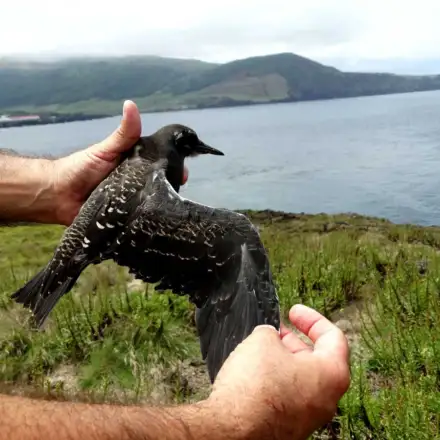
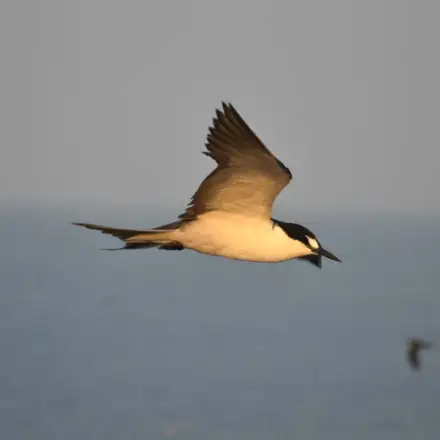
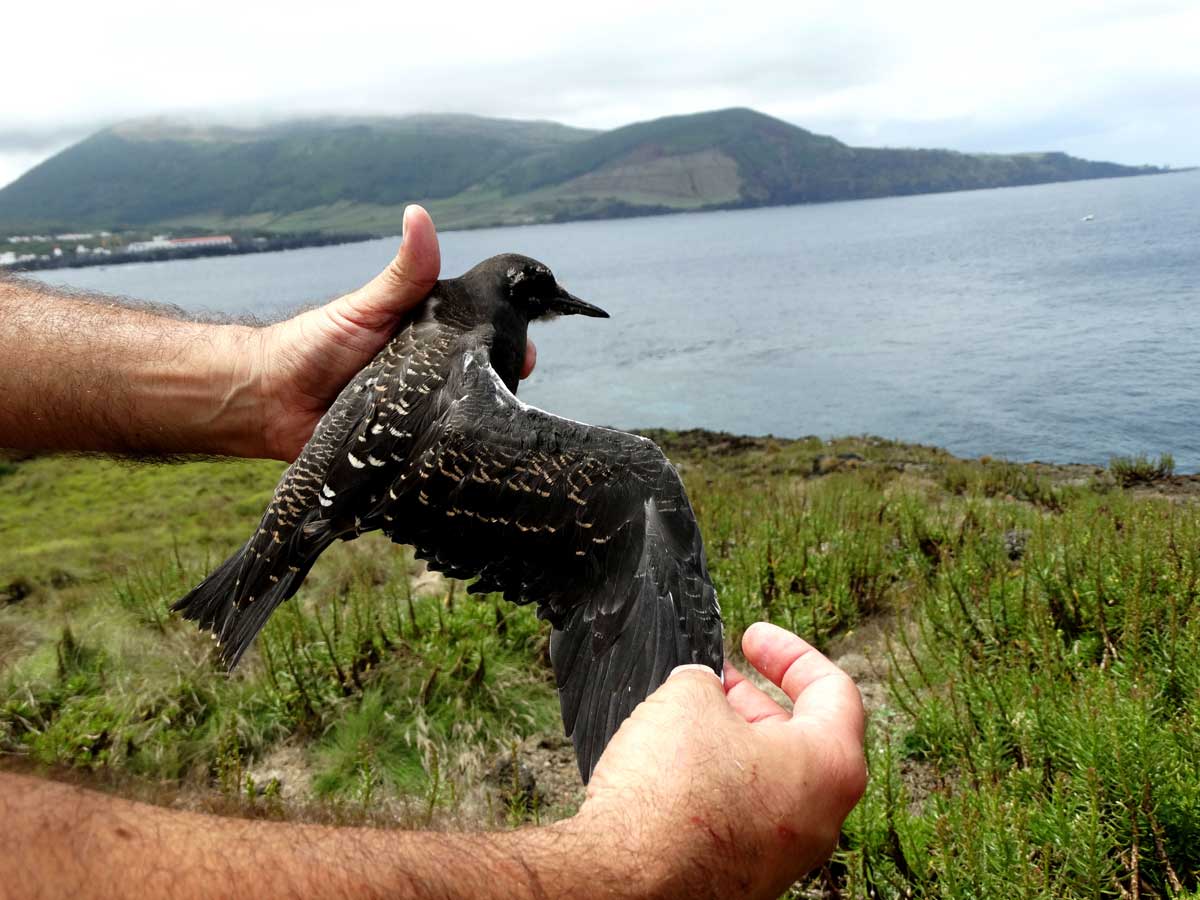
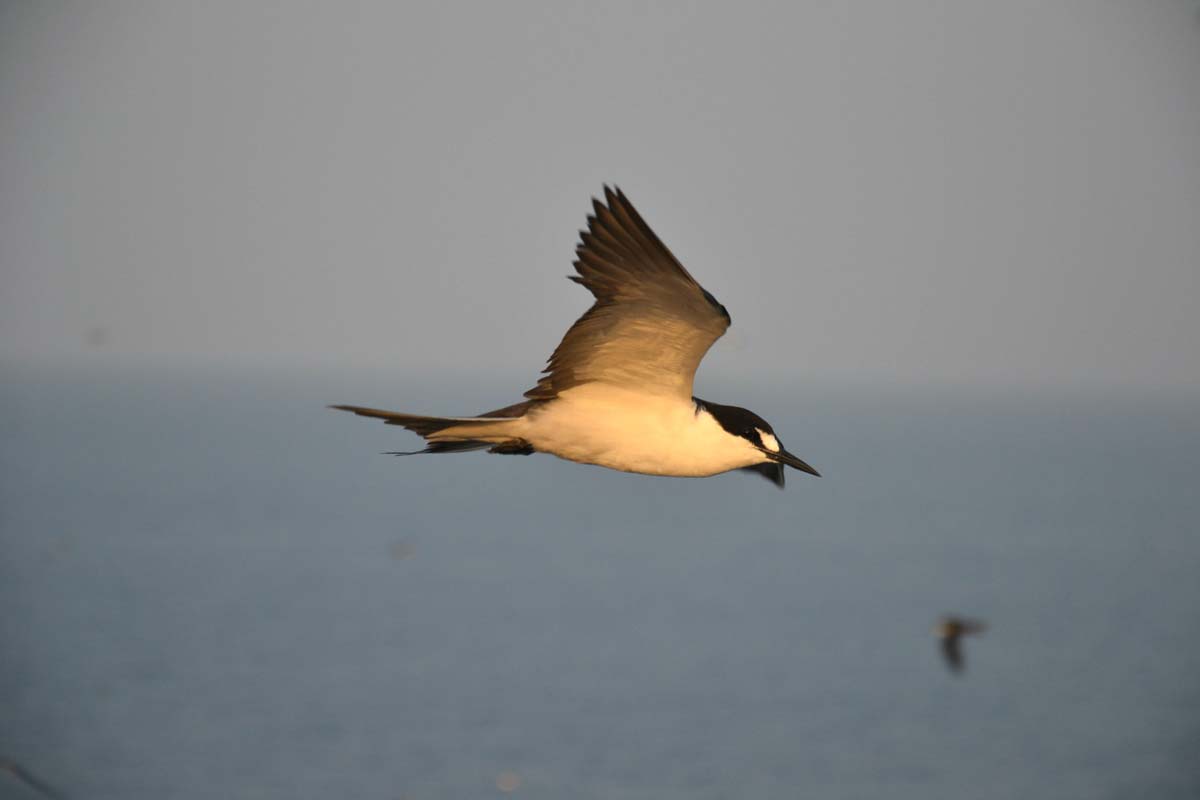
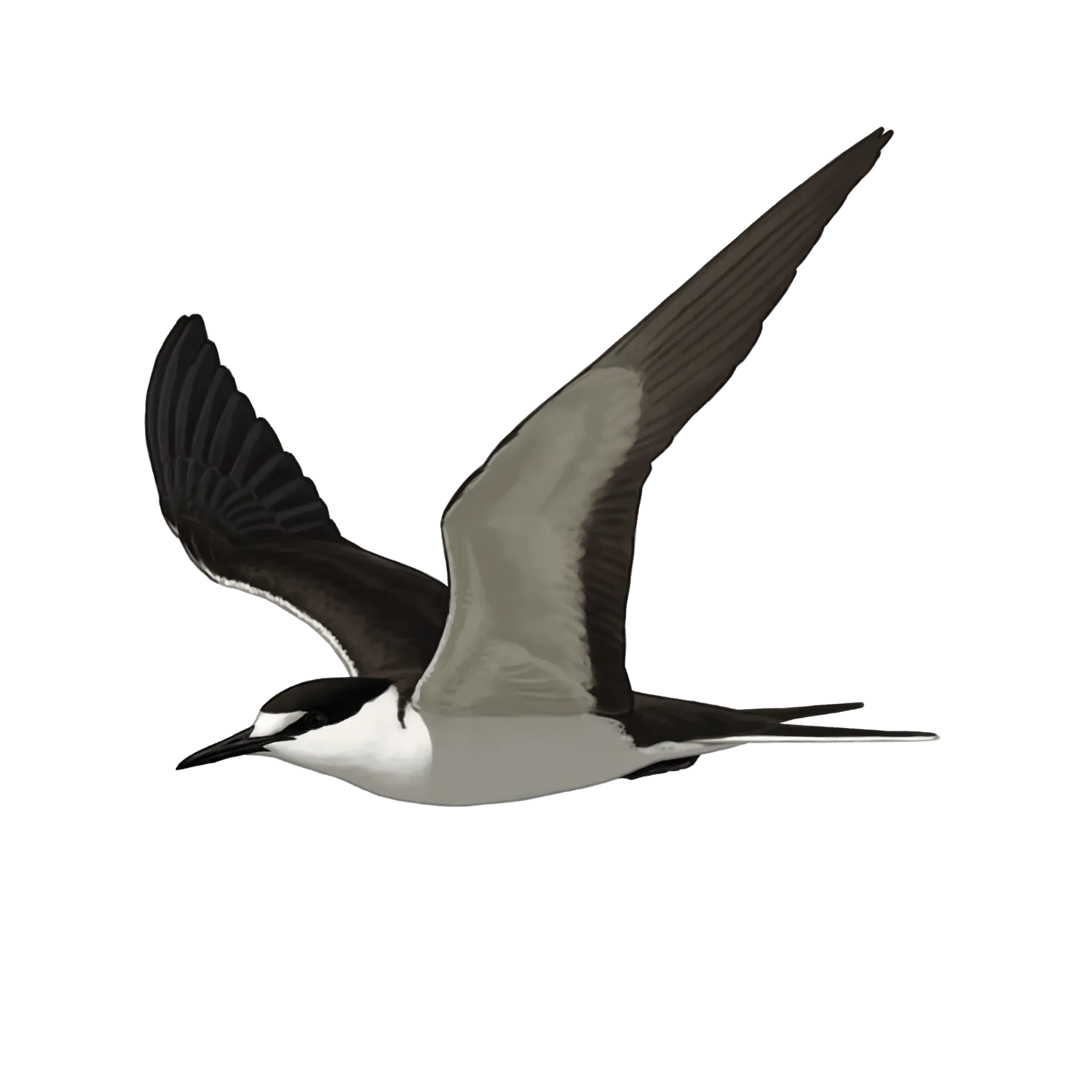
The Sooty Tern breeds on most of the tropical and subtropical islands across all the oceans (Billerman et al. 2026). In the Western Palearctic, regular breeding of the species occurs only in the Azores, between April and September, on the islets of Praia (Graciosa) and Vila (Santa Maria) (Equipa Atlas 2022). The species has been observed on other islands in the Azores, such as Graciosa, São Miguel, São Jorge and Faial, although there is no evidence of breeding. In Madeira, records are scarce and are mainly concentrated on the Selvagens and Deserta Grande islands, with no recent evidence of breeding either, although it was confirmed on Selvagem Pequena in 1982 (Roux 1983; Meirinho et al. 2014). On the Mainland, it is a rare species, with only two records formally accepted by the Portuguese Rarities Committee (Robb et al. 2025). It has not been possible to obtain individual tracking data demonstrating use of the Portuguese EEZ.
Abundance and population trends
The global population is estimated at around 23 million mature individuals, with an unknown population trend (BirdLife International 2025). The presence of the Sooty Tern in the Azores has been known since 1902 (Hartert & Ogilvie-Grant 1905), with the first monitoring of the breeding population beginning in the 1990s. It has bred more or less regularly on Praia Islet since 2004, with interannual variations between one and two pairs, the most recent record, in 2025, corresponding to two pairs. One pair also bred on Vila Islet between 1990 and 2006, with no further breeding records since then. Despite the very small population size and highly localised breeding, the Azores population has achieved Good Environmental Status for the abundance indicator.
Ecology and habitat
The Sooty Tern nests on the ground, on a substrate of sand, rock or sparse vegetation, usually in flat areas. In the Azores, it nests in mixed colonies of Common Sterna hirundo and Roseate Terns Sterna dougallii. Outside the breeding season, it is highly pelagic. Its diet consists mainly of small fish and squid, and it may occasionally feed on crustaceans, insects and fishing discards (Billerman et al. 2026). It may also associate with large predatory fish that drive prey to the surface (Higgins & Davies 1996).
Threats and conservation
The main threat in breeding areas is predation and disturbance caused by invasive species, notably rats and cats (BirdLife International 2025). At sea, variations in sea surface temperature reduce success in capturing prey, which may impact breeding success (Erwin & Congdon 2007). In Portugal, the introduction of predators into breeding areas poses a risk if there is no monitoring and regular biosecurity measures, a situation exacerbated by human disturbance and predation by other native birds (Meirinho et al. 2003a; Meirinho et al. 2003b).
- Autor
Tânia Nascimento
- Owners/sources of tracking data
NA
Roux F (1983). Présence et reproduction de Laridés nouveaux aux îles Salvages. L’Oiseau et la R.F.O. 53: 291-292. Bibliography:
Robb M, Alfrey P, Alves P, Cardoso H, Crochet PA, Fagerström V, Fernandes P, Nicolau P, Ramalho P & Valkenburg T (2025). Aves de ocorrência rara ou acidental em Portugal. Relatório do Comité Português de Raridades referente ao ano de 2023. Anuário Ornitológico 17: 3-37. Bibliography:
Meirinho A, Pitta Groz M, Silva AG & Bolton M (2003b). Proposta de Plano de Gestão da Zona de Protecção Especial Ilhéu da Vila. Departamento de Oceanografia e Pescas da Universidade dos Açores, Horta. Bibliography:
Meirinho A, Pitta Groz M & Silva AG (2003a). Proposta de Plano de Gestão da Zona de Protecção Especial Ilhéu da Praia. Departamento de Oceanografia e Pescas da Universidade dos Açores, Horta. Bibliography:
Meirinho A, Barros N, Oliveira N, Catry P, Lecoq M, Paiva V, Geraldes P, Granadeiro JP, Ramírez I & Andrade J (2014). Atlas das Aves Marinhas de Portugal. Sociedade Portuguesa para o Estudo das Aves. Bibliography:
Hartert E & Ogilvie-Grant WR (1905). On the birds of the Azores. Novitates Zoologicae XII: 80-128. Bibliography:
Erwin CA & Congdon BC (2007). Day-to-day variation in sea-surface temperature reduces sooty tern Sterna fuscata foraging success on the Great Barrier Reef, Australia. Marine Ecology Progress Series 331: 255-266. Bibliography:
Equipa Atlas (2022). III Atlas das Aves Nidificantes de Portugal (2016-2021). SPEA, ICNF, LabOr/UÉ, IFCN. Portugal. Bibliography:
BirdLife International (2025). IUCN Red List for birds. Downloaded from https://datazone.birdlife.org on 30.11.2025. Bibliography:
Billerman SM, Keeney BL, Kirwan GM, Medrano F, Sly ND & Smith MG (eds.) (2026). Birds of the World. Cornell Laboratory of Ornithology, Ithaca, NY, USA. Glossary:
Individuals capable of breeding, used as a reference in population estimates. Glossary:
A group of marine arthropods that are important in the marine food chain. Glossary:
A species or parameter that reflects the state of an ecosystem or environmental changes. Glossary:
Monitoring the movements of individuals using tracking devices. Glossary:
The direction of change in the size of a population over time (increase, decline or stability). Glossary:
A concept defined under the Marine Strategy Framework Directive (MSFD), referring to the condition of the elements of the marine environment, including birds. It aims to assess whether ecosystems are healthy, balanced and capable of supporting ecological functions and human uses in a sustainable manner. The ultimate goal is for the components and ecosystems to achieve Good Environmental Status. Glossary:
Under the United Nations Convention on the Law of the Sea, coastal states are entitled to declare an EEZ comprising maritime area beyond their territorial waters. The national EEZ is delimited by an imaginary line situated 200 nautical miles from the coast, separating national waters from international or shared waters. Within its EEZ, each state has rights such as the exploitation of marine resources, the conduct of scientific research and the regulation of fishing by foreign vessels. Glossary:
The portion of the catch taken by commercial fishing vessels that is returned to the sea, often dead or dying. Discarded fish often belong to species of no commercial value, individuals below the minimum legal landing size, or individuals whose landing is not permitted, for example due to quota restrictions. Discards may also consist of parts of the catch, namely offal and heads, which, after on-board processing, are rejected and discarded at sea. Discards have a strong impact on marine ecosystems and influence many aspects of the distribution, foraging behaviour and population dynamics of seabirds, particularly species and individuals that habitually follow vessels. Glossary:
The area or environment where organisms that do not depend on the seafloor normally live. It is the typical ecological environment of open ocean waters. The pelagic ecosystem does not include only the open sea; it also comprises the waters covering the continental shelf. The pelagic zone begins below the influence of tides and extends into the open ocean, at depths ranging from a few tens of metres to approximately 6,000 metres, and is divided into different layers. Glossary:
A term generally applied to a species introduced deliberately or accidentally into a specific location or region outside its original range. Depending on its adaptation to the new environment, an introduced species may or may not become naturalised and proliferate.