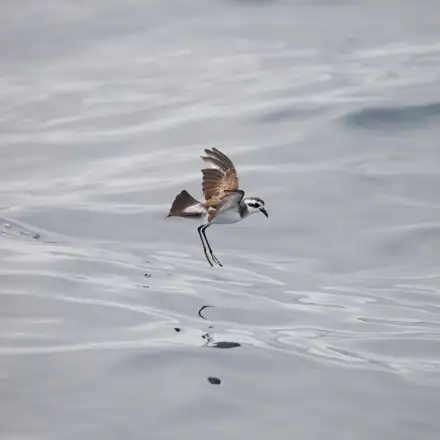
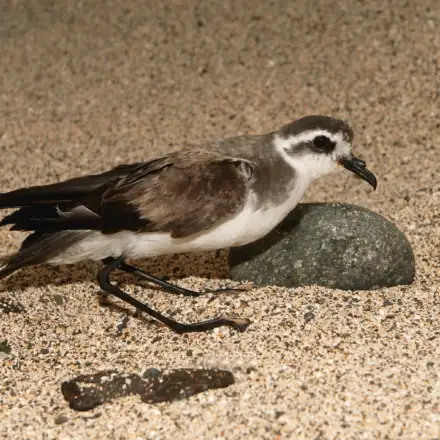
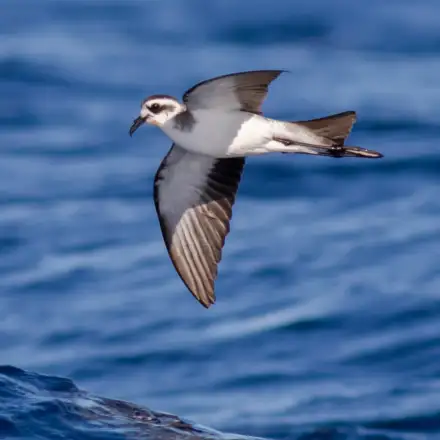
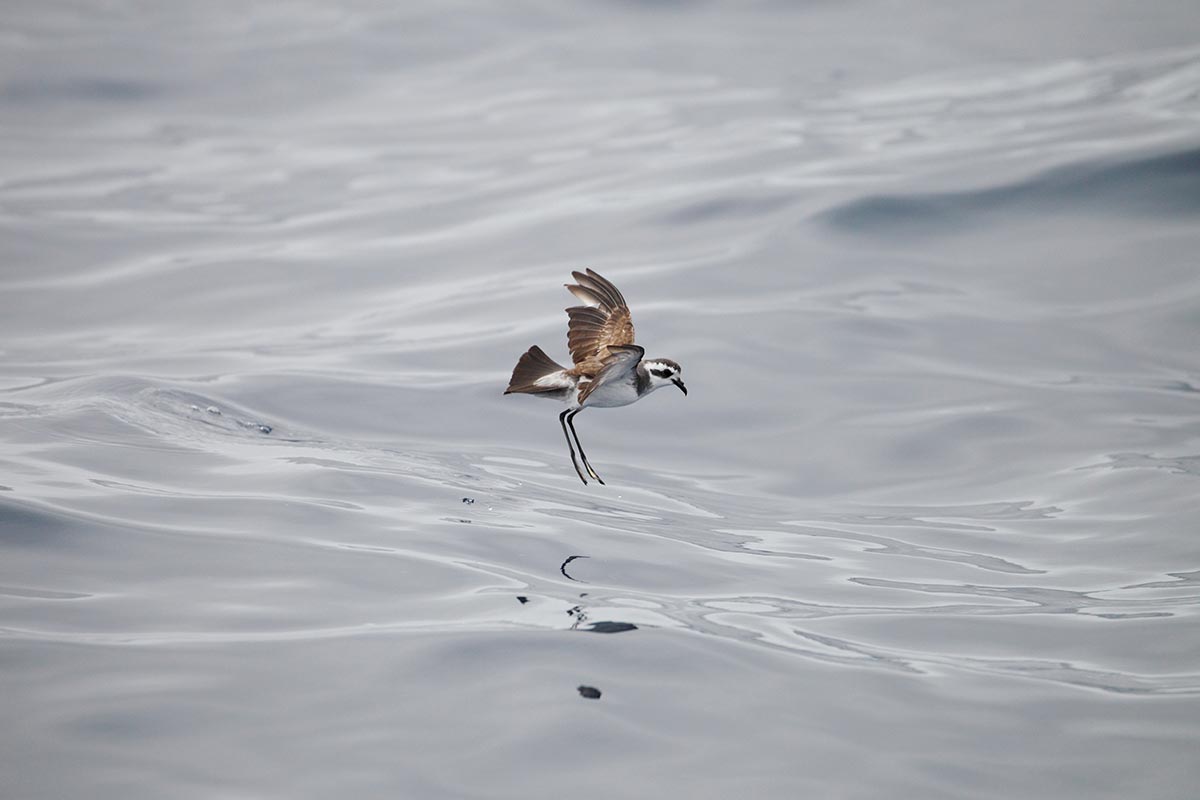
White-faced Storm-petrel
Scientific name: Pelagodroma marina
Family oceanitidae
Phenology
- Mainland
- Vagrant
- Madeira
- Summer breeder
- Azores
- Vagrant
Conservation status
Learn more- Mainland
- Madeira
- Azores
- IUCN Global
Data
Maps
Distribution | Breeding
Scale
Minimum value:
Maximum value:
Scale
Minimum value:
Maximum value:
Scale
Minimum value:
Maximum value:
Scale
Minimum value:>
Maximum value:<
Scale
Minimum value:
Maximum value:
Scale
Minimum value:>
Maximum value:>
Distribution based on seabird tracking data (locations/hexagone).
Colony(ies) of origin:
Device:
Data period / number of individuals:
Data period / number of individuals:
Distribution of seabird breeding colonies or sites (number of breeding pairs).
Distribution based on marine censuses (probability of occurrence).
Observed density based on marine censuses (birds/ km2).
Confirmed occurence during marines censuses.
Abundance of waders derived from Project Arenaria coastal surveys (birds/square).
Passage rates derived from RAM coastal surveys (birds/hour).
No data available for the selected period.
Presentation
Distribution, movements and phenology
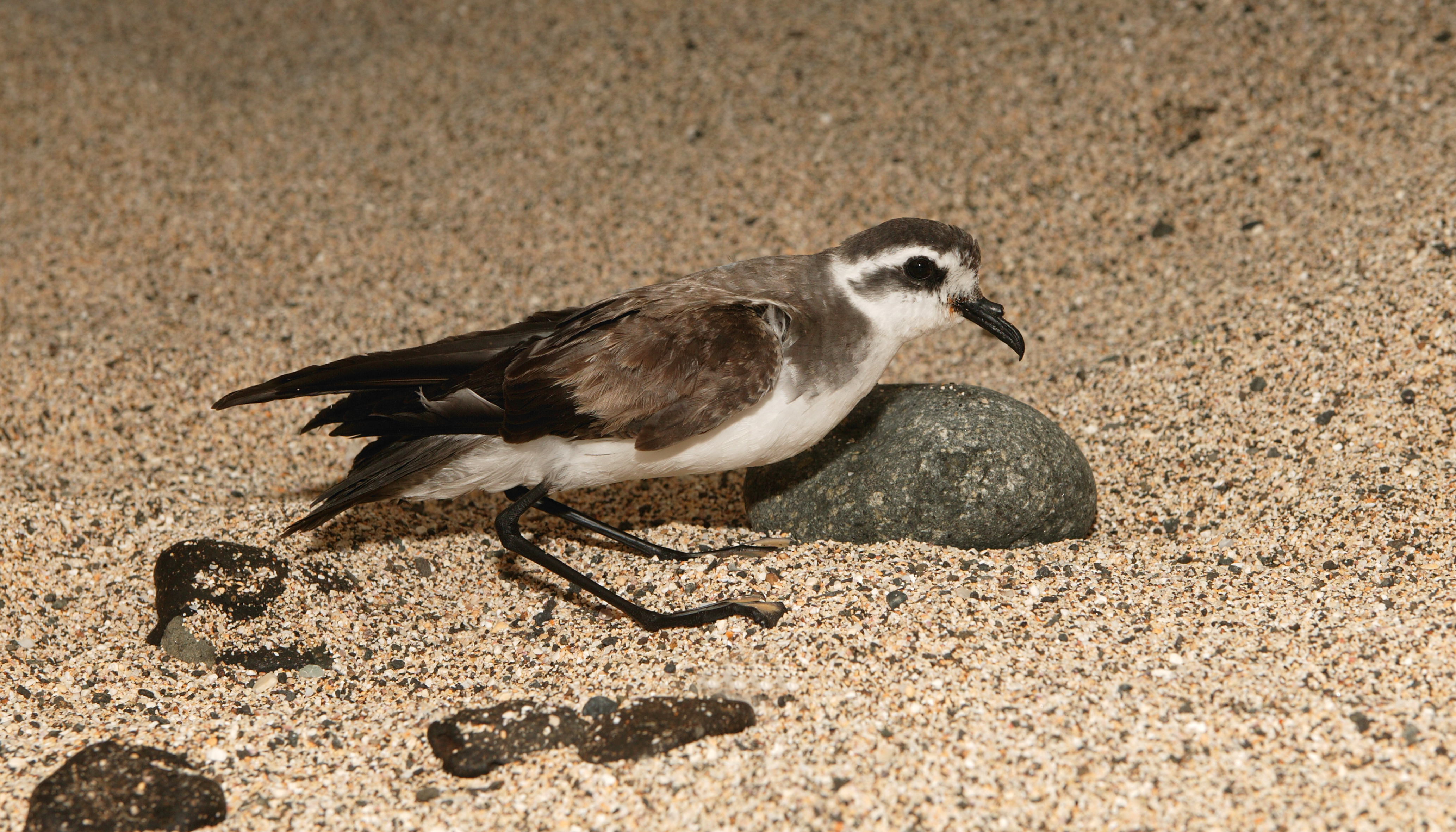
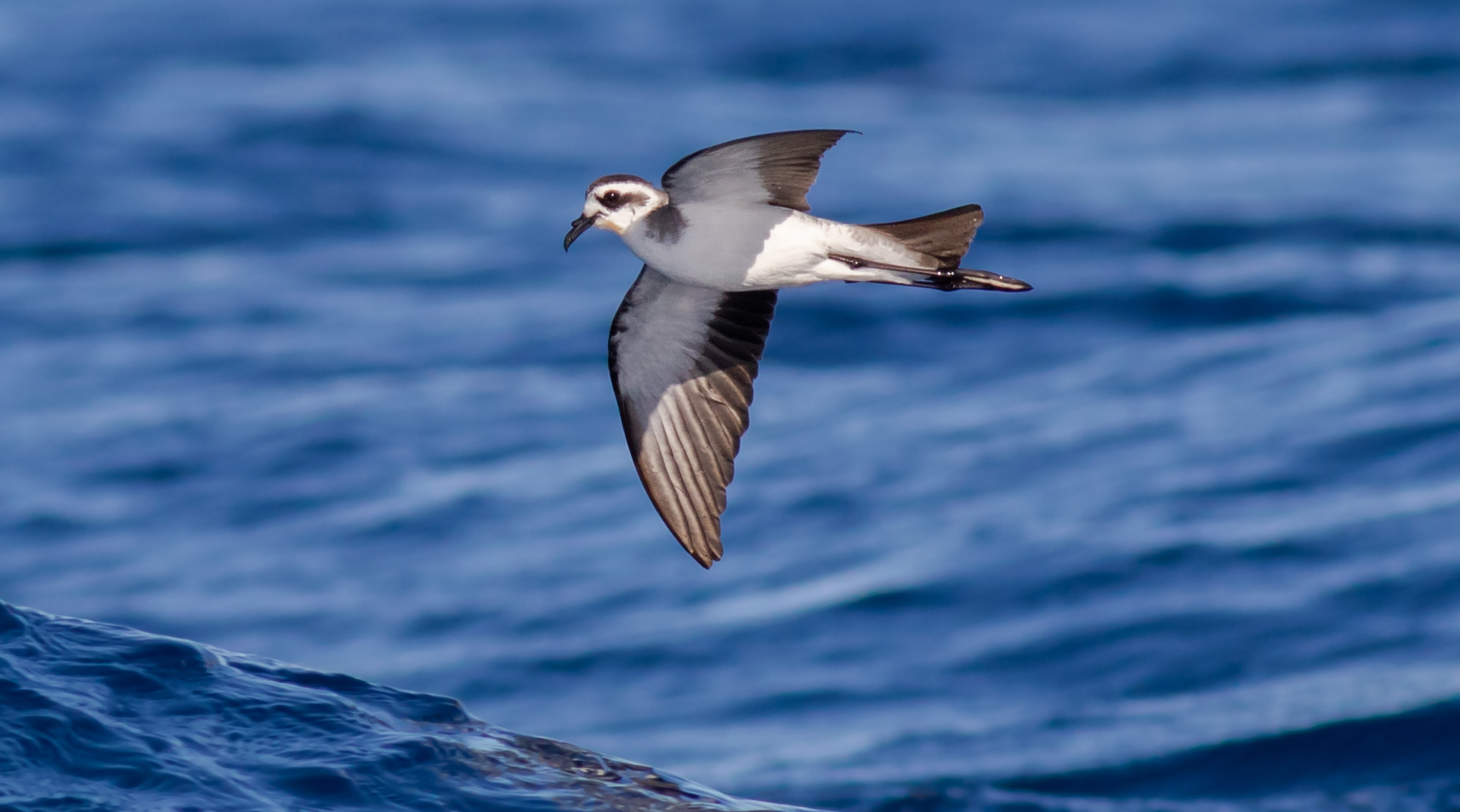
The White-faced Storm-petrel breeds along the coasts of Australia and New Zealand, and on the remote islands of Tristan da Cunha in the South Atlantic. In the North Atlantic, colonies exist in the Selvagens (Madeira, Portugal), the Canary Islands (Spain), and Cape Verde (Billerman et al. 2026). In the Selvagens archipelago, the species breeds on Selvagem Grande, Selvagem Pequena and Fora Islet. Here, breeding occurs between February and August (Campos & Granadeiro 1999). Due to the presence of the breeding population, the species is common in Madeiran waters, whilst rarely observed in the Azores and on the Mainland (Catry et al. 2010a). Individual tracking of 34 birds from Selvagem Grande fitted with GPS during the 2018 and 2019 breeding seasons confirmed the use of the Madeira sub-area, with a higher concentration in the southern and south-east zones. These birds mainly use deep ocean waters, up to around 400 km from the colony, and may also explore the African continental margin and the Canary Islands region (Alho et al. 2022). As for wintering areas, these are mainly located in the North-west Atlantic, along the Mid-Atlantic Ridge and south of the Azores (Medrano et al. 2023).
Abundance and population trends
The global population of the species is estimated at at least 4,000,000 individuals, whilst the European population, consisting mainly of the Portuguese colonies, is estimated at 77,800 to 111,000 pairs, with a declining trend (BirdLife International 2025).
The breeding population on Selvagem Pequena and Fora Islet appears to number 62,550 pairs, with the largest colony in Portugal located on Selvagem Pequena (Catry et al. 2010b). On Selvagem Grande, the only estimate dates back to 1996, when around 36,000 pairs were breeding (Campos & Granadeiro 1999). The population trend appears to be stable, although there is a considerable margin of error in the estimate of the number of breeding pairs and a lack of current figures (Catry et al. 2010b; Equipa Atlas 2022). Consequently, it has not been possible to assess the environmental status of this population in Portugal.
Ecology and habitat
The White-faced Storm-petrel is a pelagic bird, approaching land only to reach its breeding colonies. It has a highly diverse diet, consisting mainly of planktonic crustaceans, cephalopods and small epipelagic and mesopelagic fish (Alho et al. 2022; Billerman et al. 2026). Nests are dug in flat, sandy areas, usually in very dense colonies.
Threats and conservation
Globally, introduced mammals remain the main threat, due to predation on eggs, chicks and adults (Alho et al. 2021). Nest trampling by people or livestock can also cause significant impacts (Billerman et al. 2026). In Portuguese colonies, predation by house mice Mus musculus was, in the past, a major cause of breeding failure at Selvagem Grande (Campos & Granadeiro 1999), but this pressure was eliminated in 2002. However, some potential threats remain, such as the local increase in Yellow-legged Gulls Larus michahellis in nesting areas, leading to increased predation (Matias & Catry 2010), and attraction to artificial lights from vessels, leading to collisions and mortality; it is therefore important to ensure that lighting near breeding areas is minimised. Furthermore, the White-faced Storm-petrel frequently ingests floating plastic, so this marine pollution may come to affect its populations (Furtado et al. 2016).
- Autores
Paulo Catry, Maria Alho
- Owners/sources of tracking data
Medrano F, Repullés K, Militão T, Leal A & González-Solís J (2023). Migratory movements and activity patterns of White-faced Storm-petrels Pelagodroma marina Breeding in Cabo Verde. Ardeola 71(1): 101-118. Bibliography:
Furtado R, Menezes D, Santos CJ & Catry P (2016). White-faced storm-petrels Pelagodroma marina predated by gulls as biological monitors of plastic pollution in the pelagic subtropical Northeast Atlantic. Marine Pollution Bulletin 112: 117-122. Bibliography:
Equipa Atlas (2022). III Atlas das Aves Nidificantes de Portugal (2016-2021). SPEA, ICNF, LabOr/UÉ, IFCN. Portugal. Bibliography:
BirdLife International (2025). IUCN Red List for birds. Downloaded from https://datazone.birdlife.org on 30.11.2025. Bibliography:
Billerman SM, Keeney BL, Kirwan GM, Medrano F, Sly ND & Smith MG (eds.) (2026). Birds of the World. Cornell Laboratory of Ornithology, Ithaca, NY, USA. Bibliography:
Alho M, Granadeiro JP, Rando JC, Geraldes P & Catry P (2021). Characterization of an extinct seabird colony on the island of Santa Luzia (Cabo Verde) and its potential for future recolonizations. Journal of Ornithology 163: 301-313. Bibliography:
Alho M, Catry P, Silva MC, Nunes VL & Granadeiro JP (2022). Revealing the foraging movements and diet of the White-faced Storm Petrel Pelagodroma marina in the NE Atlantic. Marine Biology 169(7): 91. Bibliography:
Matias R & Catry P (2010). The diet of Atlantic yellow-legged gulls (Larus michahellis atlantis) at an oceanic seabird colony: estimating predatory impact upon breeding petrels. European Journal of Wildlife Research 56: 861-869 Bibliography:
Catry P, Geraldes P, Pio JP & Almeida A (2010b). Aves marinhas da Selvagem Pequena e do Ilhéu de Fora: censos e notas, com destaque para a dieta da gaivota-de-patas-amarelas. Airo 20: 29-35 Bibliography:
Catry P, Costa H, Elias G & Matias R (2010a). Aves de Portugal, Ornitologia do Território Continental. Assírio e Alvim, Lisboa Bibliography:
Campos A & Granadeiro JP (1999). Breeding Biology of White–faced Storm-Petrel Pelagodroma marina in Selvagem Grande Island, Noth-east Atlantic. Waterbirds 22: 199-206 Data:
Gonzalez-Solis J (2021a). Dataset 2157: White-faced Storm-petrel, Pelagodroma marina, Geolocator (GLS), Pássaros, Boa Vista, Cape Verde, 2019–2021. BirdLife International Seabird Tracking Database. Downloaded from https://data.seabirdtracking.org/dataset/2157/ on 30.11.2025. Data:
Catry P, Granadeiro JP & Alho MS (2019a). Dataset 1665: White-faced Storm-petrel, Pelagodroma marina, GPS, Selvagens, Madeira, Portugal, 2018–2019. BirdLife International Seabird Tracking Database. Downloaded from https://data.seabirdtracking.org/dataset/1665/ on 30.11.2025. Glossary:
Relating to the surface layer of the ocean (up to a depth of around 200 m), where high biological productivity occurs. Glossary:
A group of marine arthropods that are important in the marine food chain. Glossary:
A group of marine molluscs that includes squids, cuttlefish and octopuses. Glossary:
Areas where birds remain outside the breeding season, generally associated with favourable conditions for feeding and survival. Glossary:
Monitoring the movements of individuals using tracking devices. Glossary:
The direction of change in the size of a population over time (increase, decline or stability). Glossary:
A concept defined under the Marine Strategy Framework Directive (MSFD), referring to the condition of the elements of the marine environment, including birds. It aims to assess whether ecosystems are healthy, balanced and capable of supporting ecological functions and human uses in a sustainable manner. The ultimate goal is for the components and ecosystems to achieve Good Environmental Status. Glossary:
A small device attached to birds to study their movements at a finer scale (usually during the breeding season). These devices use the Global Positioning System (GPS) to obtain information on position, latitude, longitude and altitude at any point on Earth, using a network of orbiting satellites. Glossary:
Waters situated away from the coast, beyond the continental shelf. It is used in matters relating to maritime activities, such as fishing, the oil industry and the exploitation of renewable energy. These waters are characterised by being located in the open sea, at great depths and far from coastal influences such as rivers and estuaries. They are thus distinguished from coastal waters. Glossary:
The area or environment where organisms that do not depend on the seafloor normally live. It is the typical ecological environment of open ocean waters. The pelagic ecosystem does not include only the open sea; it also comprises the waters covering the continental shelf. The pelagic zone begins below the influence of tides and extends into the open ocean, at depths ranging from a few tens of metres to approximately 6,000 metres, and is divided into different layers. Glossary:
A marine organism living in the water column generally between 200 and 1,000 metres in depth. Glossary:
A term generally applied to a species introduced deliberately or accidentally into a specific location or region outside its original range. Depending on its adaptation to the new environment, an introduced species may or may not become naturalised and proliferate.