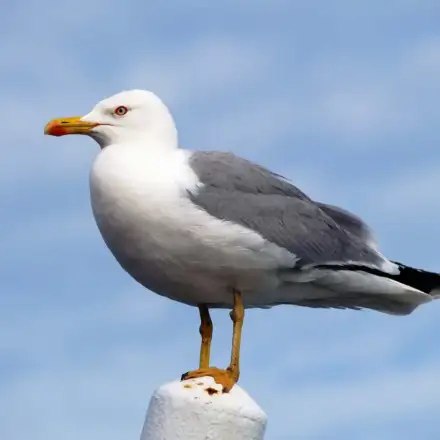
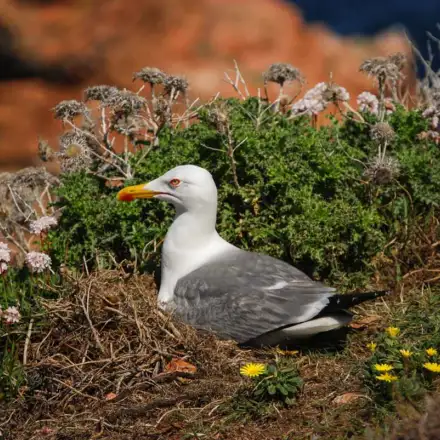
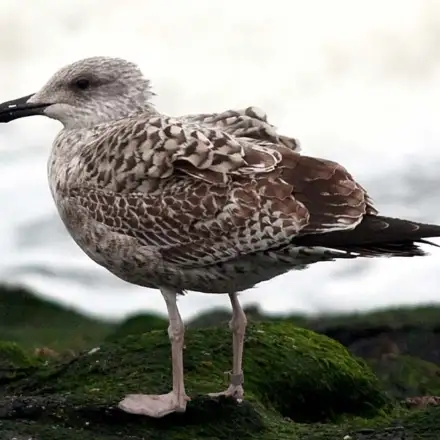
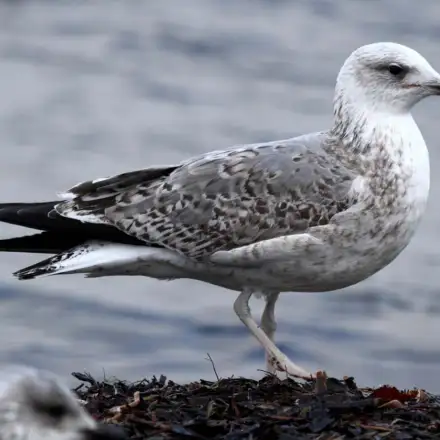
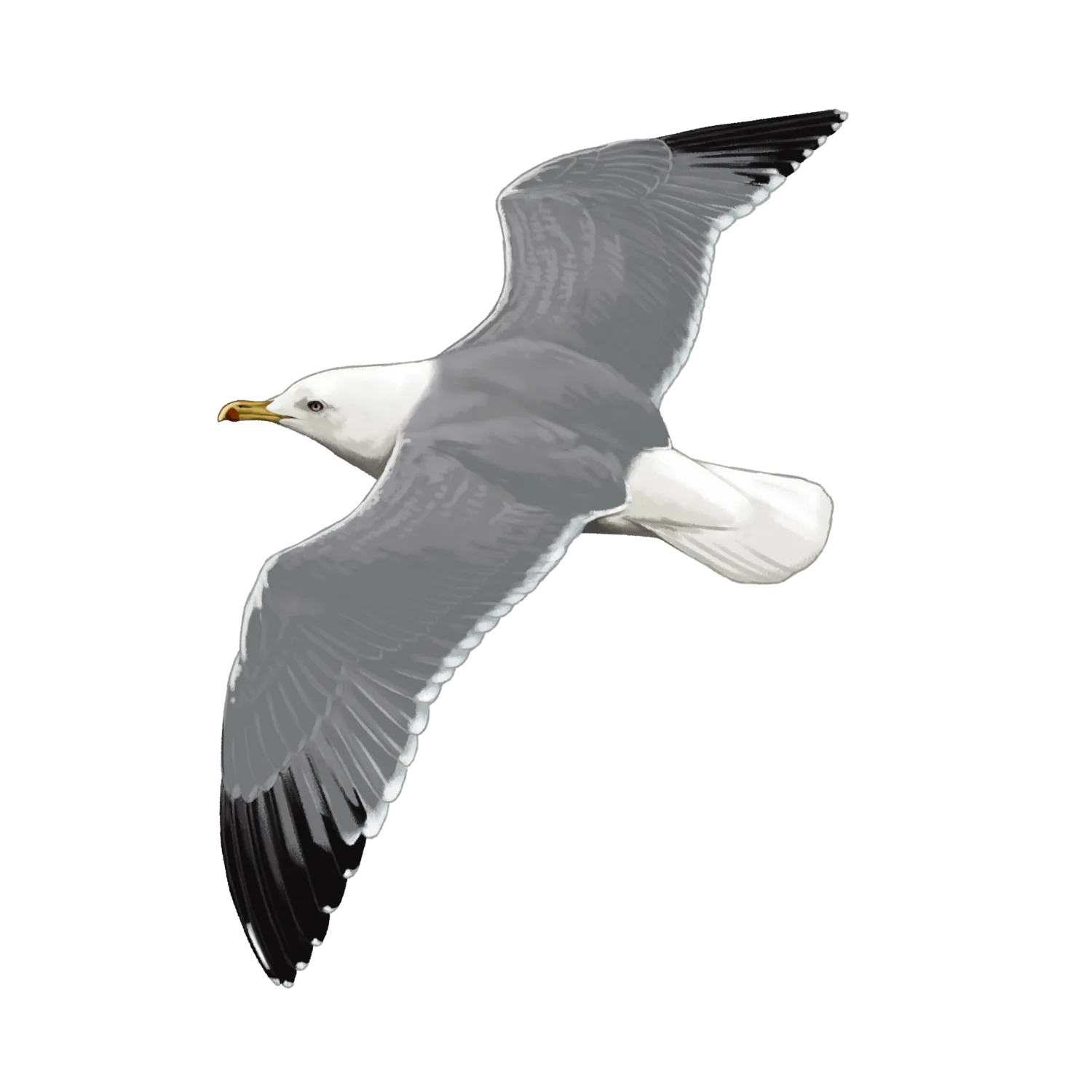
Yellow-legged Gull
Scientific name: Larus michahellis
Family laridae
Phenology
- Mainland
- Resident
- Madeira
- Resident
- Azores
- Resident
Conservation status
Learn more- Mainland
- Madeira
- Azores
- IUCN Global
Data
Maps
Distribution | Breeding
Scale
Minimum value:
Maximum value:
Scale
Minimum value:
Maximum value:
Scale
Minimum value:
Maximum value:
Scale
Minimum value:>
Maximum value:<
Scale
Minimum value:
Maximum value:
Scale
Minimum value:>
Maximum value:>
Distribution based on seabird tracking data (locations/hexagone).
Colony(ies) of origin:
Device:
Data period / number of individuals:
Data period / number of individuals:
Distribution of seabird breeding colonies or sites (number of breeding pairs).
Distribution based on marine censuses (probability of occurrence).
Observed density based on marine censuses (birds/ km2).
Confirmed occurence during marines censuses.
Abundance of waders derived from Project Arenaria coastal surveys (birds/square).
Passage rates derived from RAM coastal surveys (birds/hour).
No data available for the selected period.
Presentation
Distribution, movements and phenology
The Yellow-legged Gull breeds between April and August in Europe, the Middle East and North Africa, and is resident mainly in the coastal areas of the Iberian Peninsula and France, the Mediterranean, the Black Sea and the Caspian Sea, as well as in the Azores, Madeira and the Canary Islands. In winter, it is distributed along the European Atlantic and Mediterranean coasts, from Denmark to Western Sahara (Billerman et al. 2026). In Portugal, it nests mainly along the entire Mainland coast and on most of the islands and islets of the Azores and Madeira (Oliveira et al. 2023b). Although sedentary, some individuals undertake wider dispersal movements along the entire Portuguese Mainland coast (Fernandes et al. 2025), in Spain and Morocco, and occasionally to more distant countries in northern Europe and the Mediterranean. At sea, it has a distinctly coastal distribution, rarely venturing beyond the continental shelf (Meirinho et al. 2014; Romero et al. 2019).
Based on the individual tracking of 201 birds from colonies on Mainland Portugal and in Spain, the known distribution for the Mainland region is confirmed. This type of information was not made available for the colonies in the Azores or Madeira.
Abundance and population trends
The European population has been estimated at between 409,000 and 534,000 pairs, with a growing population trend (BirdLife International 2025).
Currently, the Portuguese population numbers between 7,350 and 8,000 pairs, with the largest colonies on the Mainland (Oliveira et al. 2023b). The latter reached a peak in the 1990s, with 45,000 individuals on the island of Berlenga alone (Catry et al. 2010a). Since then, control measures in this colony have contributed to a reduction in the population, reaching 2,200 pairs in 2022 (Ceia et al. 2023). Despite the decline in the Mainland population abundance, there has been an expansion in its distribution, mainly due to the occupation of urban areas. In other regions, a reduction in population numbers has also been recorded in recent decades, with currently 1,606 to 1,712 pairs in the Azores and 52 to 105 pairs in Madeira (Oliveira et al. 2023b).
The Mainland and Azores populations have achieved Good Environmental Status for the abundance indicator, unlike the Madeira population, reflecting the sharp decline in its abundance.
Ecology and habitat
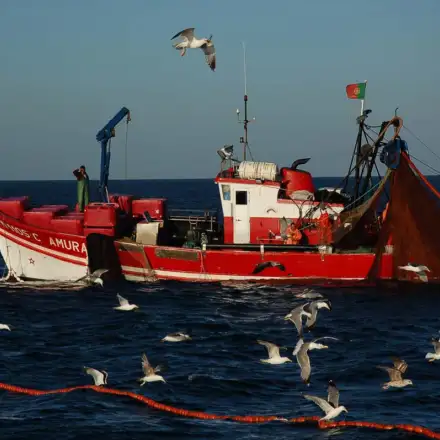
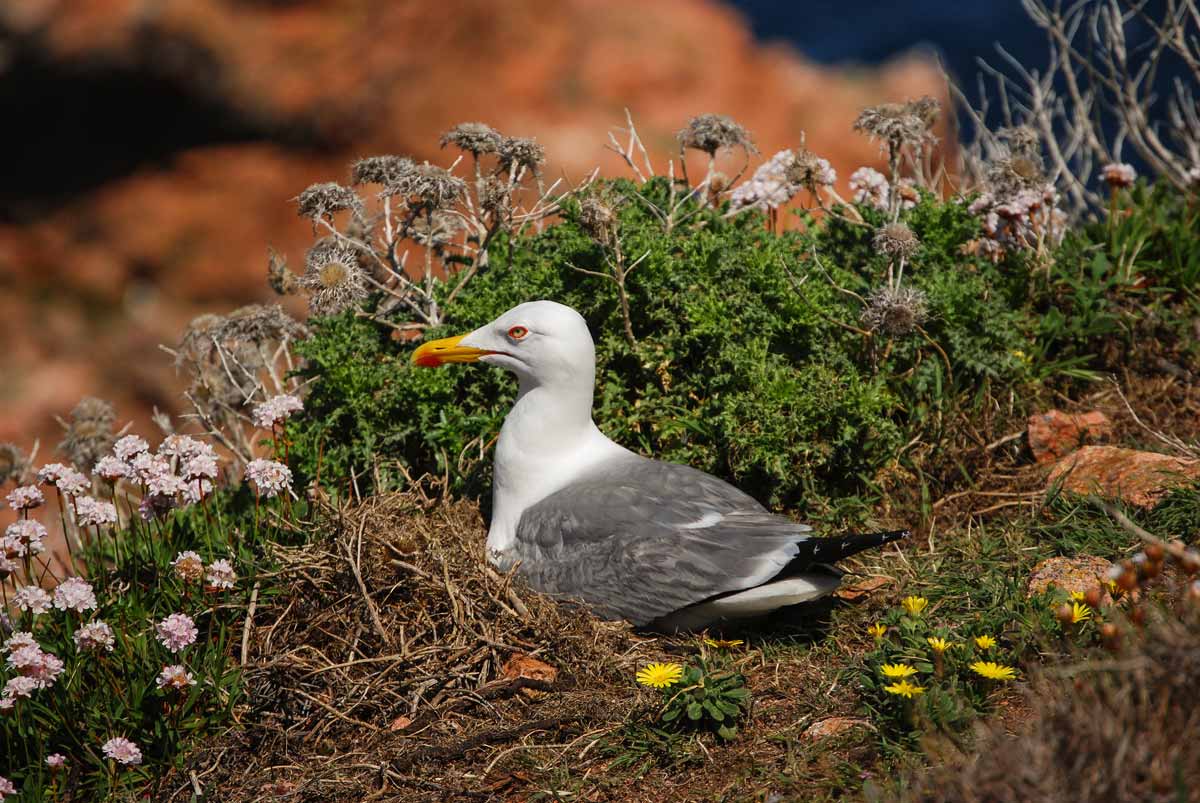
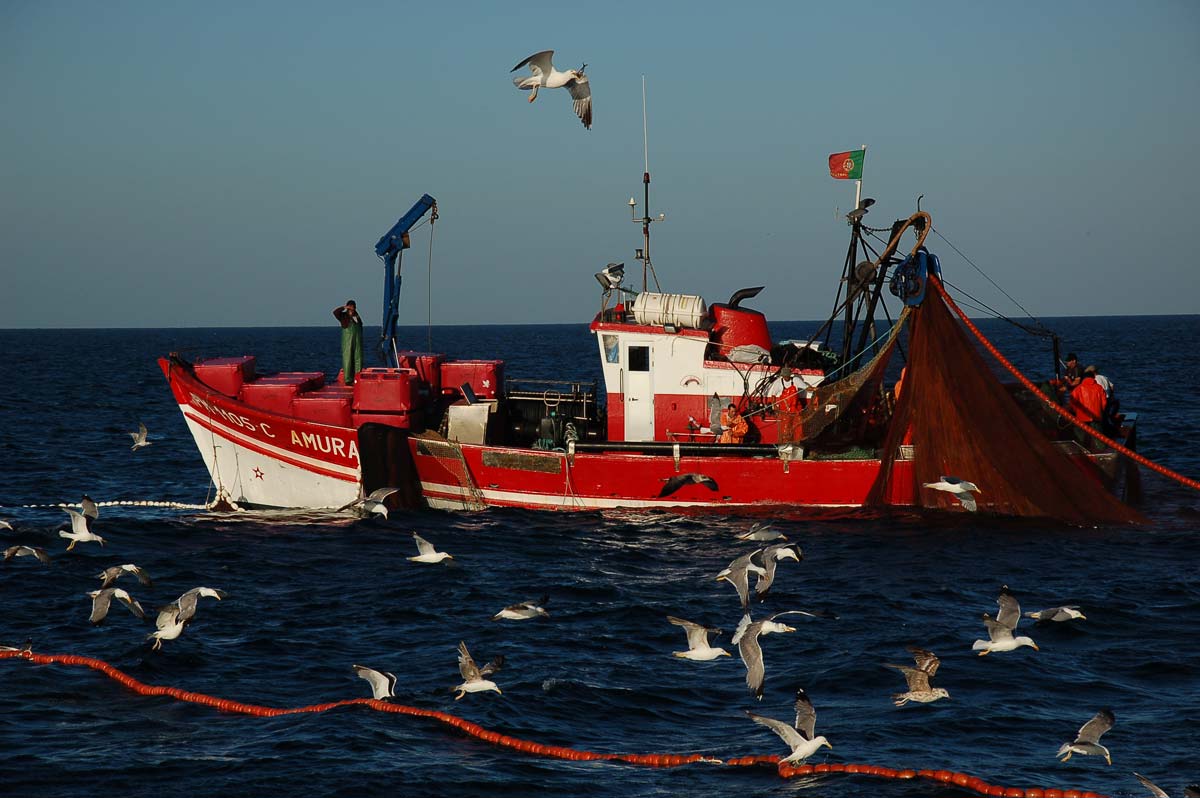
This gull utilises a variety of coastal habitats, such as beaches, fishing harbours, agricultural fields, urban areas, salt pans and landfills (Matos et al. 2018; Mendes et al. 2018). The distribution of this species appears to be linked to the high availability of food, obtained at landfills, near boats and in fishing harbours (Pereira et al. 2025b). Its generalist diet includes fish, pelagic crabs, insects and waste generated by human activities (Lopes et al. 2021). It is also a known predator of other seabirds. It nests preferentially on islands, islets, coastal cliffs and in urban areas.
Threats and conservation
In Portugal, some individuals are frequently captured as bycatch in fishing gear such as gillnets and longlines (Calado et al. 2021; Pereira et al. 2025a). Furthermore, the species faces other threats such as marine pollution (Lopes et al. 2021; dos Santos et al. 2024; Veríssimo et al. 2025) and diseases (Casero et al. 2025). Excessive population numbers in some colonies can place significant pressure on other natural elements, notably flora, other birds and reptiles. Some of these may have increased conservation value, as they are endemic with a limited distribution and/or have an unfavourable conservation status. It is urgent to ensure proper management of urban and fisheries waste in order to limit the unregulated growth of the Yellow-legged Gull.
- Autor
Jorge Pereira
- Owners/sources of tracking data
Ramos 2020b, Ramos 2021b, Ramos 2022, SPEA, Vitor H. Paiva & Filipe Ceia (MARE-UCoimbra)
Veríssimo SN, Paiva VH, Cunha SC, Brandão ALC, Coentro J, Fernandes JO, Pereira JM, Batista de Carvalho LAE, Cerveira LR, Marques MPM, Silva V, Norte AC & Ramos JA (2025). From mudflats and saltpans to open sea: Plastic ingestion and PBDE/MeO-BDE accumulation in waterbirds from southern Portugal. Marine Pollution Bulletin 214. Bibliography:
Romero J, Catry P, Menezes D, Coelho N, Silva JP & Granadeiro JP (2019). A gull that scarcely ventures on the ocean: Yellow-Legged Gulls Larus michahellis atlantis on the oceanic island of Madeira. Ardeola 66(1): 101-112. Bibliography:
Pereira JM, Ramos JA, Domingues A, Almeida A, Marçalo A, Cascão C, Silva C, Rey D, Ceia FR, Carvalho F, Santos ID, Gonçalves JMS, Cerveira LR, Frade M, Laranjeiro MI, Oliveira N, Nascimento T, Paiva VH & Norte AC (2025b). Experimental anthropogenic food restrictions drive short-term foraging and immuno-haematological changes in sympatric breeding gulls. Science of the Total Environment 1003: 180672. Bibliography:
Pereira JM, Ramos JA, Almeida A, Marçalo A, Carvalho F, Fagundes, I, Gonçalves JMS, Frade M, Oliveira N, Nascimento T & Paiva VH (2025a). Seasonal variation in seabird abundance and bycatch at artisanal bottom-set net fisheries in the southern Iberian Atlantic coast. Ocean & Coastal Management 267: 107660. Bibliography:
Oliveira N, Alonso H, Encarnação V, Menezes D, Magalhães M, Carreira G, Heber S, Pimentel R, Medeiros V, Bairos J, Raposo P, Coelho R, Rufino R, Neves R, Nascimento T, Silva E & Andrade J (2023b). Changes in numbers and distribution of Yellow-legged Gull Larus michahellis nesting in Portugal during the last two decades. Airo 31: 20–37. Bibliography:
Mendes RF, Ramos JA, Paiva VH, Calado JG, Matos DM & Ceia FR (2018). Foraging strategies of a generalist seabird species, the yellow-legged gull, from GPS tracking and stable isotope analyses. Marine Biology 165(10): 168. Bibliography:
Meirinho A, Barros N, Oliveira N, Catry P, Lecoq M, Paiva V, Geraldes P, Granadeiro JP, Ramírez I & Andrade J (2014). Atlas das Aves Marinhas de Portugal. Sociedade Portuguesa para o Estudo das Aves. Bibliography:
Matos DM, Ramos JA, Calado JG, Ceia FR, Hey J & Paiva VH (2018). How fishing intensity affects the spatial and trophic ecology of two Gull species breeding in sympatry. ICES Journal of Marine Science 75(6): 1949-1964. Bibliography:
Lopes CS, Paiva VH, Vaz PT, Pais de Faria J, Calado JG, Pereira JM & Ramos JA (2021). Ingestion of anthropogenic materials by yellow-legged gulls (Larus michahellis) in natural, urban, and landfill sites along Portugal in relation to diet composition. Environmental Science and Pollution Research 28: 19046–19063. Bibliography:
Fernandes RR, Ramos JA, de Faria JP, Matos DM, dos Santos I, Oliveira N, Rodrigues P & Paiva VH (2025). Year‐round colony‐level differences in foraging behaviour and diel activity of yellow‐legged gulls from natural and urban colonies. Journal of Zoology 328: 256-270. Bibliography:
dos Santos I, Paiva VH, Norte AC, Churlaud C, Ceia FR, Pais de Faria J, Pereira JM, Cerveira LR, Laranjeiro MI, Veríssimo SN, Ramos JA & Bustamante P (2024). Assessing the impacts of trace element contamination on the physiology and health of seabirds breeding along the western and southern coasts of Portugal. Environmental Pollution 358: 124528. Bibliography:
Ceia FR, Silva NC, Paiva VH, Morais L, Serrão EA & Ramos JA (2023). Gulls as indicators of environmental changes in the North Atlantic: A long-term study on Berlenga Island, Western Portugal. Diversity 15: 1148. Bibliography:
Casero MV, Turner AD, Ben-Gigirey B, Alexander RP, Dean KJ, Hatfield RG, Maskrey BH, Mazuet C, Karamendin K & Mateo R (2025). Identifying causative agents of a paretic syndrome in waterbirds in Southern Portugal. Toxins 17(2) 62: 1-17. Bibliography:
Calado JG, Ramos JA, Almeida A, Oliveira N & Paiva VH (2021). Seabird-fishery interactions and bycatch at multiple gears in the Atlantic Iberian coast. Ocean & Coastal Management 200: 105306. Bibliography:
BirdLife International (2025). IUCN Red List for birds. Downloaded from https://datazone.birdlife.org on 30.11.2025. Bibliography:
Billerman SM, Keeney BL, Kirwan GM, Medrano F, Sly ND & Smith MG (eds.) (2026). Birds of the World. Cornell Laboratory of Ornithology, Ithaca, NY, USA. Bibliography:
Catry P, Costa H, Elias G & Matias R (2010a). Aves de Portugal, Ornitologia do Território Continental. Assírio e Alvim, Lisboa Data:
Ramos R (2022). Dataset 1836: Yellow-legged Gull, Larus michahellis, GPS, San Pedro, San Pedro, Spain, 2021–2022. BirdLife International Seabird Tracking Database. Downloaded from https://data.seabirdtracking.org/dataset/1836/ on 30.11.2025. Data:
Ramos R (2021b). Dataset 1835: Yellow-legged Gull, Larus michahellis, GPS, San Pedro, San Pedro, Spain, 2020–2021. BirdLife International Seabird Tracking Database. Downloaded from https://data.seabirdtracking.org/dataset/1835/ on 30.11.2025. Data:
Ramos R (2020b). Dataset 1831: Yellow-legged Gull, Larus michahellis, GPS, Ebro Delta, Ebro Delta, Spain, 2019–2020. BirdLife International Seabird Tracking Database. Downloaded from https://data.seabirdtracking.org/dataset/1831/ on 30.11.2025. Glossary:
Equipment used to catch marine animals, such as nets, longlines or traps. Glossary:
A species or parameter that reflects the state of an ecosystem or environmental changes. Glossary:
Monitoring the movements of individuals using tracking devices. Glossary:
The direction of change in the size of a population over time (increase, decline or stability). Glossary:
A concept defined under the Marine Strategy Framework Directive (MSFD), referring to the condition of the elements of the marine environment, including birds. It aims to assess whether ecosystems are healthy, balanced and capable of supporting ecological functions and human uses in a sustainable manner. The ultimate goal is for the components and ecosystems to achieve Good Environmental Status. Glossary:
A static net, often nearly invisible and with variable mesh size, used to catch a wide variety of fish. It is set in the sea at varying depths and later retrieved. It is a non-selective fishing gear that frequently catches seabirds, marine mammals and reptiles. Glossary:
The portion of the seabed that begins at the coastline and slopes gently downwards to the continental slope (where the slope is much steeper). On average, the continental shelf extends to a depth of 200 metres. Glossary:
The area or environment where organisms that do not depend on the seafloor normally live. It is the typical ecological environment of open ocean waters. The pelagic ecosystem does not include only the open sea; it also comprises the waters covering the continental shelf. The pelagic zone begins below the influence of tides and extends into the open ocean, at depths ranging from a few tens of metres to approximately 6,000 metres, and is divided into different layers. Glossary:
A fishing gear consisting of a main line (mother line) from which secondary lines with hooks attached branch off. It is left in the sea and can be placed on the seabed to catch deep-sea species (e.g. scabbardfish) or at the surface to catch large pelagic fish (e.g. swordfish). Glossary:
Classification of the threat level of a species according to its probability of extinction. The criteria for this classification generally follow internationally recognised rules defined by the International Union for Conservation of Nature (IUCN) (http://www.redlist.org) and are based on population size, range and population trend. This status may be national or international. Glossary:
A term used in biology (endemism, from the Greek endemos, meaning indigenous) to describe living organisms whose range is confined to a restricted region (e.g. a mountain, an island or a country).